 Ver en contexto
 Enviar
 Compartir
 Detalles

 Descargar
 Similares
 Radiografía
 Presentación de diapositivas
Elisabeth Isabelle Mniszech


 Ver más
Reproducción al óleo hecha a mano
Óleo sobre lienzo pintado a mano en el tamaño y marco de su elección, realizado por encargo por nuestros artistas. ( Comprar impresión Comprar imagen)




P118B $10

P118H $10

P118W $10

P438Z $10

P508JH $12

P508YH $12

P805H $10

P805Z $10

P919BZ $10

P919G $10

P919XJ $10

P959ZH $10

P968JZ $12

W106C $8

W218G $10

W218JH $8

W218Y $10

W307PJ $10

W316G $10

W316PJ $8

W316Y $10

W398PJ $8

W4111J $10

W500HY $15

W500JH $15

W692G $12

W849H $8

W940BG $15

W953PJ $8




Elija entre nuestros tamaños predefinidos que respetan las proporciones originales de la obra.

Puede ingresar sus propias dimensiones para adaptarse a un marco o espacio específico. Si el tamaño seleccionado no coincide con las proporciones de la imagen original, recortaremos la obra o extenderemos la pintura con elementos adicionales pintados a mano. Se le enviará una maqueta digital para su aprobación antes de comenzar la producción.
Tenga en cuenta que la vista previa en pantalla no refleja el recorte o la extensión reales. Solo la maqueta mostrará con precisión la composición final.
Si bien existen tamaños personalizados, recomendamos seleccionar una dimensión de la lista predefinida para preservar las proporciones originales.
Tras realizar el pedido, el equipo de ArtsDot.com enviará un correo electrónico al cliente para solicitar instrucciones y proporcionarle una vista previa del boceto.
Envío a todo el mundo () en 3-4 semanas en lugar de las 5 semanas estándar. (22 agosto). Sin comprometer la calidad.

Envío exprés gratuito a todo el mundo

Lienzo de lino de alta calidad

Seguro de envío total

Garantía de reembolso de impuestos aduaneros

Garantía de fidelidad cromática exacta

Política de devolución de 60 días (solo por defectos)

Garantía de devolución del 100% del dinero

Descuento por cantidad
 La opción de vidrio solo está disponible en tamaños inferiores a 110 cm.

Elisabeth Isabelle Mniszech
Técnica de reproducción
Dimensiones de la reproducción
-


Precio total final
$ 263
Descripción de la obra
A Portrait of Innocence: Elisabeth Isabelle Mniszech by Louise Vigée Le Brun
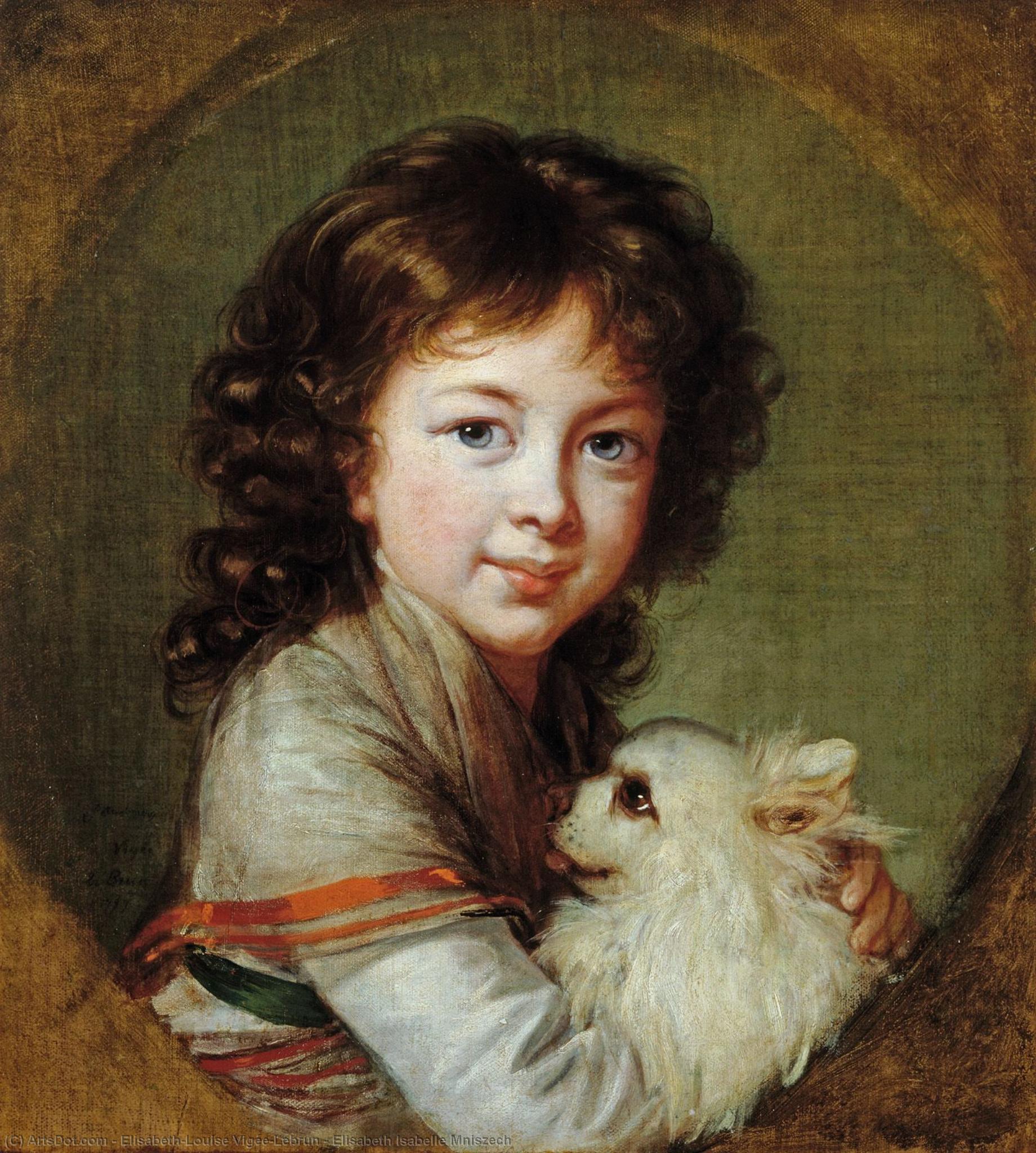
The year is 1797, and within the elegant confines of Parisian society, Louise Élisabeth Vigée Le Brun captures a moment of profound tenderness in her portrait of Elisabeth Isabelle Mniszech. This isn’t merely a likeness; it's an exquisite distillation of childhood innocence, rendered with the meticulous detail and psychological insight that defined Vigée Le Brun’s illustrious career. The painting immediately draws the viewer in – a young girl, no older than seven or eight, cradles a small white dog close to her chest, their connection palpable even across two centuries.
Vigée Le Brun was at the height of her powers during this period, serving as the official painter to Marie Antoinette and later Napoleon Bonaparte. Her style evolved throughout her life, but in works like this, she masterfully blended Rococo grace with a burgeoning Neoclassical sensibility. Notice the soft, diffused light bathing the scene – a hallmark of Vigée Le Brun’s technique, carefully manipulated to create an atmosphere of warmth and intimacy. The artist employs a delicate pastel palette, favoring muted pinks, blues, and creams that enhance the ethereal quality of the portrait. The brushstrokes are remarkably subtle, almost invisible, contributing to the overall sense of serenity and quiet contemplation.
Decoding Symbolism: Dog, Girl, and the Weight of Expectation
Beyond the immediate beauty of the image lies a wealth of symbolic meaning. The white dog, often associated with purity and loyalty, represents companionship and unconditional love – qualities deeply valued in childhood. Its proximity to Elisabeth suggests a comforting presence, perhaps even a protector against the uncertainties of the world. The girl herself embodies an almost timeless quality. Her gaze is direct yet gentle, hinting at a quiet intelligence and resilience. The scarf around her neck, though seemingly simple, could represent familial connection or perhaps a subtle nod to social standing within the aristocratic circles she inhabited.
Furthermore, consider the historical context. 1797 was a period of significant political upheaval in France – the aftermath of the French Revolution and the rise of Napoleon. While outwardly serene, this portrait subtly reflects the anxieties and uncertainties of the era. The girl’s composure could be interpreted as an emblem of hope for the future, a reminder of innocence amidst chaos. It's a poignant juxtaposition of youthful vulnerability and the weight of societal expectations.
The Artist’s Hand: Technique and Legacy
Vigée Le Brun was renowned not only for her ability to capture likeness but also for her profound understanding of human psychology. She meticulously studied her subjects, observing their mannerisms, expressions, and gestures to create portraits that went beyond mere representation. Her use of *sfumato*, a technique borrowed from Leonardo da Vinci, is particularly evident in the soft transitions between light and shadow, lending the portrait an almost dreamlike quality. The careful rendering of fabric – the girl’s dress and the dog's fur – demonstrates her mastery of detail and her commitment to realism.
Elisabeth Isabelle Mniszech’s portrait stands as a testament to Vigée Le Brun’s artistic genius and her ability to capture the essence of her subjects. It is a timeless image that continues to resonate with viewers today, offering a glimpse into the lives and aspirations of a bygone era. Reproductions of this captivating work are available through ArtsDot.com, allowing art lovers worldwide to experience the beauty and emotional depth of this remarkable portrait.
A Timeless Masterpiece for Your Space
Whether adorning a grand salon or a cozy study, Elisabeth Isabelle Mniszech by Louise Vigée Le Brun offers an exquisite addition to any collection. The painting’s delicate colors and serene composition create a sense of tranquility and sophistication, while its rich symbolism invites contemplation and reflection. A high-quality reproduction from ArtsDot.com ensures that you can enjoy the full beauty of this masterpiece in your own home, bringing a touch of Parisian elegance and timeless charm to your surroundings.
Obras relacionadas
Biografía del artista
Primeros Años y Formación
- Nacimiento: París, Francia (16 de abril de 1755)
- Fallecimiento: 1842
- Louise Élisabeth Vigée nació en una familia con conexiones artísticas. Su padre, Louis Vigée, era un retratista pastelero y miembro del gremio de artistas, la Académie de Saint-Luc.
- Comenzó su formación artística temprano, aprendiendo de su padre. Demostró un talento notable desde temprana edad, pintando en diversas superficies.
- Tras la muerte de su padre cuando tenía doce años, continuó desarrollando sus habilidades, estudiando con artistas como Blaise Bocquet, Pierre Davesne y Gabriel Briard.
Ascenso a la Prominencia y Patronazgo Real
- En 1774, se unió a la Académie de Saint-Luc, un paso significativo para establecerse como artista.
- Su matrimonio con Jean-Baptiste Pierre Le Brun en 1776, un comerciante de arte, resultó beneficioso para su carrera, proporcionando acceso y conexiones dentro del mundo del arte.
- Un momento crucial llegó en 1778 cuando fue comisionada para pintar un retrato oficial de María Antonieta, Reina de Francia. Esto marcó el comienzo de una estrecha relación con la familia real.
- Se convirtió en la retratista oficial de María Antonieta, creando numerosos retratos de la reina y sus hijos. Su habilidad para capturar los rasgos y retratar la elegancia le valió un amplio reconocimiento.
- Su trabajo fue muy solicitado por otros miembros de la aristocracia y la sociedad selecta.
Estilo Artístico y Obras Principales
- El estilo artístico de Vigée Le Brun se considera generalmente parte de la estela del Rococó, aunque a menudo adopta un enfoque neoclásico.
- Sus retratos se caracterizan por su elegancia, naturalismo y atención al detalle. Capturaba hábilmente las personalidades y el estatus social de sus modelos.
- Obras Notables:
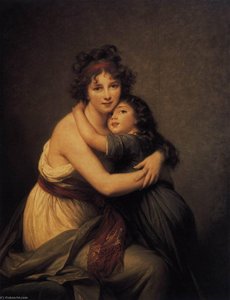
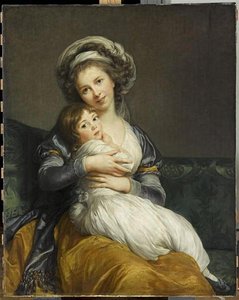
- Autorretrato con su Hija, Julie – Una conmovedora representación de la maternidad.
- Retratos de María Antonieta – Numerosos retratos que muestran el estilo y la personalidad de la reina.
- María Antonieta en gran traje de corte, sosteniendo una rosa - Captura la grandeza de la Reina.
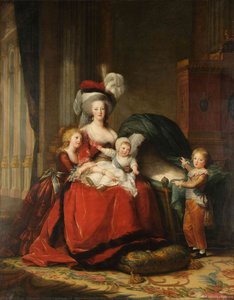
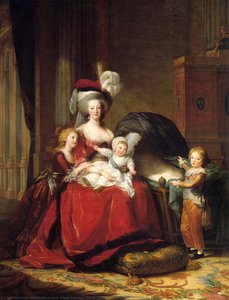
- Marie-Antoinette Lorrraine Habsburg, Reina de Francia y sus hijos. – Un retrato familiar que demuestra su habilidad.
- También creó paisajes y escenas de género, aunque es más conocida por sus retratos.
La Revolución Francesa y Vida Posterior
- La Revolución Francesa impactó significativamente la vida y la carrera de Vigée Le Brun. Debido a la agitación política y las preocupaciones por su seguridad, huyó de Francia en 1789.
- Pasó varios años viajando por Europa, incluyendo Rusia, Italia, Inglaterra y Suiza, continuando pintando retratos de figuras prominentes.
- Durante este período, ganó reconocimiento y patrocinio de varias cortes y aristócratas europeos.
- Regresó a Francia en 1809 y vivió una vida relativamente tranquila, dividiendo su tiempo entre París y su finca rural.
- Publicó sus memorias, proporcionando valiosas perspectivas sobre su vida, carrera y el mundo artístico de su época.
Legado y Significado Histórico
- Vigée Le Brun es reconocida como una de las retratistas más destacadas del siglo XVIII.
- Su obra proporciona un valioso registro visual de la sociedad francesa durante un período de cambios significativos.
- Como artista femenina exitosa en un campo dominado por hombres, allanó el camino para futuras generaciones de artistas mujeres.
- Su capacidad para obtener patrocinio real y lograr un amplio reconocimiento demuestra su talento y determinación.
- Sus memorias ofrecen una perspectiva única sobre el mundo del arte, la vida cortesana y el impacto de la Revolución Francesa.
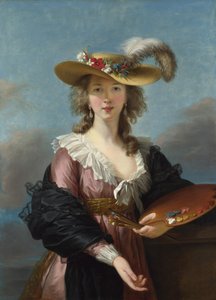
Luisa Isabel Vigée Le Brun
1755 - 1842 , Francia
Datos clave
- Artistas Que Influyeron:
- Blaise Bocquet
- Pierre Davesne
- Gabriel Briard
- Fecha De Fallecimiento: 30 de marzo de 1842
- Fecha De Nacimiento: 16 de abril de 1755
- Lugar De Nacimiento: París, Francia
- Movimiento Artístico: Rococó y Neoclasicismo
- Nacionalidad: Francesa
- Nombre Completo: Luisa Isabel Vigée Le Brun
- Obras Notables:
- Autorretrato con su hija
- Retratos de María Antonieta
- Reina María Antonieta
Artículos relacionados
Vigée Le Brun: Portraiture, Patronage & Feminine Identity in 18th-Century France
Explore the life & art of Louise Élisabeth Vigée Le Brun, Marie Antoinette’s renowned portraitist. Discover her Rococo style, self-portraits, and influence on 18th-century French painting. A deep dive into patronage & feminine identity.
Charles Le Brun: Master of French Baroque Classicism & His Enduring Legacy
Explore the life & art of Charles Le Brun, master of French Baroque Classicism. Discover his royal commissions, influence on Versailles, and enduring legacy through detailed analysis & stunning artworks.
Henri Le Sidaner: Evoking Atmosphere & Intimacy in Post-Impressionist Landscapes
Discover the evocative world of Henri Le Sidaner, a master of Intimist painting. Explore his tranquil landscapes & atmospheric interiors – a celebration of light and intimacy. Learn about his life, style, and lasting legacy.
Édouard Manet: Las 25 Obras Maestras del Impresionismo para Decorar tu Hogar con Arte
Descubre las 25 obras maestras de Édouard Manet, el rebelde del impresionismo. Explora su historia, técnica y significado en cada cuadro famoso. Reproducciones de arte de museo para decorar tu hogar con estilo. ¡Explora la colección completa en ArtsDot.com!
Neoclasicismo: 10 Obras Maestras que Definieron un Estilo Eterno |
Descubre las 10 obras maestras del Neoclasicismo con . Explora la historia de David, Ingres y Canova, su técnica y el legado de este estilo eterno. Reproducciones de arte de museo para tu hogar. ¡Explora la colección online!