 Ver en contexto
 Enviar
 Compartir
 Detalles

 Descargar
 Similares
 Radiografía
 Presentación de diapositivas
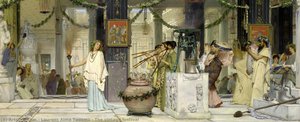
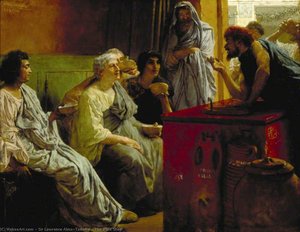
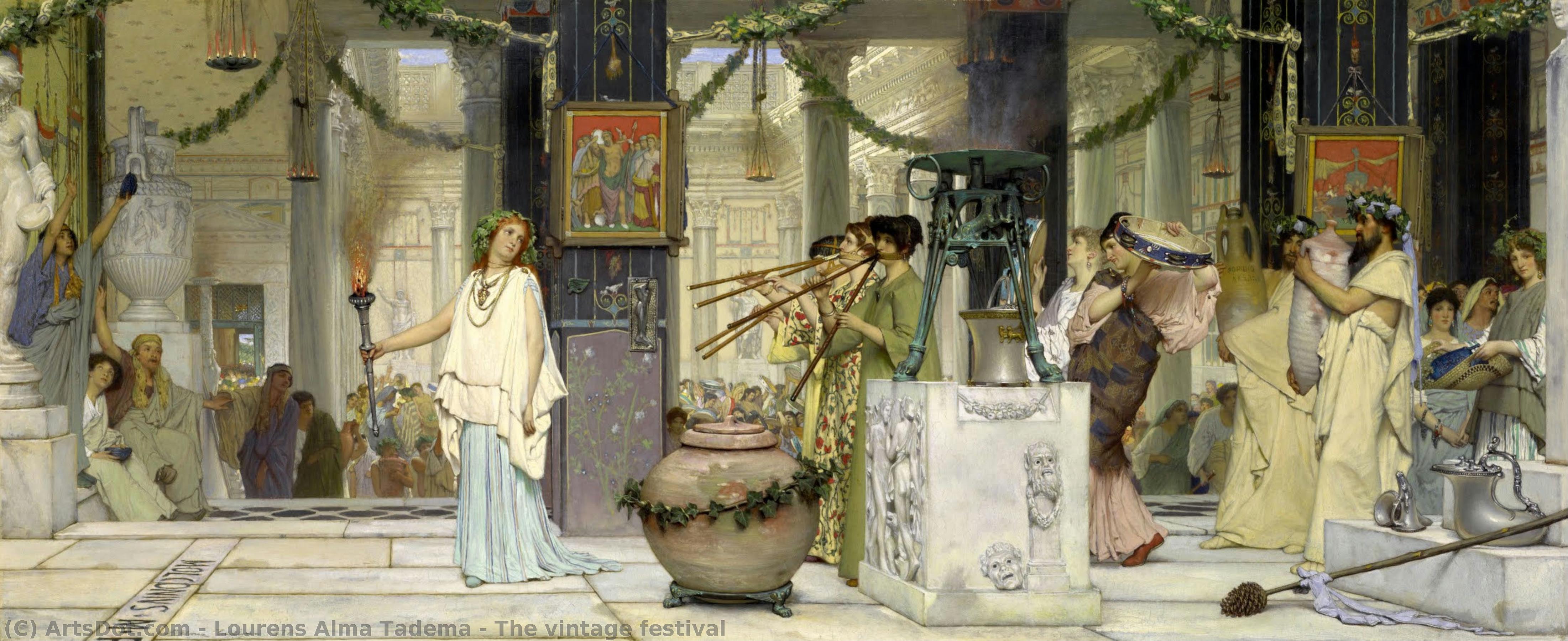
El festival de la vendimia
 Óleo sobre lienzo
- Arte de pared
- Victorian Aestheticism & Classical Antiquity
 1871
1871- Siglo XIX
 51.0 x 119.0 cm
 Galería Nacional de Victoria
 Ver más
Reproducción al óleo hecha a mano
Óleo sobre lienzo pintado a mano en el tamaño y marco de su elección, realizado por encargo por nuestros artistas. ( Comprar impresión Comprar imagen)




P118B $10

P118H $10

P118W $10

P438Z $10

P508JH $12

P508YH $12

P805H $10

P805Z $10

P919BZ $10

P919G $10

P919XJ $10

P959ZH $10

P968JZ $12

W106C $8

W218G $10

W218JH $8

W218Y $10

W307PJ $10

W316G $10

W316PJ $8

W316Y $10

W398PJ $8

W4111J $10

W500HY $15

W500JH $15

W692G $12

W849H $8

W940BG $15

W953PJ $8




Elija entre nuestros tamaños predefinidos que respetan las proporciones originales de la obra.

Puede ingresar sus propias dimensiones para adaptarse a un marco o espacio específico. Si el tamaño seleccionado no coincide con las proporciones de la imagen original, recortaremos la obra o extenderemos la pintura con elementos adicionales pintados a mano. Se le enviará una maqueta digital para su aprobación antes de comenzar la producción.
Tenga en cuenta que la vista previa en pantalla no refleja el recorte o la extensión reales. Solo la maqueta mostrará con precisión la composición final.
Si bien existen tamaños personalizados, recomendamos seleccionar una dimensión de la lista predefinida para preservar las proporciones originales.
Tras realizar el pedido, el equipo de ArtsDot.com enviará un correo electrónico al cliente para solicitar instrucciones y proporcionarle una vista previa del boceto.
Envío a todo el mundo () en 3-4 semanas en lugar de las 5 semanas estándar. (26 agosto). Sin comprometer la calidad.

Envío exprés gratuito a todo el mundo

Lienzo de lino de alta calidad

Seguro de envío total

Garantía de reembolso de impuestos aduaneros

Garantía de fidelidad cromática exacta

Política de devolución de 60 días (solo por defectos)

Garantía de devolución del 100% del dinero

Descuento por cantidad
 La opción de vidrio solo está disponible en tamaños inferiores a 110 cm.

El festival de la vendimia
Técnica de reproducción
Dimensiones de la reproducción
-


Precio total final
$ 263
Descripción de la obra
Una sinfonía de luz y detalle: Explorando “The Vintage Festival” de Lawrence Alma-Tadema
La obra "The Vintage Festival" de Lawrence Alma-Tadema, completada en 1871, se erige como un logro monumental del esteticismo victoriano; un testimonio de observación meticulosa y ejecución magistral que continúa cautivando a los espectadores en la actualidad. Más que una simple representación de una celebración romana antigua, es un cuadro cuidadosamente construido, diseñado para evocar la grandeza y la riqueza sensorial de una era pasada, consolidando la reputación de Alma-Tadema como uno de los artistas más destacados de su tiempo.- Contexto histórico: Pompeya bajo asedio La pintura transporta a los espectadores a la Pompeya del año 79 d.C., una próspera ciudad romana al borde de la catastrófica destrucción por el Monte Vesubio. Alma-Tadema llevó a cabo una investigación exhaustiva sobre la vida romana —un esfuerzo pionero para su época— recurriendo a descubrimientos arqueológicos y textos académicos para recrear un panorama asombrosamente vívido de la existencia cotidiana. Esta dedicación a la precisión no es meramente decorativa; sirve como un conducto para transmitir el espíritu de la época, reflejando la fascinación victoriana por la antigüedad clásica y sus percibidas virtudes morales.
- <Estilo y técnica: Ilusión fotorrealista Alma-Tadema alcanzó su notable realismo mediante una atención minuciosa al detalle, una técnica que le valió un considerable reconocimiento de críticos como el Art Journal. Empleó óleos sobre un gran panel de madera, superponiendo veladuras translúcidas para construir gradaciones tonales y capturando los sutiles matices de luz y sombra con una precisión sin parangón. La magistral pincelada del artista imita las texturas de las columnas de mármol, los tejidos drapeados y la piel humana, creando una ilusión tan convincente que roza la representación fotográfica.
- <Composición y simbolismo: Una escena cuidadosamente orquestada La composición en sí está deliberadamente equilibrada: una extensión horizontal dominada por un majestuoso templo romano, puntuada por figuras entregadas a un alegre festejo. El uso de la perspectiva por parte de Alma-Tadema atrae la mirada hacia el interior, guiando al espectador a través de la escena y sumergiéndolo en su atmósfera. Cabe destacar que la inclusión de instrumentos como flautas y pífanos simboliza la celebración musical —parte integral de los festivales romanos—, mientras que las ornamentadas vestimentas y accesorios de los participantes subrayan su estatus social y riqueza.
- <Paleta de colores: Calidez radiante y calma tranquila La paleta cromática de Alma-Tadema es un triunfo de la armonía tonal, mezclando matices cálidos —oro, carmesí, ocre— con tonos más fríos —azules y verdes pálidos— para crear una impresión general de calidez radiante templada por una calma tranquila. El artista utiliza hábilmente técnicas de glaseado para lograr efectos luminosos, capturando el brillo centelleante de las superficies de mármol y la sutil luminiscencia de la luz de las velas.
- <Recepción crítica y legado: Una obra maestra perdurable Como describió elocuentemente Art Journal en 1883: “En esta elaborada composición, el artista ha llevado el realismo arqueológico a un grado elevado...”. "The Vintage Festival" de Alma-Tadema sigue siendo un ejemplo de la ambición artística victoriana: un retrato cautivador de historia y belleza que continúa inspirando admiración y estudio académico. Su atractivo perdurable habla del poder del arte para transportar a los espectadores a través del tiempo, fomentando el aprecio tanto por la virtuosismo técnico como por la profunda visión cultural.
Esta obra monumental se encuentra actualmente en la Kunsthalle Hamburg y ejemplifica el compromiso inquebrantable de Alma-Tadema por capturar la esencia de la antigüedad con una precisión asombrosa.
Obras relacionadas
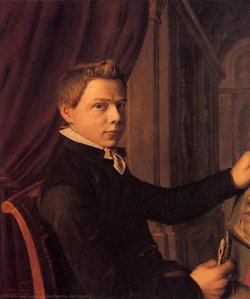
Biografía del artista
Sir Lawrence Alma-Tadema (1836–1912): The Architect of Atmospheric Detail
Lawrence Alma Tadema, later Lawrence Alma Tadema, was born in Dronryp, Friesland, Netherlands, on January 8, 1836. His father, Pieter Jiltes Tadema, a village notary, had three sons by his first marriage, and his mother, Hinke Dirks Brouwer, was the half sister of Pieter’s first wife. The Tadema family moved to Leeuwarden in 1838 where Pieter's position as a notary would be more lucrative. His father died when Laurens was four, leaving his mother with five children: Laurens, his sister, and three boys from his father’s first marriage. Hinke Brouwer had artistic leanings, and decided that drawing lessons should be incorporated into the children’s education. He received his first art training with a local drawing master hired to teach his older half-brothers. It was intended that Laurens would become a lawyer; but in 1851 he suffered a physical and mental breakdown. Diagnosed as consumptive; given only a short time to live, he was allowed to spend his remaining days at his leisure, drawing and painting. Left to his own devices he regained his health and decided to pursue a career as an artist. In 1852 he entered The Royal Academy of Antwerp where he studied early Dutch and Flemish masters, alongside absorbing the meticulous detail demanded by historical accuracy. During Laurens’ four years as a registered student at the Academy, he won several respectable awards. Before leaving school, towards the end of 1855, he became assistant to the painter Louis Jan de Taeye, whose courses in history and historical costume he had greatly enjoyed at the Academy. De Taeye introduced him to books that influenced his desire to portray Merovingian subjects early in his career. He was encouraged to depict historic accuracy in his paintings, a trait for which the artist became known. Laurens Tadema took this criticism very seriously, and it led him to improve his technique and to become the world’s foremost painter of marble and variegated granite.- Early Life: Alma-Tadema’s childhood was marked by tragedy when his father died prematurely, leaving his mother with five children. Despite facing significant hardship, Hinke Brouwer fostered Laurens' artistic inclinations through drawing lessons.
- Academic Training: He enrolled at The Royal Academy of Antwerp in 1852, immersing himself in the study of classical masters and honing his skills in historical representation.
- Personal Struggles: A debilitating illness struck Alma-Tadema in 1851, forcing him to abandon legal aspirations and dedicate himself entirely to artistic pursuits—a decision that ultimately revitalized his health.
Exploring Antiquity: Merovingian Mysteries and Egyptian Visions
Alma Tadema’s artistic trajectory began with explorations of Merovingian themes—the Frankish dynasty that ruled after the fall of the Western Roman Empire. These early works, though demonstrating his burgeoning talent for historical detail and narrative composition, didn’t achieve the widespread acclaim he would later find. It is perhaps in this series that Laurens Tadema moved by the deepest feeling and the strongest spirit of romance. He was encouraged to depict historic accuracy in his paintings, a trait for which the artist became known. However Merovingian subjects did not have a wide international appeal, so he switched to themes of life in ancient Egypt, then to the classical world of Greece and Rome. This transition wasn't arbitrary; it reflected a growing public appetite for romanticized visions of antiquity, fueled by archaeological discoveries and a Victorian fascination with moral lessons drawn from the past. He was captivated by the grandeur and elegance of Roman villas and interiors—a fascination that would define his artistic output for decades to come.The Architect of Atmosphere: Detail and Light
What truly set Alma Tadema apart was his unparalleled ability to create atmosphere. He wasn't just painting objects; he was capturing the very *feeling* of sunlight on marble, the coolness of mosaic floors underfoot, the gentle murmur of fountains in a Roman atrium. This mastery stemmed from an obsessive attention to detail and a deep understanding of materials. He meticulously researched ancient architecture, furniture, and clothing, ensuring that every element within his compositions was historically plausible. But beyond accuracy, he possessed a remarkable talent for rendering light and texture. His marble gleamed with a lifelike luminosity, his fabrics flowed with graceful realism, and his water shimmered with captivating clarity. This dedication to verisimilitude wasn’t merely about technical skill; it was about creating an illusion of reality so convincing that viewers felt transported to another time and place. He even went as far as to build miniature models of the settings he intended to paint, ensuring perfect perspective and architectural accuracy.Victorian Fame and Legacy
Alma Tadema enjoyed immense popularity during his lifetime, becoming a household name and receiving numerous accolades, including knighthood in 1899. His paintings—particularly those depicting Roman life—became symbols of Victorian elegance and moral virtue. Despite the stylistic shifts of the early 20th century, Alma Tadema’s meticulous realism endured, securing his place as one of the most influential artists of his era. Scholars and collectors rediscovered the beauty and technical brilliance of his works in the 1960s, recognizing him as a master of Victorian art and a significant figure in the history of classical representation—a testament to his enduring vision and unparalleled skill. His legacy continues to inspire contemporary artists who strive for similar levels of detail and atmospheric realism.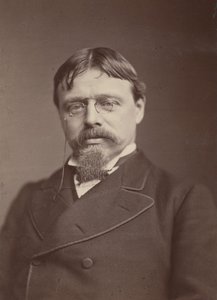
lourens alma tadema
1836 - 1912 , Países Bajos
Datos clave
- Artistic Movement Or Style: Pintura Victoriana
- Artists Or Movements Influenced By This Artist: ['Romanticismo']
- Artists Who Influenced This Artist: ['Louis Jan de Taeye']
- Date Of Birth: 8 enero 1836
- Date Of Death: 25 junio 1912
- Full Name: Lourens Alma Tadema
- Nationality: Holandés
- Notable Artworks:
- Un Beso
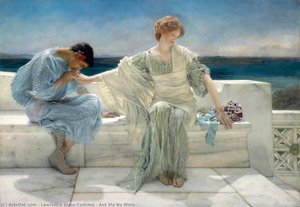
- Pregúntame No Más
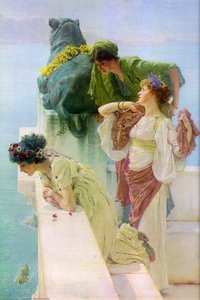
- Un Rincón de Vista
- Place Of Birth: Dronryp, Países Bajos
Artículos relacionados
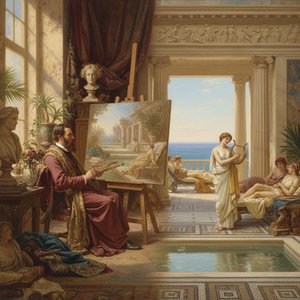
Sir Lawrence Alma-Tadema: A Study in Victorian Aestheticism & Classical Antiquity
Explore the captivating world of Sir Lawrence Alma-Tadema, a master of Victorian Aestheticism. Discover his stunning depictions of ancient Rome, artistic techniques, and enduring legacy with ArtsDot.
Bartolomeo Pinelli: Neoclassical Linearity & Roman Topography of Memory
Explore the captivating world of Bartolomeo Pinelli, a master Italian engraver renowned for his evocative Roman scenes & historical narratives. Discover his art and legacy with ArtsDot.

La Estética Refinada de la Ilustración Victoriana: Narrativa y Técnica en el Arte del Siglo XIX
Descubra la estética refinada de la ilustración victoriana y el impacto revolucionario de los Prerrafaelitas. Análisis profundo de técnicas, narrativa y simbolismo en el arte del siglo XIX.
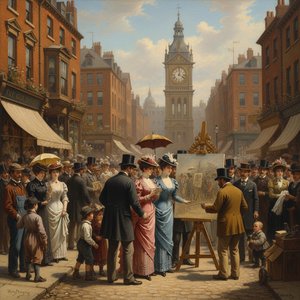
William Powell Frith: Narratives of Victorian Society & the Rise of Realist Painting
Explore the life & works of William Powell Frith, the 'greatest British painter of social scenes.' Discover his iconic Victorian genre paintings and learn about his lasting impact on realist art. Hand-painted reproductions available.
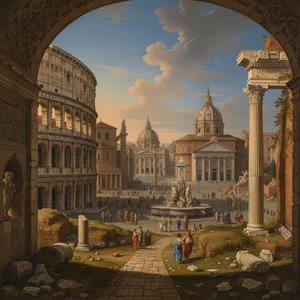
Giovanni Paolo Panini: Capturing Roman Grandeur – A Vedute Master's Legacy
Explore the captivating world of Giovanni Paolo Panini, master of Roman vedute painting. Discover his technique, iconic works, influence on art history & collecting advice from experts at ArtsDot.