 Ver en contexto
 Enviar
 Compartir
 Detalles

 Descargar
 Similares
 Radiografía
 Presentación de diapositivas
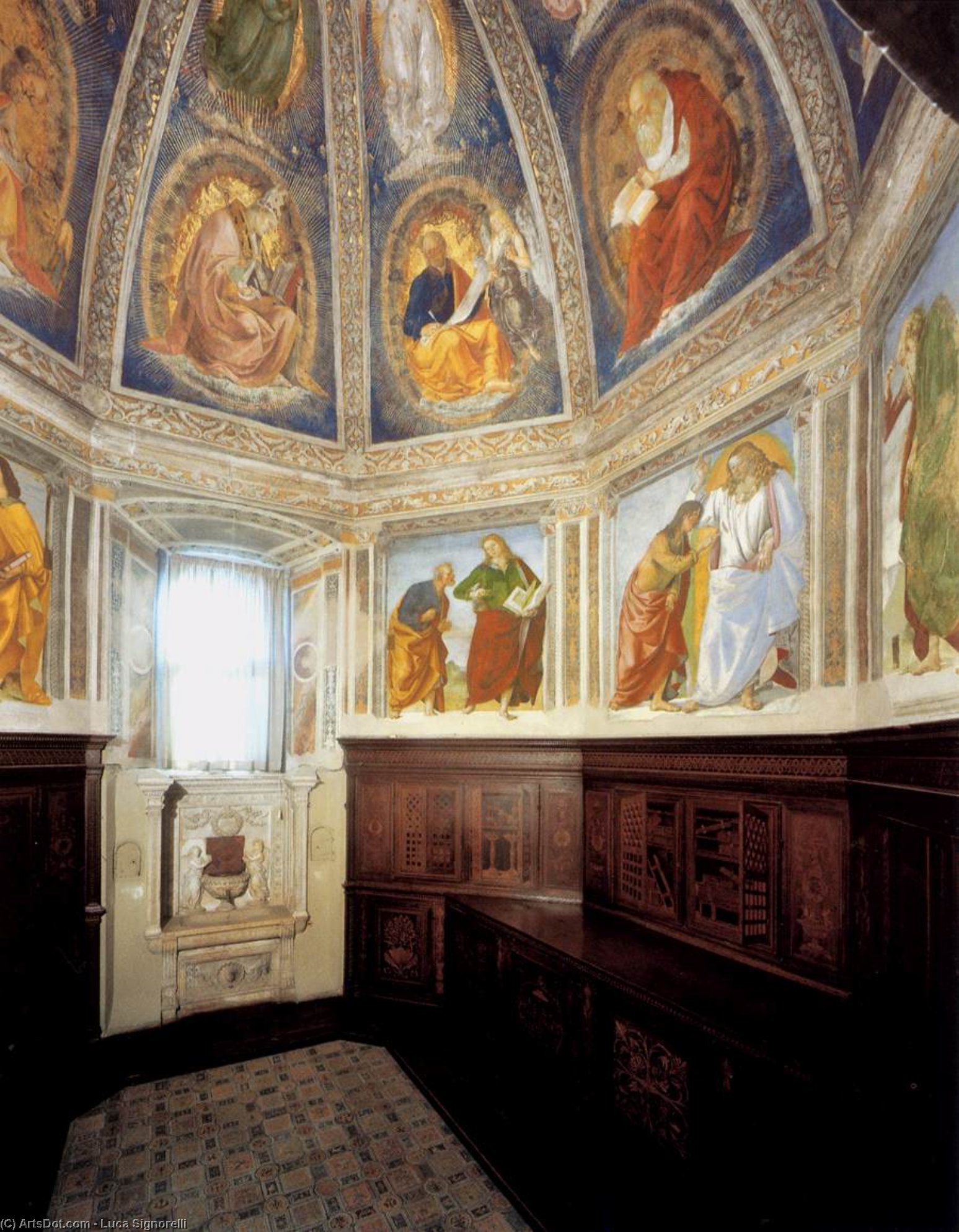
View of the Sacristy of St John


 Ver más
Giclée / Impresión de arte
Impresiones giclée o en lienzo de calidad de museo con producción rápida y opciones de acabado flexibles. ( Comprar pintura hecha a mano Comprar imagen)




P118B $10

P118H $10

P118W $10

P438Z $10

P508JH $12

P508YH $12

P805H $10

P805Z $10

P919BZ $10

P919G $10

P919XJ $10

P959ZH $10

P968JZ $12

W106C $8

W218G $10

W218JH $8

W218Y $10

W307PJ $10

W316G $10

W316PJ $8

W316Y $10

W398PJ $8

W4111J $10

W500HY $15

W500JH $15

W692G $12

W849H $8

W940BG $15

W953PJ $8




Elija entre nuestros tamaños predefinidos que respetan las proporciones originales de la obra.

Puede introducir sus propias dimensiones para adaptarse a un marco o espacio específico. Si el tamaño seleccionado no coincide con las proporciones de la imagen original, recortaremos la obra de arte o extenderemos la imagen con un borde con efecto espejo o de color sólido. Se enviará una maqueta digital para su aprobación antes de que comience la producción.
Tenga en cuenta que la vista previa en pantalla no refleja el recorte o la extensión real. Solo la maqueta mostrará con precisión la composición final.
Aunque existen tamaños personalizados, recomendamos seleccionar una dimensión de la lista predefinida para preservar las proporciones originales.
Envío a todo el mundo () en 2 semanas en lugar de las 4/5 semanas estándar. (31 agosto)

Envío exprés gratuito a todo el mundo

Lienzo de lino de alta calidad

Seguro de envío total

Garantía de reembolso de impuestos aduaneros

Garantía de fidelidad cromática exacta

Política de devolución de 60 días (solo por defectos)

Garantía de devolución del 100% del dinero

Descuento por cantidad
 La opción de vidrio solo está disponible en tamaños inferiores a 110 cm.

View of the Sacristy of St John
Giclée / Impresión de arte
Dimensiones de la reproducción
-


Precio total final
$ 62
Luca Signorelli’s “View of the Sacristy of St John”: A Renaissance Vision of Divine Order
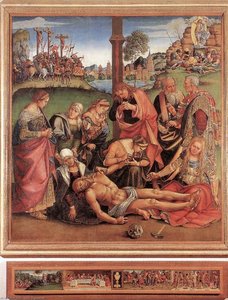
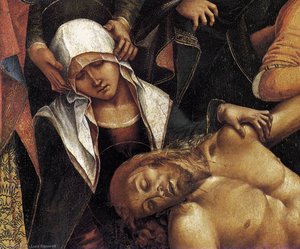
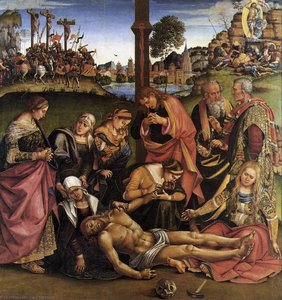
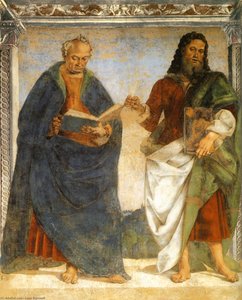
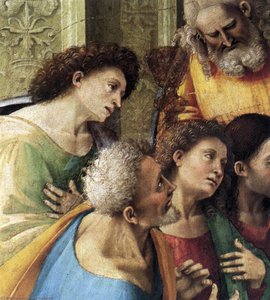
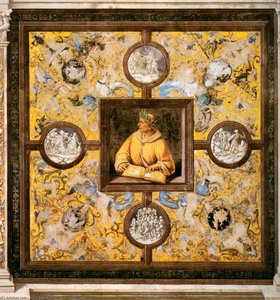
The fresco, “View of the Sacristy of St John,” painted in 1477 by Luca Signorelli for the dome of the Basilica della Santa Casa in Loreto, Italy, is more than just a decorative ceiling; it’s a meticulously crafted microcosm of faith, a testament to Renaissance artistic principles, and a profound exploration of biblical narrative. Signorelli, already establishing himself as a master draftsman and colorist, delivers here a complex composition brimming with symbolic weight and technical brilliance, inviting the viewer into a world where earthly beauty intertwines with celestial grace. The painting’s immediate impact is one of controlled dynamism – figures move within a carefully orchestrated space, guided by linear perspective and a deep understanding of human anatomy. It's a scene both intimate in its conversation and expansive in its theological scope.A Symphony of Figures and Narrative
The fresco unfolds as a series of interconnected vignettes, arranged around a central area dominated by three men engaged in animated discussion. These figures, likely representing teachers or guides, are positioned strategically to draw the eye into the heart of the composition. Above them, within circular frames adorning the dome itself, we encounter depictions of saints and angels – a gallery of holy figures rendered with classical elegance and imbued with an aura of serene authority. The narrative is deeply rooted in biblical stories: scenes from the lives of the saints, episodes from the Old Testament, and glimpses into the future judgment. Signorelli masterfully integrates these disparate elements, creating a cohesive whole that speaks to the enduring power of faith and divine providence. The careful placement of each figure – their gestures, expressions, and interactions – contributes to the overall sense of order and harmony.Technique and Materials: Fresco’s Enduring Legacy
Signorelli's mastery lies not only in his narrative vision but also in his technical execution. As a fresco painter, he worked directly onto wet plaster, applying pigments mixed with water – a technique demanding both speed and precision. The slightly textured surface of the paint is visible, lending the work an authentic sense of history and age. Signorelli’s use of color is particularly noteworthy; he employs a rich palette dominated by warm tones—golds, reds, yellows, and browns—to create a luminous effect that seems to emanate from within the fresco itself. The subtle gradations of light and shadow – achieved through careful layering of pigments – imbue the figures with volume and depth, while the linear perspective guides the viewer’s eye across the complex composition. The meticulous detail in the drapery, the realistic portrayal of facial features, and the precise rendering of architectural elements all testify to Signorelli's exceptional skill as a draftsman.Symbolism and Spiritual Resonance
Beyond its aesthetic qualities, “View of the Sacristy of St John” is rich in symbolic meaning. The circular arrangement of figures reflects the concept of eternity – a timeless realm where God’s will prevails. The saints depicted represent various virtues and ideals, serving as models for Christian emulation. The central conversation suggests the importance of guidance and instruction on the path to salvation. Furthermore, the fresco embodies the Renaissance fascination with classical antiquity, evident in the idealized forms of the figures and the harmonious proportions of the composition. It’s a visual meditation on humanity's place within the divine order, inviting contemplation and fostering a sense of spiritual connection.A Timeless Masterpiece: Reproduction and Inspiration
Today, “View of the Sacristy of St John” stands as a remarkable achievement of Renaissance art—a vibrant testament to Luca Signorelli’s genius. Reproductions offer an accessible way to experience this extraordinary work, bringing its beauty and symbolism into homes and spaces worldwide. The fresco's intricate details, balanced composition, and profound spiritual message continue to inspire artists, designers, and collectors alike. Whether admired for its technical brilliance or its evocative narrative, “View of the Sacristy of St John” remains a powerful reminder of the enduring legacy of Renaissance art.Obras relacionadas
Biografía del artista
Primeros años y formación
Luca Signorelli, pintor del Renacimiento italiano, nació en Cortona, Toscana, alrededor de 1450. La fecha exacta de su nacimiento es incierta, pero se estima que fue entre 1441 y 1445. Se le conocía por su excepcional habilidad como dibujante y su uso innovador del claroscuro y la perspectiva lineal. Sus primeras influencias artísticas parecen haber surgido en Perugia, donde fue influenciado por los estilos de artistas como Benedetto Bonfigli, Fiorenzo di Lorenzo y Pinturicchio. Giorgio Vasari, el famoso historiador del arte, menciona que Luca fue aprendiz de Piero della Francesca gracias a su tío materno, Lazzaro Vasari.Trayectoria artística
La obra de Signorelli se puede encontrar en varios lugares, incluyendo Arezzo (1472) y Città di Castello (1474). Una de sus obras notables es la pintura "Escuela de Pan", que fue presentada a Lorenzo de' Medici. Esta pintura presenta una representación realista de la forma humana, mostrando la maestría de Signorelli en el claroscuro y la perspectiva lineal. Su habilidad para representar figuras en movimiento y su dominio del dibujo anatómico lo distinguieron. Se le considera un precursor de artistas como Miguel Ángel, especialmente por sus representaciones de figuras desnudas.Obras destacadas
- El Juicio Final (1499-1503), Catedral de Orvieto: Considerada su obra maestra, este enorme fresco muestra la habilidad de Signorelli para representar el apocalipsis y el juicio final.
- Políptico de San Medardo (1507): Un ejemplo destacado de su trabajo, que presenta una representación altamente detallada y naturalista de la forma humana.
- Frescos en la Capilla Nuova, Catedral de Orvieto: Estos frescos representan eventos relacionados con el Apocalipsis y el Juicio Final, destacando por su composición innovadora y figuras expresivas.
Influencias y desarrollo artístico
Signorelli fue influenciado por varios artistas importantes del Renacimiento temprano, incluyendo a Piero della Francesca, Verrocchio y Antonio Pollaiuolo. Su estilo evolucionó desde una influencia inicial de la pintura gótica hacia un enfoque más naturalista y expresivo. Su habilidad para representar figuras en movimiento y su dominio del dibujo anatómico lo distinguieron de sus contemporáneos. El estudio de las formas humanas y el uso de la perspectiva lineal fueron elementos clave en su desarrollo artístico.Significado histórico y legado
Luca Signorelli tuvo un impacto significativo en el desarrollo del arte del Renacimiento. Su habilidad para representar figuras en movimiento, su dominio del dibujo anatómico y su innovador uso del claroscuro influyeron a muchos artistas que le siguieron. Su obra maestra, "El Juicio Final" en la Catedral de Orvieto, es considerada un hito en la historia del arte italiano y una fuente de inspiración para generaciones de artistas. Su legado perdura a través de sus obras, que se encuentran en museos y catedrales de toda Italia.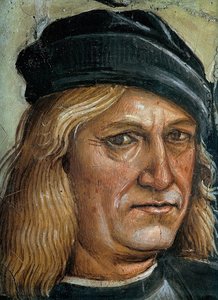
Luca Signorelli
1450 - 1523 , Italia
Datos clave
- Artistas Que Influyeron:
- Piero della Francesca
- Benedetto Bonfigli
- Fecha De Muerte: 1523
- Fecha De Nacimiento: c. 1450
- Influencia En Artistas: Miguel Ángel
- Lugar De Nacimiento: Cortona, Italia
- Movimiento Artístico: Renacimiento italiano
- Nacionalidad: Italiana
- Nombre Completo: Luca Signorelli
- Obras Notables:
- El Juicio Final
- Políptico de San Medardo
Artículos relacionados
Luca Signorelli: Renaissance Innovation & Dramatic Foreshadowing of Modern Artistic Expression
Explore the revolutionary art of Luca Signorelli, a High Renaissance master renowned for his dramatic frescoes & anatomical precision. Discover his lasting impact on art history and techniques like foreshortening.

Legado en las Paredes: Frescos Familiares que Trascienden el Tiempo
Descubre el arte del fresco muralístico para inmortalizar tu historia familiar. Expertos en frescos personalizados y técnicas ancestrales. Crea un legado visual único con .

The Enduring Legacy of Fresco: Technique, History & Artistic Expression Across Cultures
Explore the rich history & enduring legacy of fresco painting! Discover ancient techniques, Giotto's masterpieces, and modern applications. Expert insights for art lovers & professionals.

The Enduring Legacy of Fresco Painting: Techniques, History & Contemporary Relevance
Explore the rich history & enduring artistry of fresco painting – from Giotto to Michelangelo! Discover techniques, conservation efforts, & modern applications. Learn how ArtsDot brings this timeless art form to your home.
El Fresco a Través de los Siglos: Técnica, Historia y Expresión Artística Duradera
Descubre la historia y técnica del fresco, desde sus orígenes en la antigüedad hasta los maestros renacentistas. Guía completa sobre conservación, restauración y el legado artístico de este arte milenario.