

 Ver en contexto
 Enviar
 Compartir
 Detalles

 Descargar
 Similares
 Radiografía
 Presentación de diapositivas
Notario
 Other
Other 1592
1592 22.0 x 32.0 cm
 Archivos Estatales
 Ver más
Adquiera una imagen digital de alta resolución y optimizada, muy superior a la vista previa en línea.
Cada archivo es preparado meticulosamente por nuestros especialistas internos mediante el uso de herramientas avanzadas y un experto retoque manual. Nos aseguramos de que cada imagen posea una claridad excepcional, una precisión cromática impecable y un detalle minucioso.
El archivo final se entrega por correo electrónico en un plazo de 72 horas, optimizado para su uso inmediato en entornos profesionales, editoriales y de impresión. Esta es la misma calidad en la que confían los estudios de diseño, las editoriales y las galerías de primer nivel.
Imagen Digital
Descarga un archivo de alta resolución para exhibición personal, impresión y proyectos creativos. ( Comprar impresión Comprar pintura hecha a mano)
Incluido en cada pedido de imágenes digitales
Entrega digital experta, garantizada.
Al elegir ArtsDot.com, no solo está adquiriendo una imagen; está recibiendo una obra de arte digital mejorada profesionalmente, elaborada con precisión y respaldada por una garantía de satisfacción. Esto es todo lo que incluye su pedido, automáticamente:

Entrega rápida por email
Recibirá su archivo de imagen digital en alta resolución por correo electrónico en un plazo de 72 horas tras realizar su pedido, listo para su uso inmediato.

Archivo digital optimizado por IA
Su obra de arte se optimiza profesionalmente mediante herramientas avanzadas de IA y edición manual, garantizando el máximo detalle, claridad y precisión cromática.

Reenvío gratuito de por vida
¿Has borrado o perdido tu archivo por error? No te preocupes: te lo volveremos a enviar en cualquier momento, sin coste adicional.

Sin gastos de importación, siempre
Disfrute de su obra de arte al instante sin aduanas, aranceles ni gastos de envío; las descargas digitales siempre están libres de impuestos.

Garantía de fidelidad de color
Garantizamos que su imagen digital refleje los colores originales con la mayor fidelidad posible, mediante el uso de herramientas profesionales y gestión del color.

Garantía de satisfacción de 60 días
Si no está satisfecho con su imagen digital, la revisaremos o le reembolsaremos el 100% en un plazo de 60 días, sin preguntas.

100% Garantía de devolución de dinero
¿No está satisfecho? Obtenga un reembolso completo dentro de los 60 días posteriores a la recepción de su archivo digital, sin necesidad de explicaciones.

Descuentos por pedidos grandes
Compra 3 imágenes, ahorra 10% - Compra 5, ahorra 15% - Compra 10+, ahorra 20%. Ideal para proyectos creativos, galerías y agencias.
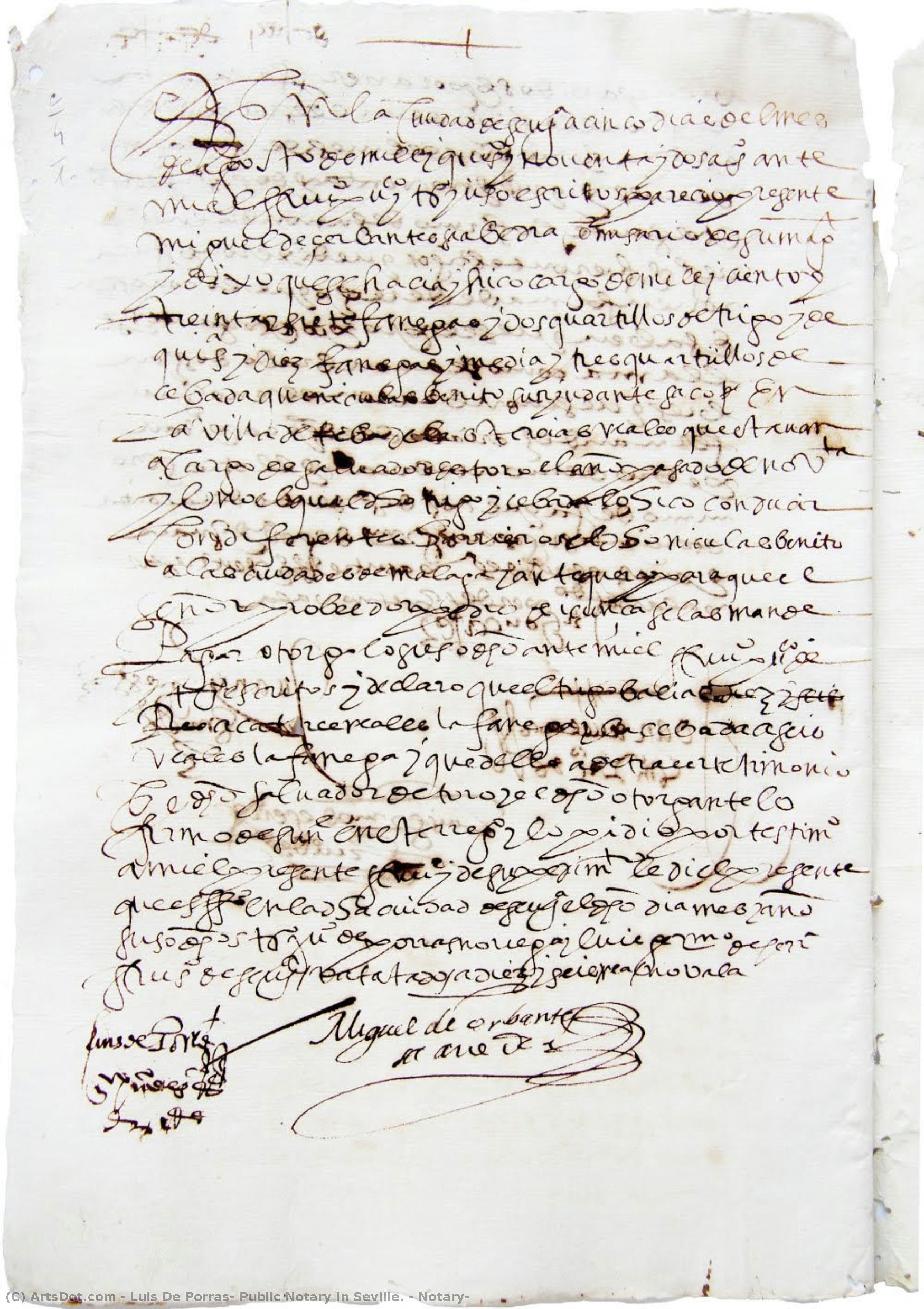
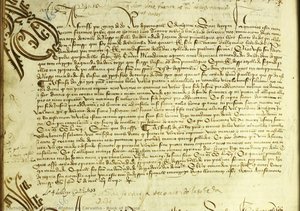
Una Ventana al Siglo XVII Español: "Notario" de Luis de Porras
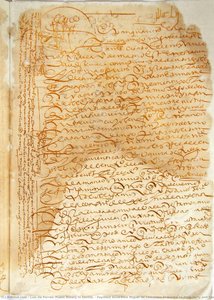
Este notable documento, titulado “Notario”, ofrece una rara y entrañable ventana al mundo legal del siglo XVI en Sevilla. Creado en 1592 por Luis de Porras, un notario público español, esto no es simplemente un registro; es un vínculo tangible con un momento crucial de la historia: una época en la que Miguel de Cervantes Saavedra, el célebre autor de *Don Quijote*, estaba sorteando complejidades legales y documentando su vida a través de canales oficiales. La obra en sí misma no es una pintura o escultura, sino un documento original meticulosamente transcrito por Porras, lo que la convierte en una forma única de arte histórico. Su importancia radica en su conexión directa con una de las figuras literarias más importantes de España.Estilo y Técnica: Caligrafía y Pergamino
El estilo es intrínsecamente el de la documentación histórica, un testimonio de las meticulosas prácticas de archivo de la época. La escritura, realizada en elegante caligrafía latina con diferentes pesos de línea y adornos, revela la habilidad y la atención al detalle del notario. La tinta de hierro gálico, utilizada comúnmente en ese momento, ha impartido un tono rico y oscuro que contrasta hermosamente con el pergamino envejecido, elaborado a partir de piel animal. La técnica es completamente manual; cada letra formada laboriosamente a mano, lo que resulta en sutiles imperfecciones y variaciones que contribuyen a su autenticidad y encanto. La falta de perspectiva y la composición plana son características de los documentos destinados a fines legales: la claridad y la legibilidad eran primordiales.Contexto Histórico y la Conexión con Cervantes
El papel de Luis de Porras como notario se extendía más allá del papeleo rutinario; fue fundamental para documentar eventos clave en la vida de Miguel de Cervantes Saavedra. Como lo demuestran otros documentos registrados por Porras (ver obras de arte y página del artista relacionadas), este documento “Notario” probablemente está relacionado con una de las transacciones legales o financieras de Cervantes. El año 1592 sitúa el documento dentro de un período de desafíos personales y profesionales significativos para Cervantes, lo que añade otra capa de intriga a su importancia histórica. Los registros de archivo revelan la participación de Porras en documentar los asuntos financieros y las representaciones legales de Cervantes, proporcionando información invaluable sobre la vida del autor más allá de sus logros literarios.Simbolismo e Impacto Emocional
Más allá de su función literal como registro legal, “Notario” conlleva un profundo peso simbólico. El pergamino envejecido, manchado y arrugado por el tiempo, representa el paso de los siglos y el poder duradero de la documentación. La escritura latina en sí misma simboliza la autoridad, la legalidad y la preservación del conocimiento. Observar este documento evoca una sensación de conexión con el pasado: un vínculo tangible con la España del siglo XVII y el mundo de Miguel de Cervantes Saavedra. La obra inspira a la contemplación sobre temas como la historia, el derecho, la literatura y la necesidad humana perdurable de registrar y preservar nuestras experiencias. Es un testimonio silencioso pero poderoso de la importancia de una documentación meticulosa para dar forma a nuestra comprensión del pasado.Obras relacionadas
![Vida De Miguel De Cervantes Saavedra (life Of Miguel De Cervantes Saavedra). Libro V De La Edición De Don Quijote (biblioteca Nacional De España) [7] — Martín Fernández De Navarrete, Arte Académico](/media/artworks/images-thumb/8c/b6/8cb67a4dd450447373a546c8dd039e57.jpg)
![La Verdadera Patria De Miguel De Cervantes (miguel De Cervantes’s True Homeland) (biblioteca Nacional De España) [4][fol.1] — Pedro José García Balboa, Renacimiento Barroco Rococó](/media/artworks/images-thumb/a6/d8/a6d842058b3ffb23732e0ff43fd89aac.jpg)
Biografía del artista
The Silent Witness of Seville: The Legacy of Luis de Porras
In the golden, sun-drenched streets of 17th-century Seville, where the scent of orange blossoms mingled with the heavy atmosphere of Spanish imperial grandeur, there existed a man whose life was defined by the precision of the pen and the weight of the seal. Luis de Porras, a public notary of profound diligence, occupied a unique position within the social fabric of the Spanish Habsburg monarchy. While history often reserves its highest honors for the poets and conquerors, De Porras operated in the vital, quiet spaces between them, serving as the essential custodian of truth during the reign of Philip II. His existence was not merely one of administrative routine; rather, he acted as a bridge between the ephemeral spoken word and the enduring permanence of the written record.
Born in Seville sometime before 1592, De Porras ascended through the rigorous legal hierarchies of his era to secure a position that granted him unparalleled access to the heartbeat of Sevillian society. As a notary, he was more than a clerk; he was an architect of legality, tasked with documenting the transactions, disputes, and agreements that fueled the economic engine of one of Europe's most prosperous cities. His work provided the structural integrity required for a complex society to function, ensuring that every shipment of grain and every transfer of property was anchored in unshakeable proof. Through his eyes, we glimpse a world of intense legal drama and meticulous social order, where the stroke of a quill could alter the fortunes of families and the stability of the royal treasury.
A Literary Intersection: Cervantes and the Notarial Record
The true historical magic of De Porras’s career lies in his unexpected intersection with the giants of Spanish literature. To study his archives is to walk alongside Miguel de Cervantes Saavedra, the master of the Spanish Golden Age. De Porras was not merely a bystander to the era of Don Quixote; he was the official hand that authenticated the very existence of Cervantes’s earthly struggles. One of the most breathtaking fragments of history preserved through his office is the authentication of documents regarding wheat and barley shipments destined for the royal treasury—a record that bears the unmistakable signature of Cervantes himself. This connection transforms De Porras from a mere bureaucrat into a vital participant in the literary landscape, providing the physical evidence that grounds the legendary author in the gritty, economic reality of his time.
Beyond these singular moments of contact, De Porras’s contribution to the cultural memory of Spain is cemented by his authorship of the Historia de Sevilla. This comprehensive chronicle serves as a monumental achievement, weaving together the foundational myths and the lived realities of Seville from its inception through the mid-17th century. In this work, the notary transitioned from a recorder of private contracts to a chronicler of public destiny. His writing reflects a deep engagement with the urban life and social customs of his city, capturing the essence of a period marked by both immense wealth and profound transition. The Historia stands as a testament to his intellectual breadth, proving that the same eye capable of spotting a discrepancy in a payment bond was equally capable of perceiving the grand narrative of a civilization.
The Artistry of the Archive
While we may not categorize De Porras as a painter of canvases, his professional output possesses an undeniable aesthetic and artistic merit. The documents he produced were masterpieces of calligraphic precision and formal elegance. In an age where the visual presentation of a document signaled its authority, De Porras employed a distinctive style characterized by ornate script and meticulous attention to detail. His use of Latin script and the careful arrangement of text on aged parchment created a visual language of power and permanence. To look upon a payment bond or a letter of agreement documented by his hand is to experience the Baroque sensibility—a fascination with complexity, texture, and the dramatic interplay of light and shadow found within the very structure of the letters themselves.
The historical significance of Luis de Porras extends far beyond the borders of Seville. He represents the essential role of the intellectual middle class in maintaining the continuity of history. His life reminds us that the grand narratives of kings and poets are built upon a foundation of smaller, meticulously recorded truths. Through his legal precision and his historical passion, De Porras ensured that the triumphs and transactions of 17th-century Spain would not vanish into the mists of time, but would remain etched in the indelible ink of the archives for all future generations to discover.
Breves datos
- Artistic Movement Or Style: Documentary Art
- Full Name: Luis de Porras
- Nationality: Spanish
- Notable Artworks: ['Payment bond from Miguel de Cervantes Saavedra to Vicente Orzuche']
- Place Of Birth: Seville, Spain

