Luis de Porras: Seville's Chronicler of Cervantes and Legal History
Luis de Porras (dates unknown) stands as a singular figure in the annals of Sevillian legal history, primarily recognized for his meticulous record-keeping during the reign of Philip II. More than just a notary—a profession vital to maintaining order and documenting transactions within the Spanish Habsburg monarchy—De Porras’s work transcended mere paperwork; it became an invaluable window into the intellectual and cultural landscape of 17th-century Spain, particularly its engagement with literature.
Born in Seville sometime before 1592 (precise birthdate remains elusive), De Porras ascended to the role of notary public, securing a position that afforded him access to legal proceedings and allowed him to observe firsthand the unfolding drama of his era. His reputation rested not solely on his professional duties but also on his literary endeavors—specifically, his authorship of “Historia de Sevilla,” a comprehensive chronicle detailing Seville’s history from its founding through the mid-century.
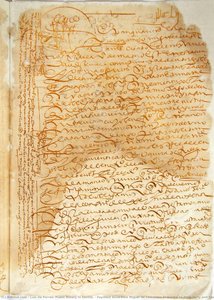
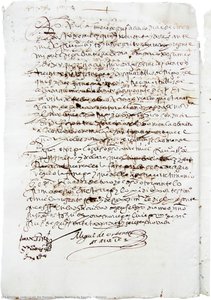
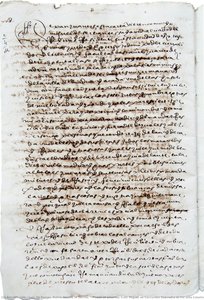
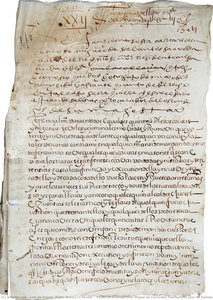
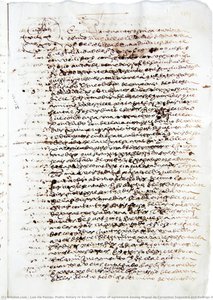
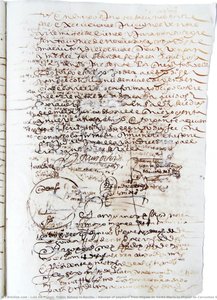
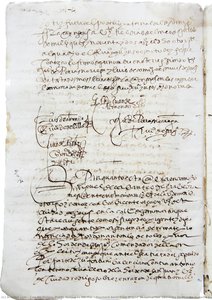
De Porras's contribution to art history is inextricably linked to his role as the notary who authenticated Miguel de Cervantes Saavedra’s statement regarding wheat and barley shipments destined for the royal treasury. This document, meticulously penned in Latin script—a testament to the scholarly traditions of the time—represents one of the most celebrated surviving legal records from Cervantes's lifetime. The signature of Cervantes himself adds an extraordinary layer of significance, cementing De Porras’s place as a witness to literary genius and bolstering the credibility of “Historia de Sevilla.”
The chronicle itself is remarkable for its detailed descriptions of Seville’s urban life, social customs, and economic activities. De Porras employed a distinctive artistic style—characterized by ornate calligraphy and meticulous attention to detail—reflecting the prevailing aesthetic sensibilities of the Baroque period. His work stands as an exemplar of documentary art, blending factual accuracy with stylistic elegance.
Furthermore, De Porras’s chronicle served as inspiration for later artists who sought to capture the spirit of Seville during Cervantes's time. It exemplifies a broader trend toward integrating historical observation into artistic expression—a practice that distinguishes De Porras from many of his contemporaries and elevates him to the status of cultural historian alongside legal scholar.
His legacy extends beyond the chronicle itself; it resides in the preservation of crucial legal documents that illuminate the complexities of Spanish governance and culture. Luis de Porras’s meticulous record-keeping ensured that future generations would possess access to primary sources documenting pivotal moments in Sevillian history and Cervantes's literary career—a contribution that continues to resonate within scholarly circles today.