

 Ver en contexto
 Enviar
 Compartir
 Detalles

 Descargar
 Similares
 Radiografía
 Presentación de diapositivas
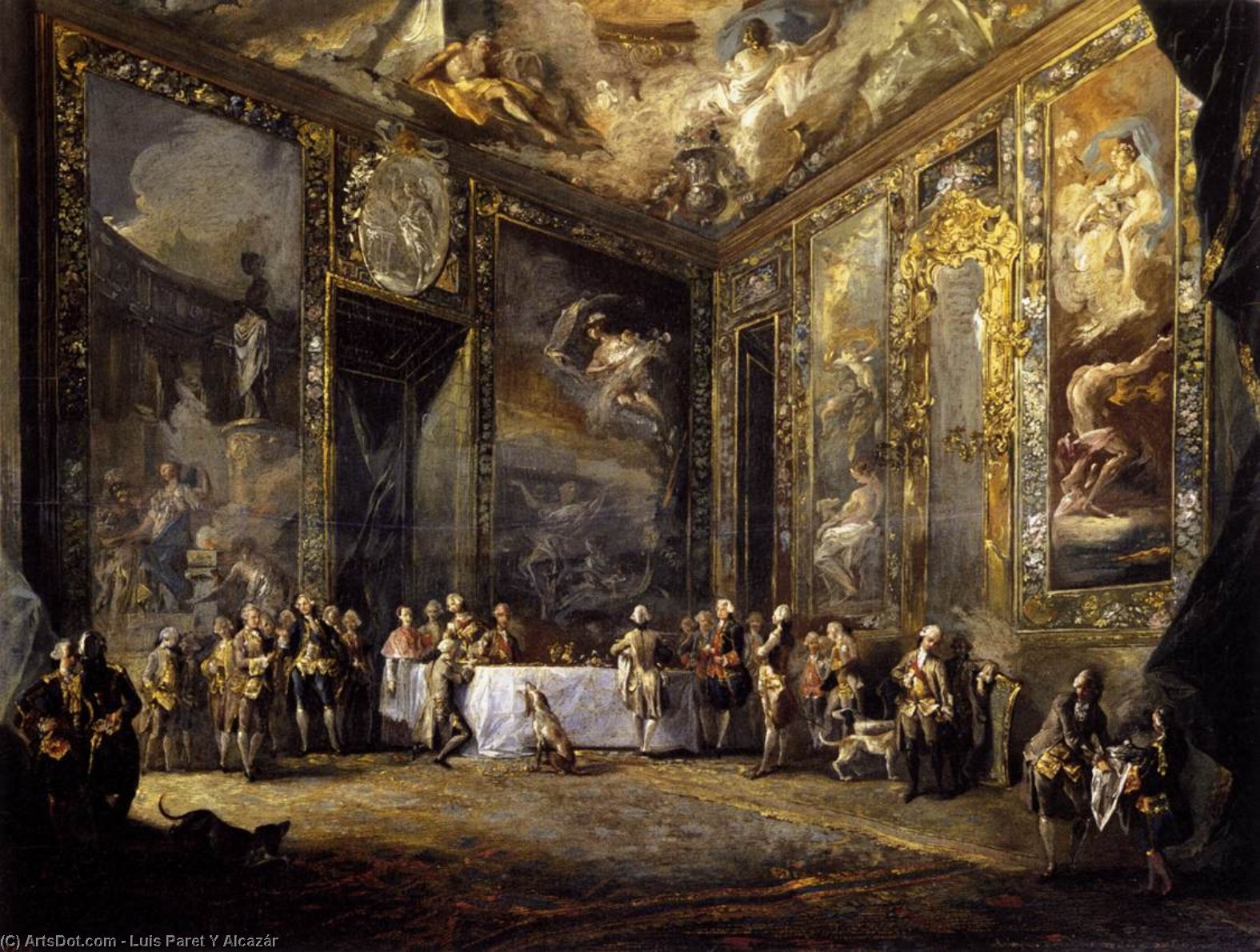
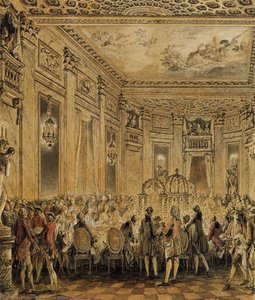
Charles III Dining before the Court
 Acrylic On Canvas
- WallArt
- Baroque Rococo
 1788
1788 50.0 x 64.0 cm
 Museo del Prado
 Ver más
Reproducción al óleo hecha a mano
Óleo sobre lienzo pintado a mano en el tamaño y marco de su elección, realizado por encargo por nuestros artistas. ( Comprar impresión Comprar imagen)




P118B $10

P118H $10

P118W $10

P438Z $10

P508JH $12

P508YH $12

P805H $10

P805Z $10

P919BZ $10

P919G $10

P919XJ $10

P959ZH $10

P968JZ $12

W106C $8

W218G $10

W218JH $8

W218Y $10

W307PJ $10

W316G $10

W316PJ $8

W316Y $10

W398PJ $8

W4111J $10

W500HY $15

W500JH $15

W692G $12

W849H $8

W940BG $15

W953PJ $8




Elija entre nuestros tamaños predefinidos que respetan las proporciones originales de la obra.

Puede ingresar sus propias dimensiones para adaptarse a un marco o espacio específico. Si el tamaño seleccionado no coincide con las proporciones de la imagen original, recortaremos la obra o extenderemos la pintura con elementos adicionales pintados a mano. Se le enviará una maqueta digital para su aprobación antes de comenzar la producción.
Tenga en cuenta que la vista previa en pantalla no refleja el recorte o la extensión reales. Solo la maqueta mostrará con precisión la composición final.
Si bien existen tamaños personalizados, recomendamos seleccionar una dimensión de la lista predefinida para preservar las proporciones originales.
Tras realizar el pedido, el equipo de ArtsDot.com enviará un correo electrónico al cliente para solicitar instrucciones y proporcionarle una vista previa del boceto.
Envío a todo el mundo () en 3-4 semanas en lugar de las 5 semanas estándar. (25 agosto). Sin comprometer la calidad.

Envío exprés gratuito a todo el mundo

Lienzo de lino de alta calidad

Seguro de envío total

Garantía de reembolso de impuestos aduaneros

Garantía de fidelidad cromática exacta

Política de devolución de 60 días (solo por defectos)

Garantía de devolución del 100% del dinero

Descuento por cantidad
 La opción de vidrio solo está disponible en tamaños inferiores a 110 cm.

Charles III Dining before the Court
Técnica de reproducción
Dimensiones de la reproducción
-


Precio total final
$ 263
Descripción de la obra
A Window into Spanish Royalty: Luis Paret y Alcázar’s “Charles III Dining Before the Court”
Luis Paret y Alcázar's "Charles III Dining Before the Court," painted in 1788, transcends mere depiction; it embodies the opulent spirit of Rococo art and offers a poignant glimpse into the social dynamics of Enlightenment Spain. Executed on a generous canvas measuring 50 x 64 cm, this monumental oil painting captures King Charles III presiding over a formal banquet at court – an event meticulously documented by historians and artists alike.
The artwork’s stylistic hallmarks are undeniably Rococo, characterized by delicate ornamentation, asymmetrical compositions, and pastel hues that prioritize beauty and elegance above strict realism. Paret skillfully employs chiaroscuro—the dramatic interplay of light and shadow—to sculpt the figures within the scene, emphasizing their postures and expressions with remarkable precision. Notice how the artist’s brushstrokes convey a sense of movement and fluidity, mirroring the lively conversation unfolding around the table.
Technical Brilliance: Mastering Vedute Painting
Paret's mastery lies particularly in his technique as a veduta painter—a genre dedicated to capturing panoramic views of urban landscapes. He meticulously renders the interior of a grand dining room, incorporating details like a towering chandelier casting shimmering light upon the attendees and a stately clock marking the passage of time. The artist’s attention to architectural precision reflects the influence of Jacques-Henri Bernard Vivant Denizard, whose studio Paret frequented during his formative years.
Historical Context: Reflecting the Age of Reason
Painted during Charles III's reign (1759–1788), “Charles III Dining Before the Court” speaks to the broader intellectual currents of the Enlightenment. The scene portrays a royal gathering intended to project an image of stability and grandeur—a deliberate effort to solidify the monarchy’s prestige amidst growing calls for reform. However, beyond political symbolism, the painting captures everyday life within the aristocratic elite, revealing social rituals and customs that defined the era.
Symbolism & Emotional Resonance: A Portrait of Privilege
The inclusion of two dogs—one positioned near the left side of the image and another closer to the right—adds a subtle layer of symbolism. Dogs were frequently depicted in aristocratic interiors as emblems of loyalty, companionship, and status. Furthermore, the painting’s serene atmosphere evokes a feeling of refined tranquility – inviting viewers to contemplate the beauty and formality of royal life. It remains a testament to Paret's ability to convey complex emotions through visual artistry.
Provenance & Legacy: A Piece of Prado History
Currently housed at Museo del Prado, Madrid, “Charles III Dining Before the Court” exemplifies the artistic achievements of Spanish Baroque and Rococo. Its meticulous detail and masterful execution continue to inspire admiration among art connoisseurs and collectors alike. Reproductions of this iconic artwork offer a captivating glimpse into a bygone era—a celebration of royal patronage and an enduring symbol of artistic excellence.
Obras relacionadas
Biografía del artista
Luis Paret y Alcázar: A Rococo Visionary Embracing the Spirit of His Time
Luis Paret y Alcázar (1746-1799) stands as a significant figure in Spanish Baroque and Rococo art, particularly celebrated for his masterful depictions of maritime landscapes—vedute—and his nuanced portrayals of everyday life. Born in Madrid, he embarked on an artistic journey shaped by formal training under Antonio González Velázquez at the Academia Real de San Fernando and further honed through association with Charles de la Traverse’s studio, fostering connections to French artistic sensibilities prevalent during his era. Despite facing challenges like exile to Puerto Rico due to political upheaval, Paret persevered in establishing himself as a respected teacher and producing works that captured the essence of Spanish society and culture.Early Training & Academic Recognition:
Paret’s formative years were spent absorbing the techniques and stylistic considerations championed by Velázquez, Spain's foremost painter, at San Fernando. His success in art competitions—winning second prize in 1760 and first prize in 1766—demonstrated his prodigious talent and cemented his position within the artistic establishment. Velázquez’s meticulous attention to detail, combined with a masterful use of chiaroscuro (the interplay of light and shadow), profoundly influenced Paret's approach to painting. He diligently studied Velázquez’s compositions, analyzing brushstrokes and color palettes—a habit that would characterize his entire artistic career.Influence of Traverse & Parisian Connections:
Charles de la Traverse’s mentorship proved pivotal, exposing Paret to the innovative approaches of French landscape painting and bolstering his understanding of contemporary artistic trends. This collaboration fostered a dialogue between Spanish and European aesthetics. De La Traverse encouraged Paret to explore new techniques and subjects—particularly those favored by the École Supérieure des Beaux-Arts in Paris—where artists were experimenting with asymmetrical compositions and dramatic lighting effects. The Parisian influence broadened Paret’s artistic horizons, prompting him to incorporate elements of French Rococo into his own distinctive style.Royal Commissions & Vedute Landscapes:
The majority of Paret's oeuvre consisted of commissions from the royal court, primarily focused on creating detailed panoramas of ports like Puerto Rico and Cádiz—a genre known as vedute—reflecting the burgeoning interest in topographical accuracy and capturing the grandeur of imperial Spain. These monumental paintings demanded considerable skill and patience, requiring Paret to meticulously render architectural features, harbor activity, and atmospheric conditions with remarkable precision. His vedute landscapes exemplify the Baroque ideal of representing reality with idealized beauty—a stylistic hallmark that distinguishes them from earlier depictions of urban spaces.Genre Paintings & Bambochadas:
Beyond monumental landscapes, Paret produced captivating genre scenes termed “bambochadas,” offering glimpses into the lives of ordinary Spaniards—particularly laborers and artisans—often depicting festive celebrations and domestic rituals. These paintings provide invaluable insight into social customs and daily life during the late eighteenth century. He skillfully captured the vibrancy of Spanish popular culture, portraying figures engaged in everyday activities with warmth and empathy—a characteristic that distinguishes his genre works from more formal portraits or mythological subjects.Notable Works & Legacy:
Among Paret’s most celebrated pieces are “Village Scene and View of Fuenterrabia,” showcasing a breathtaking depiction of coastal Spain, “Esperando los Reyes,” capturing anticipation for royal processions, and “Fernando Suárez Reguera” – a sculptural masterpiece reflecting the artist’s mastery of form and material. His works reside in prestigious museums across Europe—including Museo Nacional del Prado, Museo de Bellas Artes de Bilbao, Museo Cerralbo and Museo Lázaro Galdiano—testament to their enduring artistic merit and historical significance. Paret's legacy extends beyond his individual artworks; he played an instrumental role in nurturing talent within San Fernando Academy and influenced José Campeche, Puerto Rico’s foremost painter. He remains a compelling figure whose work continues to inspire artists and scholars alike—a testament to his profound understanding of both visual aesthetics and human experience.
Luis Paret y Alcázar
1746 - 1799 , España
Datos clave
- Artistic Movement Or Style: Rococo
- Artists Who Influenced This Artist:
- Antonio González Velázquez
- Charles de la Traverse
- Date Of Birth: Madrid, 1746
- Date Of Death: Madrid, 1799
- Full Name: Luis Paret y Alcázar
- Nationality: Español
- Notable Artworks:
- Village Scene and View of Fuenterrabia
- Esperando los Reyes
- Place Of Birth: España
Artículos relacionados

Goya: Las 25 Obras Maestras del Genio Español | Reproducciones de Arte en ArtsDot
Descubre las 25 obras maestras de Goya, el genio español. Explora retratos icónicos, 'Los Caprichos' y 'Las Pinturas Negras'. Reproducciones de arte en lienzo de alta calidad para decorar tu hogar con estilo. ¡Encuentra tu obra favorita en ArtsDot.com!
From Grandeur to Grace: Exploring the Evolution of Baroque & Rococo Art
Explore the captivating evolution from Baroque's drama to Rococo's grace! Discover key artists, characteristics & lasting influence of these art movements with expert insights at ArtsDot.

The Golden Age Reforged: Dramatic Realism & Religious Zeal in Spanish Baroque Art
Explore the dramatic world of Spanish Baroque art! Discover masters like Zurbarán & the powerful influence of religious zeal on painting techniques – a guide for collectors and enthusiasts.

The Dramatic Flourish: Exploring the Baroque Movement's Enduring Legacy in Art History
Explore the dramatic world of Baroque art! Discover iconic artists like Caravaggio & Rubens, defining techniques, and its lasting impact on art history. Expert insights for collectors & enthusiasts at ArtsDot.

Rococó: 10 Obras Maestras que Definieron una Época | Arte y Decoración en
Descubre las 10 obras maestras del Rococó que marcaron una época. Explora la elegancia de Fragonard, Boucher y Watteau en . Reproducciones de arte de calidad museo para decorar tu hogar con estilo.

