

 Ver en contexto
 Enviar
 Compartir
 Detalles

 Descargar
 Similares
 Radiografía
 Presentación de diapositivas
Maria de las Nieves Micaela Fourdinier
 Oil
Oil- WallArt
- Rococo Painting
 1782
1782 37.0 x 28.0 cm
 Museo del Prado
 Ver más
Reproducción al óleo hecha a mano
Óleo sobre lienzo pintado a mano en el tamaño y marco de su elección, realizado por encargo por nuestros artistas. ( Comprar impresión Comprar imagen)




P118B $10

P118H $10

P118W $10

P438Z $10

P508JH $12

P508YH $12

P805H $10

P805Z $10

P919BZ $10

P919G $10

P919XJ $10

P959ZH $10

P968JZ $12

W106C $8

W218G $10

W218JH $8

W218Y $10

W307PJ $10

W316G $10

W316PJ $8

W316Y $10

W398PJ $8

W4111J $10

W500HY $15

W500JH $15

W692G $12

W849H $8

W940BG $15

W953PJ $8




Elija entre nuestros tamaños predefinidos que respetan las proporciones originales de la obra.

Puede ingresar sus propias dimensiones para adaptarse a un marco o espacio específico. Si el tamaño seleccionado no coincide con las proporciones de la imagen original, recortaremos la obra o extenderemos la pintura con elementos adicionales pintados a mano. Se le enviará una maqueta digital para su aprobación antes de comenzar la producción.
Tenga en cuenta que la vista previa en pantalla no refleja el recorte o la extensión reales. Solo la maqueta mostrará con precisión la composición final.
Si bien existen tamaños personalizados, recomendamos seleccionar una dimensión de la lista predefinida para preservar las proporciones originales.
Tras realizar el pedido, el equipo de ArtsDot.com enviará un correo electrónico al cliente para solicitar instrucciones y proporcionarle una vista previa del boceto.
Envío a todo el mundo () en 3-4 semanas en lugar de las 5 semanas estándar. (27 agosto). Sin comprometer la calidad.

Envío exprés gratuito a todo el mundo

Lienzo de lino de alta calidad

Seguro de envío total

Garantía de reembolso de impuestos aduaneros

Garantía de fidelidad cromática exacta

Política de devolución de 60 días (solo por defectos)

Garantía de devolución del 100% del dinero

Descuento por cantidad
 La opción de vidrio solo está disponible en tamaños inferiores a 110 cm.

Maria de las Nieves Micaela Fourdinier
Técnica de reproducción
Dimensiones de la reproducción
-


Precio total final
$ 263
Descripción de la obra
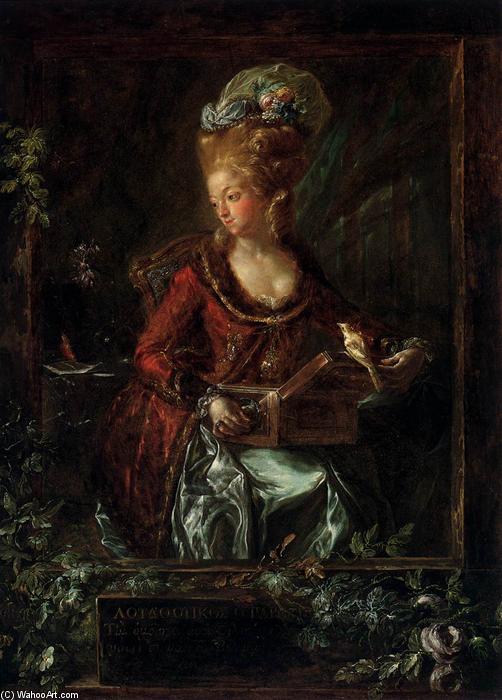
A Portrait of Grace: Maria de las Nieves Micaela Fourdinier by Luis Paret Y Alcázar
The year is 1782. Madrid, the heart of Spanish Baroque and Rococo culture, pulsates with artistic fervor. Within the walls of a grand residence, Luis Paret y Alcázar, a master painter deeply influenced by the elegance of Charles de la Traverse, meticulously captures the essence of Maria de las Nieves Micaela Fourdinier – the wife of his own esteemed artist. This exquisite portrait, now housed within the Museo del Prado, is more than just a likeness; it’s a shimmering window into the refined world of 18th-century Spanish aristocracy and a testament to Paret's extraordinary skill in rendering both form and emotion.
Pared y Alcázar’s Rococo style shines through every delicate brushstroke. The painting is an embodiment of the era’s love for soft colors, intricate details, and a sense of airy lightness. Notice how he employs oil on copper – a technique favored at the time for its ability to retain vibrant hues and create a luminous surface. This choice immediately elevates the work, lending it a luxurious quality that speaks to the wealth and status of both the subject and her husband. The composition itself is carefully balanced, drawing the eye directly to Maria’s face—a study in serene composure and subtle grace.
The Woman and Her World
Maria de las Nieves Micaela Fourdinier herself embodies the ideals of her time. Dressed in a magnificent red gown adorned with delicate lace and embroidery, she is clearly a woman of considerable means and social standing. The rich crimson fabric, contrasted against the darker tones of the background, draws attention to her figure and highlights the intricate details of her attire – a hallmark of Rococo fashion. Her elaborate headdress, featuring what appear to be feathers or plumes, further emphasizes her aristocratic bearing. The subtle smile playing on her lips suggests an inner peace and contentment, hinting at a life filled with beauty and refinement.
Beyond the immediate visual details, the portrait offers glimpses into the social context of its creation. The setting—likely a richly appointed room interior—reflects the opulence prevalent in Spanish aristocratic circles. The careful attention to detail – from the textures of the fabrics to the subtle play of light and shadow – speaks volumes about the importance placed on aesthetics and refinement during this period. It’s a world where art, fashion, and social status were inextricably linked.
Symbolism and Artistic Technique
Paret's mastery lies not only in his ability to capture likeness but also in his skillful use of symbolism and technique. The pose itself—seated with an object held gently in her hands—suggests a moment of quiet contemplation, perhaps lost in thought or engaged in a delicate activity. The lighting is expertly controlled, creating a soft, diffused glow that illuminates Maria’s face and upper body while leaving the background partially obscured, adding depth and mystery to the scene. The artist's use of chiaroscuro—the dramatic contrast between light and dark—further enhances the sense of three-dimensionality and adds emotional intensity to the portrait.
The painting is a remarkable example of Paret’s ability to blend technical skill with artistic sensitivity. He doesn’t simply depict Maria; he captures her essence, conveying not just her physical appearance but also her inner character and the social world she inhabits. It's a portrait that invites us to step back in time and experience the beauty and elegance of 18th-century Spain.
A Timeless Masterpiece – Available as a Reproduction
Today, this captivating portrait stands as a cornerstone of Spanish art history. The Museo del Prado welcomes millions of visitors each year who come to marvel at its beauty and historical significance. Recognizing the desire for art lovers worldwide to own a piece of this legacy, ArtsDot offers meticulously crafted oil painting reproductions of Luis Paret y Alcázar’s “Maria de las Nieves Micaela Fourdinier.” These reproductions are created using traditional techniques and high-quality materials, ensuring that they faithfully capture the original's exquisite detail and luminous quality. Whether you’re an art collector, an interior designer seeking to infuse your space with timeless elegance, or simply someone who appreciates the beauty of a classic masterpiece, this reproduction offers a stunning way to bring this iconic portrait into your home.
Size: 37 x 28 cm
Date: 1782
Artist: luis paret y alcázar
Obras relacionadas
Biografía del artista
Luis Paret y Alcázar: A Rococo Visionary Embracing the Spirit of His Time
Luis Paret y Alcázar (1746-1799) stands as a significant figure in Spanish Baroque and Rococo art, particularly celebrated for his masterful depictions of maritime landscapes—vedute—and his nuanced portrayals of everyday life. Born in Madrid, he embarked on an artistic journey shaped by formal training under Antonio González Velázquez at the Academia Real de San Fernando and further honed through association with Charles de la Traverse’s studio, fostering connections to French artistic sensibilities prevalent during his era. Despite facing challenges like exile to Puerto Rico due to political upheaval, Paret persevered in establishing himself as a respected teacher and producing works that captured the essence of Spanish society and culture.Early Training & Academic Recognition:
Paret’s formative years were spent absorbing the techniques and stylistic considerations championed by Velázquez, Spain's foremost painter, at San Fernando. His success in art competitions—winning second prize in 1760 and first prize in 1766—demonstrated his prodigious talent and cemented his position within the artistic establishment. Velázquez’s meticulous attention to detail, combined with a masterful use of chiaroscuro (the interplay of light and shadow), profoundly influenced Paret's approach to painting. He diligently studied Velázquez’s compositions, analyzing brushstrokes and color palettes—a habit that would characterize his entire artistic career.Influence of Traverse & Parisian Connections:
Charles de la Traverse’s mentorship proved pivotal, exposing Paret to the innovative approaches of French landscape painting and bolstering his understanding of contemporary artistic trends. This collaboration fostered a dialogue between Spanish and European aesthetics. De La Traverse encouraged Paret to explore new techniques and subjects—particularly those favored by the École Supérieure des Beaux-Arts in Paris—where artists were experimenting with asymmetrical compositions and dramatic lighting effects. The Parisian influence broadened Paret’s artistic horizons, prompting him to incorporate elements of French Rococo into his own distinctive style.Royal Commissions & Vedute Landscapes:
The majority of Paret's oeuvre consisted of commissions from the royal court, primarily focused on creating detailed panoramas of ports like Puerto Rico and Cádiz—a genre known as vedute—reflecting the burgeoning interest in topographical accuracy and capturing the grandeur of imperial Spain. These monumental paintings demanded considerable skill and patience, requiring Paret to meticulously render architectural features, harbor activity, and atmospheric conditions with remarkable precision. His vedute landscapes exemplify the Baroque ideal of representing reality with idealized beauty—a stylistic hallmark that distinguishes them from earlier depictions of urban spaces.Genre Paintings & Bambochadas:
Beyond monumental landscapes, Paret produced captivating genre scenes termed “bambochadas,” offering glimpses into the lives of ordinary Spaniards—particularly laborers and artisans—often depicting festive celebrations and domestic rituals. These paintings provide invaluable insight into social customs and daily life during the late eighteenth century. He skillfully captured the vibrancy of Spanish popular culture, portraying figures engaged in everyday activities with warmth and empathy—a characteristic that distinguishes his genre works from more formal portraits or mythological subjects.Notable Works & Legacy:
Among Paret’s most celebrated pieces are “Village Scene and View of Fuenterrabia,” showcasing a breathtaking depiction of coastal Spain, “Esperando los Reyes,” capturing anticipation for royal processions, and “Fernando Suárez Reguera” – a sculptural masterpiece reflecting the artist’s mastery of form and material. His works reside in prestigious museums across Europe—including Museo Nacional del Prado, Museo de Bellas Artes de Bilbao, Museo Cerralbo and Museo Lázaro Galdiano—testament to their enduring artistic merit and historical significance. Paret's legacy extends beyond his individual artworks; he played an instrumental role in nurturing talent within San Fernando Academy and influenced José Campeche, Puerto Rico’s foremost painter. He remains a compelling figure whose work continues to inspire artists and scholars alike—a testament to his profound understanding of both visual aesthetics and human experience.
Luis Paret y Alcázar
1746 - 1799 , España
Datos clave
- Artistic Movement Or Style: Rococo
- Artists Who Influenced This Artist:
- Antonio González Velázquez
- Charles de la Traverse
- Date Of Birth: Madrid, 1746
- Date Of Death: Madrid, 1799
- Full Name: Luis Paret y Alcázar
- Nationality: Español
- Notable Artworks:
- Village Scene and View of Fuenterrabia
- Esperando los Reyes
- Place Of Birth: España
Artículos relacionados

Goya: Las 25 Obras Maestras del Genio Español | Reproducciones de Arte en ArtsDot
Descubre las 25 obras maestras de Goya, el genio español. Explora retratos icónicos, 'Los Caprichos' y 'Las Pinturas Negras'. Reproducciones de arte en lienzo de alta calidad para decorar tu hogar con estilo. ¡Encuentra tu obra favorita en ArtsDot.com!

Rococó: 10 Obras Maestras que Definieron una Época | Arte y Decoración en
Descubre las 10 obras maestras del Rococó que marcaron una época. Explora la elegancia de Fragonard, Boucher y Watteau en . Reproducciones de arte de calidad museo para decorar tu hogar con estilo.

La Estética Rococó: Opulencia, Rebelión y Placer en el Arte del Siglo XVIII
Descubre la fascinante estética rococó: su historia, características clave y los artistas más influyentes del siglo XVIII. Un análisis profundo para amantes del arte y coleccionistas.
The Allure of Elegance in Art: A Historical & Aesthetic Exploration of Refinement & Grace
Explore the exquisite world of Rococo art! Discover its history, masters (Watteau, Boucher & more), and defining elegance. Expert insights for collectors seeking museum-quality reproductions & custom portraits.
Rafael de Penagos: A Study in Spanish Portraiture & Artistic Identity
Explore the life & art of Rafael de Penagos, a leading Spanish Art Deco illustrator. Discover his iconic 'Penagos Woman', commercial work, and lasting legacy. Learn about this pivotal figure in 20th-century Spanish art history.

