

 Ver en contexto
 Enviar
 Compartir
 Detalles

 Descargar
 Similares
 Radiografía
 Presentación de diapositivas
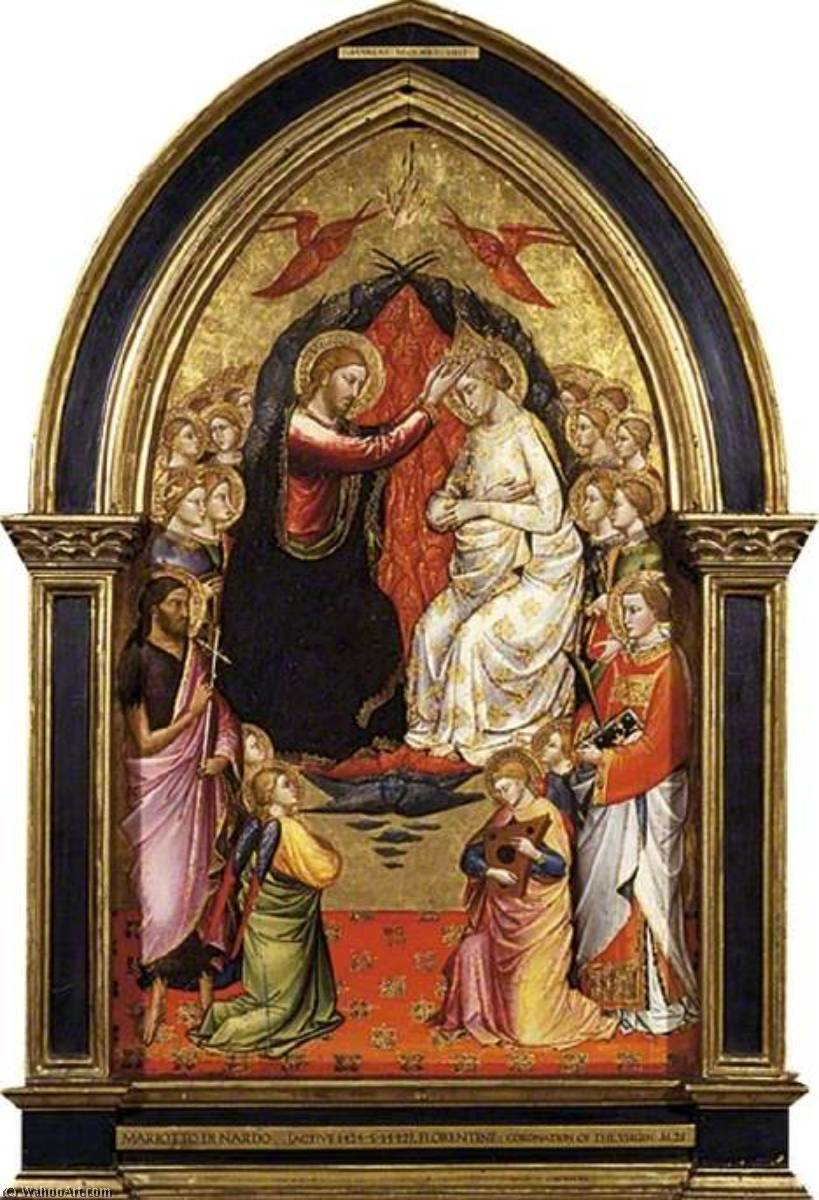
The Coronation of the Virgin
 Oil On Canvas
- WallArt
- Late Gothic Style
 81.0 x 52.0 cm
 Fitzwilliam College
 Ver más
Giclée / Impresión de arte
Impresiones giclée o en lienzo de calidad de museo con producción rápida y opciones de acabado flexibles. ( Comprar pintura hecha a mano Comprar imagen)




P118B $10

P118H $10

P118W $10

P438Z $10

P508JH $12

P508YH $12

P805H $10

P805Z $10

P919BZ $10

P919G $10

P919XJ $10

P959ZH $10

P968JZ $12

W106C $8

W218G $10

W218JH $8

W218Y $10

W307PJ $10

W316G $10

W316PJ $8

W316Y $10

W398PJ $8

W4111J $10

W500HY $15

W500JH $15

W692G $12

W849H $8

W940BG $15

W953PJ $8




Elija entre nuestros tamaños predefinidos que respetan las proporciones originales de la obra.

Puede introducir sus propias dimensiones para adaptarse a un marco o espacio específico. Si el tamaño seleccionado no coincide con las proporciones de la imagen original, recortaremos la obra de arte o extenderemos la imagen con un borde con efecto espejo o de color sólido. Se enviará una maqueta digital para su aprobación antes de que comience la producción.
Tenga en cuenta que la vista previa en pantalla no refleja el recorte o la extensión real. Solo la maqueta mostrará con precisión la composición final.
Aunque existen tamaños personalizados, recomendamos seleccionar una dimensión de la lista predefinida para preservar las proporciones originales.
Envío a todo el mundo () en 2 semanas en lugar de las 4/5 semanas estándar. (27 agosto)

Envío exprés gratuito a todo el mundo

Lienzo de lino de alta calidad

Seguro de envío total

Garantía de reembolso de impuestos aduaneros

Garantía de fidelidad cromática exacta

Política de devolución de 60 días (solo por defectos)

Garantía de devolución del 100% del dinero

Descuento por cantidad
 La opción de vidrio solo está disponible en tamaños inferiores a 110 cm.

The Coronation of the Virgin
Giclée / Impresión de arte
Dimensiones de la reproducción
-


Precio total final
$ 62
Mariotto di Nardo: Bridging Gothic Splendor and Renaissance Promise
The Coronation of the Virgin by Mariotto di Nardo stands as a pivotal artwork, marking a crucial juncture between the opulent formalism of late Gothic painting and the burgeoning naturalism that would soon dominate the Florentine Renaissance. Executed around 1408, this monumental tempera panel—now housed in The Fitzwilliam Museum—offers a glimpse into an artistic landscape grappling with profound transformations, reflecting both established traditions and nascent explorations of humanist ideals.- Subject Matter: The painting depicts the Virgin Mary enthroned amidst a procession of angels and saints, commemorating her divine coronation – a theme deeply rooted in Marian devotion prevalent throughout medieval Europe.
- Style & Technique: Mariotto’s style embodies the Gothic twilight, characterized by flattened perspectives, stylized drapery, and an emphasis on decorative ornamentation. However, subtle innovations foreshadow the stylistic breakthroughs of artists like Piero della Francesca and Masaccio, hinting at a move towards greater realism and spatial depth.
- Historical Context: Florence during Mariotto’s time was experiencing rapid urbanization and civic pride fueled by papal patronage—particularly evident in the ambitious construction of Brunelleschi's Duomo. Artistic endeavors served as expressions of Florentine identity and spiritual aspiration, mirroring broader cultural currents.
- Symbolism: The coronation itself symbolizes Mary’s exaltation as Queen of Heaven and Mother of God – a central dogma within Christian theology. Angels bearing musical instruments represent divine harmony and praise, underscoring the sanctity of the occasion.
- Emotional Impact: Mariotto's Coronation aims to inspire awe and reverence in the viewer, conveying the profound spiritual significance of Mary’s role as intermediary between God and humanity. The painting’s serene beauty speaks to a timeless fascination with religious iconography and artistic excellence.
Further Exploration
For more information on Mariotto di Nardo and his artistic legacy, consider visiting these resources:Obras relacionadas
Biografía del artista
A Florentine Visionary of the Gothic Twilight
Mariotto di Nardo, a name perhaps less resonant than those of his Renaissance successors, nevertheless occupies a crucial position in the transition between the elegant world of late Gothic painting and the burgeoning naturalism that would define the 15th century. Born around 1365 in Florence—precise birthdates remain elusive, shrouded in the mists of archival records—Mariotto emerged during a period of immense artistic dynamism, witnessing firsthand the flowering of Florentine Gothic style amidst the grandeur of the Duomo and the fervent piety of its ecclesiastical patrons. His career spanned from approximately 1394 to 1424, marking him as one of the most prolific artists active in Florence during this formative epoch—a time when stylistic experimentation mingled with unwavering devotion to established traditions. He wasn’t merely a passive recipient of artistic currents; he was a skilled interpreter and adapter, imbuing his work with a distinctive sensibility that captivated his contemporaries and continues to fascinate art historians today. While biographical details concerning Mariotto’s personal life remain sparse—records documenting his family connections and domestic circumstances are scant—his artistic output speaks volumes about the evolving aesthetic landscape of Florence and its profound impact on subsequent artistic developments.Family, Apprenticeship, and Early Influences
Mariotto’s lineage traced back to Andrea di Cione di Arcangelo—Orcagna—a sculptor whose monumental works graced both Florence and Pisa, establishing a tradition of craftsmanship that would permeate Mariotto’s formative years. His father, Nardo di Cione, initially practiced stonecutting in Siena and Volterra before dedicating himself to painting, becoming Mariotto’s first teacher and instilling in him an unwavering respect for technical precision—a characteristic that would become synonymous with his artistic style. This familial connection to sculptural artistry undoubtedly shaped Mariotto’s early development, fostering a keen awareness of form and proportion. The influence of Orcagna’s dramatic compositions and refined draftsmanship is subtly discernible in Mariotto’s earliest paintings, though he swiftly cultivated his own distinctive voice—a testament to his innate talent and intellectual curiosity. Beyond his immediate family, Mariotto absorbed the stylistic influences prevalent in Florence during his youth—primarily those championed by Spinello Aretino and Niccolò di Pietro Gerini. These artists—whose dynamic figures and vibrant color palettes exerted considerable sway over Florentine art—provided Mariotto with invaluable models for artistic expression. The resulting synthesis of Gothic formalism and expressive dynamism would characterize Mariotto’s oeuvre throughout his career, distinguishing him from many of his peers and cementing his place as a pivotal figure in the transition to Renaissance aesthetics.A Prolific Workshop and Diverse Commissions
Mariotto swiftly established himself as one of Florence’s most sought-after painters—a reputation underpinned by an astonishing volume of commissions spanning ecclesiastical patronage, civic commemoration, and aristocratic embellishment. Documents reveal Mariotto’s involvement in decorating the Duomo of Florence—though much of his monumental fresco cycle has regrettably vanished due to fire and subsequent reconstruction efforts—demonstrating his mastery of architectural grandeur and his ability to convey profound spiritual narratives. Furthermore, he undertook significant projects for Santa Maria Maggiore and Orsanmichele—two Florentine churches renowned for their sculptural ensembles and civic significance—solidifying his position as a leading artist within the city’s artistic elite. These commissions underscored Mariotto’s versatility—his capacity to adapt his style to diverse contexts and audiences—and testified to his unwavering commitment to fulfilling the aspirations of his patrons. Beyond monumental fresco decoration, Mariotto excelled in panel painting—producing altarpieces that showcased exquisite craftsmanship and evocative imagery—particularly the celebrated Madonna della Neve chapel altarpiece commissioned by the Board of Works in 1398. His artistic output extended beyond religious iconography; he engaged in decorative projects for aristocratic residences—enhancing their splendor with lavish frescoes and intricate sculptural embellishments. As a member of both the Physicians and Apothecaries Guild and the Company of Saint Luke, Mariotto’s social standing reflected his prominence within Florentine society—a testament to his artistic reputation and professional acumen.Stylistic Innovations and Lasting Legacy
While firmly rooted in the Gothic tradition—characterized by elongated figures, stylized drapery, and flattened perspectives—Mariotto di Nardo subtly challenged established conventions through innovative techniques that foreshadowed the stylistic breakthroughs of the early Renaissance. Notably, he experimented with oblique perspective—a technique that created a sense of depth and spatial recession without adhering to the mathematically precise linear perspective championed by Leonardo da Vinci and Michelangelo—introducing a nuanced approach to representation that distinguished him from many of his contemporaries. Moreover, Mariotto favored desolate rocky landscapes as backgrounds for his compositions—adding dramatic visual impact and conveying an atmosphere of solemn contemplation—a stylistic choice that departed significantly from the lush gardens and idealized vistas prevalent in earlier Gothic art. His figures possessed a palpable dynamism—infused with nervous energy and emotional intensity—reflecting a shift toward greater psychological realism—a hallmark of Renaissance artistic expression. Although subsequent critics questioned Mariotto’s stylistic consistency—arguing that his later works lacked the expressive fervor of his early masterpieces—his enduring legacy remains undeniable—representing a crucial nexus between Gothic formalism and Renaissance naturalism. His contribution to Florentine art history is commemorated by surviving altarpieces—such as those housed in Santa Maria Maggiore and Orsanmichele—which exemplify Mariotto’s artistic vision and technical prowess—serving as tangible reminders of his pivotal role in shaping the aesthetic landscape of Florence during its transition to a new era. Mariotto di Nardo's influence continues to resonate through subsequent generations of artists, securing his place among the most important figures in Florentine Gothic art—a testament to his enduring artistic significance. ## Surviving Masterpieces A remarkable corpus of Mariotto’s paintings has survived—providing invaluable insights into his artistic style and creative process. Among these treasures are:- The Madonna della Neve Chapel Altarpiece (Florence): Demonstrating Mariotto's mastery of composition and color, this monumental fresco remains a cornerstone of Florentine Gothic art.
- The Assumption of the Virgin Altarpiece (Fiesole): Executed in 1402–4, this altarpiece showcases Mariotto’s refined draftsmanship and expressive dynamism—a testament to his artistic vision.
- The Chapel Altarpiece of Saint Reparata (Florence): Completed around 1402–4, this fresco exemplifies Mariotto's ability to convey solemn contemplation through evocative imagery.
- The Polyptych from the Convent of S. Gaggio (Florence): This masterpiece embodies Mariotto’s stylistic evolution—reflecting his embrace of Renaissance principles while retaining elements of Gothic tradition.
- The Polyptych from the Certosa del Galluzzo (Florence): Another significant example of Mariotto's oeuvre, this polyptych exemplifies his meticulous craftsmanship and artistic sensitivity.
Mariotto di Nardo
1365 - 1424 , Italia
Datos clave
- Artistic Movement Or Style: Gótico florentino
- Artists Who Influenced This Artist:
- Lorenzo Monaco
- Spinello Aretino
- Niccolò di Pietro Gerini
- Date Of Birth: Antes de 1365
- Date Of Death: Entre 1424 y 1427
- Full Name: Mariotto di Nardo
- Nationality: Italiano
- Notable Artworks:
- Deploración
- Cristo en el Sepulcro
- Escenas de la vida de Cristo
- Place Of Birth: Florencia, Italia
Artículos relacionados

Giotto di Bondone: Las 25 Obras Maestras que Definieron el Renacimiento | ArtsDot
Descubre las 25 obras maestras de Giotto di Bondone, el pionero del Renacimiento. Explora la historia, técnica y simbolismo de sus frescos italianos más icónicos. Encuentra reproducciones de arte exclusivas para decorar tu hogar en ArtsDot.com.
La Sombra de la Fe: Explorando la Intensidad Espiritual y la Innovación Arquitectónica del Arte Gótico
Descubre la profunda espiritualidad y la innovadora arquitectura del arte gótico. Explora la Basílica de Saint-Denis, su simbolismo cristiano y el legado duradero de este fascinante estilo. Análisis experto en ArtsDot.
El Crepúsculo Radiante de la Visión Medieval: Fe, Forma y Emotividad en el Arte Gótico Tardío (c. 1300-1500)
Explore el esplendor del arte gótico tardío (c. 1300-1500). Descubra la síntesis de fe, forma y emoción en la pintura internacional, los retablos medievales y la influencia de Giotto. Análisis experto.
La Biennale de Venecia: 25 Obras Maestras para Inspirar tu Hogar | ArtsDot
Descubre las 25 obras maestras de la Bienal de Venecia. Explora la historia, artistas y técnicas detrás de iconos del arte renacentista, moderno y contemporáneo. Encuentra reproducciones de alta calidad e inspira tu hogar con ArtsDot.com.
Jacob Henricus Maris: A Master of Dutch Atmospheric Realism & the Intimate Landscape
Explore the captivating world of Jacob Henricus Maris, a leading figure of the Dutch Hague School. Discover his atmospheric landscapes, signature brushstrokes & lasting influence on 19th-century art. Learn more at ArtsDot.

