

 Ver en contexto
 Enviar
 Compartir
 Detalles

 Descargar
 Similares
 Radiografía
 Presentación de diapositivas
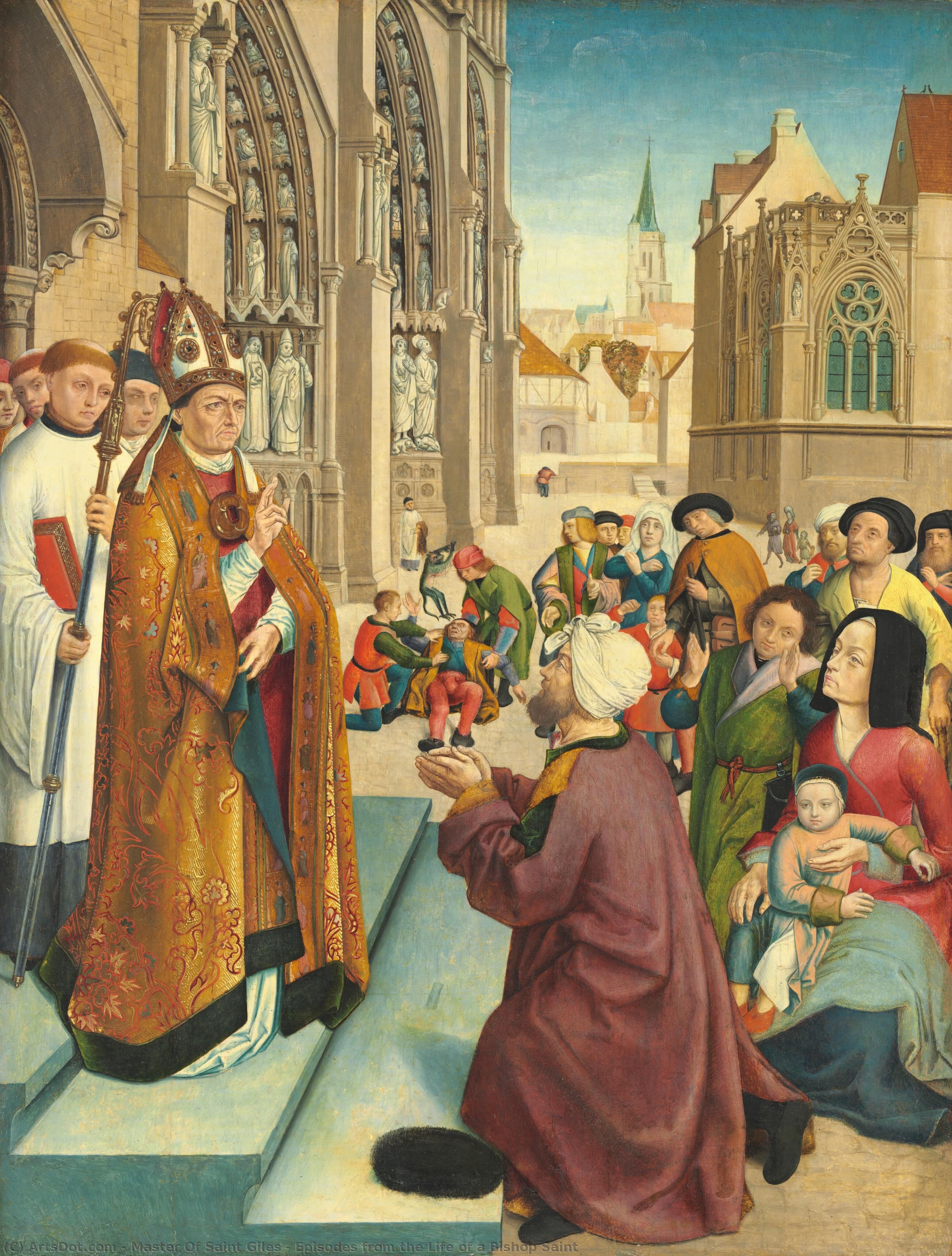
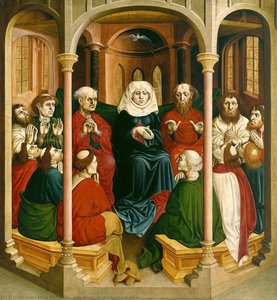
Episodes from the Life of a Bishop Saint
 Late Gothic
 1500
1500 76.0 x 63.0 cm
 Ver más
Reproducción al óleo hecha a mano
Óleo sobre lienzo pintado a mano en el tamaño y marco de su elección, realizado por encargo por nuestros artistas. ( Comprar impresión Comprar imagen)




































Elija entre nuestros tamaños predefinidos que respetan las proporciones originales de la obra.

Puede ingresar sus propias dimensiones para adaptarse a un marco o espacio específico. Si el tamaño seleccionado no coincide con las proporciones de la imagen original, recortaremos la obra o extenderemos la pintura con elementos adicionales pintados a mano. Se le enviará una maqueta digital para su aprobación antes de comenzar la producción.
Tenga en cuenta que la vista previa en pantalla no refleja el recorte o la extensión reales. Solo la maqueta mostrará con precisión la composición final.
Si bien existen tamaños personalizados, recomendamos seleccionar una dimensión de la lista predefinida para preservar las proporciones originales.
Tras realizar el pedido, el equipo de ArtsDot.com enviará un correo electrónico al cliente para solicitar instrucciones y proporcionarle una vista previa del boceto.
Envío a todo el mundo () en 3-4 semanas en lugar de las 5 semanas estándar. (2 septiembre). Sin comprometer la calidad.

Envío exprés gratuito a todo el mundo

Lienzo de lino de alta calidad

Seguro de envío total

Garantía de reembolso de impuestos aduaneros

Garantía de fidelidad cromática exacta

Política de devolución de 60 días (solo por defectos)

Garantía de devolución del 100% del dinero

Descuento por cantidad
 La opción de vidrio solo está disponible en tamaños inferiores a 110 cm.

Episodes from the Life of a Bishop Saint
Técnica de reproducción
Dimensiones de la reproducción
-


Precio total final
$ 538
Obras relacionadas

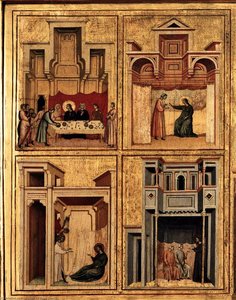
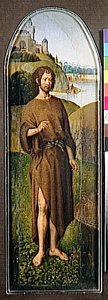
Biografía del artista
The Enigmatic Master of Saint Giles: A Vision in Late Gothic Detail
The identity of the “Master of Saint Giles” remains one of art history’s most enduring mysteries, a captivating puzzle wrapped within layers of legend and tantalizing hints. Active primarily in Paris during the early 16th century, this anonymous artist produced a small but remarkably significant body of work – predominantly panels depicting scenes from the life of Saint Giles, the hermit, alongside other religious narratives. His style, characterized by an exquisite delicacy and meticulous attention to detail, reveals a profound influence from both Netherlandish painting and the evolving traditions of French late Gothic art, creating a unique visual language that continues to fascinate scholars today.
Early accounts, notably those compiled by Max Friedländer in the early 20th century, established the “Master” as a Franco-Flemish painter trained in the Low Countries who later settled in France. This theory gained considerable traction due to stylistic similarities with works by artists like Rogier van der Weyden and Jean Hey (the Master of Moulins), suggesting a shared artistic lineage. However, more recent research has challenged this straightforward narrative, proposing that the artist may have been a French painter deeply influenced by Netherlandish techniques – perhaps even trained in the Netherlands before returning to France. The presence of Parisian landscapes within some panels, alongside the distinctive style of his figures, hints at a local sensibility and engagement with the urban environment.
The surviving works—primarily the “Episodes from the Life of a Bishop Saint” (National Gallery, London), two panels depicting scenes from Saint Giles’s life (National Gallery of Art, Washington D.C.), and a Betrayal of Christ in Brussels—offer invaluable insights into the artist's creative process. These panels are not merely representations of biblical stories; they are meticulously constructed narratives filled with symbolic detail and psychological depth. The figures are rendered with remarkable realism, capturing subtle expressions and gestures that convey a wealth of emotion. The use of light is particularly noteworthy – it’s diffused and atmospheric, creating a sense of intimacy and drawing the viewer into the scene. The artist's mastery of texture—evident in the rendering of fabrics, wood, and skin—further enhances the visual impact of his work.
A Tapestry of Influences: Netherlandish Roots and French Sensibilities
The Master’s style is a compelling synthesis of influences. His meticulous attention to detail and realistic depiction of interiors clearly stem from the burgeoning realism of Netherlandish painting, particularly the work of Rogier van der Weyden and his followers. The artist's use of perspective, his careful observation of anatomy, and his ability to capture the nuances of human expression are all hallmarks of this tradition. However, the Master’s paintings also possess a distinctly French sensibility – a sensitivity to color, a decorative elegance, and an interest in portraying everyday life that reflects the artistic trends developing in Paris at the time.
The incorporation of Parisian landscapes into some panels—such as the depiction of Pontoise in the “King Hunting” panel—suggests a deep connection to his local environment. This element distinguishes him from many Netherlandish artists who primarily focused on religious subjects and idealized settings. Furthermore, the artist’s use of grisaille figures – small, monochrome portraits integrated into larger compositions—is another characteristic feature of French late Gothic art, demonstrating his familiarity with established artistic conventions.
The Legend of Saint Giles: A Shifting Narrative
The story surrounding the Master of Saint Giles is inextricably linked to the legend of Saint Giles himself. The saint, a hermit who lived in the Rhône valley during the 7th century, became a popular figure throughout Europe, revered for his piety, humility, and miraculous healing abilities. The anonymous legend that has survived through centuries of transmission presents a complex and often contradictory narrative, involving a royal connection to Charlemagne and a series of miracles attributed to the saint’s intervention.
While much of this legend is likely embellished or fabricated, it played a crucial role in shaping the artist's reputation and attracting pilgrims to his panels. The tale of Charlemagne’s hidden sin—revealed by Saint Giles during Mass—became a central element of the cult, adding an aura of mystery and intrigue to the saint’s story. The historical dating of this legend is itself debated, with some scholars suggesting that it originated in the 10th century, long after Saint Giles's death.
A Legacy of Mystery: The Enduring Appeal of the Master
Despite the lack of definitive biographical information, the “Master of Saint Giles” remains one of the most intriguing figures in French Renaissance art. His paintings are prized for their technical skill, emotional depth, and evocative atmosphere. The mystery surrounding his identity—whether he was a Franco-Flemish artist or a purely French painter—continues to fuel scholarly debate and inspire new interpretations of his work.
The Master’s influence extends beyond the individual panels that survive. His meticulous attention to detail and his ability to capture the nuances of human experience have resonated with artists throughout the centuries, influencing generations of painters who sought to emulate his style. His legacy endures not only in the art museums where his paintings are displayed but also in the ongoing fascination they inspire—a testament to the enduring power of a mysterious artist whose identity remains shrouded in intrigue.

master of saint giles
France
Datos clave
- Artistic Movement Or Style: Naive Painting
- Artists Or Movements Influenced By This Artist: ['Toussaint Paintings']
- Artists Who Influenced This Artist: ['Netherlandish painting']
- Date Of Birth: Paris, France (c. 1820)
- Full Name: Raphaël Toussaint
- Nationality: French
- Notable Artworks: ['Episodes from the Life of a Bishop Saint']
- Place Of Birth: Paris, France
Artículos relacionados

Oil on Panel: A Historical Survey of Technique, Support & Aesthetic Evolution
Explore the rich history of oil on panel painting! Discover Renaissance techniques, support structures & aesthetic evolution. Expert insights for art collectors and enthusiasts.
Las 10 Obras Maestras al Óleo sobre Panel que Transformaron la Historia del Arte |
Descubre las 10 obras maestras al óleo sobre panel que revolucionaron la historia del arte. Explora a Jan van Eyck, Botticelli y otros genios renacentistas. Reproducciones de arte exclusivas en para transformar tu hogar.
El Enduring Legado de la Tabla: Una Revisión Histórica de la Técnica, el Soporte y el Impacto Estético del Óleo sobre Madera
Descubre la fascinante historia de la pintura sobre tabla y óleo sobre madera. Explora técnicas ancestrales, artistas clave del Renacimiento y consejos para conservar estas obras maestras. ¡Un viaje por el legado artístico!

Oil on Board: A Historical Survey of Technique, Aesthetic Qualities & Enduring Appeal
Explore the rich history of oil on board painting! Discover techniques, aesthetic qualities & enduring appeal from early masters to modern practice. Expert insights for collectors and art enthusiasts.

The Enduring Legacy of Oil on Canvas: Technique, History & Aesthetic Impact
Explore the rich history & techniques of oil painting – from Renaissance masters to Impressionism. Discover pigments, layering methods, and why this timeless medium endures. Expert insights for artists & art enthusiasts.

