 Ver en contexto
 Enviar
 Compartir
 Detalles

 Descargar
 Similares
 Radiografía
 Presentación de diapositivas
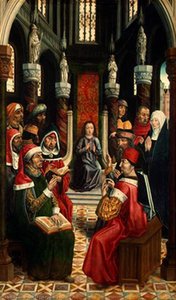
Cristo entre los doctores
 Óleo sobre tabla
- Spanish Renaissance
 1495
1495 136.0 x 93.0 cm
 Galería Nacional de Arte
 Ver más
Giclée / Impresión de arte
Impresiones giclée o en lienzo de calidad de museo con producción rápida y opciones de acabado flexibles. ( Comprar pintura hecha a mano Comprar imagen)




P118B $10

P118H $10

P118W $10

P438Z $10

P508JH $12

P508YH $12

P805H $10

P805Z $10

P919BZ $10

P919G $10

P919XJ $10

P959ZH $10

P968JZ $12

W106C $8

W218G $10

W218JH $8

W218Y $10

W307PJ $10

W316G $10

W316PJ $8

W316Y $10

W398PJ $8

W4111J $10

W500HY $15

W500JH $15

W692G $12

W849H $8

W940BG $15

W953PJ $8




Elija entre nuestros tamaños predefinidos que respetan las proporciones originales de la obra.

Puede introducir sus propias dimensiones para adaptarse a un marco o espacio específico. Si el tamaño seleccionado no coincide con las proporciones de la imagen original, recortaremos la obra de arte o extenderemos la imagen con un borde con efecto espejo o de color sólido. Se enviará una maqueta digital para su aprobación antes de que comience la producción.
Tenga en cuenta que la vista previa en pantalla no refleja el recorte o la extensión real. Solo la maqueta mostrará con precisión la composición final.
Aunque existen tamaños personalizados, recomendamos seleccionar una dimensión de la lista predefinida para preservar las proporciones originales.
Envío a todo el mundo () en 2 semanas en lugar de las 4/5 semanas estándar. (26 agosto)

Envío exprés gratuito a todo el mundo

Lienzo de lino de alta calidad

Seguro de envío total

Garantía de reembolso de impuestos aduaneros

Garantía de fidelidad cromática exacta

Política de devolución de 60 días (solo por defectos)

Garantía de devolución del 100% del dinero

Descuento por cantidad
 La opción de vidrio solo está disponible en tamaños inferiores a 110 cm.

Cristo entre los doctores
Giclée / Impresión de arte
Dimensiones de la reproducción
-


Precio total final
$ 62
Descripción de la pieza
Una Obra Maestral de la Edad Media Tardía Española: Cristo Entre los Doctores
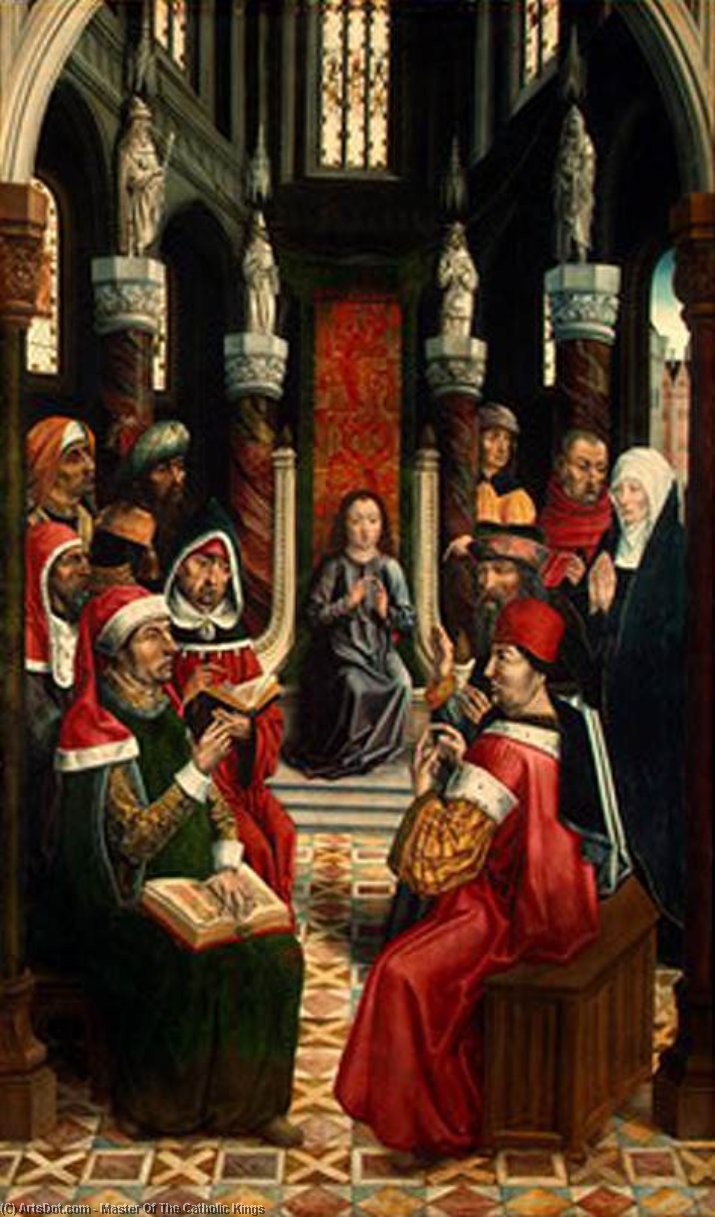
La pintura *Cristo Entre los Doctores*, creada por el Maestro del Retablo de los Reyes Católicos alrededor de 1495, representa un episodio clave del cristianismo occidental y una expresión excepcional del arte español de finales del siglo XV. Esta impresionante obra maestra, ahora alojada en la Galería Nacional de Arte en Washington D.C., ofrece una ventana fascinante al espíritu creativo de la época y a las preocupaciones estéticas que dominaban el panorama artístico europeo. Más allá de su belleza visual, *Cristo Entre los Doctores* posee un profundo significado simbólico que invita a una reflexión sobre la sabiduría divina y el papel del conocimiento en la formación espiritual humana.Origen Histórico y Contexto Cultural
El cuadro fue encargado para adornar un templo religioso en Valladolid, ciudad favorita de Fernando II de Aragón e Isabel I de Castilla, los llamados Reyes Católicos. Estos monarcas eran fervientes defensores de la Iglesia Católica y su reinado marcó una etapa crucial en la historia española, caracterizada por el impulso al arte sacro y la promoción de las artes liberales. La pintura refleja esta atmósfera intelectual y religiosa, reflejando las tendencias artísticas que surgieron en Castilla durante ese período, influenciadas por el estilo gótico internacional y por los ideales renacentistas provenientes de Italia. El matrimonio entre Fernando II y Isabel I simbolizó una alianza estratégica entre dos poderosos estados cristianos, fortaleciendo la unidad política y cultural del reino español.Estilo Artístico y Técnicas Pictóricas
El Maestro del Retablo empleó técnicas pictóricas avanzadas para lograr efectos de profundidad y luminosidad que eran innovadores para su época. El uso magistral del óleo sobre tabla permitió obtener colores vibrantes y una textura suave, creando una imagen realista que capturaba la atmósfera espiritual del templo. La composición sigue las convenciones tradicionales del arte gótico internacional, con líneas verticales dominantes y espacios abiertos que enfatizan la grandeza de la escena religiosa. Los arquitectos emplearon técnicas como el arco apuntado y la bóveda nervada para crear estructuras impresionantes que reflejaban la fuerza y la estabilidad del reino español. Además, los artistas utilizaron elementos simbólicos como las ventanas emplomizadas con vidrieras policromadas para iluminar el templo con colores cálidos y transmitir mensajes religiosos. Estos detalles arquitectónicos contribuyeron a crear una experiencia estética completa que evocaba sentimientos de reverencia y contemplación espiritual.Simbolismo Religioso y Representaciones Iconográficas
La pintura transmite un mensaje profundo sobre la importancia del conocimiento y la sabiduría en la búsqueda de Dios. Cristo, representado como joven maestro, está rodeado por eruditos que discuten con fervor sobre cuestiones religiosas fundamentales. Esta escena simboliza el encuentro entre la fe cristiana y la razón filosófica, reflejando las preocupaciones intelectuales de la época renacentista. Los personajes vestidos con ropas lujosas y adornados con símbolos religiosos representan el poder y la dignidad del sacerdocio cristiano. Además, los elementos arquitectónicos como el arco apuntado y la bóveda nervada simbolizan la fortaleza espiritual y la unidad religiosa del reino español. Estos símbolos evocan sentimientos de esperanza y trascendencia, invitando al espectador a reflexionar sobre cuestiones esenciales relacionadas con la existencia humana y la relación entre hombre y Dios.Impacto Emocional y Valor Artístico
*Cristo Entre los Doctores* sigue siendo una obra maestra que conmueve por su belleza estética y profundidad simbólica. La iluminación cuidadosamente estudiada crea una atmósfera de solemnidad y recogimiento espiritual, invitando al contemplador a acercarse a la imagen religiosa con respeto y admiración. Los colores ricos y vibrantes expresan la fuerza emocional del mensaje cristiano, transmitiendo sentimientos de amor divino y esperanza en la salvación eterna. Esta pintura representa un punto culminante del arte español de finales del siglo XV, demostrando el talento artístico excepcional del Maestro del Retablo y su capacidad para crear obras que siguen inspirando a artistas y amantes del arte hasta nuestros días. Una pieza esencial para comprender la historia del arte occidental y la cultura española de ese período histórico.Obras relacionadas
Biografía del artista
A Shadow in the Golden Age
The identity of the Master of the Catholic Kings remains one of the most captivating enigmas in the annals of Spanish art history. Operating during the twilight of the 15th century, specifically between approximately 1485 and 1500, this painter existed more as a stylistic force than a documented individual. While his birthdate and death remain lost to time, his presence is felt through the monumental scale of his contributions to Spain’s Golden Age. He earned his moniker from his profound connection to the most powerful figures of his era: Queen Isabella I of Castile and King Ferdinand II of Aragon. Through his brush, the political ambitions of the Catholic Monarchs were transformed into sacred visual narratives, weaving together the divine right of kings with the fervent piety of a unifying nation.
To study his work is to witness a pivotal moment in European art, where the medieval world began to yield to the burgeoning light of the Renaissance. His oeuvre is characterized by a remarkable ability to bridge disparate worlds, blending the meticulous, almost tactile realism of the Flemish masters with the emerging structural ideals of the Italian Renaissance. This synthesis created a unique aesthetic—a style that felt both intimately human and cosmically significant, capturing the spiritual gravity required for the great altarpieces of the period.
The Art of the Retablo: Faith and Majesty
At the heart of this artist's legacy lies the retablo, the grand, multi-paneled altarpieces that served as the spiritual and visual focal points of Spanish churches. These were not merely decorations but complex theological instruments designed to instruct the faithful and glorify the crown. The Master’s mastery of this format allowed him to execute sprawling, dramatic compositions that commanded the attention of all who entered a cathedral. His work on the Retablo of the Reyes Católicos stands as a testament to his ability to handle large-scale narratives with both technical precision and emotional depth.
His technique often utilized oil and tempera on panel, a medium that permitted an extraordinary level of detail. One can observe the delicate interplay of light upon heavy drapery, the luminous quality of skin tones, and the intricate textures of royal garments. In masterpieces such as Christ Among the Doctors, commissioned between 1495 and 1497, the artist demonstrates a profound command over composition, using the arrangement of figures to guide the viewer’s eye through a landscape of religious devotion. His ability to imbue sacred scenes with a sense of courtly dignity helped establish a visual language for the Spanish monarchy that would influence generations of painters.
Legacy and Artistic Influence
Though his personal biography is fragmentary, the stylistic footprint of the Master of the Catholic Kings is indelible. He was a pioneer of what historians often identify as the Hispano-Flemish style, a movement that defined the visual identity of Spain during its most transformative century. By integrating the Northern European obsession with naturalism—seen in the expressive folds of fabric and meticulous botanical details—with the burgeoning Renaissance interest in volume and space, he helped create an art form that was uniquely Spanish.
The significance of his work extends far beyond the altarpieces themselves. He contributed to a cultural era where art served as the primary medium for political legitimacy and religious unification. His influence can be traced through the evolution of Spanish painting, paving the way for later masters who would further refine the balance between realism and spiritual symbolism. Today, his surviving works, housed in prestigious institutions like the Museo del Prado, continue to serve as windows into a vanished world—a time when the stroke of a brush could help forge the very soul of a kingdom.
Datos clave
- Artistic Movement Or Style: Spanish Renaissance
- Nationality: Spanish
- Notable Artworks:
- The Marriage at Cana
- Christ among the Doctors
- The Virgin of the Catholic Monarchs
- Place Of Birth: Spain
Artículos relacionados

Las 10 Obras Maestras del Alto Medieval: Arte, Historia y Decoración Exclusiva
Descubre las 10 obras maestras del Alto Medieval. Explora la historia, el simbolismo y la belleza de la pintura románica y gótica. Reproducciones exclusivas en ArtsDot.com para decorar tu hogar con arte atemporal.

The Golden Age Reforged: Dramatic Realism & Religious Zeal in Spanish Baroque Art
Explore the dramatic world of Spanish Baroque art! Discover masters like Zurbarán & the powerful influence of religious zeal on painting techniques – a guide for collectors and enthusiasts.
Sacred Narratives Embodied: A Comprehensive Exploration of Religious Iconography in Art History
Explore the rich history of religious iconography in art! Discover symbolism, movements & masterpieces from Byzantine to Renaissance periods. Expert insights for collectors and enthusiasts at ArtsDot.
10 Obras Maestras Medievales que Definen el Arte (y tu Hogar)
Descubre 10 obras maestras del arte medieval, desde Duccio a Van Eyck. Explora la historia, simbolismo y belleza de Giotto, Simone Martini y más. Encuentra reproducciones de alta calidad para decorar tu hogar en ArtsDot.com.
Sacred Narratives on Canvas: Exploring Religious Painting Through History
Explore the rich history of religious painting with ArtsDot.com! Discover iconic artworks, symbolism & techniques from antiquity to the Renaissance. Enhance your art appreciation today.