 Enviar
 Compartir
 Detalles

 Descargar
 Similares
 Presentación de diapositivas
Laudario de la Compagnia di Sant'Agnese
 Pan de oro
- Escultura
- Retorno Bizantino
 1320
1320 367.0 x 273.0 cm
 Galería Nacional de Arte
 Ver más
Reproducción al óleo hecha a mano
Óleo sobre lienzo pintado a mano en el tamaño y marco de su elección, realizado por encargo por nuestros artistas. ( Comprar impresión Comprar imagen)




































Elija entre nuestros tamaños predefinidos que respetan las proporciones originales de la obra.

Puede ingresar sus propias dimensiones para adaptarse a un marco o espacio específico. Si el tamaño seleccionado no coincide con las proporciones de la imagen original, recortaremos la obra o extenderemos la pintura con elementos adicionales pintados a mano. Se le enviará una maqueta digital para su aprobación antes de comenzar la producción.
Tenga en cuenta que la vista previa en pantalla no refleja el recorte o la extensión reales. Solo la maqueta mostrará con precisión la composición final.
Si bien existen tamaños personalizados, recomendamos seleccionar una dimensión de la lista predefinida para preservar las proporciones originales.
Tras realizar el pedido, el equipo de ArtsDot.com enviará un correo electrónico al cliente para solicitar instrucciones y proporcionarle una vista previa del boceto.
Envío a todo el mundo () en 3-4 semanas en lugar de las 5 semanas estándar. (5 septiembre). Sin comprometer la calidad.

Envío exprés gratuito a todo el mundo

Lienzo de lino de alta calidad

Seguro de envío total

Garantía de reembolso de impuestos aduaneros

Garantía de fidelidad cromática exacta

Política de devolución de 60 días (solo por defectos)

Garantía de devolución del 100% del dinero

Descuento por cantidad
 La opción de vidrio solo está disponible en tamaños inferiores a 110 cm.

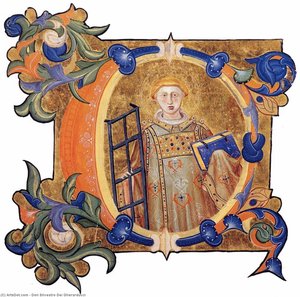
Laudario de la Compagnia di Sant'Agnese
Técnica de reproducción
Dimensiones de la reproducción
-


Precio total final
$ 363
La narrativa divina en oro iluminado
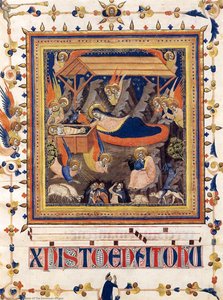
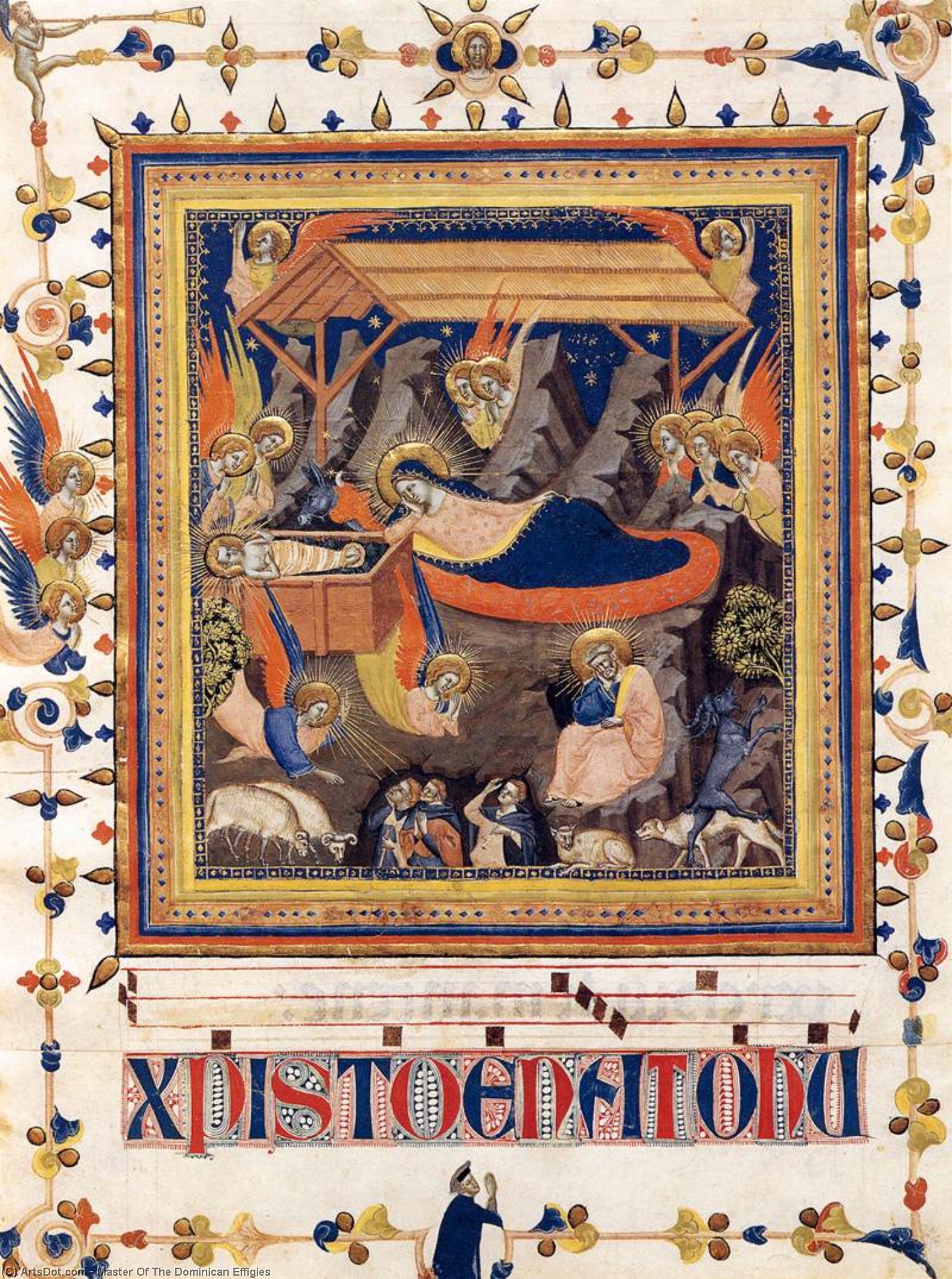
Contemple la riqueza sobrecogedora del Laudario de la Compagnia di Sant'Agnese, un testimonio monumental de la devoción medieval plasmado en pigmento y pan de oro. Esta página de un manuscrito iluminado no es una mera ilustración; es un portal cuidadosamente construido hacia el momento sagrado de la Natividad. La escena se despliega con un detalle meticuloso, centrándose en el humilde pero profundamente significativo cuadro dentro del establo. María, José y el recién nacido Cristo están envueltos en una atmósfera densa de misterio divino, custodiados por seres celestiales cuya presencia es anunciada por ángeles que flotan en el aire presentando sus dones. Rodeando este núcleo narrativo, la gentil compañía de bueyes, asnos y ovejas sitúa el evento milagroso en un entorno tangible y terrenal.
Ecos bizantinos y forma románica
Estilísticamente, la obra resuena profundamente con la grandeza de la iluminación bizantina, al tiempo que conserva el vigor narrativo característico del periodo románico. El artista emplea magistralmente una perspectiva plana, renunciando a la ilusión de un espacio profundo en favor de una que prioriza la claridad simbólica por encima de todo lo demás. Esta elección deliberada obliga al espectador a confrontar el peso espiritual del momento en lugar de sus dimensiones físicas. Observe cómo la composición se estructura mediante una precisión geométrica —cuadrados y rectángulos se entrelazan con las curvas orgánicas de la vida— creando un tapiz de significado denso, casi como una joya. La pieza entera late con una energía sagrada y ordenada.
Técnica: Una sinfonía de pigmento y luz
La brillantez técnica que se muestra es asombrosa. Ejecutada mediante el uso de pigmentos de temple aplicados sobre vitela o pergamino, el artista logró una luminosidad que parece emanar del propio material. El uso extensivo del pan de oro es, quizás, la característica más impactante; no solo decora, sino que simboliza la naturaleza inefable de la divinidad y la santidad. Estos acentos dorados capturan la luz, creando una textura visual opulenta que habla de un trabajo inmenso y de una profunda reverencia. Complementando esta riqueza se encuentran los tonos profundos y saturados —los azules reales, los rojos apasionados y los marrones terrosos—, todos trabajando en conjunto para crear una paleta de sublime opulencia.
Simbolismo y resonancia espiritual
Cada elemento dentro del Laudario carga con el peso de la significación teológica. El prominente estandarte que lleva la inscripción ‘Christo Redemptori’ sirve como un punto focal inquebrantable, dirigiendo toda la atención hacia el mensaje central de la salvación. Los bordes decorativos circundantes, con sus motivos florales estilizados e intrincados patrones, actúan como velos sagrados, enmarcando el misterio divino para nuestra contemplación. Contemplar esta obra es entablar un diálogo con siglos de devoción cristiana; habla elocuentemente de la gracia, el sacrificio y la promesa perdurable de la redención.
Llevando la grandeza sagrada al hogar
Para aquellos que buscan infundir en sus espacios sagrados o colecciones privadas un aura de arte atemporal y profundo, una reproducción de esta pieza ofrece una conexión inigualable con la historia del arte. Si bien su escala original —unos magníficos 367 x 273 cm— exige reverencia, la posibilidad de poseer una representación de alta calidad permite incorporar este impresionante poder narrativo en un entorno moderno. Es más que una decoración; es una pieza central devocional que invita a la contemplación silenciosa y hace eco de la majestuosidad perdurable de la fe.
Obras relacionadas
Biografía del artista
The Enigma of the Florentine Brush
In the golden, flickering light of early fourteenth-century Florence, an artist emerged whose name remains a whispered mystery, known only through the enduring beauty of his creations. The Master of the Dominican Effigies stands as a singular, anonymous figure in the annals of art history, a creator whose true identity is lost to time but whose vision remains vibrantly alive. Active approximately between 1328 and 1350, this master was not merely a painter but a principal Florentine manuscript illuminator, a craftsman capable of weaving profound spiritual narratives into both expansive panels and the delicate, intimate pages of illuminated codices.
While historical records offer little regarding his personal life or origins—though some scholarly fragments suggest a connection to Lombardy—his artistic fingerprints are unmistakable. He operated within a Florence characterized by burgeoning civic pride and an intense, almost spiritual engagement with Byzantine aesthetics. This era was a crossroads of styles, where the monumental, static grandeur of the East met the burgeoning humanism of the Italian West, and the Master of the Dominican Effigities stood at the very heart of this stylistic alchemy.
A Symphony of Gold and Devotion
The work of the Master is a breathtaking testament to the power of religious iconography. His technique was a masterful blend of narrative depth and decorative splendor, often characterized by a luminous palette that seemed to radiate from within the pigment itself. To observe his work is to witness a meticulous devotion to detail; he possessed a rare ability to use gold leaf not merely as an ornament, but as a divine light that sanctified the figures he depicted. His style frequently employed flattened figures and stylized drapery, a clear homage to the monumental frescoes of Constantinople and Thessalonica, yet he infused these traditional forms with a uniquely Florentine sense of expressive emotion.
His achievements are most notably preserved in several remarkable masterpieces that continue to captivate the modern eye:
- The Laudario of the Compagnia di Sant'Agnese: A monumental achievement in manuscript illumination, where the pages serve as celestial portals. Through intricate gold leaf and azure pigments, he captured scenes from the Gospels with a sense of ceremony that transcends the medieval era.
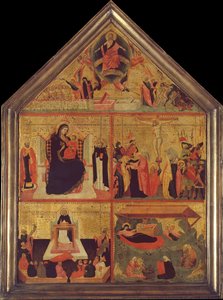
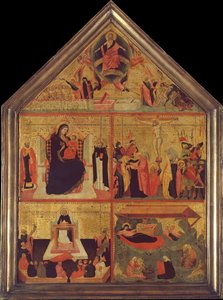
- The Last Judgment and Related Panels: A complex, multi-layered work dating to around 1325, showcasing his prowess as both an illuminator and a painter. This piece weaves together themes of the Crucifixion, the Nativity, and the glorification of saints into a singular, cohesive visual tapestry.
- The Lehnman Panel: A work that highlights his tendencies as a miniaturist, emphasizing lively storytelling through reduced, intricate forms that demand close, meditative study.
Legacy of the Byzantine Influence
The historical significance of the Master of the Dominican Effigies lies in his role as a bridge between eras. He was a pioneer who helped integrate the rigid, iconic traditions of the Byzantine Empire into the evolving language of Florentine painting. By blending the decorative richness of the East with the burgeoning narrative complexity of the Italian tradition, he contributed to the foundational layers of what would eventually blossom into the Renaissance.
Though his name remains shrouded in shadow, his legacy is etched in gold and pigment across the great collections of the world, from the Metropolitan Museum of Art to the Getty Museum. He remains a vital figure for any student of art history—a reminder that even when an artist's identity vanishes, the soul of their work can remain eternally present, speaking across centuries of devotion and beauty.
Datos clave
- Artistic Movement Or Style: Medieval Catholic Art
- Artists Or Movements Influenced By This Artist: ['Medieval Catholic Art']
- Artists Who Influenced This Artist:
- Egyptian Art Influence
- Ptolemaic Egypt Art
- Byzantine Style
- Full Name: Master of the Dominican Effigies
- Nationality: Italian
- Notable Artworks:
- Laudario of Sant'Agnese
- Fragment of a Triptych
- The Last Judgment
- The Crucifixion
- The Glorification of Saint Thomas Aquinas
- The Virgin and Child with a Bishop-Saint and Saint Peter Martyr
- Place Of Birth: Florence
Artículos relacionados
Las 10 Obras Maestras del Alto Medieval: Arte, Historia y Decoración Exclusiva
Descubre las 10 obras maestras del Alto Medieval. Explora la historia, el simbolismo y la belleza de la pintura románica y gótica. Reproducciones exclusivas en ArtsDot.com para decorar tu hogar con arte atemporal.
Illuminating Faith & Power: A Journey Through Medieval Art (c. 500 – c. 1500)
Explore the rich history of Medieval Art (c. 500 – c. 1500) with ArtsDot. Discover Byzantine mosaics, Gothic cathedrals & Renaissance masterpieces. Expert insights & museum-quality reproductions.
10 Obras Maestras del Arte Medieval Temprano: Belleza e Historia para tu Hogar
Descubre 10 obras maestras del arte medieval temprano. Explora la historia, los artistas y el significado de iconos religiosos, mosaicos bizantinos y más. Reproducciones de alta calidad en ArtsDot.com.
10 Obras Maestras Medievales que Definen el Arte (y tu Hogar)
Descubre 10 obras maestras del arte medieval, desde Duccio a Van Eyck. Explora la historia, simbolismo y belleza de Giotto, Simone Martini y más. Encuentra reproducciones de alta calidad para decorar tu hogar en ArtsDot.com.
Illuminating the Fourteenth Century: Art, Innovation & Enduring Legacies (1300-1400)
Explore the transformative art of the 14th century! Discover Gothic masterpieces, International Style innovations, and the precursors to the Renaissance. Expert insights & historical context at ArtsDot.