 Ver en contexto
 Enviar
 Compartir
 Detalles

 Descargar
 Similares
 Radiografía
 Presentación de diapositivas
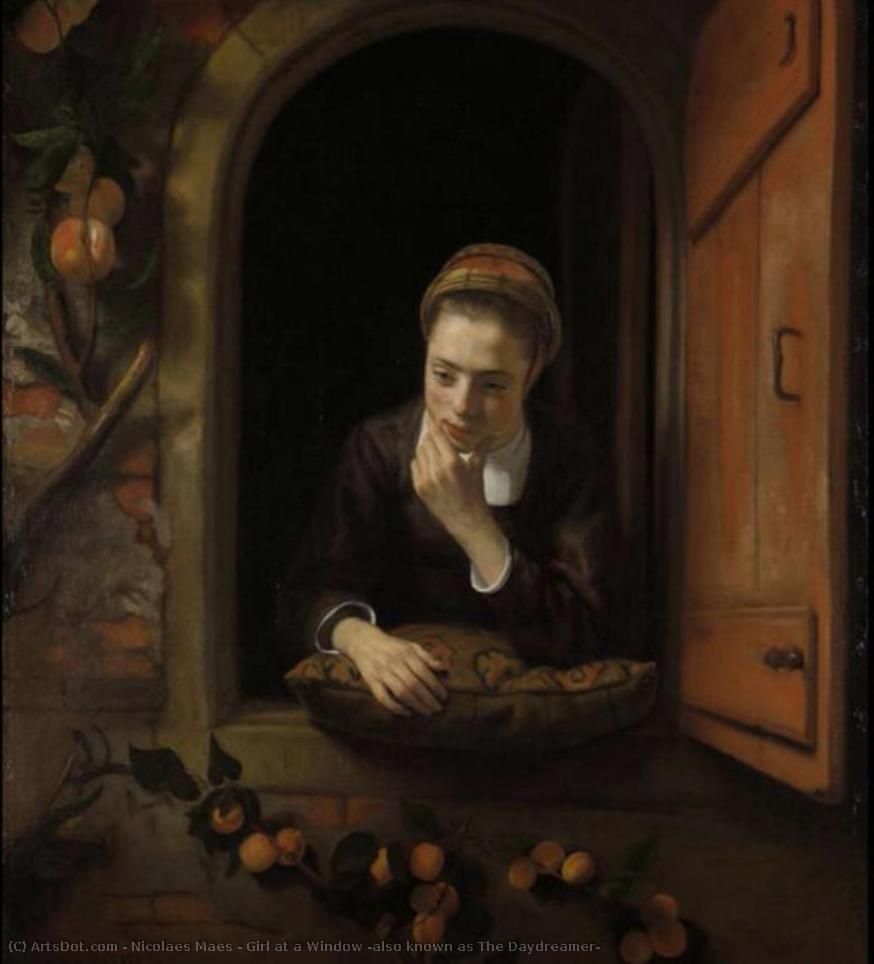
Girl at a Window (also known as The Daydreamer)


 Ver más
Giclée / Impresión de arte
Impresiones giclée o en lienzo de calidad de museo con producción rápida y opciones de acabado flexibles. ( Comprar pintura hecha a mano Comprar imagen)




P118B $10

P118H $10

P118W $10

P438Z $10

P508JH $12

P508YH $12

P805H $10

P805Z $10

P919BZ $10

P919G $10

P919XJ $10

P959ZH $10

P968JZ $12

W106C $8

W218G $10

W218JH $8

W218Y $10

W307PJ $10

W316G $10

W316PJ $8

W316Y $10

W398PJ $8

W4111J $10

W500HY $15

W500JH $15

W692G $12

W849H $8

W940BG $15

W953PJ $8




Elija entre nuestros tamaños predefinidos que respetan las proporciones originales de la obra.

Puede introducir sus propias dimensiones para adaptarse a un marco o espacio específico. Si el tamaño seleccionado no coincide con las proporciones de la imagen original, recortaremos la obra de arte o extenderemos la imagen con un borde con efecto espejo o de color sólido. Se enviará una maqueta digital para su aprobación antes de que comience la producción.
Tenga en cuenta que la vista previa en pantalla no refleja el recorte o la extensión real. Solo la maqueta mostrará con precisión la composición final.
Aunque existen tamaños personalizados, recomendamos seleccionar una dimensión de la lista predefinida para preservar las proporciones originales.
Envío a todo el mundo () en 2 semanas en lugar de las 4/5 semanas estándar. (31 agosto)

Envío exprés gratuito a todo el mundo

Lienzo de lino de alta calidad

Seguro de envío total

Garantía de reembolso de impuestos aduaneros

Garantía de fidelidad cromática exacta

Política de devolución de 60 días (solo por defectos)

Garantía de devolución del 100% del dinero

Descuento por cantidad
 La opción de vidrio solo está disponible en tamaños inferiores a 110 cm.

Girl at a Window (also known as The Daydreamer)
Giclée / Impresión de arte
Dimensiones de la reproducción
-


Precio total final
$ 62
Nicolaes Maes’s “Girl at a Window”: A Portrait of Contemplation and Baroque Light
Nicolaes Maes, born in Dordrecht in 1634, stands as a testament to the flourishing artistic landscape of the Dutch Golden Age. His formative years were steeped in the mercantile dynamism of his hometown—a father who commanded respect as a cloth merchant and soap boiler fostered an environment conducive to intellectual curiosity and creative pursuits. Recognizing Maes’s innate talent for painting, Gerrit Maes secured him an apprenticeship with Rembrandt van Rijn around 1648 – a partnership that would indelibly shape the trajectory of his artistic development. This immersion in Rembrandt's workshop wasn’t merely about mastering technique; it instilled within Maes a profound understanding of *chiaroscuro*, the masterful manipulation of light and shadow, which would become the cornerstone of his distinctive visual language. Early canvases showcased biblical narratives rendered with breathtaking realism and luminous hues—a stylistic echo of Rembrandt’s groundbreaking approach to portraying human emotion and spiritual depth.- Style: Baroque
- Medium: Oil on Canvas
- Dimensions: Unknown
Technique and Artistic Innovation
Maes’s technique is characterized by an unwavering commitment to capturing fleeting moments of emotion with unparalleled accuracy. Like Rembrandt before him, he prioritized conveying psychological nuance over mere visual representation—a hallmark of baroque painting's ambition to engage the viewer on a visceral level. The artist skillfully utilized *chiaroscuro*, layering light and shadow to sculpt form and heighten dramatic impact. Observe how Maes’s masterful brushstrokes illuminate the woman’s face, casting delicate shadows that accentuate her expression of melancholy. This technique wasn’t simply about achieving visual beauty; it was a deliberate strategy for communicating profound ideas about human experience.Historical Context: The Dutch Golden Age
“Girl at a Window” emerged during the apex of the Dutch Golden Age (approximately 1637–1675)—a period marked by unprecedented economic prosperity, artistic innovation, and intellectual ferment. This era witnessed an explosion of creativity across disciplines—painting, sculpture, literature, and music—fueled by the burgeoning merchant class and a spirit of humanist inquiry. Nicolaes Maes’s work reflects this cultural milieu, embodying the baroque preoccupation with portraying human emotion and spiritual contemplation within a richly ornamented setting. It stands as a poignant reminder of a time when art served not only to delight but also to provoke thought and inspire moral reflection.Emotional Resonance: A Window into Inner Thought
Ultimately, “Girl at a Window” transcends its formal elements—style, technique, and composition—to convey a powerful emotional resonance. The painting invites viewers to contemplate the complexities of human consciousness—the yearning for solace amidst solitude, the struggle to reconcile inner desires with external realities. Maes’s masterful depiction captures the essence of *dolce stil novo*, or “sweet new style,” which sought to evoke feelings of tenderness and melancholy—a stylistic hallmark that continues to captivate audiences today. It remains a timeless portrait of introspection and beauty—a testament to Nicolaes Maes' enduring legacy as one of the Dutch Golden Age’s most perceptive artists.Obras relacionadas

Biografía del artista
Nicolaes Maes: Una Vida en el Siglo de Oro Neerlandés
- Nacido: Dordrecht, Países Bajos (Enero 1634)
- Fallecido: Ámsterdam, Países Bajos (Diciembre 1693)
Nicolaes Maes (también conocido como Nicolaes Maas) fue un destacado pintor del Siglo de Oro Neerlandés, reconocido por sus escenas de género y retratos. Nacido en Dordrecht hijo de Gerrit Maes, un próspero comerciante, e Ida Herman Claesdr, se convirtió en una figura significativa dentro del panorama artístico del siglo XVII en los Países Bajos.
Formación Temprana e Influencia de Rembrandt
La carrera temprana de Maes fue moldeada significativamente por su aprendizaje con Rembrandt van Rijn en Ámsterdam (aproximadamente 1648-1653). Este período resultó formativo, inculcándole una profunda apreciación por el claroscuro –el uso dramático de la luz y la sombra– y un dominio del color. Sus primeras obras, como "La Reverie" (Rijksmuseum, Ámsterdam) y "Los Jugadores de Cartas" (National Gallery, Londres), presentan un sorprendente parecido al estilo de Rembrandt, lo que a menudo llevó a su atribución errónea. Estas primeras piezas demuestran su capacidad para emular las técnicas de su maestro, utilizando figuras de tamaño natural y una rica paleta de colores brillantes.
Desarrollo de un Estilo Maduro
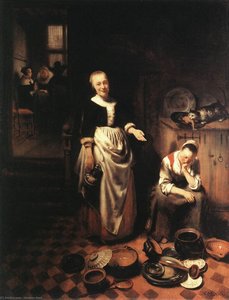
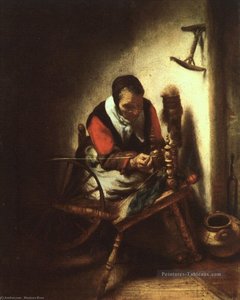
Tras regresar a Dordrecht en 1653, Maes desarrolló un estilo más distintivo. Aproximadamente entre 1655 y 1665, se centró principalmente en escenas de género doméstico a menor escala, conservando el brillo colorístico aprendido de Rembrandt. Se alejó de las composiciones religiosas a gran escala, optando por representar la vida cotidiana con una intimidad y un detalle notables. Los temas recurrentes incluían mujeres dedicadas a actividades como hilar, leer la Biblia o preparar comidas. Maes también mostró una fascinación particular por el encaje, produciendo numerosas variaciones sobre este tema.
Retratismo y Carrera Posterior
El talento de Maes se extendió más allá de la pintura de género al retratismo. Ejemplos notables incluyen "Retrato de Laurence Hyde, Earl of Rochester", "Retrato de Jan de Reus" y "Retrato de un Hombre con Peluca Negra". Estos retratos exhiben su habilidad para capturar el parecido y el carácter de sus sujetos con una precisión notable. En 1673, Maes se trasladó a Ámsterdam, convirtiéndose en uno de los principales pintores de retratos de la ciudad durante las últimas tres décadas del siglo. Este traslado reflejó tanto la ambición artística como la adaptación a las condiciones cambiantes del mercado.
Legado y Significado Histórico
Nicolaes Maes dejó atrás una obra sustancial que continúa siendo admirada por su habilidad técnica, su íntima representación de la vida cotidiana y su influencia duradera en generaciones posteriores de artistas holandeses. Su capacidad para capturar la esencia de personas comunes durante el Siglo de Oro Neerlandés proporciona valiosas perspectivas sobre las costumbres sociales y los entornos domésticos de ese período. Las pinturas de Maes se conservan en prestigiosos museos de todo el mundo, incluyendo el Rijksmuseum y la National Gallery, y siguen siendo accesibles para su estudio y apreciación en plataformas como ArtsDot.com.
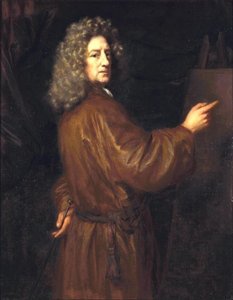
Nicolaes Maes
1634 - 1693 , Países Bajos
Datos clave
- Artistas Que Influyeron: ['Rembrandt']
- Fecha De Fallecimiento: Diciembre de 1693
- Fecha De Nacimiento: Enero de 1634
- Lugar De Nacimiento: Dordrecht, Países Bajos
- Movimiento Artístico: Edad de Oro Neerlandesa
- Nacionalidad: Neerlandés
- Nombre Completo: Nicolaes Maes
- Obras Notables:
- La Reverie
- Los Jugadores de Cartas
- Niños con un Carro de Cabras
- Retrato de Laurence Hyde
- Retrato de Jan de Reus
- Retrato de un Hombre en Peluca Negra
Artículos relacionados

Los 10 Maestros del Siglo de Oro Holandés: Arte, Historia y Decoración Exclusiva
Descubre los 10 imprescindibles del Siglo de Oro Holandés: Rembrandt, Vermeer y más. Explora la historia, técnica y belleza de estos lienzos clásicos. Encuentra reproducciones de arte exclusivas para decorar tu hogar en .

Reflejos de una Época Dorada: La Pintura Barroca Holandesa y la Innovación Cultural
Descubra la riqueza y el detalle de la pintura barroca holandesa del Siglo de Oro. Explore las obras maestras de Rembrandt, Vermeer y otros artistas clave. Análisis experto e historia cultural.

Los 10 Maestros del Barroco Holandés: Obras que Definen una Época | ArtsDot
Descubre los 10 imprescindibles del Barroco holandés: Rembrandt, Vermeer y más. Explora la historia, técnica y belleza de estas obras maestras. Reproducciones de arte en ArtsDot.com para decorar tu hogar con elegancia.

La Luz y la República: Innovación Artística en el Siglo de Oro Neerlandés
Descubra la innovación artística del Siglo de Oro Neerlandés. Explore las obras maestras de Rembrandt y Vermeer, técnicas revolucionarias y el legado perdurable de este florecimiento cultural. ¡Sumérjase en la luz y la belleza!
Illuminating Realism: Exploring the Dutch Golden Age of Painting (1600-1700)
Explore the Dutch Golden Age of painting (1600-1700) with ArtsDot. Discover Rembrandt, Vermeer & other masters. Learn about techniques, history & find museum-quality reproductions.