

 Ver en contexto
 Enviar
 Compartir
 Detalles

 Descargar
 Similares
 Radiografía
 Presentación de diapositivas
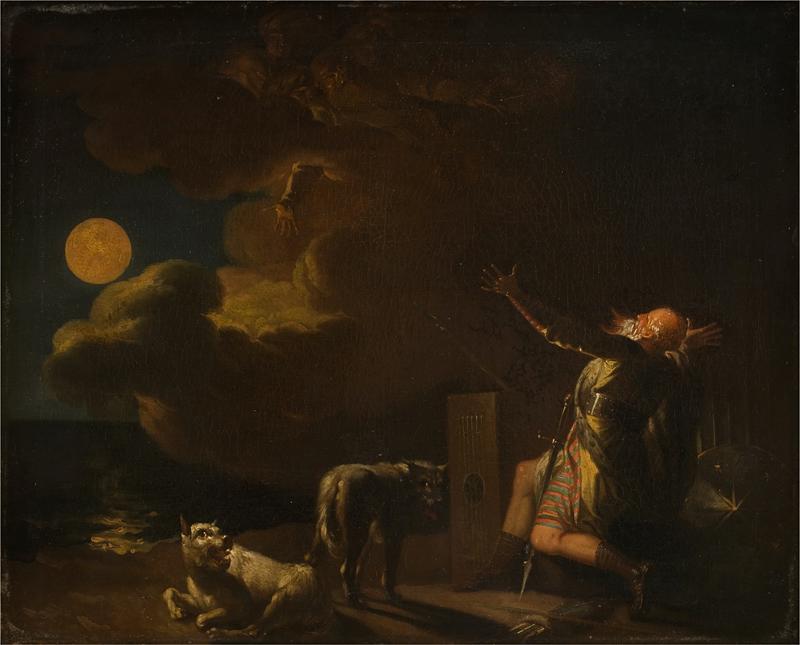
Fingal Sees the Ghosts of his Forefathers by Moonlight


 Ver más
Adquiera una imagen digital de alta resolución y optimizada, muy superior a la vista previa en línea.
Cada archivo es preparado meticulosamente por nuestros especialistas internos mediante el uso de herramientas avanzadas y un experto retoque manual. Nos aseguramos de que cada imagen posea una claridad excepcional, una precisión cromática impecable y un detalle minucioso.
El archivo final se entrega por correo electrónico en un plazo de 72 horas, optimizado para su uso inmediato en entornos profesionales, editoriales y de impresión. Esta es la misma calidad en la que confían los estudios de diseño, las editoriales y las galerías de primer nivel.
Imagen Digital
Descarga un archivo de alta resolución para exhibición personal, impresión y proyectos creativos. ( Comprar impresión Comprar pintura hecha a mano)
Incluido en cada pedido de imágenes digitales
Entrega digital experta, garantizada.
Al elegir ArtsDot.com, no solo está adquiriendo una imagen; está recibiendo una obra de arte digital mejorada profesionalmente, elaborada con precisión y respaldada por una garantía de satisfacción. Esto es todo lo que incluye su pedido, automáticamente:

Entrega rápida por email
Recibirá su archivo de imagen digital en alta resolución por correo electrónico en un plazo de 72 horas tras realizar su pedido, listo para su uso inmediato.

Archivo digital optimizado por IA
Su obra de arte se optimiza profesionalmente mediante herramientas avanzadas de IA y edición manual, garantizando el máximo detalle, claridad y precisión cromática.

Reenvío gratuito de por vida
¿Has borrado o perdido tu archivo por error? No te preocupes: te lo volveremos a enviar en cualquier momento, sin coste adicional.

Sin gastos de importación, siempre
Disfrute de su obra de arte al instante sin aduanas, aranceles ni gastos de envío; las descargas digitales siempre están libres de impuestos.

Garantía de fidelidad de color
Garantizamos que su imagen digital refleje los colores originales con la mayor fidelidad posible, mediante el uso de herramientas profesionales y gestión del color.

Garantía de satisfacción de 60 días
Si no está satisfecho con su imagen digital, la revisaremos o le reembolsaremos el 100% en un plazo de 60 días, sin preguntas.

100% Garantía de devolución de dinero
¿No está satisfecho? Obtenga un reembolso completo dentro de los 60 días posteriores a la recepción de su archivo digital, sin necesidad de explicaciones.

Descuentos por pedidos grandes
Compra 3 imágenes, ahorra 10% - Compra 5, ahorra 15% - Compra 10+, ahorra 20%. Ideal para proyectos creativos, galerías y agencias.
A Moonlit Reverie: Nicolai Abildgaard’s “Fingal Sees the Ghosts of his Forefathers”
Nicolai Abraham Abildgaard's "Fingal Sees the Ghosts of his Forefathers by Moonlight," painted in 1782, is more than a mere depiction of a solitary figure; it’s a profound meditation on memory, lineage, and the ethereal realm between worlds. This evocative work, rendered in a masterful blend of Neoclassical precision and burgeoning Romantic sensibility, offers a glimpse into the artist's complex worldview and his fascination with Norse mythology and the weight of history.
The painting immediately draws the eye to its central figure – a man standing upon a small boat, his posture suggesting both contemplation and a yearning gaze. He’s not actively reaching for the moon, as the initial impression might suggest, but rather seems enveloped within its silvery light, almost dissolving into it. This deliberate ambiguity is key to understanding Abildgaard's intent. The composition isn’t about literal observation; it’s about capturing an emotional state – a sense of melancholy and connection to something vast and ancient.
The Language of Symbolism
Abildgaard was deeply influenced by the Romantic movement, which emphasized emotion, imagination, and the sublime. “Fingal Sees the Ghosts of his Forefathers” is saturated with symbolic elements that reinforce this theme. The moon itself isn’t simply a celestial body; it represents memory, intuition, and the passage of time. Its light bathes the scene in an otherworldly glow, blurring the boundaries between reality and dream.
The two dogs flanking the figure are particularly significant. Often interpreted as representing loyalty and guardianship, they also evoke the ancient Celtic traditions that Abildgaard admired – a connection to nature and ancestral spirits. The clock on the wall behind the man serves as a stark reminder of linear time, contrasting sharply with the timelessness suggested by the moonlit scene. The bird soaring above symbolizes freedom and transcendence, while the books represent knowledge and the accumulated wisdom of generations.
A Masterclass in Technique
Abildgaard’s skill as a painter is evident in every detail of “Fingal Sees the Ghosts of his Forefathers.” The use of chiaroscuro – the dramatic contrast between light and shadow – creates a powerful sense of depth and atmosphere. The subtle gradations of grey and silver capture the ethereal quality of moonlight, while the carefully rendered textures of the boat’s wood and the man's clothing add to the painting’s realism.
Notably, Abildgaard employed a technique reminiscent of Dutch masters like Rembrandt, utilizing light not just for illumination but also for emotional effect. The shadows are particularly rich and expressive, hinting at hidden emotions and unspoken narratives. The meticulous detail in the depiction of the landscape – the subtle ripples on the water, the distant shoreline – demonstrates his deep understanding of perspective and composition.
Historical Context and Artistic Legacy
Created during a period of significant artistic and intellectual ferment in Denmark, “Fingal Sees the Ghosts of his Forefathers” reflects Abildgaard’s engagement with both classical ideals and emerging Romantic sensibilities. He was part of a generation of Danish artists who sought to forge a distinctly national style, drawing inspiration from Norse mythology and folklore while maintaining a connection to European artistic traditions.
Abildgaard's work profoundly influenced the development of Danish art, establishing him as one of the country’s most important painters. His exploration of themes such as memory, lineage, and the relationship between humanity and nature continues to resonate with viewers today. Reproductions of this captivating painting offer a beautiful way to bring this evocative vision into your home or office – a testament to the enduring power of art to transport us beyond the confines of time and space.
Obras relacionadas


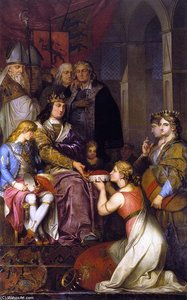
Biografía del artista
Primeros Años y Educación
- Nacido: 11 de septiembre de 1743, Copenhague, Dinamarca
- Padres: Søren Abildgaard (cartógrafo antiguo) y Anne Margrethe Bastholm
- Recibió formación temprana con un maestro pintor.
- Se unió a la Nueva Real Academia de Arte de Dinamarca (Det Kongelige Danske Kunstakademi) en Copenhague en 1764.
- Ganó varias medallas en la academia desde 1764 hasta 1767, demostrando una brillantez temprana.
- Recibió una beca de viaje en 1767, que utilizó cinco años después.
- Estudió bajo Johan Edvard Mandelberg y Johannes Wiedewelt en la Academia.
Período Romano y Desarrollo Artístico (1772-1777)
- Viajó a Roma desde 1772 hasta 1777, un período crucial en su desarrollo artístico.
- Estudió escultura, arquitectura, decoración, frescos (en el Palacio Farnesio) y murales.
- Visitó Nápoles en 1776 con Jens Juel.
- Se centró en desarrollar habilidades en la pintura histórica.
- Sacó inspiración de los frescos de Annibale Carracci, Rafael, Tiziano y Miguel Ángel.
- Se alejó del clasicismo estricto, influenciado por artistas como Johan Tobias Sergel y Johann Heinrich Füssli.
- Desarrolló una apreciación por la literatura que incluía a Shakespeare, Homero y Ossian.
Regreso a Dinamarca y Comisiones Reales
- Regresó a Copenhague en diciembre de 1777.
- Fue nombrado profesor en la Academia en 1778.
- Se convirtió en pintor histórico real alrededor de 1780.
- Recibió una comisión significativa del gobierno danés: pintar una historia de Dinamarca para la Sala de los Caballeros (Riddersal) en el Palacio Christiansborg.
- Este proyecto implicó obras monumentales que combinaban representaciones históricas, elementos alegóricos y referencias mitológicas diseñadas para glorificar a la monarquía.
- Trabajó con Johan Edvard Mandelberg en las decoraciones del Palacio de Fredensborg.
Obras Principales y Estilo Artístico
- Pinturas Notables: "Cristián I Eleva Holstein al Ducado en 1474", "La Pesadilla", "Retrato de Nicolai Abraham Abildgaard", "El Fantasma de Culmin Aparece a su Madre", "Escenas de 'El Viaje Subterráneo de Niels Klim'", "La Comadrona se Despide de la Chica de Andros (de Terencio)", "Magnus Stenbock se Rinde a Frederik IV en 1714", "Nudo masculino sentado con la cara parcialmente cubierta por sus brazos levantados", “Audhumla”, y "El Filoctetes Herido".
- Estilo Artístico: El estilo de Abildgaard combinaba elementos neoclásicos con influencias románticas emergentes. Incorporó alegoría pictórica, utilizando símbolos para transmitir ideas a un público culto. Sus obras a menudo presentaban una iluminación dramática, colores ricos y detalles meticulosos.
- Temas: Exploró temas de la mitología griega y nórdica, eventos históricos y narrativas literarias.
Legado e Influencia
- Fue director de la Academia durante 1789–1791 y 1801–1809.
- Enseñó a artistas influyentes como Asmus Jacob Carstens, Bertel Thorvaldsen, J. L. Lund y Christoffer Wilhelm Eckersberg.
- Eckersberg, su alumno, se hizo conocido como el "padre de la pintura danesa" y sentó las bases para la Edad Dorada de la Pintura Danesa.
- Falleció el 14 de noviembre de 1809 en Copenhague.
- Su trabajo influyó significativamente en el desarrollo del Romanticismo nórdico y contribuyó al panorama artístico de Dinamarca.
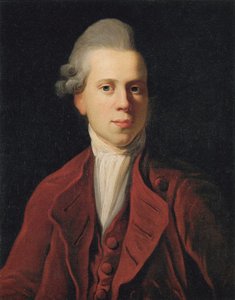
Nicolai Abraham Abildgaard
1743 - 1809 , Dinamarca
Breves datos
- Artistas Influenciados:
- Asmus Jacob Carstens
- Bertel Thorvaldsen
- Christoffer Wilhelm Eckersberg
- Artistas Que Influyeron:
- Annibale Carracci
- Rafael
- Tiziano
- Miguel Ángel
- Fecha De Nacimiento: 11 de septiembre de 1743
- Lugar De Nacimiento: Copenhague, Dinamarca
- Movimiento Artístico: Neoclasicismo, pintura histórica real
- Nacionalidad: Danés
- Nombre Completo: Nicolai Abraham Abildgaard
- Obras Notables:
- Christian I Eleva Holstein
- La pesadilla
- Retrato de N. A. Abildgaard
- El fantasma de Culmin
- Escenas de 'Viaje subterráneo'
- La partera se despide
- Magnus Stenbock se rinde
- Nude masculino sentado
- Audhumla
- El herido Filoctetes

