

 Ver en contexto
 Enviar
 Compartir
 Detalles

 Descargar
 Similares
 Radiografía
 Presentación de diapositivas
 Estadísticas
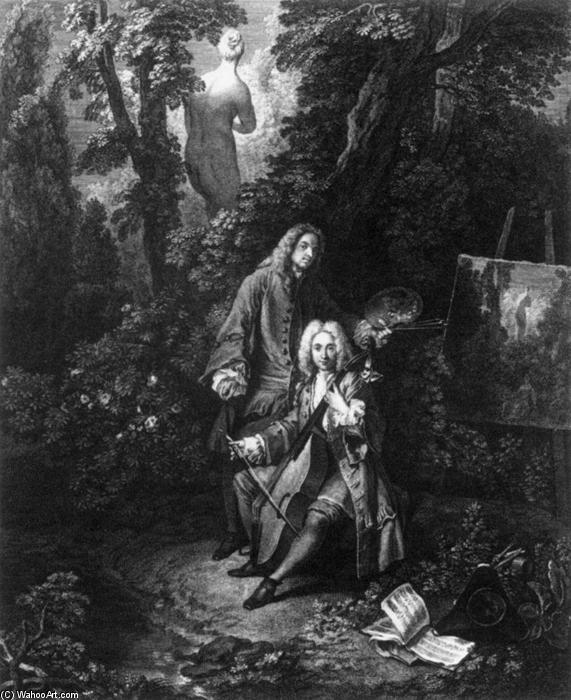
Watteau and his Friend Monsieur de Jullienne


 Ver más
Adquiera una imagen digital de alta resolución y optimizada, muy superior a la vista previa en línea.
Cada archivo es preparado meticulosamente por nuestros especialistas internos mediante el uso de herramientas avanzadas y un experto retoque manual. Nos aseguramos de que cada imagen posea una claridad excepcional, una precisión cromática impecable y un detalle minucioso.
El archivo final se entrega por correo electrónico en un plazo de 72 horas, optimizado para su uso inmediato en entornos profesionales, editoriales y de impresión. Esta es la misma calidad en la que confían los estudios de diseño, las editoriales y las galerías de primer nivel.
Imagen Digital
Descarga un archivo de alta resolución para exhibición personal, impresión y proyectos creativos. ( Cambiar a Impresión Comprar pintura hecha a mano)
Incluido en cada pedido de imágenes digitales
Entrega digital experta, garantizada.
Al elegir ArtsDot.com, no solo está adquiriendo una imagen; está recibiendo una obra de arte digital mejorada profesionalmente, elaborada con precisión y respaldada por una garantía de satisfacción. Esto es todo lo que incluye su pedido, automáticamente:

Entrega rápida por email
Recibirá su archivo de imagen digital en alta resolución por correo electrónico en un plazo de 72 horas tras realizar su pedido, listo para su uso inmediato.

Archivo digital optimizado por IA
Su obra de arte se optimiza profesionalmente mediante herramientas avanzadas de IA y edición manual, garantizando el máximo detalle, claridad y precisión cromática.

Reenvío gratuito de por vida
¿Has borrado o perdido tu archivo por error? No te preocupes: te lo volveremos a enviar en cualquier momento, sin coste adicional.

Sin gastos de importación, siempre
Disfrute de su obra de arte al instante sin aduanas, aranceles ni gastos de envío; las descargas digitales siempre están libres de impuestos.

Garantía de fidelidad de color
Garantizamos que su imagen digital refleje los colores originales con la mayor fidelidad posible, mediante el uso de herramientas profesionales y gestión del color.

Garantía de satisfacción de 100 días
Si no está satisfecho con su imagen digital, la revisaremos o le reembolsaremos el 100% en un plazo de 100 días, sin preguntas.

100% Garantía de devolución de dinero
¿No está satisfecho? Obtenga un reembolso completo dentro de los 100 días posteriores a la recepción de su archivo digital, sin preguntas.

Descuentos por pedidos grandes
Compra 3 imágenes, ahorra 10% - Compra 5, ahorra 15% - Compra 10+, ahorra 20%. Ideal para proyectos creativos, galerías y agencias.
A Moment of Parisian Grace: Tardieu’s “Watteau and his Friend”
Nicolas-Henri Tardieu's engraving, "Watteau and his Friend Monsieur de Jullienne," isn’t merely a portrait; it’s a carefully constructed window into the heart of 18th-century Parisian life. Captured in a quiet moment within a refined salon garden, the scene unfolds with an intimacy that speaks volumes about the era's artistic and intellectual currents. The image invites us to step back in time and witness a conversation between two men – the celebrated painter Jean-Antoine Watteau and his esteemed companion, Monsieur de Jullienne – a gathering steeped in the atmosphere of the fashionable salons that defined Parisian society.
Tardieu’s genius lies not just in his technical skill but in his ability to distill the essence of Watteau's original painting onto a new medium. He wasn’t simply copying brushstrokes; he was translating the mood, the light, and the subtle social dynamics into a meticulously rendered engraving. The composition is masterfully balanced, with the figures positioned beneath a classical statue – a deliberate nod to centuries of artistic tradition – while a partially visible easel hints at the creative spirit that permeated these gatherings. The scene feels frozen in time, capturing a fleeting moment of shared contemplation and intellectual exchange.
Decoding the Technique: Hatching, Tone, and Texture
As an engraving, “Watteau and his Friend” is a testament to Tardieu’s exceptional mastery of line and texture. The entire image is built upon a foundation of incredibly fine lines – hatching and cross-hatching techniques are deployed with astonishing precision. These interwoven lines create not just outlines but also a remarkable illusion of volume and depth, mimicking the effects of light and shadow found in oil painting. Notice how the artist uses varying densities of line to suggest the smooth surfaces of clothing, the rough texture of stone, and even the delicate folds of fabric. The monochrome palette – a symphony of whites, grays, and blacks – amplifies this effect, creating a sense of quiet drama and understated elegance.
The careful attention to detail extends beyond mere representation; it’s an active process of interpretation. Tardieu doesn't simply record Watteau and Jullienne; he imbues them with a palpable sense of personality through subtle shifts in expression and posture. The way their hands are positioned, the slight tilt of their heads – these small gestures convey a quiet intimacy that draws the viewer into the scene.
The Salon: A Crucible of Art and Ideas
To truly appreciate “Watteau and his Friend,” it’s crucial to understand the context in which it was created – the vibrant salon culture of 18th-century Paris. Salons were far more than just social gatherings; they were vital hubs for intellectual discourse, artistic patronage, and the dissemination of new ideas. Figures like Jean de Jullienne, where Watteau frequently spent his time, hosted these salons, attracting artists, writers, philosophers, and aristocrats alike. These spaces served as incubators for creativity, providing a platform for challenging conventional wisdom and exploring radical concepts.
The presence of Monsieur de Jullienne is particularly significant. He was a prominent art collector and connoisseur, deeply involved in the artistic circles of Paris. His salon provided Watteau with access to influential patrons and fellow artists, fostering a dynamic environment of collaboration and exchange. The engraving, therefore, offers a glimpse into this world of intellectual ferment – a world where beauty, wit, and conversation intertwined.
Symbolism and Emotional Resonance
The classical statue in the background serves as a subtle reminder of the enduring influence of antiquity on 18th-century art. It anchors the scene to a tradition of idealized beauty and harmonious proportions, while simultaneously suggesting the timeless nature of artistic pursuit. The quiet intimacy between Watteau and Jullienne evokes feelings of tranquility, contemplation, and perhaps even a touch of melancholy – a recognition that even in the midst of social grace, moments of solitude and reflection are essential.
“Watteau and his Friend” is more than just a depiction of two men; it’s a portrait of an era—a testament to the power of art, conversation, and the enduring allure of Parisian society. It invites us to pause, observe, and appreciate the subtle beauty of a moment captured in time.
Obras relacionadas

Biografía del artista
Vida Temprana y Educación
- Nacimiento: París, Francia el 18 de enero de 1674, y bautizado tres días después.
- Antecedentes Familiares: Su padre, Nicolas Tardieu, era calderero, al igual que sus dos hermanos menores. Se especula que el joven Nicolas-Henri pudo haber utilizado restos de cobre del taller de su padre para practicar grabados en sus inicios.
- Formación Artística: Estudió con destacados grabadores como Pierre Lepautre, Gérard Audran y Benoit Audran, sentando una base sólida en las técnicas del oficio.
Carrera como ‘Graveur du Roi’ y Estilo Artístico
- Nombramiento Real: Tardieu alcanzó un reconocimiento significativo cuando fue nombrado *graveur du roi* (Grabador del Rey) para el rey Luis XV el 29 de noviembre de 1720. Esta prestigiosa posición consolidó su estatus como uno de los grabadores más importantes de Francia.
- Grabado Reproductivo: Se hizo particularmente conocido por sus reproducciones sensibles y hábiles de pinturas, especialmente las de Antoine Watteau. Sus grabados capturaron la delicada atmósfera y el espíritu rococó de la obra de Watteau con una fidelidad excepcional.
- Trabajos Encargados: Como grabador muy solicitado, Tardieu recibió encargos para planchas utilizadas en importantes publicaciones como la Colección Crozat y la Galerie de Versailles.
- Principios Artísticos: Adhirió a los principios tradicionales del grabado, oponiéndose a las tendencias emergentes hacia temas menos serios. Se propuso transmitir estos valores a sus alumnos.
Legado Familiar e Influencia
- Matrimonios y Familia: Tardieu se casó dos veces: primero con Louise-Françoise Aveline en 1706, y luego con Marie-Anne Horthemels en 1712. Marie-Anne también era una grabadora consumada.
- Dinastía de Grabadores: Nicolas-Henri y Marie-Anne Tardieu tuvieron numerosos descendientes que se convirtieron en artistas notables, principalmente como grabadores, estableciendo un legado familiar duradero dentro del mundo del arte.
- Alumnos Notables: Enseñó grabado a su hijo Jacques-Nicolas Tardieu (quien también se convirtió en *graveur ordinaire du roi*), a su sobrino Pierre François Tardieu y a otros grabadores destacados como Bernard Baron, Laurent Cars y Jacques-Philippe Le Bas. Su influencia se extendió a través de generaciones de artistas.
Obras Principales e Importancia Histórica
- Grabados Clave: Algunas de sus estampas más celebradas incluyen reproducciones de *Champs Élysées* y *Embarcation for Cythera* de Watteau, elogiadas por su capacidad para retener la calidad "plateada" de las pinturas originales.
- Otras Obras Notables: También grabó retratos, temas clásicos y escenas religiosas. Ejemplos incluyen grabados de Marc-René de Voyer de Paulmy, d'Argenson y representaciones de obras de Domenichino.
- Impacto Duradero: Nicolas-Henri Tardieu es recordado como uno de los grabadores más prominentes del siglo XVIII en Francia. Su habilidad técnica, dedicación a las técnicas tradicionales y su influencia en generaciones posteriores de artistas aseguraron su lugar en la historia del arte. Su obra proporciona información valiosa sobre los gustos artísticos y la cultura visual del período rococó.
- Retrato: Jean-Baptiste van Loo pintó un retrato de Tardieu que se exhibió en las galerías de Versalles, reconociendo aún más su importancia.
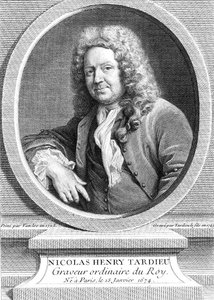
Nicolas-Henri Tardieu
1674 - 1749 , Francia
Breves datos
- Artistas Influenciados:
- J.N. Tardieu
- Baron
- Artistas Que Influyeron:
- Lepautre
- Audran
- Fecha De Fallecimiento: 27 de enero de 1749
- Fecha De Nacimiento: 18 de enero de 1674
- Lugar De Nacimiento: París, Francia
- Movimiento Artístico: Rococó
- Nacionalidad: Francés
- Nombre Completo: Nicolas-Henri Tardieu
- Obras Notables:
- Champs Élysées
- Cythera