 Ver en contexto
 Enviar
 Compartir
 Detalles

 Descargar
 Similares
 Radiografía
 Presentación de diapositivas
Adoraton of the Golden Calf d1

 Ver más
Giclée / Impresión de arte
Impresiones giclée o en lienzo de calidad de museo con producción rápida y opciones de acabado flexibles. ( Comprar pintura hecha a mano Comprar imagen)




P118B $10

P118H $10

P118W $10

P438Z $10

P508JH $12

P508YH $12

P805H $10

P805Z $10

P919BZ $10

P919G $10

P919XJ $10

P959ZH $10

P968JZ $12

W106C $8

W218G $10

W218JH $8

W218Y $10

W307PJ $10

W316G $10

W316PJ $8

W316Y $10

W398PJ $8

W4111J $10

W500HY $15

W500JH $15

W692G $12

W849H $8

W940BG $15

W953PJ $8




Elija entre nuestros tamaños predefinidos que respetan las proporciones originales de la obra.

Puede introducir sus propias dimensiones para adaptarse a un marco o espacio específico. Si el tamaño seleccionado no coincide con las proporciones de la imagen original, recortaremos la obra de arte o extenderemos la imagen con un borde con efecto espejo o de color sólido. Se enviará una maqueta digital para su aprobación antes de que comience la producción.
Tenga en cuenta que la vista previa en pantalla no refleja el recorte o la extensión real. Solo la maqueta mostrará con precisión la composición final.
Aunque existen tamaños personalizados, recomendamos seleccionar una dimensión de la lista predefinida para preservar las proporciones originales.
Envío a todo el mundo () en 2 semanas en lugar de las 4/5 semanas estándar. (28 agosto)

Envío exprés gratuito a todo el mundo

Lienzo de lino de alta calidad

Seguro de envío total

Garantía de reembolso de impuestos aduaneros

Garantía de fidelidad cromática exacta

Política de devolución de 60 días (solo por defectos)

Garantía de devolución del 100% del dinero

Descuento por cantidad
 La opción de vidrio solo está disponible en tamaños inferiores a 110 cm.

Adoraton of the Golden Calf d1
Giclée / Impresión de arte
Dimensiones de la reproducción
-


Precio total final
$ 62
A Portrait of Antiquity Revisited: Exploring Nicolas Poussin’s “Adoration of the Golden Calf”
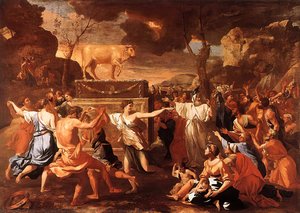
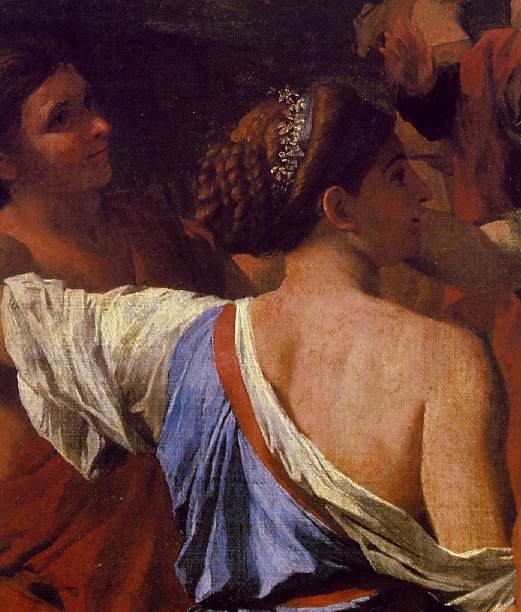
The painting "Adoration of the Golden Calf" by Nicolas Poussin, though its precise dimensions and date remain elusive, stands as a testament to the enduring power of classical ideals within Baroque art. Captured in an image that speaks volumes about faith, reverence, and human aspiration, this artwork transcends mere visual representation; it invites contemplation on themes of piety and divine majesty—a hallmark of Poussin’s artistic legacy.- Subject Matter: The scene depicts a group of figures gathered around a golden calf – an idol fashioned in commemoration of the Israelites' worship of Baal after Moses led them out of Egypt. This biblical narrative serves as the foundation for the composition, highlighting the importance of religious devotion and the dangers of idolatry.
- Style: Poussin’s style is undeniably Classical, drawing heavily from Roman sculpture and architectural models. He eschews dramatic theatricality favored by many contemporaries, opting instead for a serene stillness that prioritizes clarity of form and harmonious balance. This deliberate restraint contributes to the painting's profound emotional impact.
Technique: Mastering Illusionism and Atmospheric Depth
Poussin’s masterful technique exemplifies the principles of illusionistic painting—a method championed by artists like Raphael and Michelangelo—where artists strive to create an appearance of three-dimensionality on a two-dimensional surface. He achieves this remarkable feat through meticulous layering of glazes, subtly modulating colors and textures to simulate natural light and shadow. The artist skillfully employs atmospheric perspective, blurring distant landscapes and diminishing color intensity to convey the grandeur and vastness of the biblical setting. This technique wasn’t merely about replicating reality; it was about elevating the viewer's experience by transporting them into a realm of idealized beauty.Historical Context: Rome and the Renaissance Revival
Painted during Poussin’s formative years in Rome (1624-1640), “Adoration of the Golden Calf” reflects the broader artistic revival occurring at the time—the rediscovery and emulation of classical art forms following centuries of medieval dominance. The Catholic Church actively commissioned artists to depict biblical narratives with moral seriousness, aiming to inspire piety and reaffirm faith amidst religious upheaval. Poussin’s work aligns perfectly with this intellectual climate, embodying the humanist ideals that celebrated human reason and virtue alongside divine grace.Symbolism: Faith, Piety, and Divine Revelation
Beyond its formal beauty, “Adoration of the Golden Calf” is rich in symbolic significance. The golden calf itself represents idolatry—the worship of false gods—a transgression against God’s covenant with Moses. However, the figures surrounding it are depicted with solemn dignity, suggesting a profound contemplation of faith and divine revelation. The woman gazing at her symbolizes humility and devotion, while the gesture of offering incense underscores the importance of prayer and spiritual aspiration. Poussin's deliberate use of iconography reinforces the painting’s moral message—a reminder that true piety resides in acknowledging God’s supremacy.Obras relacionadas
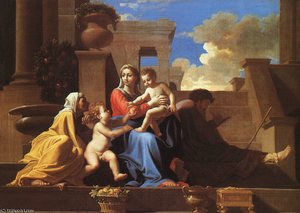
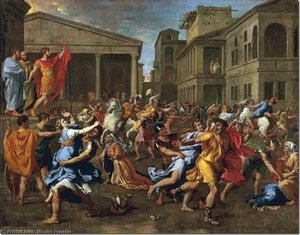
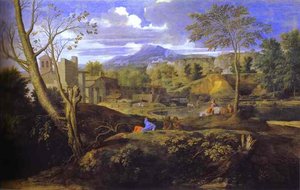
Biografía del artista
vida temprana y formación
nicolás poussin, nacido en junio de 1594, fue la quintaesencia de la pintura barroca francesa clásica. A pesar de pasar la mayor parte de su carrera en Roma, permaneció profundamente arraigado en las tradiciones artísticas francesas. Sus primeros días como pintor estuvieron envueltos en incertidumbre, pero ya en 1612 había iniciado estudios formales en París, absorbiendo influencias de artistas menos conocidos antes de ser atraído a Roma en 1624.estilo artístico e influencias
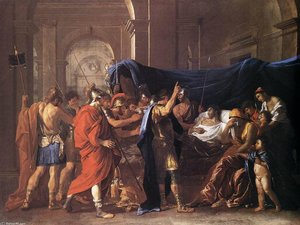
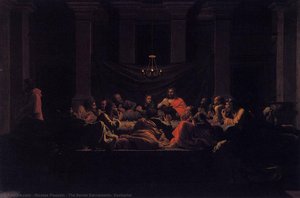
El estilo estético de Poussin, celebrado por su composición coherente y priorización de la linealidad, sentó un precedente que influyó en maestros como jacques-luís david y paul cézanne bien hasta el siglo XX. Su estilo distintivo se cristalizó a través de obras maestras como la muerte de germanicus y su seminal serie de los siete sacramentos.obras notables y museos
- nicolás poussin: autorretrato 1 (barroco, óleo), un testimonio de su maestría en el medio.
- bacanal frente a un templo (74 x 101 cm, Legión de Honor, San Francisco, Estados Unidos, óleo sobre lienzo), que muestra su capacidad para equilibrar la composición y la narrativa.
- el musée des beaux-arts de carcassonne, un destino imprescindible para los amantes del arte, que alberga una impresionante colección de pinturas occidentales desde el siglo XVII hasta el XX.
legado e impacto
La lealtad de Poussin permaneció en Roma, donde finalmente se centró en incorporar paisajes expansivos a su arte. Su madurez como artista está encapsulada en obras como Orión ciego buscando el sol y las estaciones, que anunciaron una era de composición rigurosa impregnada de la belleza serena del mundo natural.explore más con ArtsDot.com
descubra las obras maestras del musée france e inicie su viaje al mundo de la pintura barroca francesa con musée picasso, musée des beaux-arts de carcassonne y otros museos notables. Visite la página de nicolás poussin en ArtsDot.com para explorar más de sus obras y aprender sobre el contexto en el que fueron creadas.referencias
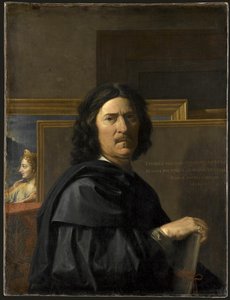
Nicolás Poussin
1594 - 1665 , Francia
Datos clave
- Artistas Influenciados:
- Jacques-Louis David
- Paul Cézanne
- Artistas Que Influyeron:
- Rafael
- Tiziano
- Fecha De Muerte: 1665
- Fecha De Nacimiento: Junio de 1594
- Lugar De Nacimiento: Le Havre, Francia
- Movimiento Artístico: Barroco clásico
- Nacionalidad: Francés
- Nombre Completo: Nicolás Poussin
- Obras Notables:
- La Muerte de Germanicus
- Los Siete Sacramentos
- Una Carretera Romana
- Orion Ciego Buscando el Sol
- Las Estaciones
Artículos relacionados
Nicolas Poussin: Classicism, Allegory & Order in 17th-Century French Painting
Explore the life & work of Nicolas Poussin, a master of French Classicism. Discover his allegorical paintings, Roman influences, and enduring impact on art history. Expert analysis & insights.

Baroque Classicism: Reconciling Drama & Order in 17th-Century Art
Explore the captivating world of Baroque Classicism! Discover its history, key artists like Caravaggio & Rubens, and defining characteristics. Expert insights & high-quality reproductions at ArtsDot.

The Dramatic Flourish: Exploring the Baroque Movement's Enduring Legacy in Art History
Explore the dramatic world of Baroque art! Discover iconic artists like Caravaggio & Rubens, defining techniques, and its lasting impact on art history. Expert insights for collectors & enthusiasts at ArtsDot.
Barroco en su Esplendor: 10 Obras Maestras que Definieron una Época | ArtsDot
Descubre las 10 obras maestras del Barroco que revolucionaron el arte. Caravaggio, Rembrandt y Velázquez te esperan en ArtsDot. Reproducciones de alta calidad para decorar tu hogar con la grandeza de este estilo. ¡Explora la colección online!
El Legado Perenne del Clasicismo: Principios Fundamentales, Evolución e Influencia en el Arte Occidental
Descubre la historia del arte clásico occidental: desde sus orígenes en Grecia y Roma hasta su influencia en el Renacimiento y las corrientes contemporáneas. Análisis experto, artistas clave y obras maestras imperdibles.