

 Ver en contexto
 Enviar
 Compartir
 Detalles

 Descargar
 Similares
 Radiografía
 Presentación de diapositivas
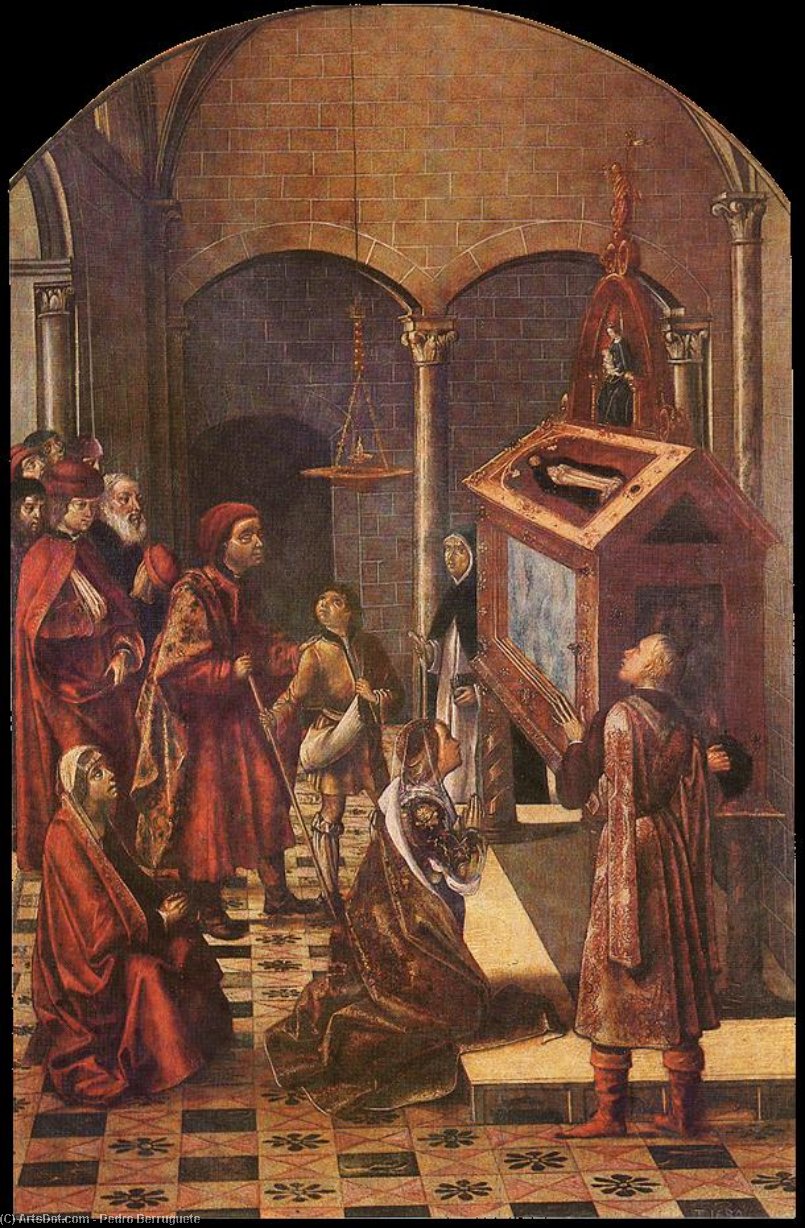
The Tomb of Saint Peter Martyr
 Acrylic On Canvas
- WallArt
- Renaissance Humanism
 1495
1495 131.0 x 85.0 cm
 Museo del Prado
 Ver más
Reproducción al óleo hecha a mano
Óleo sobre lienzo pintado a mano en el tamaño y marco de su elección, realizado por encargo por nuestros artistas. ( Comprar impresión Comprar imagen)




P118B $10

P118H $10

P118W $10

P438Z $10

P508JH $12

P508YH $12

P805H $10

P805Z $10

P919BZ $10

P919G $10

P919XJ $10

P959ZH $10

P968JZ $12

W106C $8

W218G $10

W218JH $8

W218Y $10

W307PJ $10

W316G $10

W316PJ $8

W316Y $10

W398PJ $8

W4111J $10

W500HY $15

W500JH $15

W692G $12

W849H $8

W940BG $15

W953PJ $8




Elija entre nuestros tamaños predefinidos que respetan las proporciones originales de la obra.

Puede ingresar sus propias dimensiones para adaptarse a un marco o espacio específico. Si el tamaño seleccionado no coincide con las proporciones de la imagen original, recortaremos la obra o extenderemos la pintura con elementos adicionales pintados a mano. Se le enviará una maqueta digital para su aprobación antes de comenzar la producción.
Tenga en cuenta que la vista previa en pantalla no refleja el recorte o la extensión reales. Solo la maqueta mostrará con precisión la composición final.
Si bien existen tamaños personalizados, recomendamos seleccionar una dimensión de la lista predefinida para preservar las proporciones originales.
Tras realizar el pedido, el equipo de ArtsDot.com enviará un correo electrónico al cliente para solicitar instrucciones y proporcionarle una vista previa del boceto.
Envío a todo el mundo () en 3-4 semanas en lugar de las 5 semanas estándar. (28 agosto). Sin comprometer la calidad.

Envío exprés gratuito a todo el mundo

Lienzo de lino de alta calidad

Seguro de envío total

Garantía de reembolso de impuestos aduaneros

Garantía de fidelidad cromática exacta

Política de devolución de 60 días (solo por defectos)

Garantía de devolución del 100% del dinero

Descuento por cantidad
 La opción de vidrio solo está disponible en tamaños inferiores a 110 cm.

The Tomb of Saint Peter Martyr
Técnica de reproducción
Dimensiones de la reproducción
-


Precio total final
$ 263
A Moment of Reverence: Pedro Berruguete’s “The Tomb of Saint Peter Martyr”
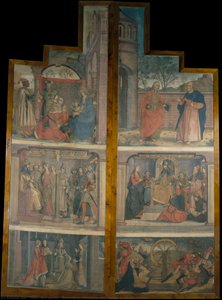
Pedro Berruguete's "The Tomb of Saint Peter Martyr," painted in 1495, stands as a testament to the burgeoning Renaissance spirit wrestling with the lingering influence of Gothic artistic conventions. Created during a period of significant cultural transformation in Spain—a time when humanist thought was gaining traction alongside the rediscovery of classical ideals—this monumental altarpiece offers a glimpse into the spiritual landscape of its era and showcases Berruguete’s remarkable ability to synthesize disparate stylistic approaches.
Subject Matter & Style: The painting depicts Saint Peter Martyr, a Roman Christian martyr venerated for his unwavering faith during persecution under Nero. The scene portrays him kneeling before a tomb—a common motif in Gothic art symbolizing mortality and divine judgment—yet Berruguete’s execution distinguishes itself through careful attention to perspective and anatomical accuracy, hallmarks of the Renaissance movement. Unlike the flattened planes and stylized figures characteristic of earlier Gothic works, Berruguete employs realistic proportions and shading to convey depth and emotion.
Technique & Materials: Berruguete utilized tempera paint on wood panel—a technique favored by Flemish masters but increasingly adopted in Spain during this period. Tempera pigments bind together with egg yolk, resulting in vibrant colors and exceptional durability. The artist meticulously rendered the drapery of Saint Peter Martyr’s robe, utilizing subtle gradations of light and shadow to create a palpable sense of texture and volume. Furthermore, Berruguete skillfully incorporated two birds—one perched atop the tomb and another positioned near its base—likely representing angels or doves symbolizing peace and divine grace – symbols frequently found in religious iconography.
Historical Context: The painting emerged from the artistic milieu of Valladolid, where Berruguete served as court painter to Isabella I and Ferdinand II. This royal patronage fostered a climate of intellectual curiosity and artistic experimentation, propelling Spain toward the forefront of European culture. “The Tomb of Saint Peter Martyr” reflects the humanist preoccupation with human dignity and spiritual contemplation—themes central to Renaissance philosophy—while simultaneously retaining elements of Gothic solemnity.
Symbolism & Emotional Impact: Beyond its depiction of martyrdom, the artwork embodies profound symbolic significance. The tomb itself represents death and resurrection—a cornerstone of Christian belief—serving as a reminder of humanity’s mortality yet affirming faith in eternal life. Berruguete's masterful rendering captures the solemnity of prayer and devotion, inviting viewers to contemplate themes of piety and spiritual transcendence. Its enduring beauty continues to inspire admiration for its artistic merit and its ability to evoke feelings of reverence and contemplation.
Recommended Reproduction: A high-quality reproduction of “The Tomb of Saint Peter Martyr” would bring the grandeur of Berruguete’s vision into any interior space, offering a captivating glimpse into Renaissance spirituality and artistic innovation. Consider framing it in a classic baroque style to enhance its visual impact.
Obras relacionadas
![Scrovegni - [32] - Cristo Antes De Caifas — Giotto Di Bondone, Primer Renacimiento](/media/artworks/images-thumb/11/55/1155f5d5b022208f5068323eadb7f812.jpg)
Biografía del artista
Pedro Berruguete: Bridging Gothic Legacy and Renaissance Dawn
Pedro Berruguete (c. 1450 – 1504) stands as a pivotal figure in Spanish art history, marking the crucial transition between the solemn grandeur of Gothic painting and the burgeoning optimism of the Italian Renaissance. Born in Paredes de Nava, Castile, his exact birth year remains elusive, shrouded in the vagueness characteristic of artists whose lives were documented sparsely during their time. His lineage traced back to noble families, providing him with a foundation for artistic pursuits that would ultimately reshape the visual landscape of Spain. Despite the lack of definitive biographical details—a frustrating impediment for art historians—Berruguete’s oeuvre speaks volumes about his profound understanding and masterful execution of stylistic innovations. He emerged from the shadow of Gothic tradition, absorbing its expressive fervor and meticulous detail, yet simultaneously embracing the humanist ideals and geometric precision championed by Florentine masters like Brunelleschi and Donatello. This duality is palpable in his paintings, where stylized figures coexist with carefully rendered drapery and architectural elements—a hallmark of the emerging Renaissance aesthetic. Consider “David,” a monumental sculpture embodying both Gothic reverence for biblical narratives and Renaissance anatomical accuracy; it exemplifies Berruguete’s ability to synthesize disparate artistic influences into a cohesive visual language. His artistic journey gained momentum during a period marked by religious upheaval; Berruguete’s most celebrated works depict scenes from the early Inquisition, capturing the anxieties and moral dilemmas of the era with unflinching realism. The dramatic compositions—often featuring figures caught in moments of intense emotion—reflect the psychological depth characteristic of Renaissance art while retaining elements of Gothic expressive intensity. His retablo panels for Castilian churches are particularly noteworthy, demonstrating his technical prowess and ability to convey profound spiritual narratives. These commissions solidified his reputation as a leading artist of his time and cemented his place within the artistic canon. The speculation surrounding Berruguete’s travels to Italy in 1480 is intriguing. Evidence suggests he spent time at Federico III da Montefeltro's court in Urbino, immersing himself in the vibrant artistic environment fostered by Lorenzo de Medici’s patronage. While attribution remains debated—with Justus van Gent also active in Urbino during that period—the influence of Italian Renaissance artists undoubtedly permeated Berruguete’s thinking and technique. He returned to Spain in 1482, establishing studios in Toledo and Ávila, where he continued to refine his style and produce monumental artworks. This return marked a decisive moment in his artistic development, allowing him to integrate Renaissance principles into his distinctive Gothic framework. Perhaps most importantly, Berruguete is recognized as the father of Alonso Berruguete (c. 1475–1561), arguably Spain’s greatest sculptor during the Renaissance. This familial connection further elevates Berruguete's significance—his son’s sculptural achievements served as a testament to his artistic legacy and established a powerful tradition within Spanish art. The distinction between “Pedro” and “Alonso” reflects the broader cultural shift occurring in Spain, where older masters nurtured younger talents, propelling artistic innovation forward. His sculptures – notably "The Ecstasy of Saint Teresa" – continue to inspire awe and admiration for their expressive power and masterful craftsmanship. Berruguete’s contribution to Spanish art is undeniable—he stands as a beacon of artistic transition, embodying the spirit of a nation embracing new horizons while honoring its venerable past.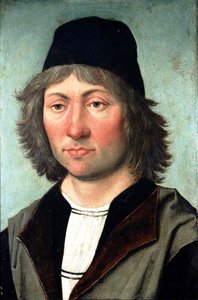
Pedro Berruguete
1450 - 1504 , España
Datos clave
- Artistic Movement Or Style: Transición entre Gótico y Renacimiento
- Artists Or Movements Influenced By This Artist: ['Lorenzo de Medici']
- Artists Who Influenced This Artist: ['Justus van Gent']
- Date Of Birth: c. 1450
- Date Of Death: 1504
- Full Name: Pedro Berruguete
- Nationality: Español
- Notable Artworks:
- David
- Ezekiel
- Salomon
- Place Of Birth: Paredes de Nava, España
Artículos relacionados
Las 10 Obras Maestras del Alto Medieval: Arte, Historia y Decoración Exclusiva
Descubre las 10 obras maestras del Alto Medieval. Explora la historia, el simbolismo y la belleza de la pintura románica y gótica. Reproducciones exclusivas en ArtsDot.com para decorar tu hogar con arte atemporal.
The Golden Age Reforged: Dramatic Realism & Religious Zeal in Spanish Baroque Art
Explore the dramatic world of Spanish Baroque art! Discover masters like Zurbarán & the powerful influence of religious zeal on painting techniques – a guide for collectors and enthusiasts.
El Crepúsculo Radiante de la Visión Medieval: Fe, Forma y Emotividad en el Arte Gótico Tardío (c. 1300-1500)
Explore el esplendor del arte gótico tardío (c. 1300-1500). Descubra la síntesis de fe, forma y emoción en la pintura internacional, los retablos medievales y la influencia de Giotto. Análisis experto.
10 Obras Maestras Medievales que Definen el Arte (y tu Hogar)
Descubre 10 obras maestras del arte medieval, desde Duccio a Van Eyck. Explora la historia, simbolismo y belleza de Giotto, Simone Martini y más. Encuentra reproducciones de alta calidad para decorar tu hogar en ArtsDot.com.
La Sombra de la Fe: Explorando la Intensidad Espiritual y la Innovación Arquitectónica del Arte Gótico
Descubre la profunda espiritualidad y la innovadora arquitectura del arte gótico. Explora la Basílica de Saint-Denis, su simbolismo cristiano y el legado duradero de este fascinante estilo. Análisis experto en ArtsDot.

