 Ver en contexto
 Enviar
 Compartir
 Detalles

 Descargar
 Similares
 Radiografía
 Presentación de diapositivas
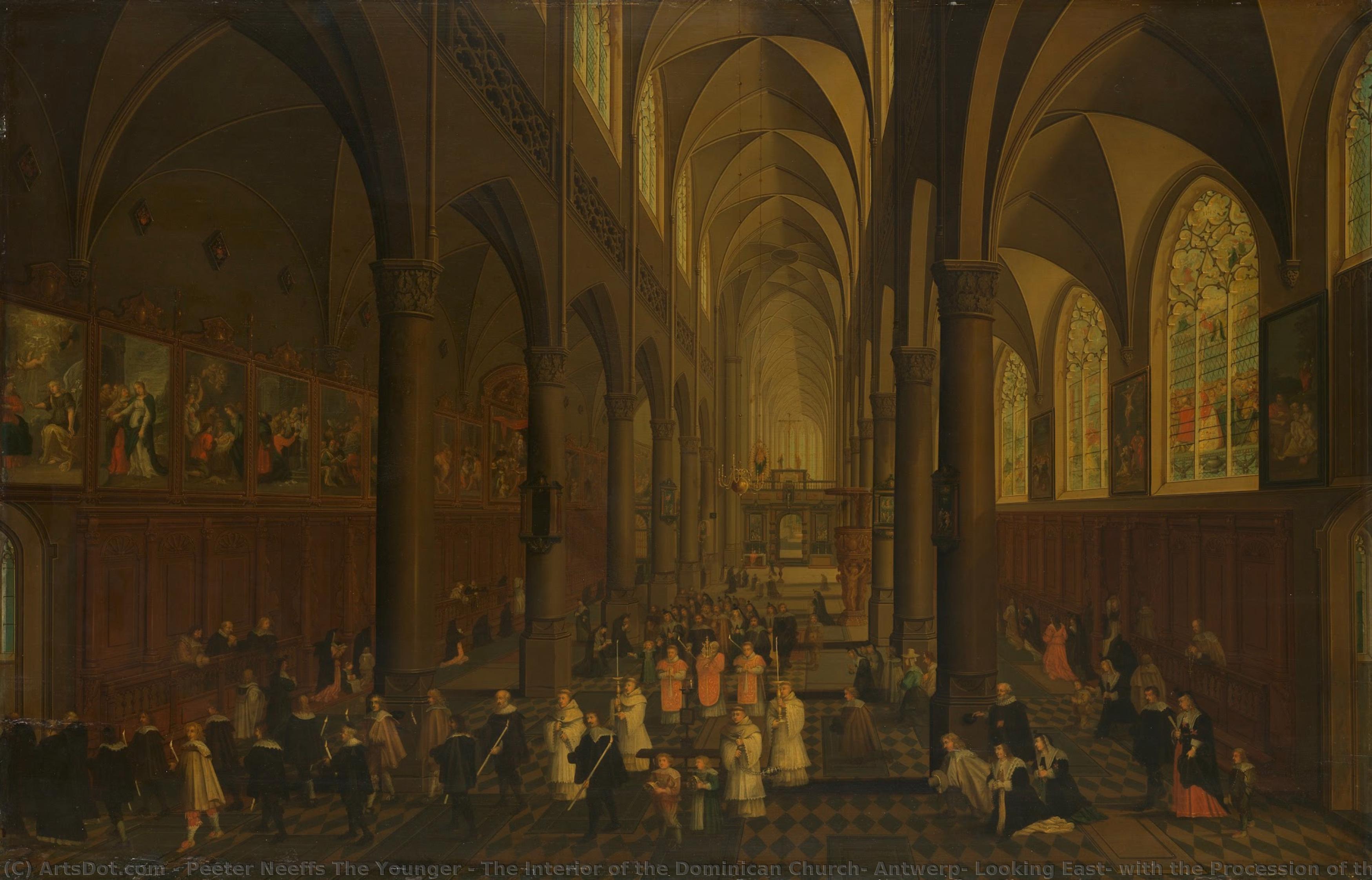
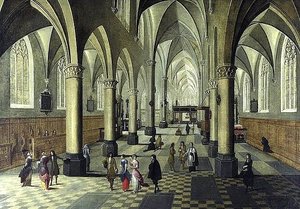
The Interior of the Dominican Church, Antwerp, Looking East, with the Procession of the Holy Sacrament, Peeter Neeffs (I), 1636
 1636
1636 68.0 x 105.0 cm
 Ver más
Reproducción al óleo hecha a mano
Óleo sobre lienzo pintado a mano en el tamaño y marco de su elección, realizado por encargo por nuestros artistas. ( Comprar impresión Comprar imagen)




































Elija entre nuestros tamaños predefinidos que respetan las proporciones originales de la obra.

Puede ingresar sus propias dimensiones para adaptarse a un marco o espacio específico. Si el tamaño seleccionado no coincide con las proporciones de la imagen original, recortaremos la obra o extenderemos la pintura con elementos adicionales pintados a mano. Se le enviará una maqueta digital para su aprobación antes de comenzar la producción.
Tenga en cuenta que la vista previa en pantalla no refleja el recorte o la extensión reales. Solo la maqueta mostrará con precisión la composición final.
Si bien existen tamaños personalizados, recomendamos seleccionar una dimensión de la lista predefinida para preservar las proporciones originales.
Tras realizar el pedido, el equipo de ArtsDot.com enviará un correo electrónico al cliente para solicitar instrucciones y proporcionarle una vista previa del boceto.
Envío a todo el mundo () en 3-4 semanas en lugar de las 5 semanas estándar. (31 agosto). Sin comprometer la calidad.

Envío exprés gratuito a todo el mundo

Lienzo de lino de alta calidad

Seguro de envío total

Garantía de reembolso de impuestos aduaneros

Garantía de fidelidad cromática exacta

Política de devolución de 60 días (solo por defectos)

Garantía de devolución del 100% del dinero

Descuento por cantidad
 La opción de vidrio solo está disponible en tamaños inferiores a 110 cm.

The Interior of the Dominican Church, Antwerp, Looking East, with the Procession of the Holy Sacrament, Peeter Neeffs (I), 1636
Técnica de reproducción
Dimensiones de la reproducción
-


Precio total final
$ 263
Obras relacionadas




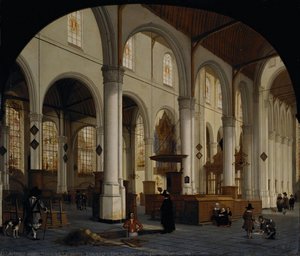
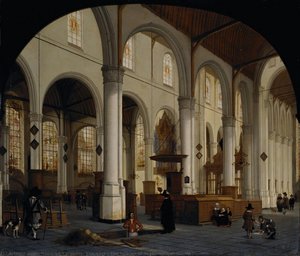
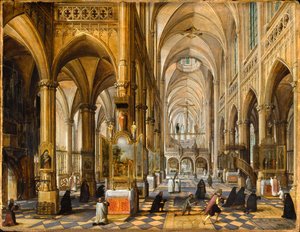

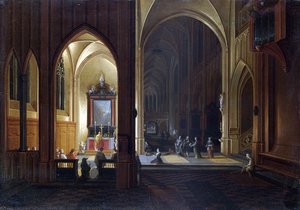
Biografía del artista
Peeter the Younger Neeffs: Un maestro de la luz y la sombra en el corazón de las iglesias
Peeter the Younger Neeffs, un nombre quizás menos conocido que los de Rubens o Van Dyck, sin embargo, se erige como una figura significativa del arte flamenco del siglo XVII. Nacido en Amberes en 1620 y trágicamente fallecido alrededor de 1675, Neeffs forjó su propio nicho artístico principalmente a través de la representación cautivadora de interiores de iglesias – espacios impregnados tanto de grandeza como de una íntima sensación de espiritualidad. Si bien los detalles biográficos permanecen en gran medida escasos, su obra maestra habla por sí sola sobre su habilidad, meticulosidad y profundo entendimiento de la luz, la composición y la experiencia humana dentro de estos lugares sagrados.
La vida temprana de Neeffs está envuelta en un grado de oscuridad. Era el hijo menor de Pieter Neefs the Elder, un respetado pintor arquitectónico ya establecido en Amberes. Esta conexión familiar sin duda desempeñó un papel crucial para dar forma a su trayectoria artística, proporcionándole un aprendizaje dentro del taller de su padre y exponiéndolo a una rica tradición de representación de espacios religiosos. A diferencia de su padre, que a menudo se centraba en composiciones grandiosas y abarcadoras, Neeffs desarrolló una fascinación particular por las sutiles nuances de la luz y la sombra dentro de estos interiores – una técnica que se convertiría en la marca registrada de su estilo.
El arte del interior: Una visión única
La principal materia prima de Neeffs era el interior arquitectónico de iglesias, particularmente las de la Catedral de Amberes. Sin embargo, no simplemente reproducía estructuras existentes; más bien, creaba espacios imaginarios – una mezcla de realismo y licencia artística – que capturaban un profundo sentido de atmósfera y emoción. Estos no eran meros ejercicios técnicos en perspectiva; sino narrativas cuidadosamente construidas, a menudo representando procesiones o ceremonias religiosas que se desarrollaban en la nave oscura. Sus composiciones suelen presentar una profunda recesión hacia el espacio, lograda mediante un magistral uso de la perspectiva lineal, atrayendo al espectador hacia un punto de fuga invisible. La luz, en particular, era su principal herramienta; Neeffs dominaba el arte del *chiaroscuro*, creando contrastes dramáticos entre la luz y la sombra para dar profundidad, volumen y dramatismo a sus escenas.
Neeffs no se limitaba a representar la arquitectura; buscaba evocar una atmósfera espiritual. A menudo pintaba interiores bañados en un suave resplandor, emanando de ventanas invisibles o vidrieras coloridas, o utilizando contrastes bruscos para resaltar figuras específicas o detalles arquitectónicos. Esta hábil manipulación de la luz no era meramente decorativa; servía para realzar el significado espiritual de la escena y evocar una sensación de reverencia.
Colaboración e influencias
La práctica artística de Neeffs estuvo profundamente entrelazada con la colaboración. A menudo trabajaba junto a otros pintores prominentes de Amberes, como su propio padre, Pieter Neefs the Elder, así como Frans Francken III, David Teniers the Younger y Bonaventura Peeters the Elder. Estas colaboraciones le permitieron ampliar su repertorio y perfeccionar su técnica. Las similitudes estilísticas entre su obra y la de su padre a veces han creado desafíos para atribuir individualmente las obras, lo que destaca la complejidad de las líneas familiares artísticas dentro de la familia Neefs.
Si bien influenciado por los pintores arquitectónicos Hendrik van Steenwijck the Elder – particularmente sus interiores de iglesias nocturnas –, Neeffs desarrolló un estilo único caracterizado por su meticuloso detalle y profundidad psicológica. La influencia de los pintores holandeses del Siglo de Oro también es evidente en su uso del color y la composición, aunque mantuvo una sensibilidad flamenco distintiva.
Obras notables y legado
Entre las obras más celebradas de Neeffs se encuentran “Interior de una Iglesia” (Museo de Bellas Artes de Amberes), que ejemplifica su maestría en la luz y la perspectiva; “El Interior de la Iglesia Dominicana, Amberes, mirando hacia el este, con la procesión del Sagrado Sacramento” (Louvre), que demuestra su capacidad para capturar la dinámica de una ceremonia religiosa; y “San Eustace”, una poderosa representación del encuentro del santo con el ciervo. Estas pinturas demuestran no solo su habilidad técnica sino también su capacidad para infundir estos espacios arquitectónicos con un profundo resonancia emocional.
Hoy en día, las obras de Peeter the Younger Neeffs son posesiones apreciadas dentro de museos prestigiosos como el Museo del Prado en Madrid y la Galería Nacional en Londres. Su legado perdura como testimonio de la atracción duradera de representar espacios sagrados – un género que continúa inspirando a artistas y cautivando a los espectadores con su belleza evocadora y profundidad espiritual.
Para obtener más información sobre la vida y obra de Peeter the Younger Neeffs, visite https://ArtsDot.com/@/peeter the younger neeffs y explore ejemplos de sus pinturas en /es/art/show/art-d3cl2x-es/.
Peeter Neeffs el Joven
1620 - 1675 , Bélgica
Datos clave
- Artistic Movement Or Style: Barroco
- Artists Or Movements Influenced By This Artist:
- Steenwijck
- Holanda
- Artists Who Influenced This Artist:
- Rubens
- Van Dyck
- Date Of Birth: 1620 Antwerp, Bélgica
- Date Of Death: 1675
- Full Name: Peeter the Younger Neeffs
- Nationality: Flamenco
- Notable Artworks:
- Interior de Iglesia
- Santo Eustace
- Place Of Birth: Antwerp, Bélgica