

 Ver en contexto
 Enviar
 Compartir
 Detalles

 Descargar
 Similares
 Radiografía
 Presentación de diapositivas
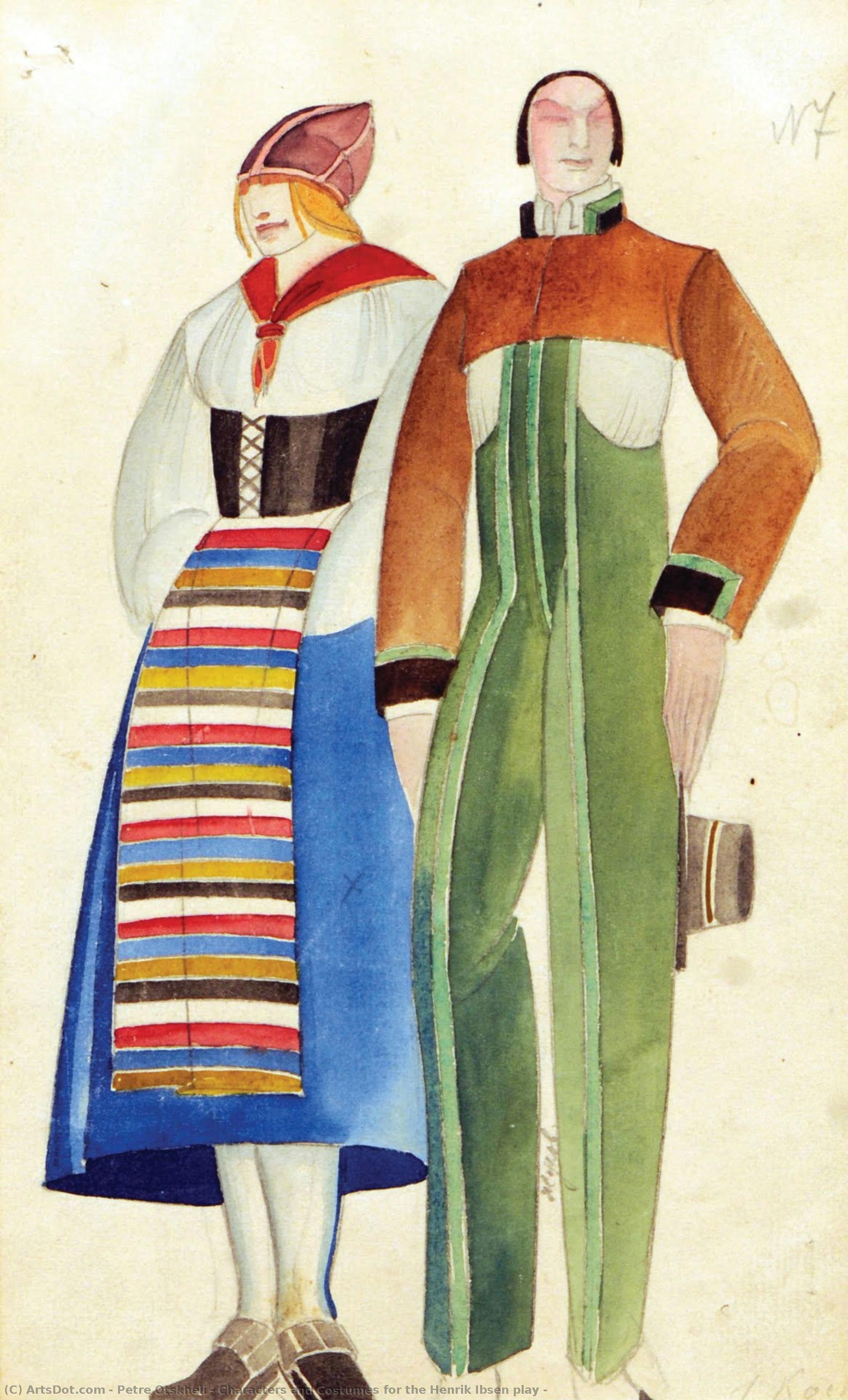
Characters and Costumes for the Henrik Ibsen play


 Ver más
Adquiera una imagen digital de alta resolución y optimizada, muy superior a la vista previa en línea.
Cada archivo es preparado meticulosamente por nuestros especialistas internos mediante el uso de herramientas avanzadas y un experto retoque manual. Nos aseguramos de que cada imagen posea una claridad excepcional, una precisión cromática impecable y un detalle minucioso.
El archivo final se entrega por correo electrónico en un plazo de 72 horas, optimizado para su uso inmediato en entornos profesionales, editoriales y de impresión. Esta es la misma calidad en la que confían los estudios de diseño, las editoriales y las galerías de primer nivel.
Imagen Digital
Descarga un archivo de alta resolución para exhibición personal, impresión y proyectos creativos. ( Comprar impresión Comprar pintura hecha a mano)
Incluido en cada pedido de imágenes digitales
Entrega digital experta, garantizada.
Al elegir ArtsDot.com, no solo está adquiriendo una imagen; está recibiendo una obra de arte digital mejorada profesionalmente, elaborada con precisión y respaldada por una garantía de satisfacción. Esto es todo lo que incluye su pedido, automáticamente:

Entrega rápida por email
Recibirá su archivo de imagen digital en alta resolución por correo electrónico en un plazo de 72 horas tras realizar su pedido, listo para su uso inmediato.

Archivo digital optimizado por IA
Su obra de arte se optimiza profesionalmente mediante herramientas avanzadas de IA y edición manual, garantizando el máximo detalle, claridad y precisión cromática.

Reenvío gratuito de por vida
¿Has borrado o perdido tu archivo por error? No te preocupes: te lo volveremos a enviar en cualquier momento, sin coste adicional.

Sin gastos de importación, siempre
Disfrute de su obra de arte al instante sin aduanas, aranceles ni gastos de envío; las descargas digitales siempre están libres de impuestos.

Garantía de fidelidad de color
Garantizamos que su imagen digital refleje los colores originales con la mayor fidelidad posible, mediante el uso de herramientas profesionales y gestión del color.

Garantía de satisfacción de 60 días
Si no está satisfecho con su imagen digital, la revisaremos o le reembolsaremos el 100% en un plazo de 60 días, sin preguntas.

100% Garantía de devolución de dinero
¿No está satisfecho? Obtenga un reembolso completo dentro de los 60 días posteriores a la recepción de su archivo digital, sin necesidad de explicaciones.

Descuentos por pedidos grandes
Compra 3 imágenes, ahorra 10% - Compra 5, ahorra 15% - Compra 10+, ahorra 20%. Ideal para proyectos creativos, galerías y agencias.
A Visionary Blueprint: Petre Otskheli’s Dramatic Sketches
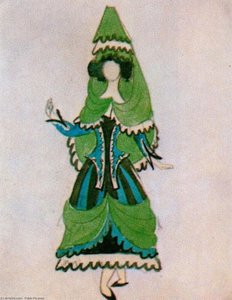
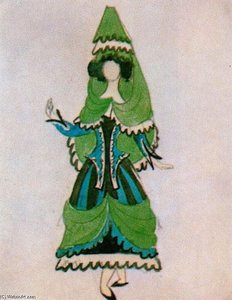
In the delicate interplay of color and character, "Characters and Costumes for the Henrik Ibsen play" serves as a captivating window into the mind of a master scenographer. Created in 1931, this intimate work by the Georgian modernist Petre Otskely transcends mere preparatory sketching to become a vibrant piece of theatrical storytelling. The painting presents two figures poised in a moment of stillness, their identities defined by the striking contrast of a bold red scarf against the deep, structured elegance of a green suit. This composition does more than just depict clothing; it captures the very essence of persona, inviting the viewer to step behind the curtain and witness the birth of a dramatic world.
The technique employed here reflects Otskheli’s profound understanding of visual weight and stage presence. Through a masterful use of color blocking and precise linework, the artist breathes life into the fabric of the costumes. The placement of accessories—the subtle inclusion of handbags that anchor the composition—adds a layer of domestic realism to the theatrical artifice. For the discerning collector or interior designer, this piece offers a sophisticated focal point, where the rhythmic balance of primary tones provides a sense of structured energy that can enliven a modern gallery wall or a classic study.
The Intersection of Modernism and Tragedy
To look upon this work is to touch the fleeting brilliance of the Georgian avant-garde. Petre Otskheli was a pioneer of scenographic constructivism, a movement that sought to redefine the relationship between the performer and the stage space. His collaboration with legendary director Kote Marjanishvili allowed him to experiment with shapes and textures that would eventually influence the trajectory of Georgian scenic design. This specific piece, intended for an Ibsen production, carries the weight of psychological depth inherent in Ibsen's dramas, translated through Otskheli’s modernist lens.
Yet, beneath the vibrant hues and meticulous costume details lies a poignant historical shadow. The era in which Otskheli worked was one of immense creative flowering shadowed by rising political darkness. As a figure caught in the turbulent shifts of the 1930s, Otskheli’s life ended tragically, making his surviving sketches even more precious as remnants of a lost golden age of design. Owning a reproduction of this work is not merely an acquisition of aesthetic beauty; it is an act of preserving a vital fragment of art history, celebrating a legacy of innovation that refused to be silenced by the passage of time.
Obras relacionadas
Biografía del artista
Early Life and Artistic Foundations
Petre Otskheli, a name now synonymous with tragic beauty and revolutionary design, emerged from the heart of Georgia in 1907, specifically in Kutaisi. His early life was steeped in a rich cultural heritage, a foundation that would profoundly shape his artistic vision. Born into a family of considerable means, he received an education rooted in both classical arts and a burgeoning interest in modernism. He began his formal training at the Kutaisi Real School, absorbing the principles of traditional Georgian art while simultaneously exploring new aesthetic possibilities. Later, he continued his studies at the Tbilisi State Academy of Arts, where he honed his skills in painting and design within a more academically rigorous environment. This dual exposure—to established traditions and emerging modernism—proved crucial to Otskheli’s unique artistic identity. It was during this period that he developed a deep appreciation for geometric forms, theatrical space, and the potential of stage design as a powerful visual language.A Creative Partnership with Kote Marjanishvili
Otskheli's career truly took flight in 1928 when he was invited to join the theatre of Kote Marjanishvili in Kutaisi. This collaboration proved to be transformative, marking the beginning of a remarkable creative partnership that would define his artistic trajectory. Marjanishvili, a visionary director known for his innovative approach to staging and costume design, recognized Otskheli’s exceptional talent and provided him with an unparalleled platform to experiment and develop his distinctive style. Under Marjanishvili's guidance, Otskheli quickly established himself as a leading figure in Georgian theatre, creating visually arresting sets and costumes that pushed the boundaries of conventional stagecraft. His early works, such as “Uriel Acosta,” were characterized by their bold geometric forms, dynamic spatial arrangements, and a striking use of color—elements that would become hallmarks of his later work.Constructivism and the Moscow Stage
Following his success in Kutaisi, Otskheli’s career took an international turn when he was recruited to the Moscow Maly Theatre in 1936 by Sergo Amaghlobeli, another influential director. This move marked a significant shift in his artistic focus, as he embraced the principles of Constructivism—a revolutionary art movement that sought to dismantle traditional aesthetic conventions and create new forms based on geometric abstraction and functional design. Working with Amaghlobeli, Otskheli developed a highly stylized approach to stage design, utilizing simplified shapes, stark color palettes, and dynamic spatial arrangements to evoke powerful emotional responses in the audience. His designs for productions such as “The Dum Have Spoken” demonstrated his mastery of Constructivist principles while simultaneously retaining a distinctly Georgian sensibility. This period represented the peak of Otskheli’s creative output, showcasing his ability to synthesize diverse influences into a cohesive and compelling artistic vision.Tragic End and Lasting Legacy
Unfortunately, Otskheli's career was tragically cut short in 1937 during the height of Stalin’s Great Purge. Accused of “counter-revolutionary activities”—trumped-up charges designed to silence dissenting voices—he, along with his fellow countryman Sergo Amaghlobeli, were arrested and executed. Despite this devastating loss, Otskheli's work has endured as a testament to the power of artistic expression in the face of oppression. His innovative designs have had a profound influence on Georgian scenic design, inspiring generations of artists to explore new forms of visual storytelling. In 1939, his achievements were recognized with a gold medal at the International Exhibition of Stage Design in London—a poignant acknowledgment of his contributions to the world of theatre. Today, Otskheli’s work is celebrated for its bold originality, its masterful use of space and form, and its enduring relevance as a symbol of artistic courage and resilience. His legacy continues to resonate within the Georgian art community and beyond, reminding us of the importance of safeguarding cultural heritage in times of political turmoil.Key Artworks and Recognition
Petre Otskheli’s designs are held in prestigious collections worldwide, with significant examples residing in museums such as the Tretyakov Gallery in Moscow. His contributions to the Moscow Maly Theatre and the Kremlin Museum (Moscow, Russia) remain invaluable resources for scholars and enthusiasts of Russian art history. His work continues to be studied and admired for its innovative approach to stage design and its lasting impact on the development of modern theatre.
Petre Otskheli
1907 - 1937 , Georgia
Breves datos
- Artistic Movement Or Style: Constructivismo, Modernismo
- Artists Or Movements Influenced By This Artist: ['Teatro Georgiano']
- Artists Who Influenced This Artist: ['Kote Marjanishvili']
- Date Of Birth: 25 de noviembre de 1907
- Date Of Death: 2 de diciembre de 1937
- Full Name: Petre Otskheli
- Nationality: Georgiano
- Notable Artworks:
- Diseño Escénico
- Esquema Diseño
- Place Of Birth: Kutaisi, Georgia

