

 Vista previa
 Compartir
 Compartir
 Ver detalles

 Descargar
 Ver similares
 Radiografía
 Presentación de diapositivas
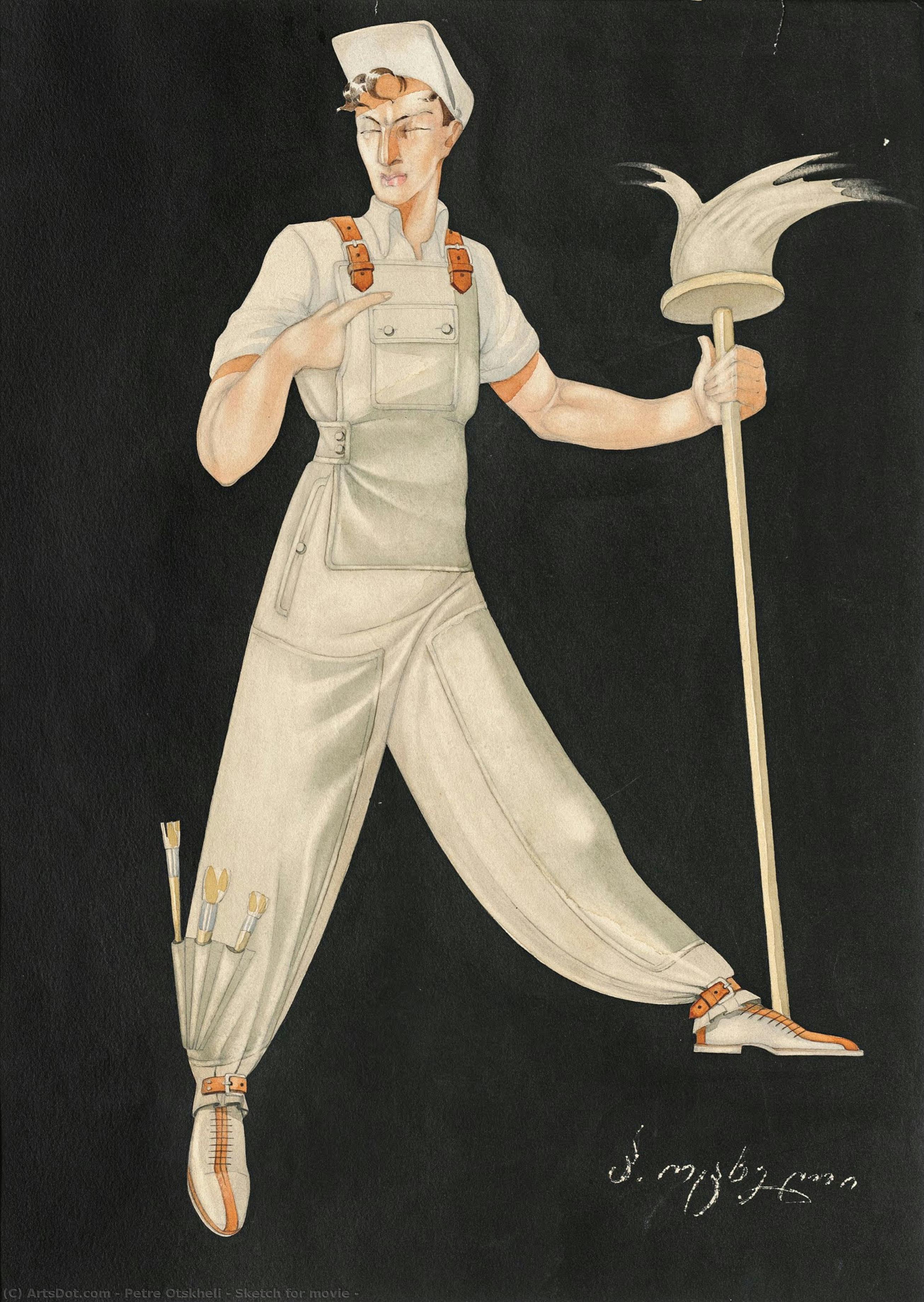
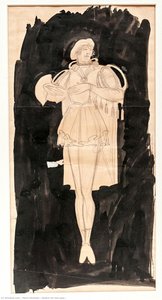
Sketch for movie
 1936
1936 42.0 x 31.0 cm
 Palacio de Arte de Georgia – Museo de Historia Cultural
 Leer más
Giclée / Impresión de arte
Impresiones giclée o en lienzo de calidad de museo con producción rápida y opciones de acabado flexibles. ( Encargar reproducción pintada a mano Comprar descarga)




































Elija entre nuestros tamaños predefinidos que respetan las proporciones originales de la obra.

Puede introducir sus propias dimensiones para adaptarse a un marco o espacio específico. Si el tamaño seleccionado no coincide con las proporciones de la imagen original, recortaremos la obra de arte o extenderemos la imagen con un borde con efecto espejo o de color sólido. Se enviará una maqueta digital para su aprobación antes de que comience la producción.
Tenga en cuenta que la vista previa en pantalla no refleja el recorte o la extensión real. Solo la maqueta mostrará con precisión la composición final.
Aunque existen tamaños personalizados, recomendamos seleccionar una dimensión de la lista predefinida para preservar las proporciones originales.
Envío a todo el mundo () en 2 semanas en lugar de las 4/5 semanas estándar. (21 agosto)

Envío exprés gratuito a todo el mundo

Lienzo de lino de alta calidad

Seguro de envío completo

Garantía de reembolso de aranceles aduaneros

Garantía de fidelidad cromática exacta

Política de devolución de 60 días (solo por defectos)

Garantía de devolución del 100% del dinero

Oferta por volumen
 La opción de vidrio solo está disponible en tamaños inferiores a 110 cm.

Sketch for movie
Giclée / Impresión de arte
Tamaño de la reproducción
-


Precio total
$ 62
Obras relacionadas






Biografía del artista
Early Life and Artistic Foundations
Petre Otskheli, a name now synonymous with tragic beauty and revolutionary design, emerged from the heart of Georgia in 1907, specifically in Kutaisi. His early life was steeped in a rich cultural heritage, a foundation that would profoundly shape his artistic vision. Born into a family of considerable means, he received an education rooted in both classical arts and a burgeoning interest in modernism. He began his formal training at the Kutaisi Real School, absorbing the principles of traditional Georgian art while simultaneously exploring new aesthetic possibilities. Later, he continued his studies at the Tbilisi State Academy of Arts, where he honed his skills in painting and design within a more academically rigorous environment. This dual exposure—to established traditions and emerging modernism—proved crucial to Otskheli’s unique artistic identity. It was during this period that he developed a deep appreciation for geometric forms, theatrical space, and the potential of stage design as a powerful visual language.A Creative Partnership with Kote Marjanishvili
Otskheli's career truly took flight in 1928 when he was invited to join the theatre of Kote Marjanishvili in Kutaisi. This collaboration proved to be transformative, marking the beginning of a remarkable creative partnership that would define his artistic trajectory. Marjanishvili, a visionary director known for his innovative approach to staging and costume design, recognized Otskheli’s exceptional talent and provided him with an unparalleled platform to experiment and develop his distinctive style. Under Marjanishvili's guidance, Otskheli quickly established himself as a leading figure in Georgian theatre, creating visually arresting sets and costumes that pushed the boundaries of conventional stagecraft. His early works, such as “Uriel Acosta,” were characterized by their bold geometric forms, dynamic spatial arrangements, and a striking use of color—elements that would become hallmarks of his later work.Constructivism and the Moscow Stage
Following his success in Kutaisi, Otskheli’s career took an international turn when he was recruited to the Moscow Maly Theatre in 1936 by Sergo Amaghlobeli, another influential director. This move marked a significant shift in his artistic focus, as he embraced the principles of Constructivism—a revolutionary art movement that sought to dismantle traditional aesthetic conventions and create new forms based on geometric abstraction and functional design. Working with Amaghlobeli, Otskheli developed a highly stylized approach to stage design, utilizing simplified shapes, stark color palettes, and dynamic spatial arrangements to evoke powerful emotional responses in the audience. His designs for productions such as “The Dum Have Spoken” demonstrated his mastery of Constructivist principles while simultaneously retaining a distinctly Georgian sensibility. This period represented the peak of Otskheli’s creative output, showcasing his ability to synthesize diverse influences into a cohesive and compelling artistic vision.Tragic End and Lasting Legacy
Unfortunately, Otskheli's career was tragically cut short in 1937 during the height of Stalin’s Great Purge. Accused of “counter-revolutionary activities”—trumped-up charges designed to silence dissenting voices—he, along with his fellow countryman Sergo Amaghlobeli, were arrested and executed. Despite this devastating loss, Otskheli's work has endured as a testament to the power of artistic expression in the face of oppression. His innovative designs have had a profound influence on Georgian scenic design, inspiring generations of artists to explore new forms of visual storytelling. In 1939, his achievements were recognized with a gold medal at the International Exhibition of Stage Design in London—a poignant acknowledgment of his contributions to the world of theatre. Today, Otskheli’s work is celebrated for its bold originality, its masterful use of space and form, and its enduring relevance as a symbol of artistic courage and resilience. His legacy continues to resonate within the Georgian art community and beyond, reminding us of the importance of safeguarding cultural heritage in times of political turmoil.Key Artworks and Recognition
Petre Otskheli’s designs are held in prestigious collections worldwide, with significant examples residing in museums such as the Tretyakov Gallery in Moscow. His contributions to the Moscow Maly Theatre and the Kremlin Museum (Moscow, Russia) remain invaluable resources for scholars and enthusiasts of Russian art history. His work continues to be studied and admired for its innovative approach to stage design and its lasting impact on the development of modern theatre.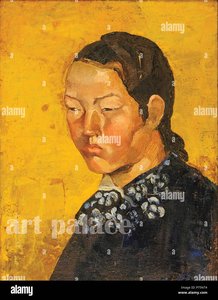
Petre Otskheli
1907 - 1937 , Georgia
Datos clave
- Artistic Movement Or Style: Constructivismo, Modernismo
- Artists Or Movements Influenced By This Artist: ['Teatro Georgiano']
- Artists Who Influenced This Artist: ['Kote Marjanishvili']
- Date Of Birth: 25 de noviembre de 1907
- Date Of Death: 2 de diciembre de 1937
- Full Name: Petre Otskheli
- Nationality: Georgiano
- Notable Artworks:
- Diseño Escénico
- Esquema Diseño
- Place Of Birth: Kutaisi, Georgia

