

 Ver en contexto
 Enviar
 Compartir
 Detalles

 Descargar
 Similares
 Radiografía
 Presentación de diapositivas
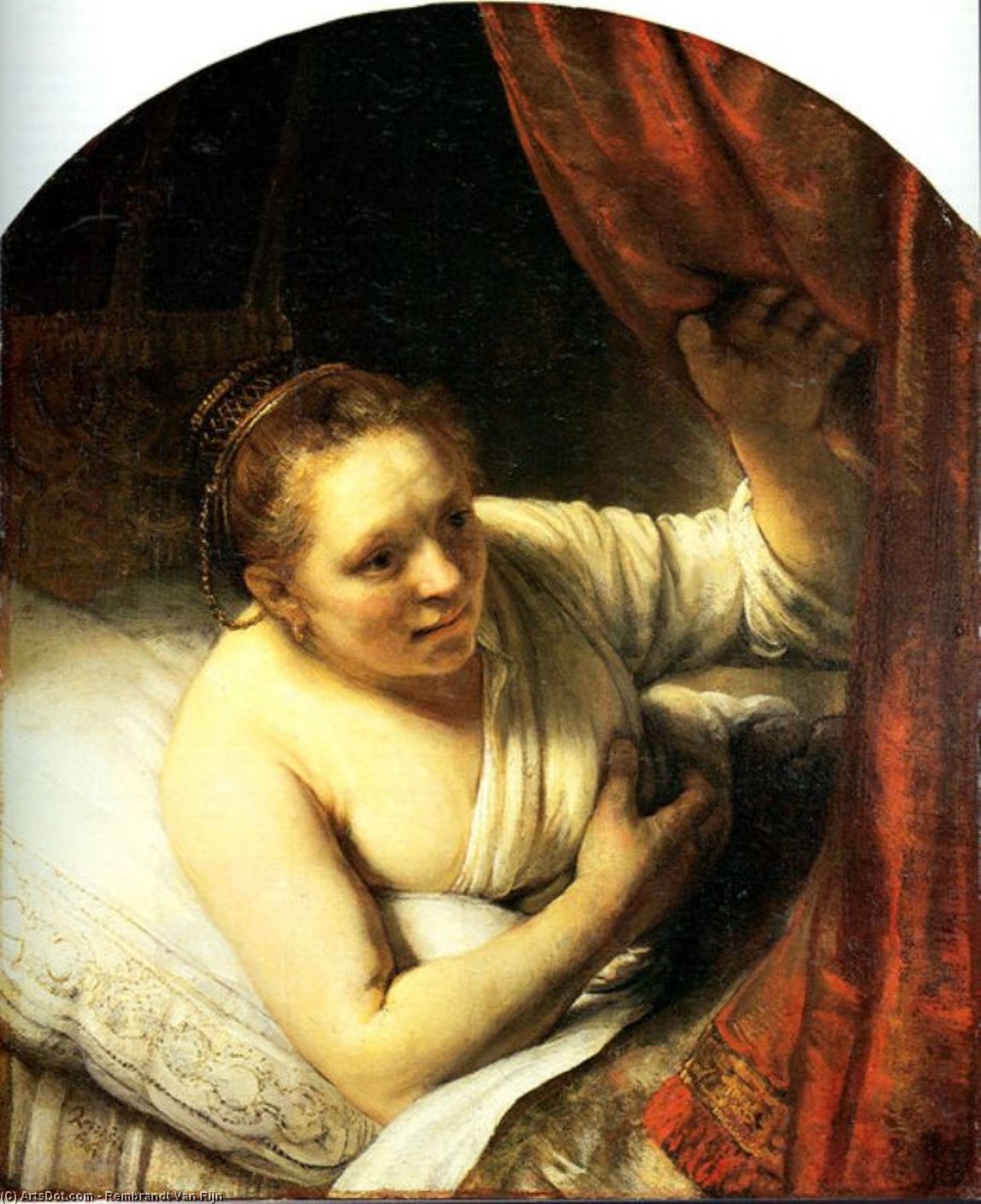
Joven mujer en la cama (también conocida como Sarah esperando a Tobias)
 Óleo sobre lienzo
- Arte de pared
- Baroque
 1647
1647- Renacimiento
 81.0 x 68.0 cm
 Ver más
Adquiera una imagen digital de alta resolución y optimizada, muy superior a la vista previa en línea.
Cada archivo es preparado meticulosamente por nuestros especialistas internos mediante el uso de herramientas avanzadas y un experto retoque manual. Nos aseguramos de que cada imagen posea una claridad excepcional, una precisión cromática impecable y un detalle minucioso.
El archivo final se entrega por correo electrónico en un plazo de 72 horas, optimizado para su uso inmediato en entornos profesionales, editoriales y de impresión. Esta es la misma calidad en la que confían los estudios de diseño, las editoriales y las galerías de primer nivel.
Imagen Digital
Descarga un archivo de alta resolución para exhibición personal, impresión y proyectos creativos. ( Comprar impresión Comprar pintura hecha a mano)
Incluido en cada pedido de imágenes digitales
Entrega digital experta, garantizada.
Al elegir ArtsDot.com, no solo está adquiriendo una imagen; está recibiendo una obra de arte digital mejorada profesionalmente, elaborada con precisión y respaldada por una garantía de satisfacción. Esto es todo lo que incluye su pedido, automáticamente:

Entrega rápida por email
Recibirá su archivo de imagen digital en alta resolución por correo electrónico en un plazo de 72 horas tras realizar su pedido, listo para su uso inmediato.

Archivo digital optimizado por IA
Su obra de arte se optimiza profesionalmente mediante herramientas avanzadas de IA y edición manual, garantizando el máximo detalle, claridad y precisión cromática.

Reenvío gratuito de por vida
¿Has borrado o perdido tu archivo por error? No te preocupes: te lo volveremos a enviar en cualquier momento, sin coste adicional.

Sin gastos de importación, siempre
Disfrute de su obra de arte al instante sin aduanas, aranceles ni gastos de envío; las descargas digitales siempre están libres de impuestos.

Garantía de fidelidad de color
Garantizamos que su imagen digital refleje los colores originales con la mayor fidelidad posible, mediante el uso de herramientas profesionales y gestión del color.

Garantía de satisfacción de 60 días
Si no está satisfecho con su imagen digital, la revisaremos o le reembolsaremos el 100% en un plazo de 60 días, sin preguntas.

100% Garantía de devolución de dinero
¿No está satisfecho? Obtenga un reembolso completo dentro de los 60 días posteriores a la recepción de su archivo digital, sin necesidad de explicaciones.

Descuentos por pedidos grandes
Compra 3 imágenes, ahorra 10% - Compra 5, ahorra 15% - Compra 10+, ahorra 20%. Ideal para proyectos creativos, galerías y agencias.
A Moment of Quiet Anticipation: Unpacking Rembrandt’s ‘Young Woman in Bed’
Rembrandt van Rijn's “Young Woman in Bed,” often referred to as “Sarah Waiting for Tobias,” is more than just a portrait; it’s a masterclass in psychological depth and the evocative power of light. Painted in 1647, this oil on canvas resides within the Von Der Heydt Museum in Wuppertal, Germany, offering viewers an intimate glimpse into a private moment suspended between expectation and uncertainty. The painting immediately draws us in with its muted palette – primarily deep reds, browns, and creams – creating a sense of quiet intimacy and almost palpable stillness. It’s a scene stripped bare of grand gestures or dramatic action, yet brimming with unspoken emotion.
At the heart of the composition lies a young woman, partially obscured by a crimson curtain that acts as both a barrier and a veil. Her face, only partially visible, is not one of overt beauty but rather one imbued with a profound sense of contemplation. Her gaze, directed outwards towards an unseen presence, speaks volumes about her inner life – a mixture of longing, anticipation, and perhaps even a touch of melancholy. The subtle curve of her lips, the slight furrow in her brow, all contribute to this captivating portrayal of human vulnerability. Notice how Rembrandt skillfully uses chiaroscuro—the dramatic contrast between light and shadow—to sculpt her form and draw our attention to the most expressive features. The darkness surrounding her isnrsquo;t merely absence of light; it actively shapes the narrative, suggesting a hidden world just beyond the frame.
- The Red Curtain: More than just decoration, the red curtain is a potent symbol. It represents privacy, intimacy, and perhaps even secrecy – hinting at a clandestine meeting or a deeply personal experience. Its color itself evokes passion, desire, and a hint of danger.
- The Unseen Tobias: The figure waiting for “Tobias” remains deliberately ambiguous. Rembrandt never explicitly identifies him, allowing the viewer to project their own interpretations onto the scene. Is he a lover? A family member? A messenger bearing news? This deliberate ambiguity is key to the paintingrsquo;s enduring appeal.
- The Room as Stage: The sparsely furnished room – the bed, the pillows, the sheets – creates a sense of domestic tranquility, yet it also feels strangely isolated and vulnerable. It's a stage set for a private drama, carefully constructed by Rembrandt to heighten the emotional impact.
Rembrandt’s Revolutionary Technique: Chiaroscuro and Emotional Resonance
“Young Woman in Bed” is a prime example of Rembrandtrsquo;s mastery of chiaroscuro, a technique he pioneered and perfected throughout his career. He doesnrsquo;t simply paint light and shadow; he uses them to sculpt the forms, define the space, and most importantly, to convey emotion. The strong contrasts between light and dark create a sense of drama and immediacy, pulling us into the scene and forcing us to confront the womanrsquo;s inner state. Observe how the light gently illuminates her face, highlighting her features while leaving the rest of the room shrouded in darkness — a deliberate choice that emphasizes her isolation and vulnerability.
Furthermore, Rembrandtrsquo;s use of impasto—thickly applied paint—adds texture and depth to the canvas, creating a tactile quality that invites us to reach out and touch the scene. The brushstrokes themselves are visible, adding another layer of complexity to the paintingrsquo;s visual language. This technique wasnrsquo;t merely about aesthetics; it was a means of expressing his artistic vision and imbuing the work with a sense of immediacy and authenticity.
A Timeless Portrait: Relevance in Modern Times
“Young Woman in Bed” continues to resonate deeply with contemporary audiences. Its themes – isolation, longing, anticipation, and the complexities of human relationships – are universal and timeless. The paintingrsquo;s quiet intimacy invites us to contemplate our own experiences of waiting, hoping, and yearning for something beyond our grasp.
Rembrandtrsquo;s ability to capture such profound emotion with such subtle means is a testament to his genius as an artist. “Young Woman in Bed” serves as a poignant reminder that the most powerful art often speaks volumes without uttering a single word. For those seeking to experience this masterpiece firsthand, ArtsDot.com offers meticulously crafted, hand-painted oil reproductions of “Young Woman in Bed,” allowing you to bring this iconic work into your own home and appreciate its beauty and complexity for years to come. Visit ArtsDot.com today to discover more about this painting and other stunning reproductions by Rembrandt van Rijn.
Photo Description: The painting is a portrait of a woman in bed with her head covered by a red curtain. She appears to be looking at something or someone outside the frame. The womanrsquo;s face is visible, but only half of it can be seen as she is partially hidden behind the curtain. In addition to the main subject, there are two other people in the painting, one on the left side and another on the right side. Both of these figures are also partially obscured by red curtains. The room has a bed with sheets and pillows, which adds to the cozy atmosphere of the scene. Size: 81 x 68 cm Date: 1647 ARTIST INFORMATION: ================== Artist: Rembrandt van Rijn Birth Year: 1606 Death Year: 1669 Birth City: Leiden Birth Country: Netherlands Biography:A Life Illuminated: The World of Rembrandt van Rijn
Rembrandt Harmenszoon van Rijn, a name synonymous with the Dutch Golden Age and the mastery of light and shadow, was born in Leiden, Netherlands, on July 15, 1606. His arrival coincided with a period of unprecedented prosperity and artistic flourishing for the young republic, a climate that would profoundly shape his life and work. The son of a miller, Harmen Gerritszoon van Rijn, and Neeltgen Willemsdochter van Zuytbrouck, from a family of bakers, Rembrandt received an education at Leidenrsquo;s Latin School, providing him with a foundation in classical learning that would later subtly inform his artistic narratives. His early artistic inclinations led to apprenticeships – first with Jacob van Swanenburg in Leiden around 1620, and then, crucially, a six-month period of study under Pieter Lastman in Amsterdam beginning in 1624. It was Lastmanrsquo;s dramatic use of light and shadow, his dynamic compositions filled with historical and
Obras relacionadas


Biografía del artista
Rembrandt van Rijn: Vida y Legado
Primeros Años y Educación (1606-1625)
- Rembrandt Harmenszoon van Rijn nació el 15 de julio de 1606 en Leiden, Países Bajos – un centro bullicioso durante la Edad Dorada de la República Holandesa.
- Su padre, Harmen Gerritszoon van Rijn, era molinero y su madre, Neeltgen Willemsdochter van Zuytbrouck, provenía de una familia de panaderos. Esto le proporcionó acceso a la educación en la Escuela Latina de Leiden.
- Alrededor de 1620, comenzó un aprendizaje con Jacob van Swanenburg en Leiden.
- Un período crucial de seis meses (1624) se pasó estudiando bajo Pieter Lastman en Ámsterdam, cuyo uso dramático de la luz y la sombra influyó profundamente en el trabajo temprano de Rembrandt.
- Al regresar a Leiden, estableció su propio estudio alrededor de 1625, compartiéndolo con el artista fellow Jan Lievens.
Carrera Temprana y Traslado a Ámsterdam (1625-1642)
- Rembrandt rápidamente ganó reconocimiento en Leiden por sus pinturas históricas y retratos.
- En 1629, se benefició del mecenazgo de Constantijn Huygens, asegurando encargos del tribunal de La Haya – un punto de inflexión en su carrera.
- Se trasladó a Ámsterdam en 1631, convirtiéndose en un pintor de retratos exitoso que atraía clientes adinerados.
- En 1634, se casó con Saskia van Uylenburgh, hija de un jurista y alcalde prominente, obteniendo influencia social e inicial estabilidad financiera.
Desarrollo Artístico y Estilo
- El desarrollo artístico de Rembrandt se caracterizó por una experimentación constante. Se alejó de las formas idealizadas hacia representaciones realistas y emocionalmente expresivas.
- Periodo Temprano (c. 1625-1635): Marcado por el realismo detallado e influencia de Lastman.
- Periodo Maduro (c. 1635-1650s): Caracterizado por un uso magistral del *claroscuro* – luz y sombra dramáticas que crean profundidad psicológica. Sus pinceladas se volvieron más sueltas, transmitiendo textura y emoción.
- Periodo Tardío (c. 1650s-1669): Un retorno a una paleta más sobria centrándose en retratos íntimos y escenas bíblicas que reflejan luchas personales y reflexiones espirituales.
Obras Maestras y Logros
- La Lección de Anatomía del Dr. Nicolaes Tulp (1632): Retrato grupal innovador que muestra anatomía humana y personalidad.
- La Cena de Belzabal (1635): Escena bíblica dramática que demuestra dominio de la luz, la sombra y la composición.
- La Guarda Nocturna (1642) – oficialmente Compañía Miliciana del Distrito II bajo el Comando del Capitán Frans Bannink Cocq: Un retrato grupal dinámico que redefine el género con una composición e iluminación innovadoras.
- Autorretratos: Aproximadamente 40 autorretratos que ofrecen un registro visual único de su proceso de envejecimiento y visión artística.
Influencias y Legado
- Maestros Italianos: Estudió obras de Tiziano, Caravaggio a través de grabados y reproducciones.
- Caravaggio: El uso dramático de la luz y la sombra impactó profundamente en su estilo.
- Artistas Holandeses y Flamencos: Influenciado por contemporáneos que trabajaban en la República Holandesa y Flandes.
- Rembrandt revolucionó el retrato, elevó el grabado a una forma de arte fina y exploró temas psicológicos profundos.
- A pesar de las tragedias personales y las dificultades financieras, su reputación perduró. Ahora se considera un pilar del arte holandés y un símbolo universal del genio artístico.
Significado Histórico
- La obra de Rembrandt refleja el espíritu de la Edad Dorada Holandesa – prosperidad económica, florecimiento intelectual e innovación artística.
- Capturó la esencia de esta época a través de retratos, escenas bíblicas que resonaban con los públicos y la exploración de emociones humanas universales.
- Su vida historia – marcada por el éxito y la adversidad – ha hecho de él una figura convincente en la historia del arte. Sigue siendo un símbolo perdurable de dedicación a la artesanía incluso frente a desafíos personales. El impacto de Rembrandt en las generaciones posteriores de artistas es inmensurable.
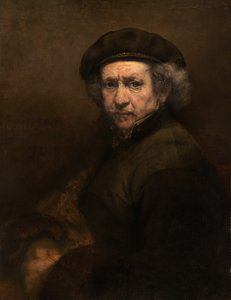
Rembrandt van Rijn
1606 - 1669 , Países Bajos
Breves datos
- Artistas Influenciados: Generaciones posteriores
- Artistas Que Influyeron:
- Pieter Lastman
- Caravaggio
- Maestros Italianos
- Fecha De Muerte: 1669
- Fecha De Nacimiento: 15 de julio de 1606
- Lugar De Nacimiento: Leiden, Países Bajos
- Movimiento Artístico: Barroco Holandés
- Nacionalidad: Holandés
- Nombre Completo: Rembrandt van Rijn
- Obras Notables:
- La Lección de Anatomía del Dr. Tulp
- Cena en Belzabal
- La Ronda de Noche
- Autorretratos

