 Ver en contexto
 Enviar
 Compartir
 Detalles

 Descargar
 Similares
 Radiografía
 Presentación de diapositivas
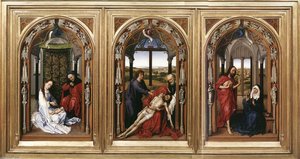
The Altar of Our Lady (Miraflores Altar)
 Óleo sobre lienzo
- Arte de pared
- Early Netherlandish Painting
 1440
1440 213.0 x 43.0 cm
 Ver más
Reproducción al óleo hecha a mano
Óleo sobre lienzo pintado a mano en el tamaño y marco de su elección, realizado por encargo por nuestros artistas. ( Comprar impresión Comprar imagen)




P118B $10

P118H $10

P118W $10

P438Z $10

P508JH $12

P508YH $12

P805H $10

P805Z $10

P919BZ $10

P919G $10

P919XJ $10

P959ZH $10

P968JZ $12

W106C $8

W218G $10

W218JH $8

W218Y $10

W307PJ $10

W316G $10

W316PJ $8

W316Y $10

W398PJ $8

W4111J $10

W500HY $15

W500JH $15

W692G $12

W849H $8

W940BG $15

W953PJ $8




Elija entre nuestros tamaños predefinidos que respetan las proporciones originales de la obra.

Puede ingresar sus propias dimensiones para adaptarse a un marco o espacio específico. Si el tamaño seleccionado no coincide con las proporciones de la imagen original, recortaremos la obra o extenderemos la pintura con elementos adicionales pintados a mano. Se le enviará una maqueta digital para su aprobación antes de comenzar la producción.
Tenga en cuenta que la vista previa en pantalla no refleja el recorte o la extensión reales. Solo la maqueta mostrará con precisión la composición final.
Si bien existen tamaños personalizados, recomendamos seleccionar una dimensión de la lista predefinida para preservar las proporciones originales.
Tras realizar el pedido, el equipo de ArtsDot.com enviará un correo electrónico al cliente para solicitar instrucciones y proporcionarle una vista previa del boceto.
Envío a todo el mundo () en 3-4 semanas en lugar de las 5 semanas estándar. (28 agosto). Sin comprometer la calidad.

Envío exprés gratuito a todo el mundo

Lienzo de lino de alta calidad

Seguro de envío total

Garantía de reembolso de impuestos aduaneros

Garantía de fidelidad cromática exacta

Política de devolución de 60 días (solo por defectos)

Garantía de devolución del 100% del dinero

Descuento por cantidad
 La opción de vidrio solo está disponible en tamaños inferiores a 110 cm.

The Altar of Our Lady (Miraflores Altar)
Técnica de reproducción
Dimensiones de la reproducción
-


Precio total final
$ 263
A Window Into Sacred Time: Rogier van der Weyden’s “The Altar of Our Lady”
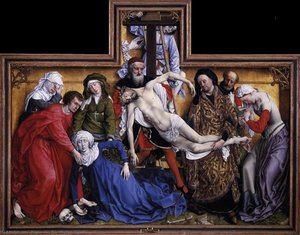
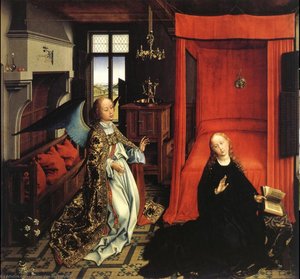
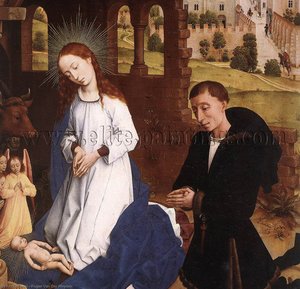
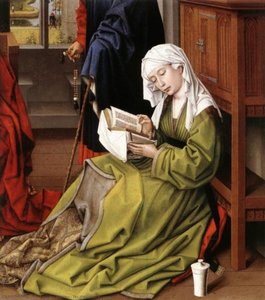
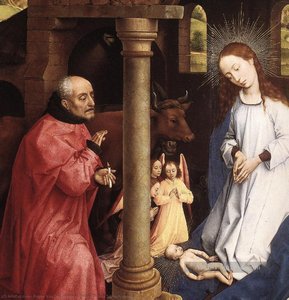
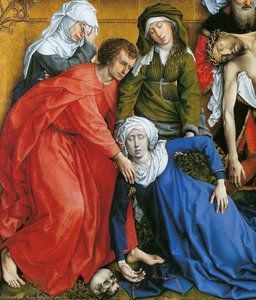
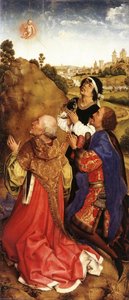
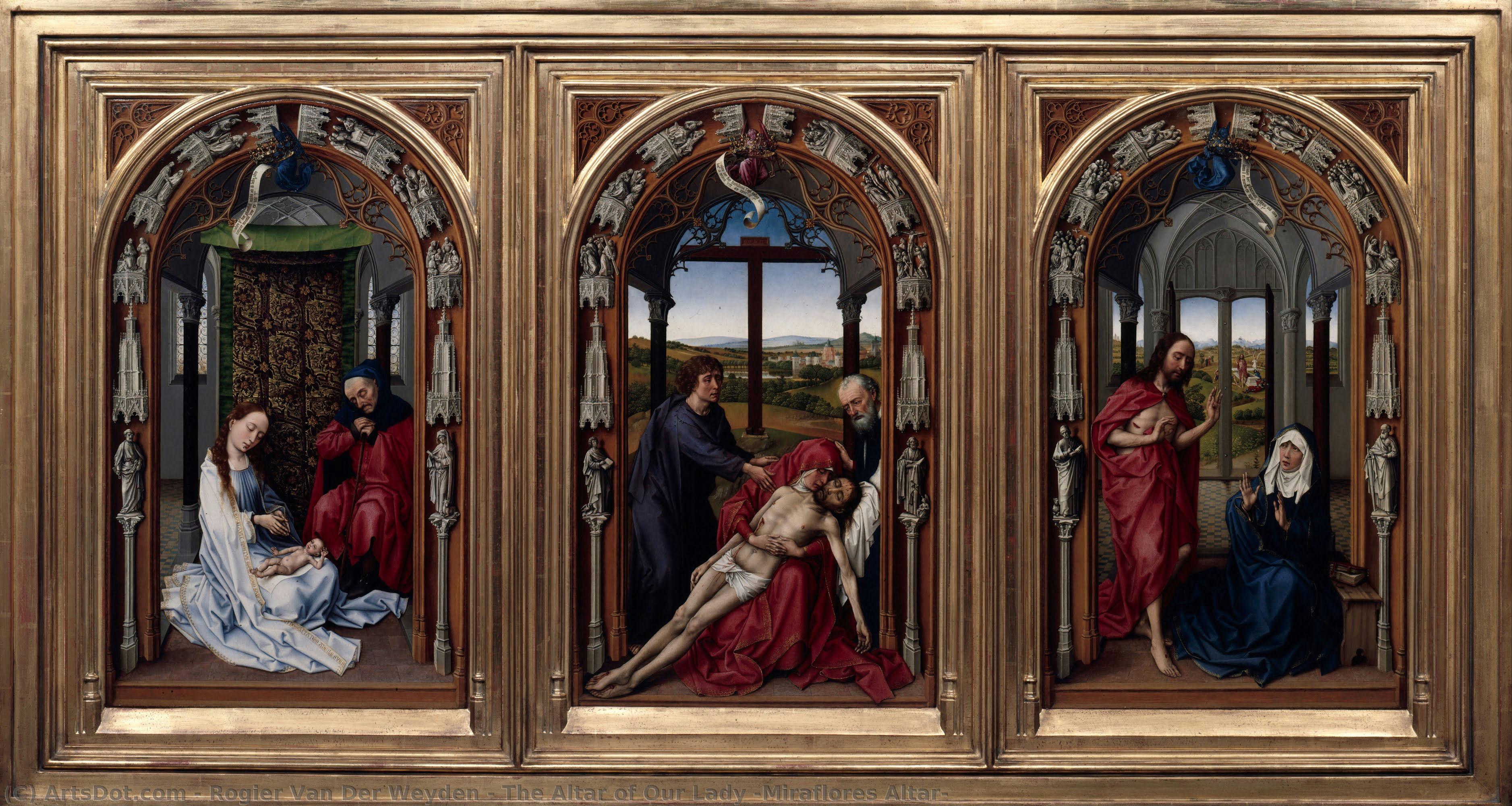
Rogier van der Weyden's "The Altar of Our Lady" (Miraflores Altarpiece), a masterpiece crafted around 1442-45, isn’t merely a painting; it’s an immersive theatrical experience. Commissioned for the Miraflores chapel in Brussels, this triptych transcends the traditional confines of religious art, inviting the viewer into a meticulously constructed world where biblical narratives unfold within imagined architectural spaces. Van der Weyden, a master of emotional realism and painstaking detail, elevates the familiar stories of Mary and Christ to an almost operatic scale, utilizing color, line, and symbolism with breathtaking sophistication.
The painting’s genesis lies in the burgeoning artistic trends of the early 15th century. Van der Weyden, trained initially as a goldsmith, brought his innate understanding of texture and craftsmanship to his art. This is immediately apparent in the remarkably realistic depiction of fabrics – the flowing robes, the folds of Mary's garments, the rough-hewn wood of the imagined architectural frames—all rendered with an astonishing level of detail. Furthermore, the influence of late Gothic architecture is palpable; the arches and spandrels that frame each panel aren’t simply decorative elements but integral components of a staged environment, blurring the line between painting and reality.
The Narrative Unfolds: Three Pivotal Moments
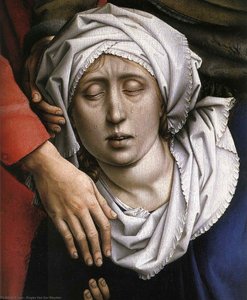
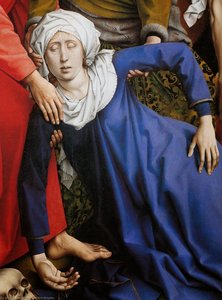
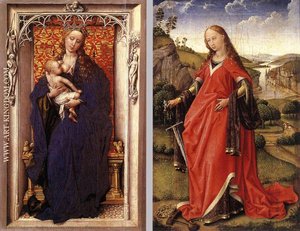
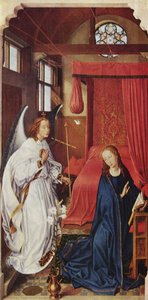
At first glance, “The Altar of Our Lady” presents three distinct scenes, yet they are inextricably linked by a chronological progression. The left panel depicts the Holy Family – Mary, Christ, and Saint Joseph – in a serene moment of return. Joseph, leaning on his staff, appears to be lost in sleep, while Mary gazes affectionately at her son. This isn’t a conventional Nativity scene; rather, it establishes a foundational narrative, setting the stage for the subsequent events. The central panel captures the poignant grief of the Lamentation – Christ's body cradled by Mary and John the Evangelist, with Peter standing vigil. The somber palette—primarily blues and blacks—underscores the tragedy, while Van der Weyden’s masterful rendering of Mary’s anguish is profoundly moving.
Finally, the right panel portrays a pivotal moment of divine reunion: Christ's appearance to his mother after the Resurrection. This scene, not explicitly detailed in the Gospels, serves as a powerful symbol of comfort and reassurance. The light emanating from Christ’s figure contrasts dramatically with the surrounding darkness, signifying hope amidst despair. The figures are rendered with an almost ethereal quality, suggesting a realm beyond earthly concerns.
Symbolism Woven into Every Detail
Beyond the narrative itself, “The Altar of Our Lady” is saturated with symbolism. Van der Weyden’s use of color is particularly significant; white represents Mary's purity and virginity, red signifies her sorrow and compassion, and blue embodies her faith. The intricate reliefs adorning the arches—depicting scenes from the lives of Christ and Mary—further enrich the narrative, providing a contextual framework for each central scene. The placement of these reliefs within imagined architectural portals creates an illusion of depth and space, drawing the viewer into the heart of the religious drama.
A Legacy of Emotion and Innovation
“The Altar of Our Lady” stands as a testament to Rogier van der Weyden’s artistic genius. It represents a pivotal moment in the development of Early Netherlandish painting, characterized by its emotional intensity, meticulous realism, and innovative use of perspective and symbolism. Influencing generations of artists, Van der Weyden's masterpiece continues to captivate viewers with its profound beauty and enduring message—a timeless exploration of faith, grief, and hope.
Obras relacionadas
Biografía del artista
vida y carrera
rogier van der weyden, también conocido como roger de la pasture, fue un destacado pintor flamenco temprano activo en el siglo XV. Nacido en Bélgica alrededor de 1400, se convirtió en uno de los artistas más influyentes de su tiempo, con sus obras ganando un reconocimiento significativo en los Países Bajos, Italia y España.estilo artístico y técnica
El estilo artístico de Van der Weyden se caracterizó por una rica coloración, una expresión simpática y un enfoque único del pathos y el naturalismo. Sus figuras a menudo aparecían estatuarias, particularmente en sus trípticos, que presentaban detalles intrincados y rasgos faciales idealizados. Empleó una diversa paleta de colores, asegurando que ningún tono se repitiera, añadiendo profundidad y complejidad a sus composiciones.obras notables
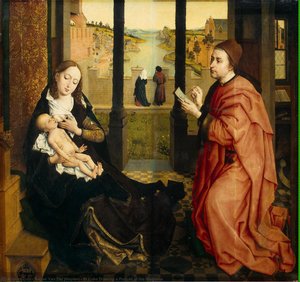
* st luke drawing a portrait of the madonna (Museo de Bellas Artes de Boston): Esta pintura muestra la maestría de Van der Weyden en el óleo sobre tabla, presentando una representación impresionante de San Lucas. * Lamento (Musée des Beaux-Arts de Tournai, Bélgica): Este pequeño pero poderoso cuadro demuestra la capacidad de Van der Weyden para transmitir intensidad emocional a través del claroscuro.museos y colecciones
* Musée des Beaux-Arts de Tournai, Bélgica: cuenta con una impresionante colección de obras de Van der Weyden, incluyendo el diptico de retrato de Jean de Gros. * Musées Royaux des Beaux-Arts (Bruselas, Bélgica): alberga una importante colección de pinturas flamencas tempranas, incluyendo obras de Van der Weyden y otros artistas notables.legado
La influencia de Van der Weyden en el Renacimiento del Norte es innegable. Se situó junto a Robert Campin y Jan van Eyck como uno de los tres grandes artistas flamencos tempranos, reconocido por su estilo e innovación técnica. A pesar de que su fama menguó en el siglo XVII, la obra de Van der Weyden fue redescubierta en el siglo XIX, y ahora se erige como una figura destacada en la historia de la pintura flamenco temprana.- ver más obras de rogier van der weyden en ArtsDot.com
- explorar la colección del Musée des Beaux-Arts de Tournai en descubriendo los tesoros del Musée des Beaux-Arts de Tournai, Bélgica
- aprender más sobre la pintura flamenca temprana en wikipedia
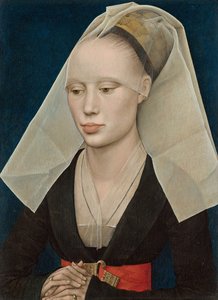
Rogier van der Weyden
1400 - 1464 , Bélgica
Datos clave
- Artistas Influenciados Por: Goswijn van der Weyden
- Artistas Que Influyeron: ['Robert Campin']
- Fecha De Muerte: 1464
- Fecha De Nacimiento: c. 1400
- Lugar De Nacimiento: Tournai, Bélgica
- Movimiento Artístico: Renacimiento Nórdico
- Nacionalidad: Belga
- Nombre Completo: Rogier van der Weyden
- Obras Notables:
- San Lucas dibujando a la Virgen
- La Lamentación
- Depósito
- Anunciación
- Retablo de los Siete Sacramentos
Artículos relacionados

Renacimiento Flamenco Temprano: 10 Obras Maestras que Cambiaron la Historia del Arte | ArtsDot
Descubre las 10 obras maestras del Renacimiento Flamenco Temprano. Explora la historia de Jan van Eyck, Robert Campin y más. Reproducciones de arte en ArtsDot.com para decorar tu hogar con belleza y elegancia. ¡Explora la colección online!
Rogier van der Weyden: Emotion, Innovation & the Early Netherlandish Renaissance
Explore the revolutionary art of Rogier van der Weyden, a pivotal figure of the Early Netherlandish Renaissance. Discover his emotional realism, innovative compositions, and lasting impact on painting history.

Los 10 Maestros del Primitivo Flamenco: Obras que Definen un Arte Inigualable | ArtsDot
Descubre los 10 imprescindibles del Primitivo Flamenco: Jan van Eyck, Robert Campin y más. Explora la historia, simbolismo y técnica de estas obras maestras renacentistas tempranas. Encuentra reproducciones de arte de museo en ArtsDot.com.
Hugo van der Goes: Devotion, Innovation & the Psychological Depth of Early Netherlandish Painting
Explore the revolutionary art of Hugo van der Goes – a master of Early Netherlandish painting renowned for his dramatic realism, psychological depth & profound influence on Renaissance artists. Discover his iconic works and lasting legacy.

Rembrandt van Rijn: Las 25 Obras Maestras que Definen un Genio | Arte, Historia y Decoración
Descubre las 25 obras maestras de Rembrandt van Rijn, el genio del barroco holandés. Explora su historia, técnica y simbolismo en retratos icónicos como 'La Ronda Nocturna'. Encuentra reproducciones de arte exclusivas para decorar tu hogar con ArtsDot.com.