

 Ver en contexto
 Enviar
 Compartir
 Detalles

 Descargar
 Similares
 Radiografía
 Presentación de diapositivas
 Stats
StatsThe Quarrel of Oberon and Titania


 Ver más
Adquiera una imagen digital de alta resolución y optimizada, muy superior a la vista previa en línea.
Cada archivo es preparado meticulosamente por nuestros especialistas internos mediante el uso de herramientas avanzadas y un experto retoque manual. Nos aseguramos de que cada imagen posea una claridad excepcional, una precisión cromática impecable y un detalle minucioso.
El archivo final se entrega por correo electrónico en un plazo de 72 horas, optimizado para su uso inmediato en entornos profesionales, editoriales y de impresión. Esta es la misma calidad en la que confían los estudios de diseño, las editoriales y las galerías de primer nivel.
Imagen Digital
Descarga un archivo de alta resolución para exhibición personal, impresión y proyectos creativos. ( Switch to Print Comprar pintura hecha a mano)
Incluido en cada pedido de imágenes digitales
Entrega digital experta, garantizada.
Al elegir ArtsDot.com, no solo está adquiriendo una imagen; está recibiendo una obra de arte digital mejorada profesionalmente, elaborada con precisión y respaldada por una garantía de satisfacción. Esto es todo lo que incluye su pedido, automáticamente:

Entrega rápida por email
Recibirá su archivo de imagen digital en alta resolución por correo electrónico en un plazo de 72 horas tras realizar su pedido, listo para su uso inmediato.

Archivo digital optimizado por IA
Su obra de arte se optimiza profesionalmente mediante herramientas avanzadas de IA y edición manual, garantizando el máximo detalle, claridad y precisión cromática.

Reenvío gratuito de por vida
¿Has borrado o perdido tu archivo por error? No te preocupes: te lo volveremos a enviar en cualquier momento, sin coste adicional.

Sin gastos de importación, siempre
Disfrute de su obra de arte al instante sin aduanas, aranceles ni gastos de envío; las descargas digitales siempre están libres de impuestos.

Garantía de fidelidad de color
Garantizamos que su imagen digital refleje los colores originales con la mayor fidelidad posible, mediante el uso de herramientas profesionales y gestión del color.

Garantía de satisfacción de 100 días
Si no está satisfecho con su imagen digital, la revisaremos o le reembolsaremos el 100% en un plazo de 100 días, sin preguntas.

100% Garantía de devolución de dinero
¿No está satisfecho? Obtenga un reembolso completo dentro de los 100 días posteriores a la recepción de su archivo digital, sin preguntas.

Descuentos por pedidos grandes
Compra 3 imágenes, ahorra 10% - Compra 5, ahorra 15% - Compra 10+, ahorra 20%. Ideal para proyectos creativos, galerías y agencias.
A Midsummer Night’s Dream Brought to Life: The Vision of Sir Joseph Noel Paton
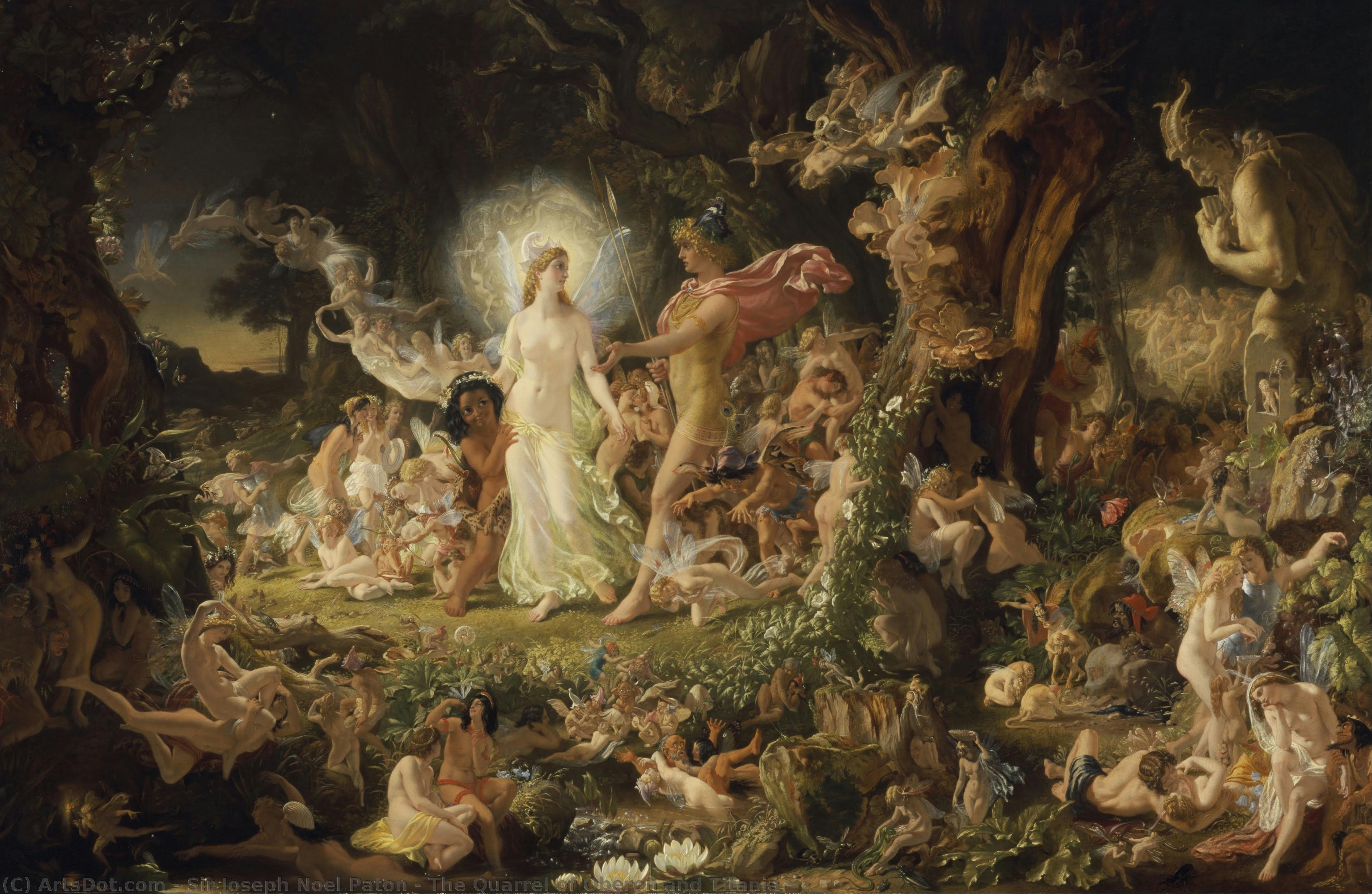
Sir Joseph Noel Paton's “The Quarrel of Oberon and Titania,” painted in 1849, isn’t merely a depiction of Shakespeare’s iconic fairy lovers; it’s a shimmering portal into the Victorian imagination. This large-scale oil on canvas transports us to an enchanted woodland realm, saturated with myth, folklore, and a potent dose of Pre-Raphaelite romanticism. Paton, born in the textile heart of Dunfermline, Scotland, brought his upbringing steeped in intricate patterns and craftsmanship to bear on this fantastical scene, imbuing it with a remarkable level of detail and emotional resonance.
The painting captures a pivotal moment from Act II, Scene I of *A Midsummer Night’s Dream*. Oberon, the King of the Fairies, is locked in a furious dispute with his queen, Titania. The air crackles with suppressed magic as they battle over a changeling boy – a child stolen from mortal lands and raised amongst the fairies. Paton masterfully avoids a simplistic portrayal of conflict; instead, he presents a complex tableau of simmering resentment and wounded pride. The figures are not simply arguing, but embodying the very essence of opposing forces: order versus chaos, beauty versus wildness, control versus freedom.
Pre-Raphaelite Sensibilities and Detailed Naturalism
Paton’s style is deeply rooted in the Pre-Raphaelite Brotherhood's aesthetic principles. He eschews the smooth, idealized forms of earlier academic painting for a more direct, emotionally charged approach. Notice the meticulous rendering of every leaf, petal, and shimmering thread of fabric – a testament to Paton’s dedication to naturalism. The artist doesn’t shy away from depicting the darker aspects of the fairy realm; grotesque faces peek out from behind the foliage, hinting at the unsettling undercurrents beneath the surface beauty. The use of rich, jewel-toned colors—emerald greens, sapphire blues, and ruby reds—further enhances the painting's otherworldly atmosphere.
Technically, Paton demonstrates a remarkable command of oil paint. He employs layering techniques to create depth and luminosity, capturing the play of light through the dense woodland canopy. The figures themselves are rendered with exquisite detail, their expressions conveying a range of emotions – from Oberon’s regal disdain to Titania’s wounded fury. The composition is carefully balanced, drawing the viewer's eye into the heart of the drama.
Symbolism and Victorian Romanticism
Beyond its narrative content, “The Quarrel” is rich in symbolism. The disputed changeling boy represents the disruption of natural order and the anxieties surrounding social boundaries during the Victorian era. Titania’s crown of light symbolizes her divine authority, while Oberon's dark attire suggests his dominion over darker forces. The forest itself acts as a metaphor for the subconscious mind – a place where emotions run wild and reason gives way to instinct.
The painting reflects the Victorian fascination with folklore, mythology, and the supernatural. It’s a visual embodiment of Romantic ideals—a celebration of imagination, emotion, and the power of nature. Paton's work speaks to a longing for escape from the constraints of industrial society and a yearning for a world where magic still held sway.
A Timeless Masterpiece – Perfect for Reproduction
“The Quarrel of Oberon and Titania” remains a captivating masterpiece, offering a glimpse into the artistic sensibilities of Victorian England. Today, high-quality reproductions allow art lovers to experience this enchanting scene in their own homes. Whether adorning a grand salon or adding a touch of whimsy to a smaller space, Paton’s painting continues to evoke a sense of wonder and transport us to a realm where fairies reign supreme.
Obras relacionadas



Biografía del artista
A Scottish Visionary: The Life and Art of Sir Joseph Noel Paton
Sir Joseph Noel Paton (1821–1901) was a Scottish painter who achieved remarkable renown during the Victorian era, establishing himself as one of Scotland’s foremost artistic figures. Born in Dunfermline, Fife, on December 13, 1821, into a family steeped in craftsmanship—his father was a damask weaver—Paton demonstrated an early aptitude for visual arts, nurtured by his familial surroundings and fueled by an innate curiosity about the world around him. Though he eschewed formal academic training, preferring to learn through observation and experimentation, Paton’s artistic sensibilities were profoundly shaped by the Pre-Raphaelite movement, with whom he formed a significant friendship during his studies at the Royal Academy in London in 1843. This connection instilled in him a dedication to meticulous detail and a fascination for capturing the beauty of nature—characteristics that would become hallmarks of his distinctive style.Weaving Myth and Morality: The Development of a Unique Style
Paton’s artistic journey was marked by an extraordinary synthesis of diverse influences. He wasn't merely illustrating tales; he was breathing life into them with meticulous detail and emotional depth. His early works, such as “The Quarrel of Oberon and Titania” (1847), now a cornerstone of the National Gallery of Scotland’s collection, immediately established his reputation for capturing fantastical scenes with remarkable realism. This painting, inspired by Shakespeare's *A Midsummer Night's Dream*, showcases not only technical skill but also Paton’s ability to imbue mythological subjects with psychological complexity. He didn’t simply depict fairies; he portrayed their passions, conflicts, and vulnerabilities. Beyond the realm of folklore, Paton explored religious themes with equal fervor, as evidenced in works like “Luther Discovering Justification by Faith,” revealing a deep engagement with theological concepts. His paintings are not just visually stunning but also intellectually stimulating, inviting viewers to contemplate profound questions about faith, morality, and the human condition. He wasn’t merely recreating stories; he was using them as vehicles for exploring universal human experiences.- His meticulous attention to detail—evident in the intricate costumes, landscapes, and facial expressions—adds layers of meaning to his compositions.
- The use of dramatic lighting and rich color palettes enhances the emotional impact of his paintings.
- Paton’s works often feature allegorical figures representing abstract concepts like love, death, and justice.
A Royal Appointment and Enduring Legacy
Recognition of Paton’s exceptional talent came in 1865 with his appointment as Queen's Limner for Scotland—a prestigious position that solidified his status as the foremost artist in the country. Two years later, he was knighted, a testament to his significant contributions to the arts and Scottish culture. This period saw him continue to produce works that blended historical accuracy with imaginative storytelling. Paintings like “Puck and Fairies” exemplify his mastery of capturing the ethereal beauty and mischievous spirit of the fairy world. However, Paton’s unique blend of Celtic mythology, religious themes, and Victorian sensibilities sets him apart as a truly original artist. He stood as a testament to the power of art to transport us to other worlds, explore profound truths, and celebrate the rich cultural heritage of Scotland. His paintings are not merely historical artifacts; they are living embodiments of imagination, faith, and artistic vision. Notable Achievements:- He was elected Associate of the Royal Scottish Academy in 1847
- He attained Full Academician status in 1850
- He received Knighthood from Her Majesty Queen Victoria in 1867
- He was awarded Honorary Doctorate of Laws (LL.D.) by the University of Edinburgh
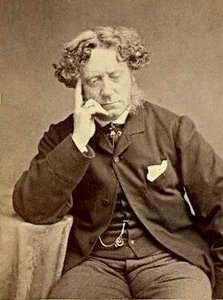
Sir Joseph Noel Paton
1821 - 1901 , Reino Unido
Breves datos
- Artistic Movement Or Style: Pre-Raphaelite influences
- Artists Who Influenced This Artist: ['John Everett Millais']
- Date Of Birth: December 13, 1821
- Date Of Death: December 26, 1901
- Full Name: Sir Joseph Noel Paton
- Nationality: Scottish
- Notable Artworks:
- The Quarrel of Oberon and Titania
- Puck and Fairies
- Hesperus
- Place Of Birth: Dunfermline, UK