 Ver en contexto
 Enviar
 Compartir
 Detalles

 Descargar
 Similares
 Radiografía
 Presentación de diapositivas
 Estadísticas
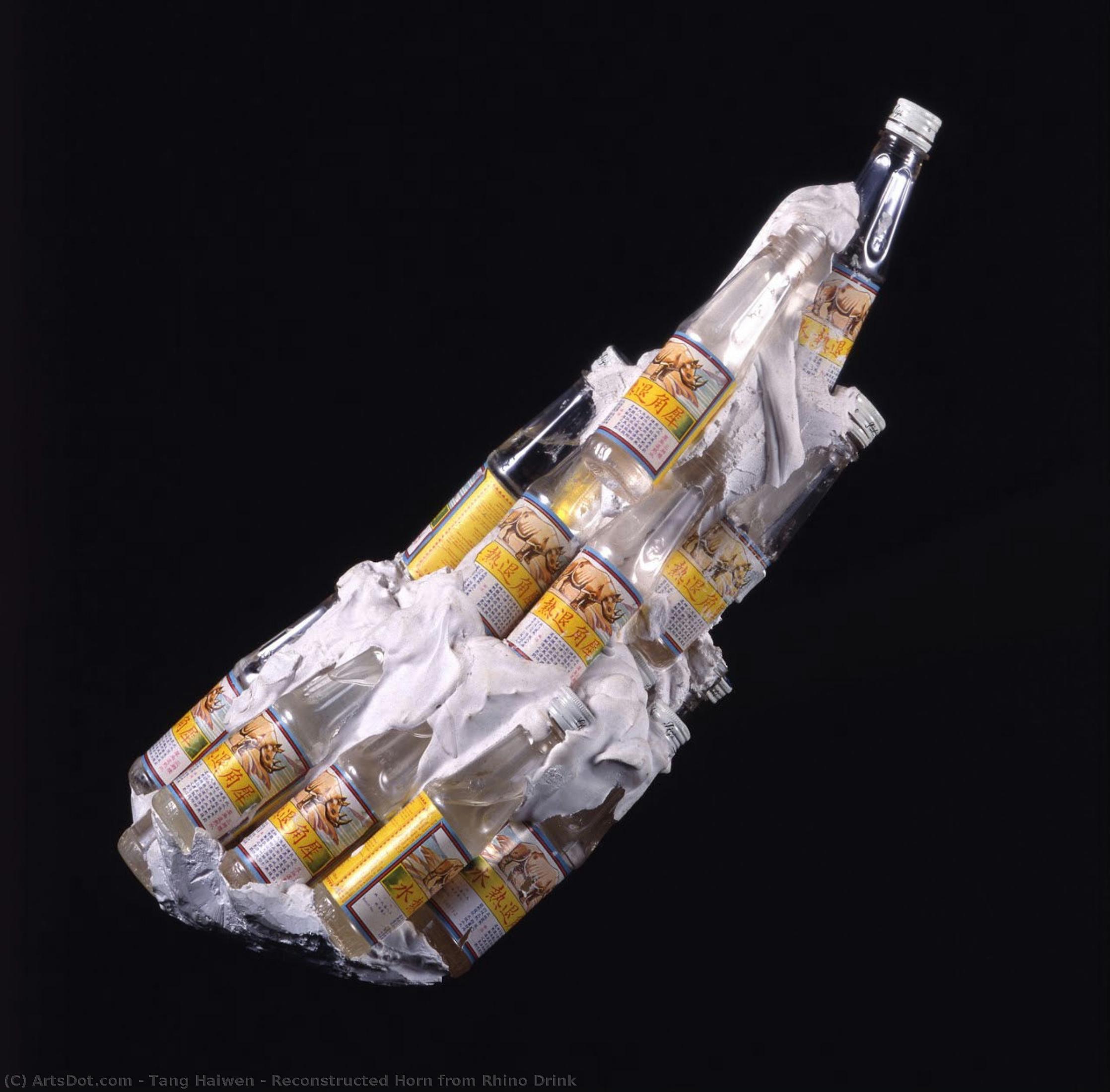
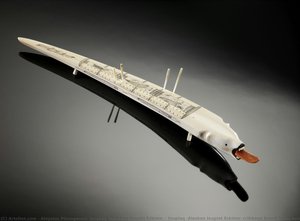
Reconstructed Horn from Rhino Drink
 54.0 x 45.0 cm
 Fukuoka Asian Art Museum
 Ver más
Adquiera una imagen digital de alta resolución y optimizada, muy superior a la vista previa en línea.
Cada archivo es preparado meticulosamente por nuestros especialistas internos mediante el uso de herramientas avanzadas y un experto retoque manual. Nos aseguramos de que cada imagen posea una claridad excepcional, una precisión cromática impecable y un detalle minucioso.
El archivo final se entrega por correo electrónico en un plazo de 72 horas, optimizado para su uso inmediato en entornos profesionales, editoriales y de impresión. Esta es la misma calidad en la que confían los estudios de diseño, las editoriales y las galerías de primer nivel.
Imagen Digital
Descarga un archivo de alta resolución para exhibición personal, impresión y proyectos creativos. ( Cambiar a Impresión Comprar pintura hecha a mano)
Incluido en cada pedido de imágenes digitales
Entrega digital experta, garantizada.
Al elegir ArtsDot.com, no solo está adquiriendo una imagen; está recibiendo una obra de arte digital mejorada profesionalmente, elaborada con precisión y respaldada por una garantía de satisfacción. Esto es todo lo que incluye su pedido, automáticamente:

Entrega rápida por email
Recibirá su archivo de imagen digital en alta resolución por correo electrónico en un plazo de 72 horas tras realizar su pedido, listo para su uso inmediato.

Archivo digital optimizado por IA
Su obra de arte se optimiza profesionalmente mediante herramientas avanzadas de IA y edición manual, garantizando el máximo detalle, claridad y precisión cromática.

Reenvío gratuito de por vida
¿Has borrado o perdido tu archivo por error? No te preocupes: te lo volveremos a enviar en cualquier momento, sin coste adicional.

Sin gastos de importación, siempre
Disfrute de su obra de arte al instante sin aduanas, aranceles ni gastos de envío; las descargas digitales siempre están libres de impuestos.

Garantía de fidelidad de color
Garantizamos que su imagen digital refleje los colores originales con la mayor fidelidad posible, mediante el uso de herramientas profesionales y gestión del color.

Garantía de satisfacción de 100 días
Si no está satisfecho con su imagen digital, la revisaremos o le reembolsaremos el 100% en un plazo de 100 días, sin preguntas.

100% Garantía de devolución de dinero
¿No está satisfecho? Obtenga un reembolso completo dentro de los 100 días posteriores a la recepción de su archivo digital, sin preguntas.

Descuentos por pedidos grandes
Compra 3 imágenes, ahorra 10% - Compra 5, ahorra 15% - Compra 10+, ahorra 20%. Ideal para proyectos creativos, galerías y agencias.
Obras relacionadas







Biografía del artista
A Life Between Worlds: The Artistic Journey of Tang Haiwen
Tang Haiwen (曾海文), born Zeng Tianfu in 1927 in the coastal city of Xiamen, China, embodies a fascinating intersection of Eastern tradition and Western modernism. His life was one of deliberate seeking—a quest for artistic liberation that led him from the calligraphy studios of his youth to the vibrant art scene of post-war Paris. Unlike many of his Chinese contemporaries who received formal academic training in Hangzhou, Tang’s path was largely self-directed, fueled by an innate sensitivity and a profound connection to Taoist philosophy instilled by his grandfather. This early influence would become a cornerstone of his unique artistic vision, shaping not only *what* he painted but *how* he approached the very act of creation. The outbreak of the Second Sino-Japanese War prompted a family relocation to Cholon, Saigon’s bustling Chinese quarter, where Tang continued his studies in calligraphy—a discipline that would remain central to his aesthetic throughout his career.From Medicine to Mastery: Finding His Voice in Paris
In 1948, at the age of twenty-one, Tang embarked on a journey to France, initially intending to pursue medical studies as per his father’s wishes. However, Paris quickly captivated him, and he soon abandoned his preordained path to dedicate himself fully to painting. He enrolled in classes at the Académie de la Grande Chaumière, but it was through independent exploration of museums and galleries—immersing himself in the works of Gauguin, Cézanne, and Matisse—that Tang truly began to forge his artistic identity. His early Parisian paintings reflect this period of assimilation, showcasing landscapes, interiors, portraits, and still lifes imbued with a distinctly Chinese sensibility. Yet, it was a growing fascination with Shitao, the iconoclastic 17th-century Chinese painter known for his unconventional techniques and spiritual depth, that proved pivotal. This encounter sparked a desire to break free from conventional constraints and embark on a uniquely personal artistic journey. Tang’s commitment to this path is powerfully articulated in a letter he wrote to his brother in 1958: “I have found my vocation in painting… Success, to be truly success, must be completely sincere.”The Fusion of East and West: A Unique Artistic Language
The early 1960s marked a transformative period for Tang Haiwen. He increasingly favored gouache, watercolors, and ink on paper—materials deeply rooted in Chinese artistic tradition. However, he didn’t simply replicate Eastern techniques; instead, he masterfully blended them with the lyrical abstraction of Western modernism. His work began to explore the interplay between form and emptiness, echoing Taoist principles of balance and harmony. This period also saw Tang embrace a nomadic spirit, traveling extensively throughout Canada and Morocco—experiences that further broadened his artistic horizons. He sought not merely to depict landscapes but to capture their *essence*, conveying a sense of atmosphere and emotion through delicate washes of color and fluid brushstrokes. His technique became increasingly refined, characterized by an extraordinary lightness of touch and a remarkable ability to evoke depth and space on the two-dimensional surface.Legacy and Recognition: A Growing Appreciation
Tang Haiwen continued to hone his artistic practice until his death in Paris in 1991. Throughout his career, he remained committed to exploring the expressive potential of ink and paper, creating a body of work that is both deeply personal and universally resonant. While he initially navigated a path distinct from other Chinese artists in Paris—avoiding formal academic structures and embracing a more intuitive approach—his contributions have gained increasing recognition in recent decades. Major retrospective exhibitions at institutions such as the Oceanographic Museum in Monaco, the Taipei Fine Arts Museum, and the Musée Guimet in Paris have highlighted the originality and significance of his work. Today, Tang Haiwen is celebrated as a pivotal figure in modern Chinese art, an artist who successfully bridged cultural divides and created a unique visual language that continues to inspire and captivate audiences worldwide. His paintings are not merely representations of nature or children; they are meditations on life, spirituality, and the enduring power of artistic expression.- Key Influences: Taoism, Chinese Calligraphy, Shitao, Henri Matisse, J.M.W. Turner.
- Major Themes: Nature, Childhood, Spirituality, Abstraction, Harmony and Balance.
- Notable Techniques: Ink Wash Painting, Gouache, Watercolor, Wet-on-Wet Technique, Delicate Brushwork.