 Ver en contexto
 Enviar
 Compartir
 Detalles

 Descargar
 Similares
 Radiografía
 Presentación de diapositivas
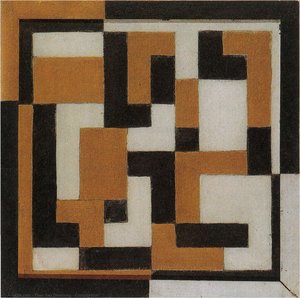
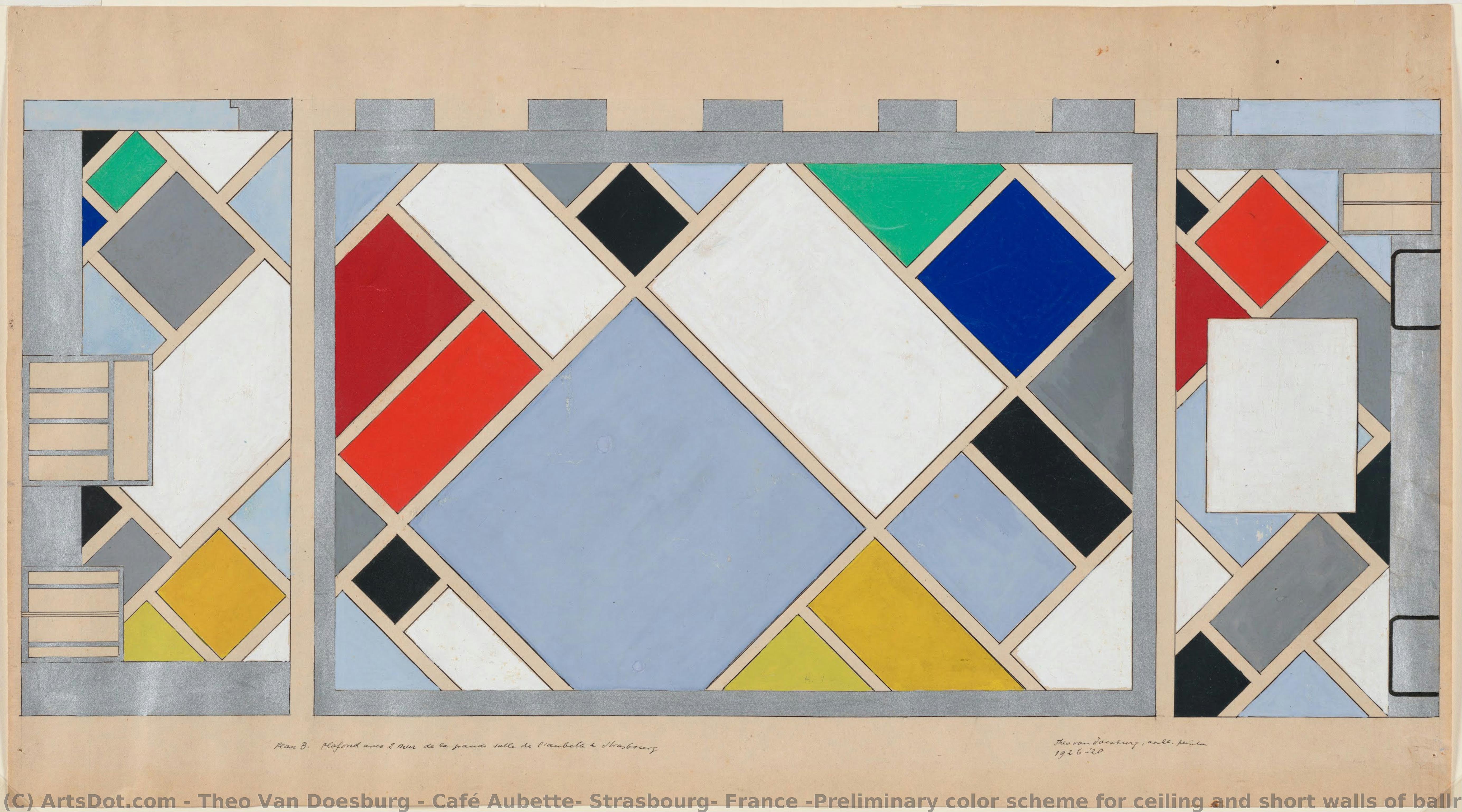
Café Aubette, Strasbourg, France (Preliminary color scheme for ceiling and short walls of ballroom)
 Gouache
- WallArt
- Neoplasticism
 1927
1927 27.0 x 62.0 cm
 MoMA
MoMA
 Ver más
Reproducción al óleo hecha a mano
Óleo sobre lienzo pintado a mano en el tamaño y marco de su elección, realizado por encargo por nuestros artistas. ( Comprar impresión Comprar imagen)




P118B $10

P118H $10

P118W $10

P438Z $10

P508JH $12

P508YH $12

P805H $10

P805Z $10

P919BZ $10

P919G $10

P919XJ $10

P959ZH $10

P968JZ $12

W106C $8

W218G $10

W218JH $8

W218Y $10

W307PJ $10

W316G $10

W316PJ $8

W316Y $10

W398PJ $8

W4111J $10

W500HY $15

W500JH $15

W692G $12

W849H $8

W940BG $15

W953PJ $8




Elija entre nuestros tamaños predefinidos que respetan las proporciones originales de la obra.

Puede ingresar sus propias dimensiones para adaptarse a un marco o espacio específico. Si el tamaño seleccionado no coincide con las proporciones de la imagen original, recortaremos la obra o extenderemos la pintura con elementos adicionales pintados a mano. Se le enviará una maqueta digital para su aprobación antes de comenzar la producción.
Tenga en cuenta que la vista previa en pantalla no refleja el recorte o la extensión reales. Solo la maqueta mostrará con precisión la composición final.
Si bien existen tamaños personalizados, recomendamos seleccionar una dimensión de la lista predefinida para preservar las proporciones originales.
Tras realizar el pedido, el equipo de ArtsDot.com enviará un correo electrónico al cliente para solicitar instrucciones y proporcionarle una vista previa del boceto.
Envío a todo el mundo () en 3-4 semanas en lugar de las 5 semanas estándar. (28 agosto). Sin comprometer la calidad.

Envío exprés gratuito a todo el mundo

Lienzo de lino de alta calidad

Seguro de envío total

Garantía de reembolso de impuestos aduaneros

Garantía de fidelidad cromática exacta

Política de devolución de 60 días (solo por defectos)

Garantía de devolución del 100% del dinero

Descuento por cantidad
 La opción de vidrio solo está disponible en tamaños inferiores a 110 cm.

Café Aubette, Strasbourg, France (Preliminary color scheme for ceiling and short walls of ballroom)
Técnica de reproducción
Dimensiones de la reproducción
-


Precio total final
$ 263
The Geometry of Memory: Exploring Theo van Doesburg's Vision
To stand before Theo van Doesburg’s "Café Aubette, Strasbourg, France (Preliminary color scheme for ceiling and short walls of ballroom)" is to step across the threshold of a dream—a meticulously planned vision rendered in pigment. This 1927 work is far more than a mere decorative study; it is an architectural manifesto translated onto canvas. Van Doesburg, a pioneer whose career was dedicated to stripping art down to its purest structural elements, invites us into the vibrant, yet rigorously controlled, world of Neoplasticism. The subject matter—a preliminary color scheme for a ballroom in Strasbourg—suggests a moment suspended between function and pure aesthetic theory. It speaks to the era's fascination with modernizing public spaces, where art was expected not just to hang on walls, but to become integral to the very experience of inhabiting a room.
A Symphony of Pure Abstraction
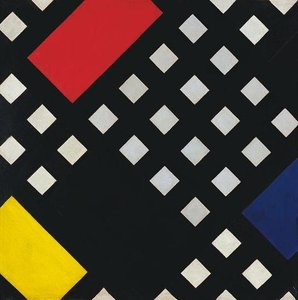
Observe the surface: it is a dazzling interplay of geometric forms. Squares and rectangles interlock with an almost obsessive precision, creating a mosaic-like tapestry that pulses with controlled energy. The palette itself—a bold dialogue between primary hues like red, blue, and yellow, grounded by the stabilizing presence of black, white, gray, and green—is nothing accidental. Van Doesburg was deeply invested in the belief that art should reflect universal, underlying harmonies rather than fleeting natural appearances. This abstraction is not cold; rather, it possesses a vibrant, almost joyous rhythm. It suggests an intellectual framework for beauty, where every line and every block of color has been placed with the weight of philosophical consideration.
Technique and Materiality: The Gouache Glow
The choice of medium—gouache on canvas—is crucial to understanding the painting's luminous quality. Gouache allows for opaque, flat fields of color that sit vibrantly against one another, enhancing the graphic impact of the composition. Unlike the subtle blending of oils, here the colors assert themselves with declarative strength. This technique perfectly serves the geometric mandate of De Stijl; there is no ambiguity in the edges, only clean, decisive boundaries. For those considering a reproduction for an interior space, this technical understanding is key: the resulting piece will offer the crisp, graphic punch necessary to anchor a room without overwhelming it.
Symbolism and Emotional Resonance
What does this geometric harmony evoke? It speaks of order emerging from potential chaos. In the wake of global upheaval, movements like De Stijl offered a visual language suggesting that underlying universal truths—mathematical, spiritual, or structural—could provide solace. The emotional impact is one of exhilarating clarity. It is stimulating without being chaotic; it is complex yet ultimately resolved. Owning this piece means embracing an aesthetic philosophy: the belief that structure itself can be profoundly beautiful. It transforms a mere wall treatment into a meditation on balance and proportion.
Integrating Art into Life
For the collector or designer, "Café Aubette" offers more than just decoration; it offers a conceptual anchor for a space. Imagine this pattern echoing in paneling, upholstery, or even stained glass—a continuous dialogue between fine art and architecture. It is a piece that demands attention while simultaneously providing a sense of calm intellectual rigor. It invites the viewer to pause, to look beyond the surface color, and appreciate the underlying logic that binds every vibrant square together.
Obras relacionadas
Biografía del artista
Vida temprana y carrera
Theo van Doesburg, un artista holandés, nació el 30 de agosto de 1883 en Utrecht, Países Bajos. Es conocido principalmente como el fundador y líder del De Stijl, un movimiento artístico neoplasticista. El trabajo temprano de Van Doesburg estuvo influenciado por Vincent van Gogh, tanto en estilo como en temática.El nacimiento del Neoplasticismo
En 1913, después de leer *Rückblicke* de Wassily Kandinsky, Van Doesburg se dio cuenta de que había un nivel superior, más espiritual en la pintura que originaba de la mente y no de la vida cotidiana. Esto condujo al desarrollo del neoplasticismo, también conocido como De Stijl. El movimiento abogó por la pura abstracción y la universalidad a través de una reducción a los elementos esenciales de forma y color.Obras notables y colaboraciones
- Estudio para composiciones simultáneas xxii, un estudio a lápiz para composiciones simultáneas, es un ejemplo del arte neoplasticista. (ubicado en el Museo Kröller-Müller, Otterlo, Países Bajos)
- Van Doesburg colaboró con Piet Mondrian en varios proyectos, incluido el diario De Stijl.
- También trabajó con Georges Vantongerloo y Sophie Taeuber-Arp en el diseño de casas para artistas.
Legado e influencia
El trabajo de Van Doesburg tuvo un impacto significativo en el desarrollo del arte moderno. Su legado se puede ver en varios aspectos del arte, desde la arquitectura hasta la pintura. El movimiento neoplasticista continúa influyendo en los artistas en la actualidad.- Ver las obras de Theo van Doesburg en ArtsDot
- Leer más sobre Theo van Doesburg en Wikipedia
- Explorar las obras de Piet Mondrian en ArtsDot
- 30 de agosto de 1883: Nació Theo van Doesburg
- 1913: Desarrolló el neoplasticismo
- 7 de marzo de 1931: Falleció
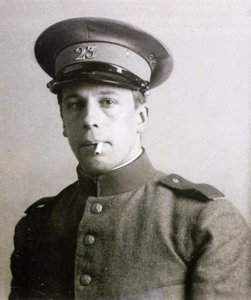
Teo van Doesburg
1883 - 1931 , Países Bajos
Datos clave
- Artistas Que Influyeron:
- Vincent van Gogh
- Wassily Kandinsky
- Estilo Artístico: Neoplasticismo, De Stijl
- Fecha De Fallecimiento: 7 de marzo de 1931
- Fecha De Nacimiento: 30 de agosto de 1883
- Influenciado A:
- Arquitectura moderna
- Diseño
- Arte abstracto
- Lugar De Nacimiento: Utrecht, Países Bajos
- Nacionalidad: Neerlandés
- Nombre Completo: Theo van Doesburg
- Obras Notables: ['Estudio para composiciones simultáneas xxii']
Artículos relacionados

Rembrandt van Rijn: Las 25 Obras Maestras que Definen un Genio | Arte, Historia y Decoración
Descubre las 25 obras maestras de Rembrandt van Rijn, el genio del barroco holandés. Explora su historia, técnica y simbolismo en retratos icónicos como 'La Ronda Nocturna'. Encuentra reproducciones de arte exclusivas para decorar tu hogar con ArtsDot.com.
Theo van Doesburg: Pioneering De Stijl & the Evolution of Neo-Plasticism
Explore the revolutionary De Stijl movement & Neo-Plasticism with our expert guide. Discover Piet Mondrian, Theo van Doesburg, and the lasting impact of this influential art style. Learn about collecting & investing in De Stijl masterpieces.

Los 10 Maestros del Primitivo Flamenco: Obras que Definen un Arte Inigualable | ArtsDot
Descubre los 10 imprescindibles del Primitivo Flamenco: Jan van Eyck, Robert Campin y más. Explora la historia, simbolismo y técnica de estas obras maestras renacentistas tempranas. Encuentra reproducciones de arte de museo en ArtsDot.com.
Decoding Van Gogh's Turmoil: ArtsDot’s Masterful Reproductions of Emotional Depth
Discover exquisite Van Gogh reproductions from ArtsDot – expert art specialists offering museum-quality prints & custom paintings. Trust our authentic process and elevate your collection today.

Neoplasticismo: Una Geometría Radical de Visión Utopista – Orígenes, Principios e Influencia Duradera
Descubre el Neoplasticismo y De Stijl en profundidad. Analizamos los orígenes, principios y la perdurable influencia de Mondrian y sus contemporáneos en el arte moderno. Expertos en historia del arte.