

 Ver en contexto
 Enviar
 Compartir
 Detalles

 Descargar
 Similares
 Radiografía
 Presentación de diapositivas
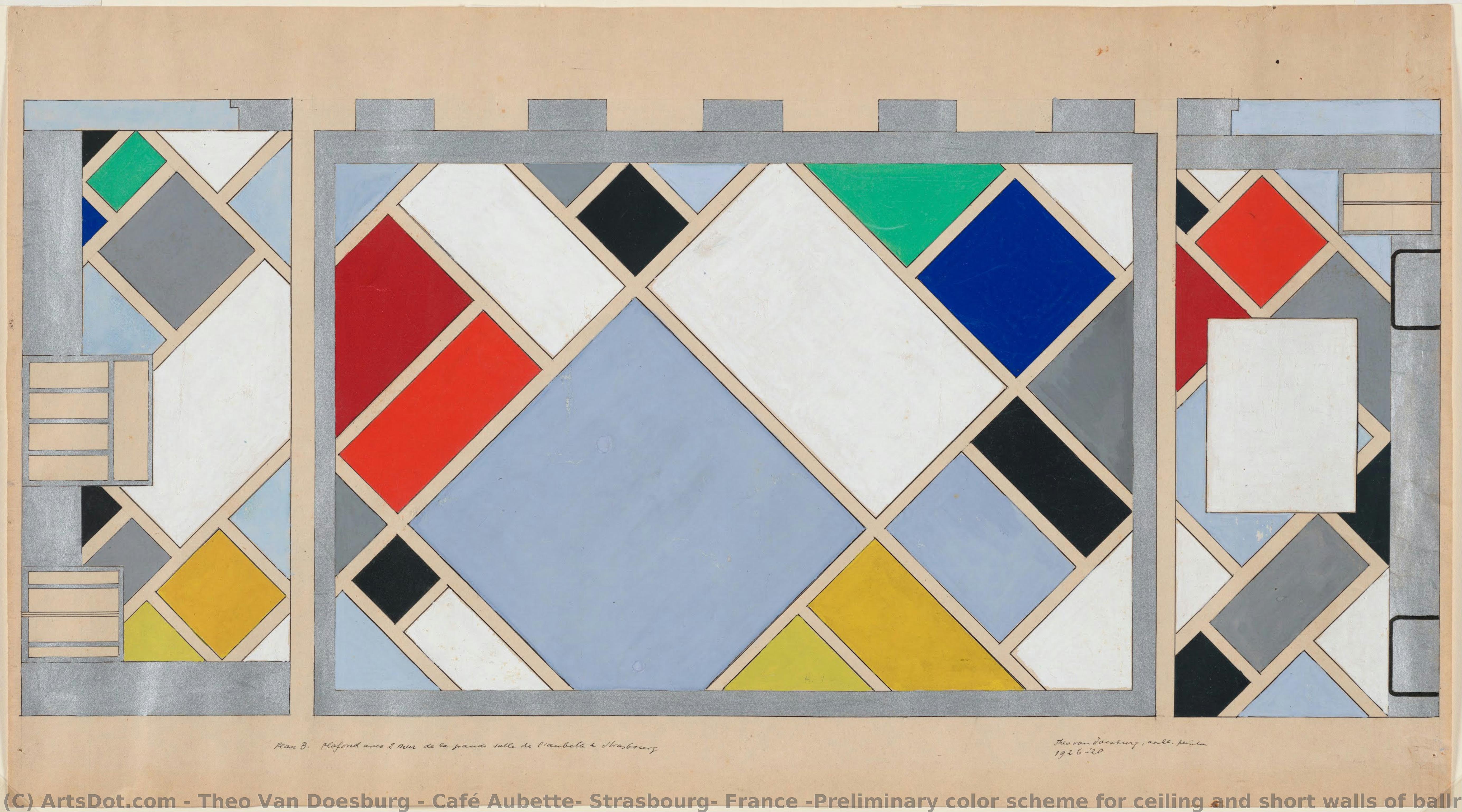
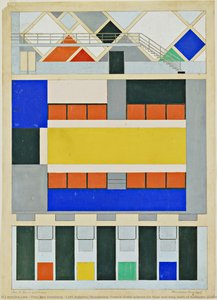
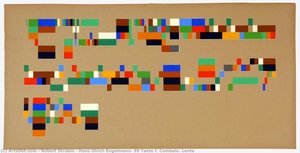
Café Aubette, Strasbourg, France (Preliminary color scheme for ceiling and short walls of ballroom)
 Gouache
- WallArt
- Neoplasticism
 1927
1927 27.0 x 62.0 cm
 MoMA
MoMA
 Ver más
Adquiera una imagen digital de alta resolución y optimizada, muy superior a la vista previa en línea.
Cada archivo es preparado meticulosamente por nuestros especialistas internos mediante el uso de herramientas avanzadas y un experto retoque manual. Nos aseguramos de que cada imagen posea una claridad excepcional, una precisión cromática impecable y un detalle minucioso.
El archivo final se entrega por correo electrónico en un plazo de 72 horas, optimizado para su uso inmediato en entornos profesionales, editoriales y de impresión. Esta es la misma calidad en la que confían los estudios de diseño, las editoriales y las galerías de primer nivel.
Imagen Digital
Descarga un archivo de alta resolución para exhibición personal, impresión y proyectos creativos. ( Comprar impresión Comprar pintura hecha a mano)
Incluido en cada pedido de imágenes digitales
Entrega digital experta, garantizada.
Al elegir ArtsDot.com, no solo está adquiriendo una imagen; está recibiendo una obra de arte digital mejorada profesionalmente, elaborada con precisión y respaldada por una garantía de satisfacción. Esto es todo lo que incluye su pedido, automáticamente:

Entrega rápida por email
Recibirá su archivo de imagen digital en alta resolución por correo electrónico en un plazo de 72 horas tras realizar su pedido, listo para su uso inmediato.

Archivo digital optimizado por IA
Su obra de arte se optimiza profesionalmente mediante herramientas avanzadas de IA y edición manual, garantizando el máximo detalle, claridad y precisión cromática.

Reenvío gratuito de por vida
¿Has borrado o perdido tu archivo por error? No te preocupes: te lo volveremos a enviar en cualquier momento, sin coste adicional.

Sin gastos de importación, siempre
Disfrute de su obra de arte al instante sin aduanas, aranceles ni gastos de envío; las descargas digitales siempre están libres de impuestos.

Garantía de fidelidad de color
Garantizamos que su imagen digital refleje los colores originales con la mayor fidelidad posible, mediante el uso de herramientas profesionales y gestión del color.

Garantía de satisfacción de 60 días
Si no está satisfecho con su imagen digital, la revisaremos o le reembolsaremos el 100% en un plazo de 60 días, sin preguntas.

100% Garantía de devolución de dinero
¿No está satisfecho? Obtenga un reembolso completo dentro de los 60 días posteriores a la recepción de su archivo digital, sin necesidad de explicaciones.

Descuentos por pedidos grandes
Compra 3 imágenes, ahorra 10% - Compra 5, ahorra 15% - Compra 10+, ahorra 20%. Ideal para proyectos creativos, galerías y agencias.
The Geometry of Memory: Exploring Theo van Doesburg's Vision
To stand before Theo van Doesburg’s "Café Aubette, Strasbourg, France (Preliminary color scheme for ceiling and short walls of ballroom)" is to step across the threshold of a dream—a meticulously planned vision rendered in pigment. This 1927 work is far more than a mere decorative study; it is an architectural manifesto translated onto canvas. Van Doesburg, a pioneer whose career was dedicated to stripping art down to its purest structural elements, invites us into the vibrant, yet rigorously controlled, world of Neoplasticism. The subject matter—a preliminary color scheme for a ballroom in Strasbourg—suggests a moment suspended between function and pure aesthetic theory. It speaks to the era's fascination with modernizing public spaces, where art was expected not just to hang on walls, but to become integral to the very experience of inhabiting a room.
A Symphony of Pure Abstraction
Observe the surface: it is a dazzling interplay of geometric forms. Squares and rectangles interlock with an almost obsessive precision, creating a mosaic-like tapestry that pulses with controlled energy. The palette itself—a bold dialogue between primary hues like red, blue, and yellow, grounded by the stabilizing presence of black, white, gray, and green—is nothing accidental. Van Doesburg was deeply invested in the belief that art should reflect universal, underlying harmonies rather than fleeting natural appearances. This abstraction is not cold; rather, it possesses a vibrant, almost joyous rhythm. It suggests an intellectual framework for beauty, where every line and every block of color has been placed with the weight of philosophical consideration.
Technique and Materiality: The Gouache Glow
The choice of medium—gouache on canvas—is crucial to understanding the painting's luminous quality. Gouache allows for opaque, flat fields of color that sit vibrantly against one another, enhancing the graphic impact of the composition. Unlike the subtle blending of oils, here the colors assert themselves with declarative strength. This technique perfectly serves the geometric mandate of De Stijl; there is no ambiguity in the edges, only clean, decisive boundaries. For those considering a reproduction for an interior space, this technical understanding is key: the resulting piece will offer the crisp, graphic punch necessary to anchor a room without overwhelming it.
Symbolism and Emotional Resonance
What does this geometric harmony evoke? It speaks of order emerging from potential chaos. In the wake of global upheaval, movements like De Stijl offered a visual language suggesting that underlying universal truths—mathematical, spiritual, or structural—could provide solace. The emotional impact is one of exhilarating clarity. It is stimulating without being chaotic; it is complex yet ultimately resolved. Owning this piece means embracing an aesthetic philosophy: the belief that structure itself can be profoundly beautiful. It transforms a mere wall treatment into a meditation on balance and proportion.
Integrating Art into Life
For the collector or designer, "Café Aubette" offers more than just decoration; it offers a conceptual anchor for a space. Imagine this pattern echoing in paneling, upholstery, or even stained glass—a continuous dialogue between fine art and architecture. It is a piece that demands attention while simultaneously providing a sense of calm intellectual rigor. It invites the viewer to pause, to look beyond the surface color, and appreciate the underlying logic that binds every vibrant square together.
Obras relacionadas
Biografía del artista
Vida temprana y carrera
Theo van Doesburg, un artista holandés, nació el 30 de agosto de 1883 en Utrecht, Países Bajos. Es conocido principalmente como el fundador y líder del De Stijl, un movimiento artístico neoplasticista. El trabajo temprano de Van Doesburg estuvo influenciado por Vincent van Gogh, tanto en estilo como en temática.El nacimiento del Neoplasticismo
En 1913, después de leer *Rückblicke* de Wassily Kandinsky, Van Doesburg se dio cuenta de que había un nivel superior, más espiritual en la pintura que originaba de la mente y no de la vida cotidiana. Esto condujo al desarrollo del neoplasticismo, también conocido como De Stijl. El movimiento abogó por la pura abstracción y la universalidad a través de una reducción a los elementos esenciales de forma y color.Obras notables y colaboraciones
- Estudio para composiciones simultáneas xxii, un estudio a lápiz para composiciones simultáneas, es un ejemplo del arte neoplasticista. (ubicado en el Museo Kröller-Müller, Otterlo, Países Bajos)
- Van Doesburg colaboró con Piet Mondrian en varios proyectos, incluido el diario De Stijl.
- También trabajó con Georges Vantongerloo y Sophie Taeuber-Arp en el diseño de casas para artistas.
Legado e influencia
El trabajo de Van Doesburg tuvo un impacto significativo en el desarrollo del arte moderno. Su legado se puede ver en varios aspectos del arte, desde la arquitectura hasta la pintura. El movimiento neoplasticista continúa influyendo en los artistas en la actualidad.- Ver las obras de Theo van Doesburg en ArtsDot
- Leer más sobre Theo van Doesburg en Wikipedia
- Explorar las obras de Piet Mondrian en ArtsDot
- 30 de agosto de 1883: Nació Theo van Doesburg
- 1913: Desarrolló el neoplasticismo
- 7 de marzo de 1931: Falleció
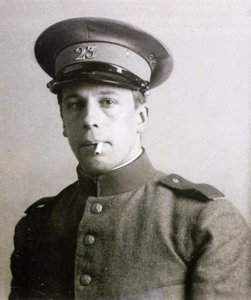
Teo van Doesburg
1883 - 1931 , Países Bajos
Breves datos
- Artistas Que Influyeron:
- Vincent van Gogh
- Wassily Kandinsky
- Estilo Artístico: Neoplasticismo, De Stijl
- Fecha De Fallecimiento: 7 de marzo de 1931
- Fecha De Nacimiento: 30 de agosto de 1883
- Influenciado A:
- Arquitectura moderna
- Diseño
- Arte abstracto
- Lugar De Nacimiento: Utrecht, Países Bajos
- Nacionalidad: Neerlandés
- Nombre Completo: Theo van Doesburg
- Obras Notables: ['Estudio para composiciones simultáneas xxii']

