

 Ver en contexto
 Enviar
 Compartir
 Detalles

 Descargar
 Similares
 Radiografía
 Presentación de diapositivas
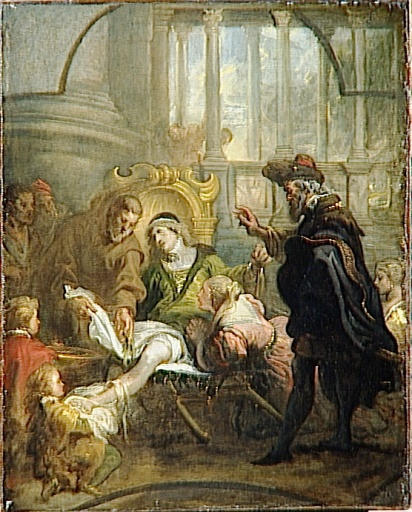
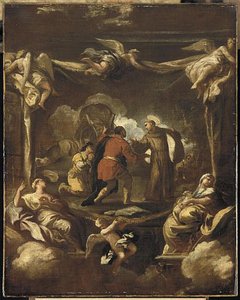
SAINT FRANCOIS DE PAULE GUERISSANT JEAN CARATELLO, DIT AUTREFOIS MIRACLE DE SAINT MARTIN


 Ver más
Adquiera una imagen digital de alta resolución y optimizada, muy superior a la vista previa en línea.
Cada archivo es preparado meticulosamente por nuestros especialistas internos mediante el uso de herramientas avanzadas y un experto retoque manual. Nos aseguramos de que cada imagen posea una claridad excepcional, una precisión cromática impecable y un detalle minucioso.
El archivo final se entrega por correo electrónico en un plazo de 72 horas, optimizado para su uso inmediato en entornos profesionales, editoriales y de impresión. Esta es la misma calidad en la que confían los estudios de diseño, las editoriales y las galerías de primer nivel.
Imagen Digital
Descarga un archivo de alta resolución para exhibición personal, impresión y proyectos creativos. ( Comprar impresión Comprar pintura hecha a mano)
Incluido en cada pedido de imágenes digitales
Entrega digital experta, garantizada.
Al elegir ArtsDot.com, no solo está adquiriendo una imagen; está recibiendo una obra de arte digital mejorada profesionalmente, elaborada con precisión y respaldada por una garantía de satisfacción. Esto es todo lo que incluye su pedido, automáticamente:

Entrega rápida por email
Recibirá su archivo de imagen digital en alta resolución por correo electrónico en un plazo de 72 horas tras realizar su pedido, listo para su uso inmediato.

Archivo digital optimizado por IA
Su obra de arte se optimiza profesionalmente mediante herramientas avanzadas de IA y edición manual, garantizando el máximo detalle, claridad y precisión cromática.

Reenvío gratuito de por vida
¿Has borrado o perdido tu archivo por error? No te preocupes: te lo volveremos a enviar en cualquier momento, sin coste adicional.

Sin gastos de importación, siempre
Disfrute de su obra de arte al instante sin aduanas, aranceles ni gastos de envío; las descargas digitales siempre están libres de impuestos.

Garantía de fidelidad de color
Garantizamos que su imagen digital refleje los colores originales con la mayor fidelidad posible, mediante el uso de herramientas profesionales y gestión del color.

Garantía de satisfacción de 100 días
Si no está satisfecho con su imagen digital, la revisaremos o le reembolsaremos el 100% en un plazo de 100 días, sin preguntas.

100% Garantía de devolución de dinero
¿No está satisfecho? Obtenga un reembolso completo dentro de los 100 días posteriores a la recepción de su archivo digital, sin necesidad de explicaciones.

Descuentos por pedidos grandes
Compra 3 imágenes, ahorra 10% - Compra 5, ahorra 15% - Compra 10+, ahorra 20%. Ideal para proyectos creativos, galerías y agencias.
A Moment of Grace: The Healing Touch of Theodor Van Thulden
Theodor van Thulden’s “Saint François de Paule guérissant Jean Carateo, dit autrefois Miracle de Saint Martin” is more than just a painting; it's a carefully constructed tableau of faith, compassion, and the enduring power of human connection. Completed around 1640, this oil on canvas masterpiece housed within the Louvre’s Department of Paintings in Paris captures a pivotal scene from the life of Saint Francis of Paola – his miraculous healing of Jean Carateo, once known as the Miracle of Saint Martin. Van Thulden, deeply influenced by the Mannerist tradition and the grandeur of Peter Paul Rubens, masterfully blends realism with an almost theatrical intensity, drawing the viewer into this intimate moment of divine intervention.
The Narrative of Faith and Healing
At the heart of the composition lies a scene brimming with symbolic weight. Saint Francis of Paola, depicted in flowing robes radiating an aura of serene authority, extends his hand towards Jean Carateo, who is lying on a simple bed, his face etched with vulnerability and relief. The gesture isn’t merely one of healing; it's imbued with the profound belief that faith can overcome suffering. The setting itself – a modestly appointed room within a religious household – underscores the humility and simplicity of this miraculous event. It’s not a grand cathedral or a bustling marketplace, but a quiet space where grace finds its expression.
The historical context is equally compelling. Saint Francis of Paola was a 15th-century Italian friar known for his fervent devotion and his ability to perform miracles through prayer and the laying on of hands. Jean Carateo, previously identified as the Miracle of Saint Martin, suffered from a debilitating ailment, and this painting immortalizes the moment when Saint Francis miraculously restored him to health. The inclusion of other figures observing the scene – some in expressions of awe, others lost in contemplation – highlights the profound impact of this event on those present.
A Masterclass in Baroque Technique
Van Thulden’s skill as a painter is immediately evident in his meticulous attention to detail and his masterful use of light and shadow. The figures are rendered with remarkable realism, their drapery flowing with an almost sculptural quality. Notice the subtle gradations of color – the rich browns and golds of Saint Francis' robes contrasting with the paler tones of Jean Carateo’s skin. Van Thulden employs a technique known as *chiaroscuro*, skillfully manipulating light to create depth and drama, directing the viewer’s eye towards the central figures and emphasizing their emotional states.
The artist's background in printmaking is also apparent in the painting’s composition. The careful arrangement of elements, the balanced use of space, and the overall sense of order reflect Van Thulden’s experience creating detailed engravings. This influence contributes to the painting’s clarity and its ability to convey a complex narrative with remarkable precision.
Symbolism and Emotional Resonance
Beyond the literal depiction of a miraculous healing, “Saint François de Paule guérissant Jean Carateo” is rich in symbolism. The simple bed on which Jean Carateo lies represents vulnerability and dependence, while Saint Francis’ outstretched hand symbolizes divine grace and compassion. The act of laying hands – a common motif in religious art – signifies the transfer of spiritual energy and the power of faith. The painting evokes a powerful sense of hope, reminding us of the transformative potential of belief and the enduring capacity for human kindness.
Reproductions of this captivating artwork offer an opportunity to bring this moment of grace into your home or office. ArtsDot.com provides high-quality reproductions in various sizes and materials, allowing you to appreciate Van Thulden’s artistry for years to come. Consider a custom size to perfectly complement your space – our mockup service ensures a flawless fit.
Obras relacionadas

Biografía del artista
Early Life and Training
Theodoor van Thulden, a pivotal figure in the Dutch Baroque movement, was born on August 9, 1606, in ‘s-Hertogenbosch, North Brabant – a region steeped in artistic tradition. His lineage provided an immediate connection to the world of art; his father, an *orfèvre* (a skilled artisan specializing in goldsmithing and decorative arts), engaged in the lucrative textile trade, while his mother descended from another family of *orfèvres*. This familial background instilled within young Theodoor a deep appreciation for craftsmanship and visual aesthetics. His artistic journey commenced under the tutelage of Abraham van Blyenbergh, a respected master painter residing in the same city, beginning around 1622. Van Blyenbergh’s workshop provided Theodoor with a foundational education in painting techniques, perspective, and composition – essential building blocks for his future endeavors. This early training laid the groundwork for his distinctive style, characterized by its elegant restraint and classical sensibilities.Artistic Career and Influences
Van Thulden's career truly blossomed upon achieving master status within the St. Luke’s Guild in Antwerp in 1627. This prestigious recognition marked a significant step forward, signifying his professional independence and allowing him to operate as an independent artist. However, it was his close association with Peter Paul Rubens that profoundly shaped his artistic development. Rubens, arguably the most influential painter of the era, exerted a powerful influence on Van Thulden’s style, evident in the latter's use of muted colors, balanced compositions, and a preference for brown tones – elements characteristic of the Flemish Baroque tradition. The collaboration between the two artists extended beyond mere mentorship; they frequently worked together on ambitious projects, including the elaborate decorations for the joyous entry of Cardinal-Infante Ferdinand into Antwerp in 1635. This monumental undertaking showcased Van Thulden’s ability to execute large-scale paintings with meticulous detail and a deep understanding of Rubens's artistic vision. Notably, Van Thulden also spent time in France between 1631 and 1633, an experience that exposed him to the Mannerist style prevalent at the Fontainebleau court. While he absorbed elements of this trend, particularly through his copying of frescoes by Francesco Primaticcio and Niccolò dell’Abbate, he skillfully integrated these influences into his own unique artistic vocabulary.Notable Works and Collaborations
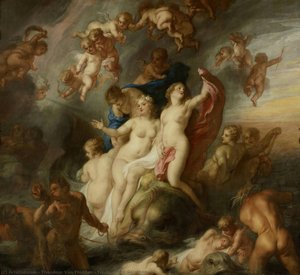
Van Thulden's oeuvre encompasses a diverse range of subjects, including mythological scenes, allegorical compositions, village festivals, wedding celebrations, portraits, and religious altarpieces. One of his most celebrated works is “Triumph der Galathea” (1659), now housed in the Picture Gallery Sanssouci in Potsdam, Germany. This monumental painting exemplifies Van Thulden’s mastery of Baroque techniques – dynamic movement, dramatic lighting, and a carefully orchestrated interplay of figures. His collaboration with Rubens on the decorations for the triumphal entry of Cardinal-Infante Ferdinand stands as another testament to their artistic synergy. Beyond these grand projects, Van Thulden produced numerous smaller works that offer valuable insights into his artistic development and stylistic preferences. His paintings often depict scenes of everyday life in Dutch villages, capturing the charm and vitality of rural communities. The Museo del Prado in Madrid holds three significant paintings by Van Thulden: “El descubrimiento de la púrpura” (The Discovery of Purple), "Orfeo y los animales" (Orpheus and the Animals) – a collaborative masterpiece with Frans Snyders – and “Apolo persiguiendo a Dafne” (Apollo Pursuing Daphne).Museum Collections and Historical Significance
Van Thulden’s works are held in several prominent museums around the world, including the Rijksmuseum in Amsterdam, which boasts an impressive collection of prints, drawings, and photographs by him and his contemporaries. The “Triumph der Galathea” remains a cornerstone of the museum's Baroque holdings. Furthermore, exploring the art of St. Joriskerk in Amersfoort, Netherlands, provides a deeper understanding of Dutch artistic traditions and influences during this period. Van Thulden’s legacy extends beyond his individual works; he played a crucial role in shaping the development of Dutch Baroque painting, bridging the gap between Flemish influence and emerging national styles. His elegant compositions, refined color palettes, and skillful rendering of human figures continue to resonate with art lovers today, solidifying his place as one of the most important artists of the 17th century. His paintings offer a window into a vibrant era of artistic innovation and cultural exchange, reflecting both the grandeur of the Habsburg court and the everyday realities of Dutch society.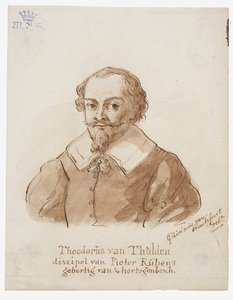
Teodoro van Thulden
1606 - 1669 , Países Bajos
Breves datos
- Artistic Movement Or Style: Barroco
- Artists Or Movements Influenced By This Artist: ['Barroco Flemeco']
- Artists Who Influenced This Artist: ['Rubens']
- Date Of Birth: 9 de agosto de 1606
- Date Of Death: 1669
- Full Name: Theodoor van Thulden
- Nationality: Flemeco
- Notable Artworks:
- Triumph Galathea
- Venus Adonis
- Antiochus Stratonice
- Place Of Birth: Den Bosch, Países Bajos