

 Ver en contexto
 Enviar
 Compartir
 Detalles

 Descargar
 Similares
 Radiografía
 Presentación de diapositivas
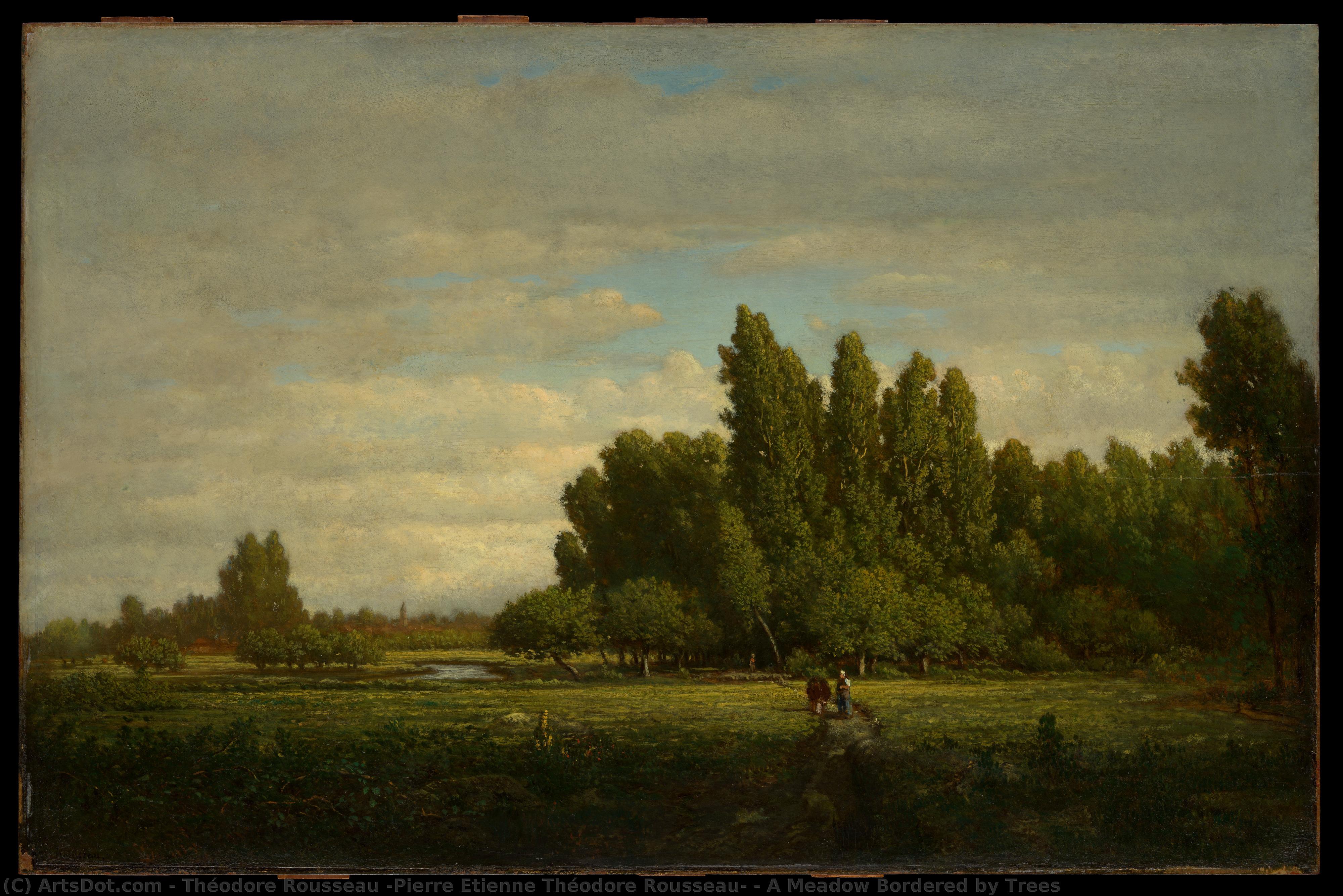
Una pradera bordeada por árboles
 Óleo sobre lienzo
- Arte de pared
- Escuela de Barbizon
 1845
1845- Siglo XIX
 42.0 x 62.0 cm
 Museo Metropolitano de Arte
 Ver más
Adquiera una imagen digital de alta resolución y optimizada, muy superior a la vista previa en línea.
Cada archivo es preparado meticulosamente por nuestros especialistas internos mediante el uso de herramientas avanzadas y un experto retoque manual. Nos aseguramos de que cada imagen posea una claridad excepcional, una precisión cromática impecable y un detalle minucioso.
El archivo final se entrega por correo electrónico en un plazo de 72 horas, optimizado para su uso inmediato en entornos profesionales, editoriales y de impresión. Esta es la misma calidad en la que confían los estudios de diseño, las editoriales y las galerías de primer nivel.
Imagen Digital
Descarga un archivo de alta resolución para exhibición personal, impresión y proyectos creativos. ( Comprar impresión Comprar pintura hecha a mano)
Incluido en cada pedido de imágenes digitales
Entrega digital experta, garantizada.
Al elegir ArtsDot.com, no solo está adquiriendo una imagen; está recibiendo una obra de arte digital mejorada profesionalmente, elaborada con precisión y respaldada por una garantía de satisfacción. Esto es todo lo que incluye su pedido, automáticamente:

Entrega rápida por email
Recibirá su archivo de imagen digital en alta resolución por correo electrónico en un plazo de 72 horas tras realizar su pedido, listo para su uso inmediato.

Archivo digital optimizado por IA
Su obra de arte se optimiza profesionalmente mediante herramientas avanzadas de IA y edición manual, garantizando el máximo detalle, claridad y precisión cromática.

Reenvío gratuito de por vida
¿Has borrado o perdido tu archivo por error? No te preocupes: te lo volveremos a enviar en cualquier momento, sin coste adicional.

Sin gastos de importación, siempre
Disfrute de su obra de arte al instante sin aduanas, aranceles ni gastos de envío; las descargas digitales siempre están libres de impuestos.

Garantía de fidelidad de color
Garantizamos que su imagen digital refleje los colores originales con la mayor fidelidad posible, mediante el uso de herramientas profesionales y gestión del color.

Garantía de satisfacción de 60 días
Si no está satisfecho con su imagen digital, la revisaremos o le reembolsaremos el 100% en un plazo de 60 días, sin preguntas.

100% Garantía de devolución de dinero
¿No está satisfecho? Obtenga un reembolso completo dentro de los 60 días posteriores a la recepción de su archivo digital, sin necesidad de explicaciones.

Descuentos por pedidos grandes
Compra 3 imágenes, ahorra 10% - Compra 5, ahorra 15% - Compra 10+, ahorra 20%. Ideal para proyectos creativos, galerías y agencias.
A Window Into Rousseau’s Vision of Rural Tranquility
In the heart of the nineteenth century, a quiet revolution was unfolding within the forests and fields of France, led by artists who sought to move beyond mere imitation toward a profound spiritual connection with the earth. Théodore Rousseau, a titan of the Barbizon School, stands at the forefront of this movement. His masterpiece, “A Meadow Bordered by Trees,” is far more than a landscape; it is an immersive window into a world where nature breathes with its own rhythmic soul. Painted between 1845 and 1850, this canvas captures a moment of eternal stillness, inviting the viewer to step away from the turbulence of modern life and find sanctuary within a verdant, sun-dappled glade.
The painting presents a breathtakingly detailed meadow, where the lushness of the grass meets the protective embrace of ancient trees. Scattered throughout this pastoral idyll are subtle traces of life—a man and a horse moving through the landscape—yet they do not dominate the scene. Instead, they are woven into the fabric of the environment, serving as gentle reminders of humanity's harmonious coexistence with the natural world. The sky above, heavy with soft, drifting clouds, adds a layer of atmospheric depth that suggests the fleeting nature of light and time, grounding the composition in a sense of realism that is both grounded and ethereal.
The Mastery of the Planimetric Technique
What distinguishes Rousseau’s work from his contemporaries is his revolutionary approach to perspective, a method he termed “planimetric.” Rather than relying on traditional, sweeping vistas, Rousseau often observed his subjects from shaded, sheltered positions—perhaps beneath the very canopy of trees depicted in his work. From this vantage point, he utilized parallel strips of color and light to build an illusion of depth. This technique creates a palpable sense of atmosphere; as the eye moves through the layers of the meadow, one feels the shift from the cool shadows of the foreground to the diffused, golden warmth of the distant trees.
This meticulous execution is not merely a display of technical prowess but a deliberate emotional tool. By layering color with such precision, Rousseau achieves a sense of tranquility and stillness that invites deep contemplation. For the collector or interior designer, this quality makes the piece an extraordinary focal point. It possesses the rare ability to anchor a room, providing a sense of calm and structural balance through its rhythmic composition and the soft, organic textures of the French countryside.
Embracing Imperfection and the Beauty of Realism
Rousseau’s philosophy was rooted in an honest appreciation for the world as it truly is. He famously avoided the polished, idealized landscapes favored by the Academy, choosing instead to embrace the beautiful imperfections of nature. In “A Meadow Bordered by Trees,” one finds beauty in the uneven textures of the earth, the dappled sunlight that breaks unpredictably through the leaves, and the muted, earthy tones that reflect the true palette of the forest floor. This commitment to realism serves a higher purpose: it celebrates the grandeur found in the organic and the unrefined.
To possess a reproduction of this work is to bring a piece of this humanist philosophy into one's own space. It is an invitation to appreciate the subtle nuances of life—the way light hits a blade of grass or the quiet dignity of a landscape left untouched by artifice. For those seeking to decorate with intention, this painting offers more than aesthetic appeal; it offers a restorative presence, a timeless reminder that true peace is found in our connection to the natural world.
Obras relacionadas
Biografía del artista
Théodore Rousseau: The Soul of the Forest
Étienne Pierre Théodore Rousseau (1812-1867) stands as a cornerstone of French Barbizon School painting, an artistic movement that championed realism and celebrated the grandeur of rural landscapes. Born in Paris to a bourgeois family, Rousseau’s early life was marked by a father who initially resisted his son's passion for art – a sentiment that ultimately softened as he witnessed Rousseau’s unwavering dedication to his craft. This familial support proved crucial as Rousseau navigated the turbulent waters of Parisian artistic circles and faced repeated rebuffs from the Salon authorities, institutions notoriously resistant to avant-garde ideas.Early Training & Influences
Rousseau's initial artistic education was modest, yet he quickly demonstrated exceptional talent. Recognizing his aptitude, his father encouraged him to pursue painting seriously, prioritizing it over business ventures. He absorbed influences from artists like Jean-François Millet and Eugène Delacroix, whose depictions of peasant life and dramatic landscapes respectively instilled in him a profound appreciation for capturing the essence of nature. Millet’s meticulous attention to detail—particularly in portraying human figures within rural settings—served as an inspiration for Rousseau's own approach to composition and characterization. Similarly, Delacroix’s expressive brushwork and masterful use of color encouraged Rousseau to experiment with bolder techniques while maintaining a steadfast commitment to conveying emotional depth.The Barbizon School & Artistic Philosophy
Rousseau’s artistic vision centered on portraying the natural world with uncompromising accuracy. Rejecting idealized representations favored by Romanticism, he embraced the Barbizon aesthetic – characterized by muted colors, sketchy brushwork, and a focus on atmospheric perspective—to convey the emotional impact of landscapes. He believed that art should serve as a conduit for observing and understanding nature, mirroring its sublime beauty. This conviction drove him to spend countless hours outdoors, meticulously studying the subtleties of light and shadow, texture and color, striving to capture not merely what he saw but also what he felt—a profound reverence for the untamed wilderness and its inherent spirituality.Rousseau’s Artistic Output
Rousseau's artistic output is distinguished by an extraordinary range of subjects, predominantly focused on forests and rural scenes. However, he wasn't merely documenting the visual appearance of these environments; he sought to convey their spiritual significance—the feeling of awe and reverence inspired by encountering untamed wilderness. Works like “Les Chênes d’Apremont” exemplify his masterful technique, demonstrating a remarkable ability to render textures and tonal variations with astonishing subtlety. The painting captures the dappled sunlight filtering through dense foliage, creating an immersive experience for the viewer. Rousseau achieved considerable fame during his lifetime, securing commissions from prominent patrons and exhibiting regularly at the Salon. Among his most celebrated paintings are “The Great Oaks of the Vieux Bas-Breau,” a monumental depiction of ancient trees bathed in golden light; "View of the Puy de Dome and Royat," showcasing a breathtaking sunset over the volcanic peaks of France; and “La Grenouillère” – a poignant portrayal of a picnic scene on the Loire River, imbued with melancholic beauty. Despite facing considerable hardship and criticism throughout his career, Rousseau persevered in his artistic pursuits until his untimely death in 1867. His legacy extends far beyond the canvases he created; he established a tradition of landscape painting that continues to inspire artists today. Théodore Rousseau remains revered as one of France’s greatest painters—a champion of natural beauty and an enduring symbol of Romantic idealism transformed into unwavering artistic conviction.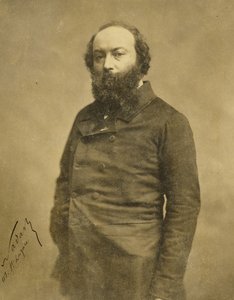
Théodore Rousseau
1812 - 1867 , Francia
Breves datos
- Artistic Movement Or Style: Escuela de Barbizon
- Artists Who Influenced This Artist:
- Jean-François Millet
- Eugène Delacroix
- Date Of Birth: 15 abril de 1812
- Date Of Death: 22 diciembre de 1867
- Full Name: Étienne Pierre Théodore Rousseau
- Nationality: Francés
- Notable Artworks:
- Les Chênes d’Apremont
- La descente des vaches
- Place Of Birth: París, Francia

