

 Ver en contexto
 Enviar
 Compartir
 Detalles

 Descargar
 Similares
 Radiografía
 Presentación de diapositivas
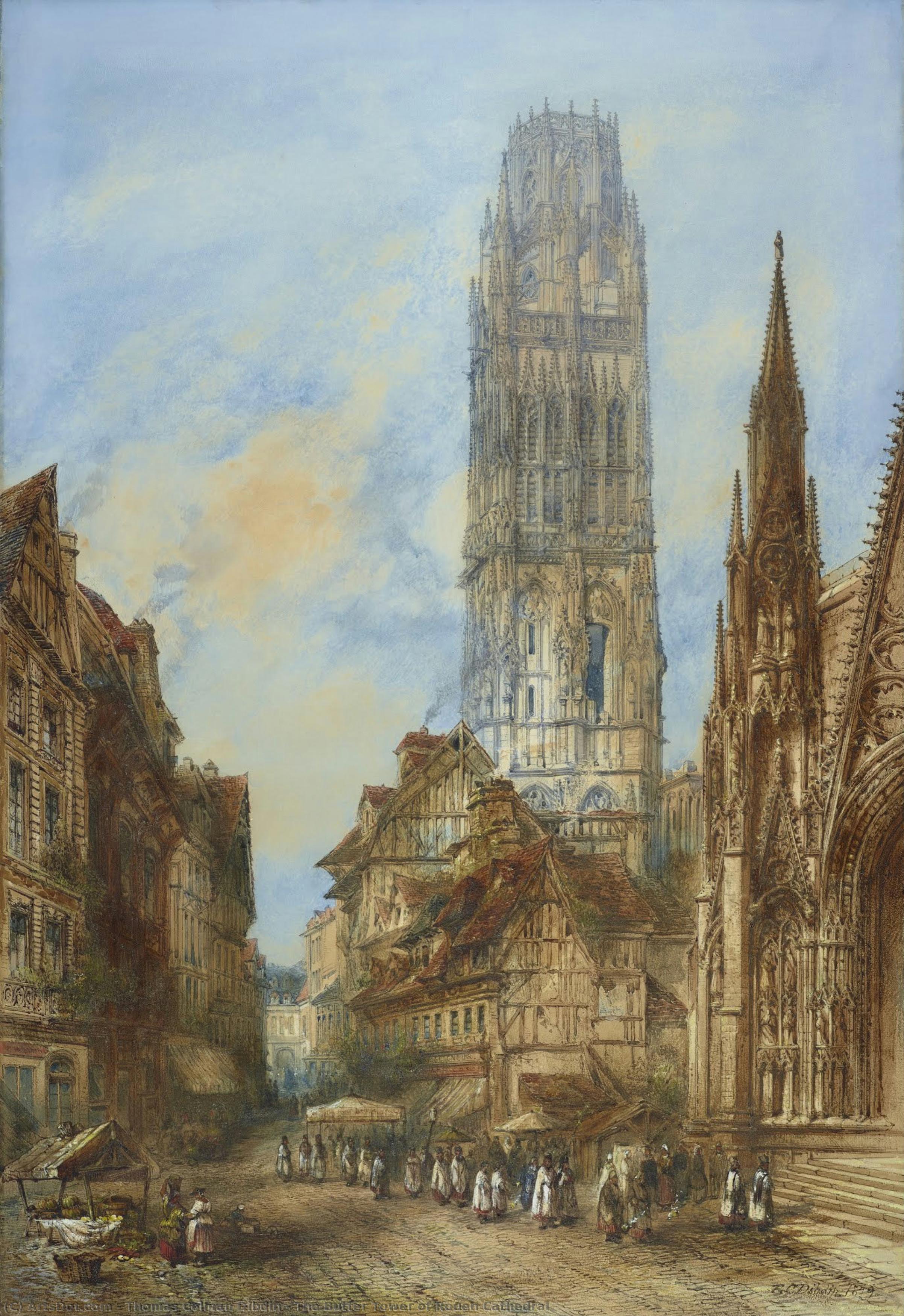
The Butter Tower of Rouen Cathedral
 Watercolor
- WallArt
- Romanticism
 1879
1879- 19th Century
 151.0 x 114.0 cm
 Galería de Arte de Nueva Gales del Sur
 Ver más
Giclée / Impresión de arte
Impresiones giclée o en lienzo de calidad de museo con producción rápida y opciones de acabado flexibles. ( Comprar pintura hecha a mano Comprar imagen)




P118B $10

P118H $10

P118W $10

P438Z $10

P508JH $12

P508YH $12

P805H $10

P805Z $10

P919BZ $10

P919G $10

P919XJ $10

P959ZH $10

P968JZ $12

W106C $8

W218G $10

W218JH $8

W218Y $10

W307PJ $10

W316G $10

W316PJ $8

W316Y $10

W398PJ $8

W4111J $10

W500HY $15

W500JH $15

W692G $12

W849H $8

W940BG $15

W953PJ $8




Elija entre nuestros tamaños predefinidos que respetan las proporciones originales de la obra.

Puede introducir sus propias dimensiones para adaptarse a un marco o espacio específico. Si el tamaño seleccionado no coincide con las proporciones de la imagen original, recortaremos la obra de arte o extenderemos la imagen con un borde con efecto espejo o de color sólido. Se enviará una maqueta digital para su aprobación antes de que comience la producción.
Tenga en cuenta que la vista previa en pantalla no refleja el recorte o la extensión real. Solo la maqueta mostrará con precisión la composición final.
Aunque existen tamaños personalizados, recomendamos seleccionar una dimensión de la lista predefinida para preservar las proporciones originales.
Envío a todo el mundo () en 2 semanas en lugar de las 4/5 semanas estándar. (24 agosto)

Envío exprés gratuito a todo el mundo

Lienzo de lino de alta calidad

Seguro de envío total

Garantía de reembolso de impuestos aduaneros

Garantía de fidelidad cromática exacta

Política de devolución de 60 días (solo por defectos)

Garantía de devolución del 100% del dinero

Descuento por cantidad
 La opción de vidrio solo está disponible en tamaños inferiores a 110 cm.

The Butter Tower of Rouen Cathedral
Giclée / Impresión de arte
Dimensiones de la reproducción
-


Precio total final
$ 62
Descripción de la pieza
A Window into Nineteenth-Century Normandy
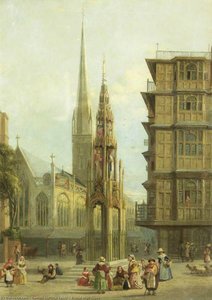
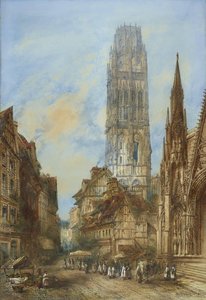
In his evocative watercolor, The Butter Tower of Rouen Cathedral, Thomas Colman Dibdin invites the viewer to step through a portal of time, transporting them to the bustling, cobblestone heart of Normandy. The scene is far more than a mere architectural study; it is a living, breathing tapestry of 19th-century European life. At the center of this composition stands the magnificent Tour de Beurre, a structure whose very name whispers tales of medieval piety and indulgence. Dibdin masterfully captures the way the sunlight dances across the intricate Gothic details of the tower, contrasting its soaring, stone permanence against the transient, rhythmic movement of the street below. Through his delicate brushwork, we witness a religious procession winding its way toward the south transept, a moment of spiritual gravity set against the mundane vitality of horses, carriages, and townspeople navigating the narrow lanes.
The atmosphere of the piece is defined by a sense of nostalgic grandeur. Dibdin, a master of topographical realism, utilizes the fluid medium of watercolor to achieve a luminous quality that mimics the soft, diffused light characteristic of Northern France. There is a profound sense of movement in the way he renders the figures and animals; they are not static portraits but part of a continuous, swirling energy that defines the town's character. For the collector or interior designer, this painting offers a sophisticated focal point that brings a sense of historical depth and European charm to any space. It evokes the romanticism of an era long passed, making it an ideal selection for those looking to infuse a room with a feeling of cultured wanderlust and timeless elegance.
The Artistry of Observation and Detail
Technically, Dibdin’s work is a testament to his profound dedication to careful observation. As the author of A Guide to Watercolor Painting, he possessed an unparalleled understanding of how to manipulate pigment to create depth, texture, and atmosphere. In this particular work, his ability to balance the heavy, imposing presence of the cathedral with the light, airy details of the surrounding half-timbered houses is nothing short of extraordinary. He employs subtle washes of color to suggest the weathered textures of stone and wood, while sharper, more precise strokes define the silhouettes of the crowd and the rhythmic motion of the carriages.
The emotional impact of the painting lies in its ability to evoke a sense of "place." It does not merely show us Rouen; it makes us feel the weight of its history and the pulse of its streets. The juxtaposition of the sacred—represented by the towering cathedral and the solemn procession—with the secular—the daily commerce and movement of the town—creates a compelling narrative tension. This duality makes the artwork particularly resonant for modern interiors, where it can serve as a meditative piece that encourages contemplation of history, architecture, and the enduring beauty of the human spirit within the landscape.
Obras relacionadas
Biografía del artista
Thomas Colman Dibdin: A Watercolorist Steeped in Observation and Detail
Thomas Robert Colman Dibdin (1810 – 1893) was a British watercolor artist whose meticulous depictions of European landscapes, particularly Gibraltar and India, cemented his reputation as a master of topographical realism. Born in Betchworth, Surrey, Dibdin’s artistic journey began modestly—he initially worked as a postal clerk—but swiftly transitioned to painting, fueled by an innate fascination with capturing the nuances of the natural world. His formative years were spent honing his skills abroad, traversing France, Germany, and Belgium, absorbing influences from Romanticism and Impressionism alike. Dibdin’s artistic breakthrough arrived in 1845 when he published “A Guide to Watercolor Painting,” a seminal text that disseminated his techniques and championed the medium's expressive potential. This publication wasn’t merely instructional; it reflected Dibdin’s belief in careful observation as the cornerstone of successful watercolor artistry—a philosophy evident throughout his oeuvre. He collaborated with his father-in-law, William Henry Fox Talbot, establishing Sydenham College, where he imparted his knowledge and fostered a new generation of artists. Dibdin's artistic output spanned decades, producing landscapes that showcased remarkable precision and sensitivity to light and atmosphere. His paintings frequently featured scenes from Gibraltar’s harbor and fortifications—particularly “Commercial Square” – capturing the bustling activity of the port city with muted tones and detailed architectural renderings. Similarly, "South Barracks From Rosia Bay" presented a captivating portrayal of Gibraltar's coastline, demonstrating Dibdin’s ability to convey both grandeur and subtle textural variations. He also undertook expeditions to India, translating sketches into watercolor paintings that captured the exotic beauty of Mughal architecture and landscapes. Notably, his Indian watercolors were created based on preparatory sketches made in England, highlighting Dibdin’s methodical approach to artistic representation. Dibdin's legacy extends beyond his individual artworks; he played a crucial role in shaping watercolor painting pedagogy during the Victorian era. His “Guide” remains a valuable resource for aspiring artists and exemplifies the importance of scientific observation alongside aesthetic consideration. Today, Dibdin’s paintings can be admired in galleries across London and Sheffield, serving as enduring reminders of 19th-century artistic excellence and Dibdin's contribution to the history of watercolor art.- Early Life & Education: Dibdin was born into a theatrical family—his father, Thomas Dibdin Sr., was a celebrated playwright—and received an early education focused on literature and music.
- Travels & Artistic Influences: Dibdin’s artistic development benefited greatly from his extensive travels across Europe. He absorbed influences from Romanticism and Impressionism, particularly evident in his use of atmospheric perspective and expressive brushwork.
- “A Guide to Watercolor Painting” (1845): This publication marked a pivotal moment in Dibdin’s career, establishing him as a leading voice on watercolor technique and advocating for the medium's artistic possibilities.
- Sydenham College & Artistic Mentorship: Dibdin’s partnership with William Henry Fox Talbot at Sydenham College resulted in the creation of a prestigious art school that nurtured talent and disseminated Dibdin’s pedagogical principles.
- Notable Paintings & Legacy: Dibdin produced numerous landscapes, notably “Commercial Square” and “South Barracks From Rosia Bay,” which exemplify his mastery of topographical realism. His work continues to inspire admiration for its meticulous detail and evocative portrayal of the natural world.
Thomas Colman Dibdin
1810 - 1893 , Reino Unido
Datos clave
- Artistic Movement Or Style: Watercolor Painting
- Artists Or Movements Influenced By This Artist: ['Florence Nightingale']
- Date Of Birth: 1810
- Date Of Death: 1893
- Full Name: Thomas Robert Colman Dibdin
- Nationality: English
- Notable Artworks:
- Commercial Square
- South Barracks From Rosia Bay
- Place Of Birth: Betchworth, United Kingdom
Artículos relacionados
Acuarelas Legendarias: 10 Obras Maestras que Transformaron el Arte | ArtsDot
Descubre 10 acuarelas legendarias de Turner, Monet y Sargent que revolucionaron el arte. Explora la historia, técnica y belleza de estas obras maestras impresionistas y románticas. Reproducciones de museo en ArtsDot.com.

Ephemeral Visions: Exploring the Artistic Legacy & Contemporary Practice of Watercolor Painting
Explore the captivating world of watercolor painting! Discover its rich history, essential techniques, influential artists & collecting tips. A comprehensive guide for art enthusiasts from ArtsDot.
Visiones Efímeras: Historia y Resonancia Emocional de la Pintura Acuarela
Descubre la fascinante historia de la acuarela, desde sus orígenes hasta su expresión contemporánea. Explora técnicas, artistas clave como Paul Klee y encuentra reproducciones de alta calidad en ArtsDot.

Ephemeral Visions: Exploring the Artistic Legacy & Nuances of Watercolor Painting
Explore the captivating world of watercolor painting! Discover its rich history, essential techniques, influential artists & collecting tips from art experts. A comprehensive guide for enthusiasts.
La Fascinación Duradera de la Acuarela: Historia, Técnicas y Práctica Contemporánea
Descubre la fascinante historia y las técnicas de la acuarela. Explora obras maestras, aprende con expertos y encuentra reproducciones o comisiones personalizadas en .

