 Ver en contexto
 Enviar
 Compartir
 Detalles

 Descargar
 Similares
 Radiografía
 Presentación de diapositivas
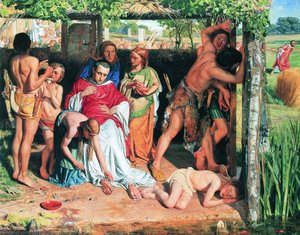
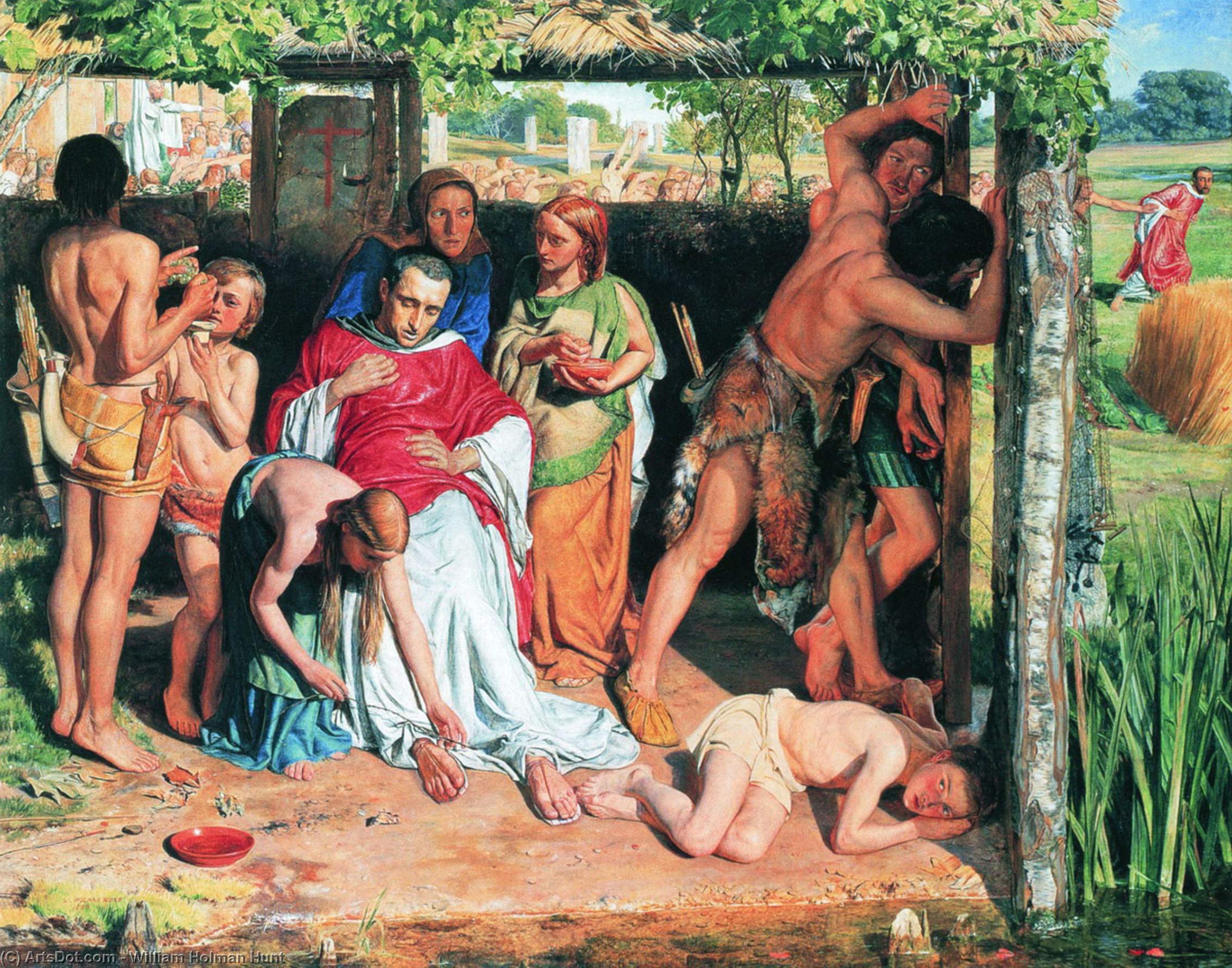
Una familia británica convertida refugiando a un misionero cristiano de la persecución de los druidas


 Ver más
Reproducción al óleo hecha a mano
Óleo sobre lienzo pintado a mano en el tamaño y marco de su elección, realizado por encargo por nuestros artistas. ( Comprar impresión Comprar imagen)




P118B $10

P118H $10

P118W $10

P438Z $10

P508JH $12

P508YH $12

P805H $10

P805Z $10

P919BZ $10

P919G $10

P919XJ $10

P959ZH $10

P968JZ $12

W106C $8

W218G $10

W218JH $8

W218Y $10

W307PJ $10

W316G $10

W316PJ $8

W316Y $10

W398PJ $8

W4111J $10

W500HY $15

W500JH $15

W692G $12

W849H $8

W940BG $15

W953PJ $8




Elija entre nuestros tamaños predefinidos que respetan las proporciones originales de la obra.

Puede ingresar sus propias dimensiones para adaptarse a un marco o espacio específico. Si el tamaño seleccionado no coincide con las proporciones de la imagen original, recortaremos la obra o extenderemos la pintura con elementos adicionales pintados a mano. Se le enviará una maqueta digital para su aprobación antes de comenzar la producción.
Tenga en cuenta que la vista previa en pantalla no refleja el recorte o la extensión reales. Solo la maqueta mostrará con precisión la composición final.
Si bien existen tamaños personalizados, recomendamos seleccionar una dimensión de la lista predefinida para preservar las proporciones originales.
Tras realizar el pedido, el equipo de ArtsDot.com enviará un correo electrónico al cliente para solicitar instrucciones y proporcionarle una vista previa del boceto.
Envío a todo el mundo () en 3-4 semanas en lugar de las 5 semanas estándar. (23 agosto). Sin comprometer la calidad.

Envío exprés gratuito a todo el mundo

Lienzo de lino de alta calidad

Seguro de envío total

Garantía de reembolso de impuestos aduaneros

Garantía de fidelidad cromática exacta

Política de devolución de 60 días (solo por defectos)

Garantía de devolución del 100% del dinero

Descuento por cantidad
 La opción de vidrio solo está disponible en tamaños inferiores a 110 cm.

Una familia británica convertida refugiando a un misionero cristiano de la persecución de los druidas
Técnica de reproducción
Dimensiones de la reproducción
-


Precio total final
$ 263
Descripción de la obra
A Converted British Family Sheltering a Christian Missionary the Persecution of the Druids – A Pre-Raphaelite Vision
William Holman Hunt’s “A Converted British Family Sheltering a Christian Missionary from the Persecution of the Druids” stands as an emblem of Victorian idealism and artistic ambition, encapsulating the spirit of the Pre-Raphaelites' quest for spiritual truth through meticulous observation and idealized representation. Completed in 1850 and currently residing within the Ashmolean Museum’s collection in Oxford, this monumental oil on canvas transcends mere visual spectacle; it’s a profound meditation on faith, conversion, and the enduring struggle between pagan tradition and Christian belief.Subject Matter and Narrative Depth
The painting depicts a poignant tableau: a devout British family offering refuge to a Christian missionary fleeing persecution by Druids – a narrative rooted in biblical allegory and reflecting anxieties surrounding religious reform during the Victorian era. Hunt deliberately eschewed grand historical narratives, favoring instead a carefully crafted scene designed to evoke empathy and contemplation. The figures are rendered with remarkable realism, capturing subtle expressions of emotion and conveying a palpable sense of vulnerability amidst the protective embrace of domestic tranquility. This deliberate choice underscores Hunt’s belief that art should illuminate moral truths rather than merely delight the eye.Artistic Style and Technique – The Pursuit of Ideal Beauty
Hunt's stylistic approach firmly aligns with the Pre-Raphaelite movement’s rejection of academic conventions. He meticulously studied Renaissance masters, particularly Raphael, striving to recapture the luminous clarity and emotional sincerity characteristic of earlier art forms. This dedication is evident in his masterful use of oil paint—a technique he honed through painstaking layering and glazing—resulting in a surface texture that possesses both depth and luminosity. The artist’s meticulous attention to detail extends beyond mere anatomical accuracy; every element within the composition contributes to an overarching sense of harmony and spiritual resonance. Light plays a crucial role, bathing the scene in a diffused glow that symbolizes divine grace and illuminating the faces of the figures with palpable emotion.Symbolism: Layers of Meaning Beyond Appearance
“A Converted British Family Sheltering a Christian Missionary from the Persecution of the Druids” is replete with symbolic significance. The hut itself represents sanctuary—a physical manifestation of spiritual refuge—while the chair symbolizes comfort and stability. More profoundly, the kneeling missionary embodies humility and devotion, mirroring Christ’s posture in depictions of the crucifixion. The family members represent steadfast faith and familial love, symbolizing the bedrock upon which Christian belief is founded. Hunt deliberately incorporated elements from Celtic mythology – notably the Druids – to heighten the dramatic tension and underscore the clash between pagan superstition and enlightened Christianity.Historical Context: Victorian Faith and Artistic Innovation
The painting emerged during a period of significant religious upheaval in Britain—the Evangelical Revival—fueled by anxieties about the decline of traditional faith. Hunt’s artistic endeavor was driven by a fervent desire to engage with these intellectual currents, translating his spiritual convictions into visual form. Simultaneously, he championed a radical aesthetic vision that challenged prevailing artistic dogma. By returning to the stylistic principles of pre-Renaissance masters, Hunt positioned himself at the forefront of an artistic movement committed to moral seriousness and unwavering fidelity to nature—a legacy that continues to inspire artists and collectors alike.Obras relacionadas
Biografía del artista
Primeros años y carrera
William Holman Hunt, un destacado pintor inglés, nació el 2 de abril de 1827 en Cheapside, Londres. Es más conocido por ser uno de los fundadores de la Hermandad Pre-Raphaelita, un grupo que buscaba revitalizar el arte enfatizando la observación detallada del mundo natural.Obras notables y estilo
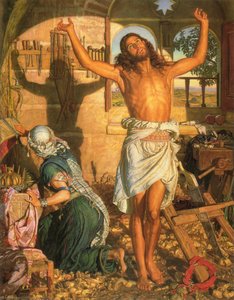
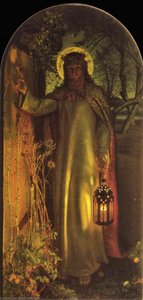
Las pinturas de Holman Hunt se caracterizan por su atención al detalle, color vívido y simbolismo elaborado. Algunas de sus obras más destacadas incluyen:- La luz del mundo (1851-1853), ahora en la capilla del Colegio Keble, Oxford, Inglaterra
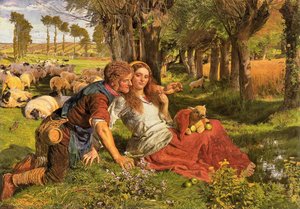
- El Pastor Engañado (1851), una escena de la vida rural moderna
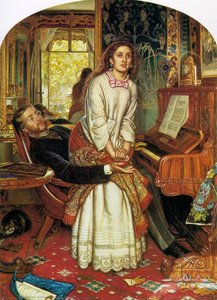
- La Conciencia Despertada, que muestra su éxito inicial con escenas naturalistas intensamente realistas
- El chivo expiatorio, La búsqueda del Salvador en el templo y La sombra de la muerte, pintadas durante sus viajes a Tierra Santa en busca de material topográfico y etnológico preciso.
Vida personal y años posteriores
Holman Hunt se casó dos veces, primero con Fanny Waugh, que modeló para varias de sus obras, incluyendo Isabela y la maceta de albahaca. Después de su muerte, esculpió su tumba en Fiesole. Su segunda esposa fue Edith, hermana de Fanny, a quien se casó en el extranjero debido a las leyes británicas contra el matrimonio con la hermana de una esposa fallecida. Los últimos años de Holman Hunt estuvieron marcados por una vista fallida, lo que le obligó a renunciar a la pintura. Completó sus últimas obras importantes con la ayuda de su asistente, Edward Robert Hughes. Holman Hunt falleció el 7 de septiembre de 1910 y fue enterrado en la Catedral de San Pablo, Londres.Legado
Holman Hunt publicó una autobiografía en 1905 y fue nombrado miembro de la Orden del Mérito por el rey Eduardo VII ese mismo año. Su vida personal fue documentada posteriormente en el libro de Diana Holman-Hunt Mi abuelo, su vida y sus amores. Vea las obras de William Holman Hunt en ArtsDot Fechas clave:- 2 de abril de 1827: nació en Cheapside, Londres
- 1851-1853: pintó La luz del mundo
- 7 de septiembre de 1910: falleció y fue enterrado en la Catedral de San Pablo, Londres
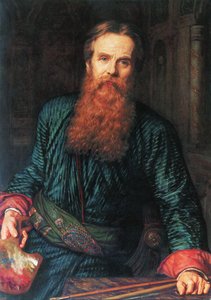
William Holman Hunt
1827 - 1910 , Reino Unido
Datos clave
- Artistas Que Influyeron:
- John Ruskin
- Dante Gabriel Rossetti
- John Everett Millais
- Estilo Artístico: Pre-Rafaelita
- Fecha De Fallecimiento: 7 de septiembre de 1910
- Fecha De Nacimiento: 2 de abril de 1827
- Lugar De Nacimiento: Cheapside, Reino Unido
- Nacionalidad: Británico
- Nombre Completo: William Holman Hunt
- Obras Notables:
- La luz del mundo
- El pastor engañado
- La conciencia despertada
Artículos relacionados
Dante Gabriel Rossetti: Las 25 Obras Maestras del Prerrafaelismo | ArtsDot
Descubre las 25 obras maestras de Dante Gabriel Rossetti, el máximo exponente del Prerrafaelismo. Explora su simbolismo, retratos victorianos y la belleza femenina en lienzos inolvidables. Reproducciones de arte exclusivas en ArtsDot.com.
Sir John Everett Millais: Pre-Raphaelite Rebellion & Victorian Narrative Detail
Explore the revolutionary art of Sir John Everett Millais & the Pre-Raphaelite Brotherhood. Discover their radical realism, symbolic narratives, and lasting impact on Victorian aesthetics. A deep dive into 19th-century masterpieces.
La Hermandad Prerrafaelita: Rebelión Estética y Romance Medieval en el Arte Victoriano
Descubre la fascinante historia de la Hermandad Prerrafaelita y su rebelión estética contra el arte victoriano. Análisis profundo de sus obras, temas y legado con expertos en arte.
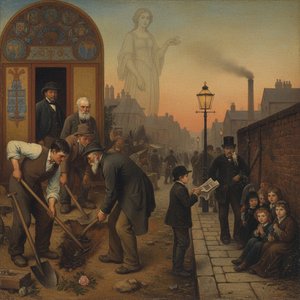
Ford Madox Brown: Pre-Raphaelite Visionary & Victorian Social Commentary
Explore the life & art of Ford Madox Brown, a pivotal Pre-Raphaelite painter renowned for his powerful social commentary and masterpiece 'Work'. Discover his lasting influence on British art history.
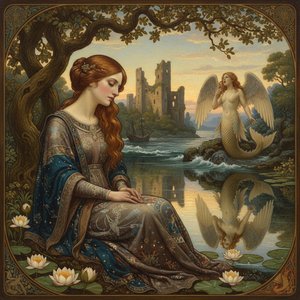
John William Waterhouse: Pre-Raphaelite Mythmaker & Poetic Depictions of Female Identity
Explore the captivating world of John William Waterhouse, a master of Pre-Raphaelite painting. Discover his iconic depictions of mythology and female identity in this expert guide.