

 Enviar
 Compartir
 Detalles

 Descargar
 Similares
 Presentación de diapositivas
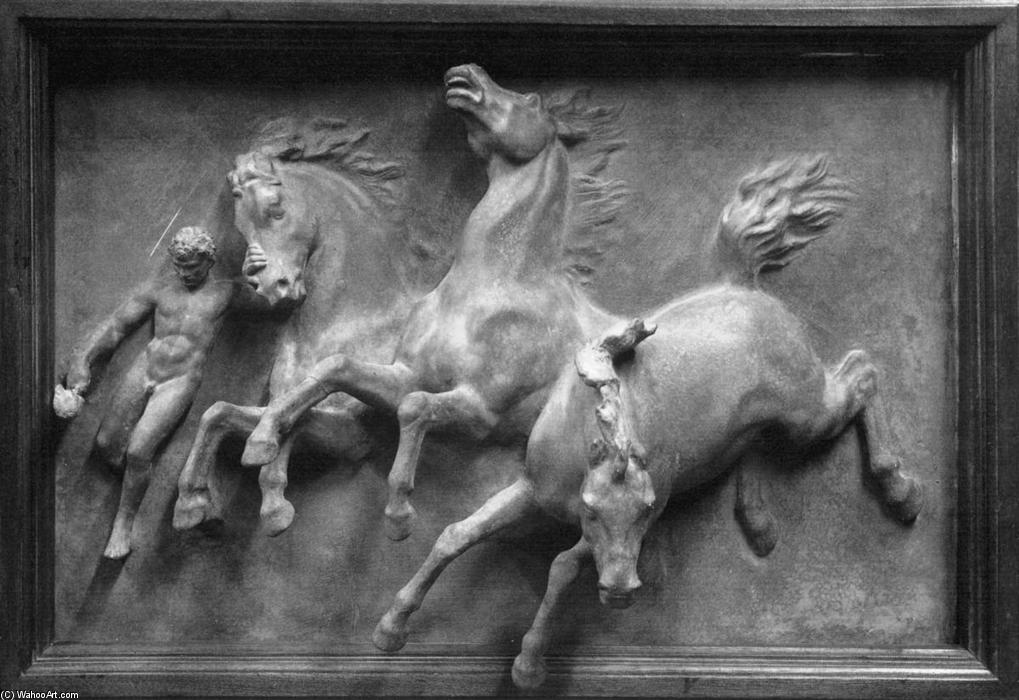
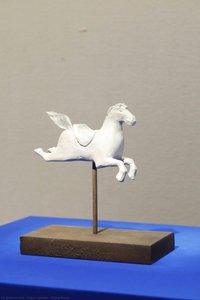
The Horses of Anahita or The Flight of Night
 Plaster
- Sculpture
- Neoclassicism/Romanticism
 1848
1848- 19th Century
 47.0 x 72.0 cm
 Museo Metropolitano de Arte
 Ver más
Adquiera una imagen digital de alta resolución y optimizada, muy superior a la vista previa en línea.
Cada archivo es preparado meticulosamente por nuestros especialistas internos mediante el uso de herramientas avanzadas y un experto retoque manual. Nos aseguramos de que cada imagen posea una claridad excepcional, una precisión cromática impecable y un detalle minucioso.
El archivo final se entrega por correo electrónico en un plazo de 72 horas, optimizado para su uso inmediato en entornos profesionales, editoriales y de impresión. Esta es la misma calidad en la que confían los estudios de diseño, las editoriales y las galerías de primer nivel.
Imagen Digital
Descarga un archivo de alta resolución para exhibición personal, impresión y proyectos creativos. ( Comprar impresión Comprar pintura hecha a mano)
Incluido en cada pedido de imágenes digitales
Entrega digital experta, garantizada.
Al elegir ArtsDot.com, no solo está adquiriendo una imagen; está recibiendo una obra de arte digital mejorada profesionalmente, elaborada con precisión y respaldada por una garantía de satisfacción. Esto es todo lo que incluye su pedido, automáticamente:

Entrega rápida por email
Recibirá su archivo de imagen digital en alta resolución por correo electrónico en un plazo de 72 horas tras realizar su pedido, listo para su uso inmediato.

Archivo digital optimizado por IA
Su obra de arte se optimiza profesionalmente mediante herramientas avanzadas de IA y edición manual, garantizando el máximo detalle, claridad y precisión cromática.

Reenvío gratuito de por vida
¿Has borrado o perdido tu archivo por error? No te preocupes: te lo volveremos a enviar en cualquier momento, sin coste adicional.

Sin gastos de importación, siempre
Disfrute de su obra de arte al instante sin aduanas, aranceles ni gastos de envío; las descargas digitales siempre están libres de impuestos.

Garantía de fidelidad de color
Garantizamos que su imagen digital refleje los colores originales con la mayor fidelidad posible, mediante el uso de herramientas profesionales y gestión del color.

Garantía de satisfacción de 60 días
Si no está satisfecho con su imagen digital, la revisaremos o le reembolsaremos el 100% en un plazo de 60 días, sin preguntas.

100% Garantía de devolución de dinero
¿No está satisfecho? Obtenga un reembolso completo dentro de los 60 días posteriores a la recepción de su archivo digital, sin necesidad de explicaciones.

Descuentos por pedidos grandes
Compra 3 imágenes, ahorra 10% - Compra 5, ahorra 15% - Compra 10+, ahorra 20%. Ideal para proyectos creativos, galerías y agencias.
A Dance of Power and Night: William Morris Hunt’s “The Horses of Anahita”
William Morris Hunt's "The Horses of Anahita or The Flight of Night," painted in 1848, isn’t merely a depiction of galloping horses; it’s a visceral embodiment of primal energy and the interplay between darkness and light. This remarkable plaster relief sculpture, now meticulously reproduced, transports us to a realm where mythic forces collide with raw, untamed power. Hunt, a pivotal figure in establishing American Barbizon painting—a movement deeply influenced by the French masters—crafted this work as an exploration of the Persian goddess Anahita, associated with both the moon and the night, and her dominion over the encroaching darkness. The sculpture’s dynamism immediately commands attention; three magnificent horses surge forward, their musculature taut, manes streaming, and tails whipping through the air – a whirlwind of movement frozen in time.
The piece's aesthetic is firmly rooted in Neoclassicism, yet infused with a Romantic sensibility. Hunt’s meticulous study of classical sculpture, particularly the works of Michelangelo, is evident in the idealized forms of the horses and their powerful stances. However, he departs from strict adherence to idealization, imbuing them with an almost frenzied energy—a characteristic that distinguishes his work from purely academic representations. The muted color palette – primarily shades of gray and white – contributes significantly to this effect, creating a sense of timelessness and emphasizing the sculptural form itself. The subtle variations in texture, achieved through careful carving, mimic the roughness of the material while simultaneously highlighting its polished surfaces, adding depth and visual interest.
Decoding Symbolism: Horses, Myth, and the Divine Feminine
Beyond their immediate visual impact, “The Horses of Anahita” is rich in symbolic meaning. The horses themselves are potent symbols – representing speed, strength, freedom, and even wildness. Their association with Anahita, a goddess revered for her fertility and connection to water, adds another layer of complexity. In Persian mythology, Anahita embodies both the nurturing aspects of motherhood and the darker forces of the night. Hunt’s sculpture captures this duality perfectly: the horses are simultaneously powerful and vulnerable, suggesting a struggle between opposing forces. The inclusion of a human figure on the left side, holding aloft a torch, further reinforces this narrative—a guardian attempting to hold back the encroaching darkness, or perhaps, to guide the horses towards a brighter future.
The choice of depicting three horses is also significant. Triads are frequently used in mythology and symbolism to represent completeness, balance, and harmony. Here, they could symbolize the three phases of the moon, or perhaps the three aspects of Anahita’s divine nature. The dynamic composition—the diagonal thrust of the horses—creates a sense of urgency and movement, as if the scene is unfolding before our eyes. The sculpture invites contemplation on themes of power, destiny, and the eternal struggle between light and darkness.
Craftsmanship and Technique: A Masterclass in Relief Sculpture
“The Horses of Anahita” showcases Hunt’s exceptional skill as a sculptor. The relief carving technique—where the design is raised from a flat background surface—is executed with remarkable precision and detail. Each muscle, each vein, each strand of hair is meticulously rendered, creating an illusion of three-dimensionality that is both captivating and convincing. The use of plaster, a material favored by Hunt for its versatility and ability to capture subtle textures, allows for a nuanced range of tones and shading. The artist skillfully manipulates light and shadow to enhance the sense of depth and volume, drawing the viewer’s eye into the heart of the composition.
The sculpture's scale—47 x 72 cm—is perfectly proportioned, allowing it to command attention without overwhelming its surroundings. The smooth, polished surface contrasts beautifully with the rough texture of the plaster, creating a tactile and visually stimulating experience. It’s a testament to Hunt’s mastery that this relatively small work possesses such a monumental presence.
A Timeless Legacy: Reproduction and Artistic Inspiration
Today, “The Horses of Anahita” continues to resonate with viewers across generations. William Morris Hunt's influence on American art is undeniable, and his pioneering spirit paved the way for future generations of artists. Reproductions of this iconic sculpture offer a remarkable opportunity to experience its beauty and power firsthand, bringing its evocative imagery into homes and galleries worldwide. Whether you’re an art enthusiast, a collector seeking a statement piece, or simply someone drawn to the allure of mythology and masterful craftsmanship, “The Horses of Anahita” remains a timeless treasure—a celebration of artistic skill, symbolic depth, and the enduring power of the human imagination.
Obras relacionadas

Biografía del artista
William Morris Hunt: Una Figura Clave en la Pintura Barbizon Americana
- Nacido: Brattleboro, Estados Unidos de América (1824)
- Fallecido: 1879
Primeros Años y Formación Europea
William Morris Hunt nació en una familia prominente en Vermont. La ascendencia de su padre se remontaba a los fundadores de Vermont, mientras que su madre provenía de una rica familia de Connecticut. Inicialmente asistió al Harvard College, pero lo abandonó antes de completar su tercer año. Reconociendo las inclinaciones artísticas de sus hijos, su madre, Jane Leavitt Hunt, desafió las expectativas sociales y trasladó a la familia a Europa – Suiza, sur de Francia y Roma – para brindarles acceso a academias de arte de primer nivel.
La formación temprana de Hunt incluyó estudios bajo Thomas Couture en París, donde estuvo expuesto a técnicas clásicas. Sin embargo, un momento crucial llegó en el Salón de París de 1851 cuando se encontró con "El Segador" de Jean-François Millet. Este encuentro influyó profundamente a Hunt, llevándolo a pasar dos años estudiando directamente con Millet en Barbizon. Este período demostró ser formativo, moldeando su estilo artístico y carácter.
Estilo Artístico e Influencias
Hunt se convirtió en un importante defensor de la Escuela Barbizon en América, abogando por la observación directa de la naturaleza y el rechazo de convenciones académicas excesivas. Su obra reflejó esta influencia, caracterizada por pinceladas sueltas, representaciones realistas de la vida rural y un énfasis en capturar efectos atmosféricos.
- Influencias Clave: Jean-François Millet (realismo, representación de la vida campesina), Thomas Couture (formación clásica), Escuela Barbizon (pintura al aire libre, naturalismo).
El historiador David McCullough señaló que la formación de Hunt en Francia avanzó significativamente su desarrollo artístico. S.G.W. Benjamin reconoció el papel de Hunt en dirigir a los jóvenes artistas estadounidenses hacia París y Múnich, fomentando un cambio hacia técnicas más audaces y una mayor énfasis en el estilo.
Carrera y Obras Principales
Tras regresar a los Estados Unidos en 1855, Hunt se casó con Louise Dumaresq Perkins, estableciéndose como un popular retratista en Boston. Si bien produjo numerosos retratos de figuras prominentes como William M. Evarts, Charles Francis Adams y el senador Charles Sumner, sus paisajes siguieron siendo centrales para su identidad artística.
- Pinturas Notables:
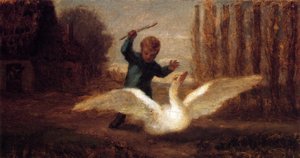
- El Niño Retrasado
- Niña en la Fuente
- Muchacho del Zarabanda
- Vista del Río St. Johns (1874)
- Mujer con Vaca (1874)
- Cataratas del Niágara (1878)
Trágicamente, muchas de las pinturas de Hunt y una valiosa colección de arte francés, incluyendo "El Segador" de Millet, se perdieron en el Gran Incendio de Boston de 1872. Más adelante en su carrera, se centró cada vez más en los paisajes estadounidenses, culminando en una serie de vistas panorámicas de las Cataratas del Niágara en 1878.
Años Posteriores y Legado
Las obras posteriores de Hunt incluyeron murales para el Capitolio Estatal en Albany, Nueva York, representando escenas alegóricas. Sin embargo, estos murales se deterioraron rápidamente debido a una instalación defectuosa, lo que provocó la profunda decepción de Hunt y contribuyó a un período de depresión. Documentó su filosofía artística en su libro, "Charlas sobre el Arte" (1878), que recibió considerable reconocimiento.
El legado de Hunt se basa en su papel como campeón de la Escuela Barbizon en América, su influencia en los artistas más jóvenes y sus contribuciones a la pintura de retratos y paisajes estadounidense. Fomentó un cambio hacia el realismo y la pintura al aire libre, dejando un impacto duradero en el desarrollo del arte americano durante el siglo XIX.
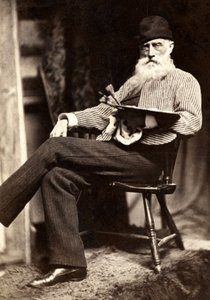
William Morris Hunt
1824 - 1879 , Estados Unidos de América
Breves datos
- Artistas Influenciados: ['Pintores americanos']
- Artistas Que Influyeron:
- Thomas Couture
- Jean-François Millet
- Fecha De Fallecimiento: 8 de septiembre de 1879
- Fecha De Nacimiento: 31 de marzo de 1824
- Lugar De Nacimiento: Brattleboro, EE. UU.
- Movimiento Artístico: Barbizon, Realismo
- Nacionalidad: Estadounidense
- Nombre Completo: William Morris Hunt
- Obras Notables:
- El niño tardío
- Niña en la fuente
- Chico con hurdy-gurdy
- Vista del río St. Johns
- Mujer con vaca
- Cataratas del Niágara

