The Alchemical Revolution: Unveiling the Luminous Secrets of Oil Painting
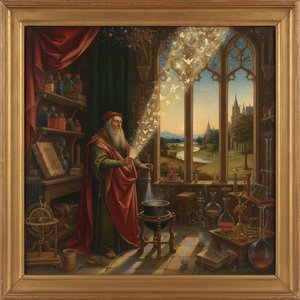 The Alchemy of Light: Discovering the Luminous Realism of Early Netherlandish Masters
The Alchemical Revolution: How Oil Painting Unlocked New Dimensions of Light The Northern Renaissance: A Masterclass in Hyper-Realism, Oil Innovation, and Symbolic Depth The Alchemical Revolution: How Oil Painting Transformed the Northern Canvas Mast...
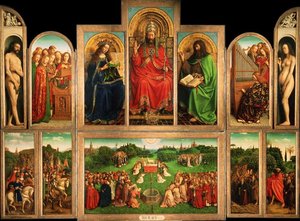
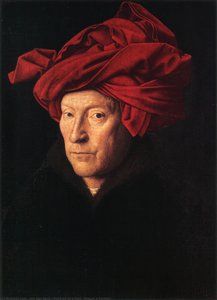
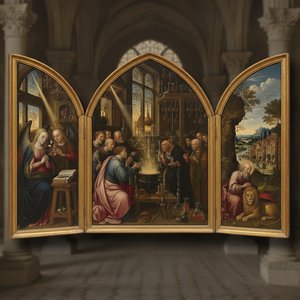
To step into the world of fifteenth-century Flemish art is to witness a profound revolution in the very chemistry of light. Before the masters of the North achieved their legendary status, the visual language of Europe was largely defined by the matte, opaque, and somewhat rigid qualities of egg tempera. While beautiful in its own right, this older medium lacked the capacity for the slow, luminous transitions that would eventually define the Northern Renaissance. The true transformation occurred through what can only be described as an alchemical mastery over transparency and depth.
By refining the technique of layering thin, translucent glazes of pigment suspended in drying oils—such as walnut or poppy seed oil—these artists unlocked a new dimension of artistic expression. This was not merely a change in medium; it was an era of technical discovery. As these masters learned to manipulate multiple layers of oil, they achieved a jewel-like brilliance where light would penetrate the surface, catch within the pigment, and refract back to the viewer’s eye. This created a sense of internal radiance, an ethereal glow that seemed to emanate from within the canvas itself, forever changing how we perceive reality on a flat surface.
Microscopic Realism: The Art of Texture and Hyper-Realistic Detail
 The Northern Renaissance: A Masterclass in Hyper-Realism, Oil Innovation, and Symbolic Depth
The Alchemical Revolution: How Oil Painting Transformed the Northern Canvas Mastering Detail: A Guide to the Timeless Beauty and Technical Brilliance of Flemish Painting The Alchemy of Oil: Pioneering Techniques of the Early Netherlandish Masters To ...
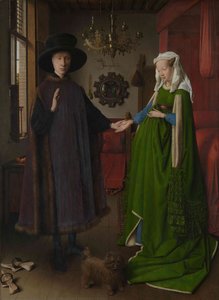
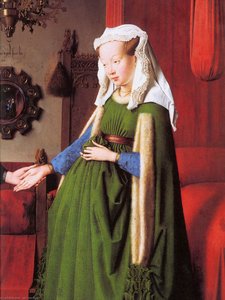
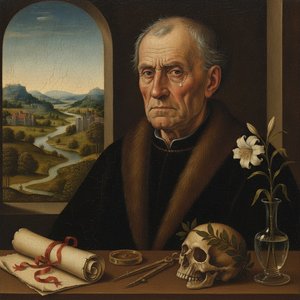
The hallmark of this era is a devotion to detail so precise it borders on the miraculous. This period, often referred to as a masterclass in hyper-realism, demanded an almost obsessive observation of the physical world. Where the Italian Renaissance sought the mathematical perfection of perspective and anatomical idealization, the Northern masters found divinity in the minute. They captured the heavy weight of velvet, the cold glint of polished metal, and the delicate translucency of a single teardrop with equal fervor.
This microscopic realism allowed for an unprecedented tactile experience. When we gaze upon the works of this period, our eyes are invited to wander across textures that feel almost palpable. The artist’s command over oil paint enabled them to create a sense of volume and atmosphere through rapid layering and blending. From the textured fabrics of a villager's garment to the atmospheric depth of a distant, misty horizon, every brushstroke serves to ground the viewer in a tangible, breathing reality. It is this meticulous attention to the grain of wood and the softness of fur that transforms a painting from a mere image into a window onto a living world.
A Tapestry of Meaning: Decoding Symbolism and Moral Allegory
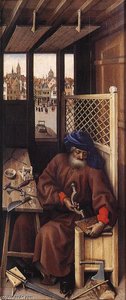 Mérode Altarpiece (right wing)
The Mérode Altarpiece: A Window into Medieval Life Robert Campin’s “Mérode Altarpiece” (right wing), completed around 1427, isn't merely a painting; it’s a meticulously crafted snapshot of fifteenth-century life, rendered with an unprecedented level ...
Beyond the surface-level splendor lies a profound intellectual depth, where every object serves as a vessel for hidden meaning. In the Northern Renaissance, nothing is ever merely an ornament. A simple carafe of water, a single candle, or a stray flower in a domestic scene often carries a heavy weight of spiritual or moral significance. This layer of symbolism transforms the canvas into a visual encyclopedia of contemporary folk wisdom and religious devotion.
In works such as the Mérode Altarpiece, we see how the domestic sphere is imbued with profound symbolic meaning, rendering a familiar household setting as a sacred space. These artists utilized "disguised symbolism," where everyday items act as metaphors for divine truths. This complexity invites the discerning viewer to engage in a slow, meditative reading of the artwork, peeling back layers of paint to reveal layers of thought. It is a sophisticated dialogue between the artist and the observer, where the material world is used to contemplate the eternal.
From Bosch to Bruegel: Navigating the Fantastical and the Human Condition
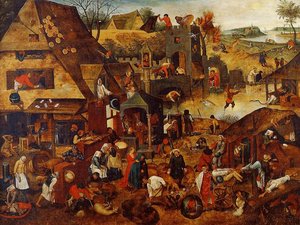 Flemish Proverbs
A Tapestry of Human Folly: The World of Flemish Proverbs In the vast, bustling landscape of 1607, Pieter Bruegel the Younger invites us into a world that is as chaotic as it is captivating. Flemish Proverbs is not merely a painting; it is a sprawling...
While many masters sought to replicate the natural world, others used the same technical brilliance to explore the boundaries of the imagination and the complexities of human nature. Hieronymus Bosch remains one of the most compelling figures in this regard, a name synonymous with fantastical imagery and moral allegory. His world was not one of observed reality but rather a deeply personal and symbolic realm populated by hybrid creatures, grotesque figures, and unsettling landscapes. He transcended traditional foundations to forge a unique visual language that defied easy categorization.
In contrast, the lineage of Pieter Bruegel the Younger offers us a panoramic stage where human folly is laid bare. His works often present a sprawling, bustling landscape—a rhythmic dance of peasants, livestock, and birds that feels almost cinematic in its scope. Through literalized idioms and Flemish proverbs, Bruegel captures the chaos and beauty of life, turning the canvas into a biting social commentary. Whether through the unsettling nightmares of Bosch or the earthy, crowded villages of Bruegel, the Northern Renaissance masters utilized their technical prowess to explore the full spectrum of the human experience, from the divine to the absurd.
The Legacy of Light: How Northern Innovations Shaped the Future of European Art
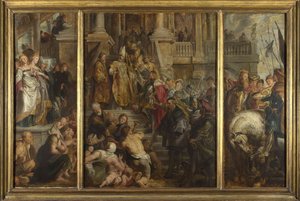 Oil Sketch for High Altarpiece, St Bavo, Ghent
Oil Sketch for High Altarpiece, St Bavo, Ghent: A Window into Rubens’s Baroque Vision The Oil Sketch for High Altarpiece, St Bavo, Ghent, offered by ArtsDot.com, is more than just a depiction of a religious scene; it's an intimate glimpse into the c...
The innovations born in the workshops of the North reverberated across the continent for centuries. The mastery of oil painting, perfected by the Early Netherlandish masters, eventually provided the foundation for the great Baroque visionaries like Sir Peter Paul Rubens. Rubens would take the emotional intensity and vibrant color palettes established by his predecessors and infuse them with a new, dramatic energy, characterized by broad, confident brushstrokes and a palpable sense of movement.
The technical breakthroughs in light and texture fundamentally altered the trajectory of Western art. The ability to manipulate transparency and depth paved the way for the dramatic chiaroscuro of later eras and even influenced the soft, atmospheric explorations of much later movements. The Northern Renaissance taught the world that by looking closely at the smallest detail—the glint of light on a bead or the texture of a leaf—one could touch upon the infinite. This enduring legacy of precision, symbolism, and luminous realism continues to captivate collectors and art enthusiasts, serving as a timeless testament to the power of human observation and artistic innovation.