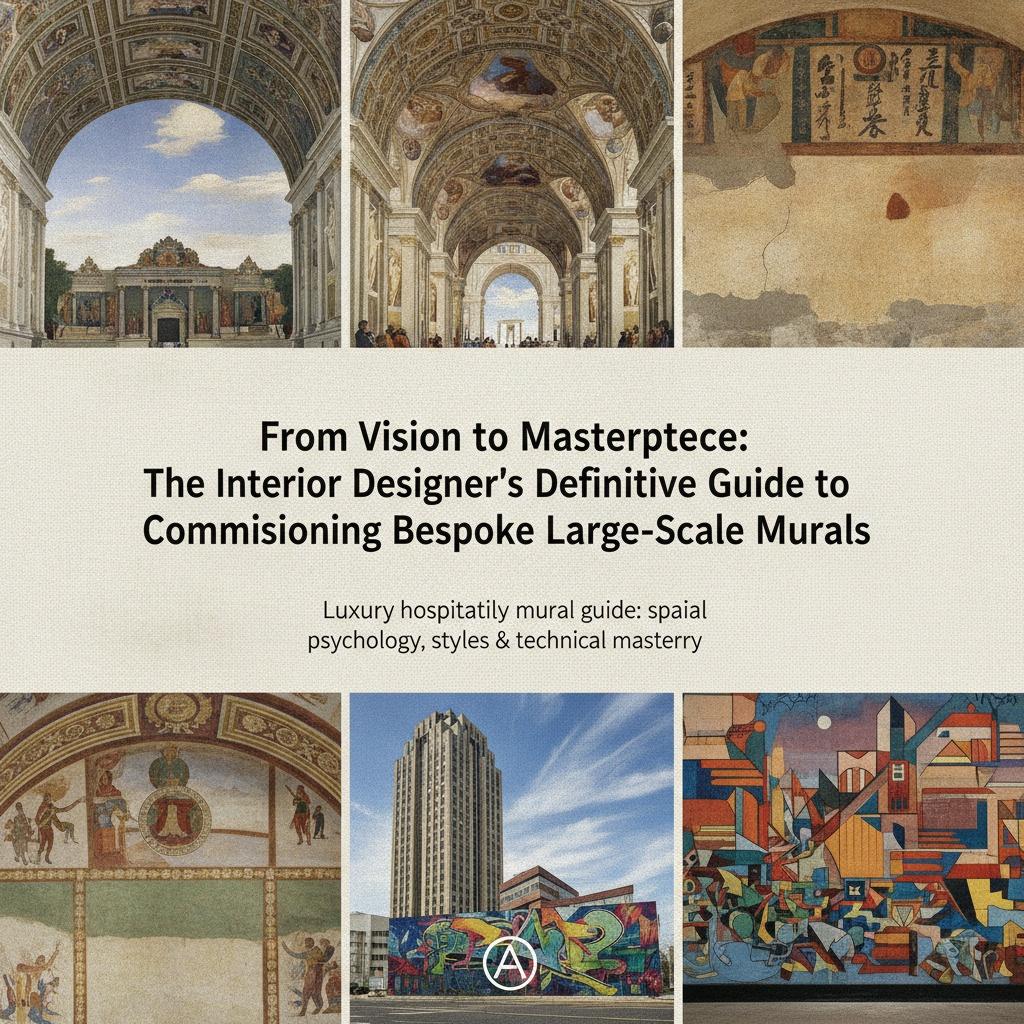
The Architectural Canvas: Aligning Mural Scale with Spatial Psychology
 From Vision to Wall: The Interior Designer’s Definitive Guide to Commissioning Bespoke Large-Scale Murals
Defining the Narrative: Aligning Mural Scale with Architectural Intent In the realm of luxury hospitality, a wall is never merely a boundary; it is a canvas for storytelling. For the discerning hotel designer, the challenge lies in transcending the t...
In the rarefied world of luxury hospitality, a wall is never merely a boundary; it is a canvas for storytelling that breathes life into the very soul of a building. For the discerning hotel designer, the challenge lies in transcendeing the transient nature of decor to create an immersive atmosphere that resonates with the architecture itself. A large-scale mural possesses the unique power to alter the perceived dimensions of a grand lobby or deepen the intimacy of a private suite, acting as a silent protagonist within the design narrative. When we consider the profound impact of scale, we are not simply discussing square footage, but rather the emotional weight an image carries when it envelops a guest's entire field of vision.
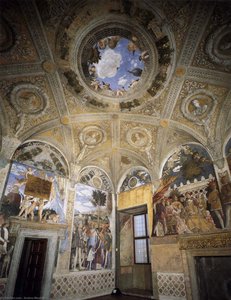
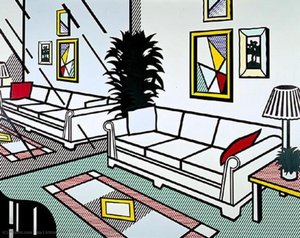
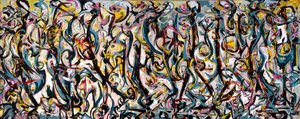
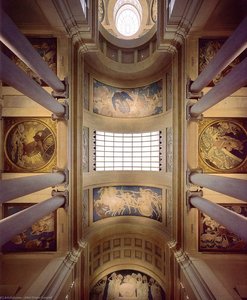
The success of such a commission begins with a deep understanding of spatial psychology. A grand, sweeping fresco in a high-ceilinged atrium can evoke the celestial awe found in Renaissance chapels, while a more restrained, geometric abstraction might provide a grounding, modern sophistication to a contemporary lounge. The intention must be singular: to harmonize the artwork with the structural rhythm of the building. Whether one is seeking to replicate the dramatic intensity of devotional works or the rhythmic precision of modern wall drawings, the mural must feel as though it emerged from the very bones of the architecture, rather than being merely applied to its surface.
Curating the Narrative: Navigating Historical Styles from Renaissance Frescoes to Abstract Expressionism
 The Return of the Fresco: Why Wall Murals Are the New Luxury Statement
The Enduring Allure of Mural Art: A Historical Perspective Frescoes above the entrance wall Michelangelo’s breathtaking frescoes above the entrance wall at the Sistine Chapel! Admire Renaissance artistry & detail in this iconic masterpiece. Explore r...
To curate a mural is to navigate the vast currents of art history, selecting a visual language that speaks to the heritage and aspiration of a space. Throughout history, murals have served as powerful forms of artistic expression and cultural documentation. From the ancient cave paintings of Lascaux to the vibrant frescoes of Pompeii, wall art has consistently reflected societal values and historical narratives. The Renaissance masters, most notably Michelangelo in the Sistine Chapel, utilized breathtaking frescoes to transform religious spaces into epic theaters of human emotion and divine grandeur.
As we moved into the 20th century, the mural’s role shifted toward social commentary and modern identity. The Mexican Muralism movement, spearheaded by legends such as Diego Rivera, utilized public spaces to celebrate national identity and industrial progress. One might look to the Detroit Industry Murals as a testament to this era, where Rivera blended social realism with vibrant, dynamic compositions that captured the essence of technological advancement. In contrast, the mid-century era brought the profound emotional depth of Abstract Expressionism, exemplified by Mark Rothko’s Seagram Murals. These works, characterized by their dark and somber palettes, utilized horizontal and vertical formats to alter the viewer’s sense of space, proving that even without figurative subjects, a mural can act as a portal to deeper human emotions such as tragedy, ecstasy, and doom.
Technical Mastery: Understanding the Nuances of Buon Fresco, Secco, and Modern Large-Format Canvas
Buon fresco (Italian for 'true fresh') is a fresco painting technique in which alkaline-resistant pigments, ground in water, are applied to wet plaster. It is distinguished from the fresco-secco (or a secco) and finto fresco techniques, in which pain...
The distinction between a mere wall covering and a true masterpiece lies in the chemistry of its creation. For the historian and the connoisseur, understanding the technical execution is essential to appreciating the work's longevity and texture. The technique of buon fresco, or true fresh painting, involves applying alkaline-resistant pigments ground in water onto freshly laid, wet lime plaster. As the plaster sets, the pigment becomes an integral part of the wall itself, creating a surface that is inseparable from the architecture. This method requires immense skill and speed, as the artist must work while the intonaco remains damp.
Conversely, the fresco-secco technique involves applying pigments mixed with an organic binder onto dried plaster. While this allows for greater detail and a broader range of colors that might not survive the caustic nature of wet lime, the pigment remains a layer on the surface rather than being chemically fused with the substrate. In the contemporary luxury landscape, we see a resurgence of these classical sensibilities adapted for modern needs. Large-format murals can now be executed on massive, high-quality canvas rolls. These works are painted by hand on 100% cotton canvas, ensuring visible brushstrokes and a deeper tonal range than any digital print could ever achieve. This allows designers to recreate the grandeur of historical ceilings or expansive landscapes with a level of tactile depth that invites closer inspection.
The Commissioning Journey: From Digital Mockups to Professional Installation
 From Vision to Wall: The Interior Designer’s Definitive Guide to Commissioning Bespoke Large-Scale Murals
The Architectural Canvas: Defining Narrative through Scale and Spatial Psychology From Vision to Wall: The Interior Designer’s Definitive Guide to Commissioning Bespoke Large-Scale Murals Defining the Narrative: Aligning Mural Scale with Architectura...
Commissioning a bespoke mural is an intricate dance between vision and execution, requiring meticulous coordination to ensure the final result meets museum-grade standards. The journey begins long before the brush touches the canvas. For complex commissions or group portraits, the use of professional digital mockups is indispensable. This service allows designers to visualize the composition, test color palettes, and adjust elements within a digital environment, removing the uncertainty that often accompanies large-scale artistic endeavors. Revisions can be made until the digital vision perfectly aligns with the architectural intent.
Once the design is finalized, the artist begins the labor of passion, typically spending several weeks meticulously layering oils on cotton canvas. This process is supported by a dedicated Project Coordinator who serves as the single point of contact, managing requirements and ensuring quality control. To maintain transparency, a pre-ship photo is provided for the designer's approval; this is the critical moment where any final adjustments can be requested before the artwork is framed and prepared for transit. The final stage involves global logistics, where the artwork is shipped via secure, climate-controlled methods like DHL or FedEx. For large-scale rolls, installation is remarkably seamless, often mirroring the precision of high-end wallpaper installation, allowing a single piece of art to transform an entire room instantly.
Strategic Integration: Enhancing Brand Identity and Guest Experience through Bespoke Art
 Elevating Interiors: How Murals are Redefining Kitchens and Bathrooms
The Resurgence of Mural Art: A Historical Perspective Draft for Mural In The Unjuried Art Show, Wall B Explore Wassily Kandinsky’s ‘Draft for Mural,’ a groundbreaking abstract work! Discover its dynamic composition, Constructivist roots & lasting inf...
In the competitive arena of luxury hospitality, differentiation is the ultimate currency. A bespoke mural serves as more than decoration; it is a strategic tool for brand storytelling. By integrating custom artwork that reflects the local culture, the history of the destination, or the specific ethos of the hotel brand, designers can create an unparalleled sense of place. This level of personalization fosters an emotional connection with guests, turning a standard stay into a memorable, immersive experience.
Whether it is a multi-panel installation that flows across a grand staircase or a single, monumental fresco in a dining room, the mural acts as a focal point that anchors the entire interior design. It provides a sense of permanence and authenticity that mass-produced decor cannot replicate. For professionals managing large-scale projects, the ability to utilize trade programs—offering volume discounts, custom sizing, and white-label shipping—ensures that these artistic statements can be integrated seamlessly into even the most complex architectural plans. Ultimately, when art is commissioned with such intentionality, it ceases to be an accessory and becomes a fundamental component of the guest's journey.
ArtsDot.com stands at the intersection of tradition and innovation, offering a premium full-service marketplace for the world’s most discerning collectors and designers. From hand-painted oil reproductions of the Old Masters to bespoke large-scale murals and custom portraits, our mission is to bring museum-quality artistry to the most prestigious spaces globally. Backed by a 100% satisfaction guarantee and a network of artists trained in the finest academic traditions, we provide the expertise and craftsmanship required to turn your architectural vision into an enduring masterpiece.