The Legacy of Ashurnasirpal II: A Master Sculptor of Ancient Assyria
Ashurnasirpal II, a name synonymous with the zenith of Neo-Assyrian power and artistic achievement, remains one of the most compelling figures in ancient history. Born in 883 BC in Nimrud, modern-day Iraq—then known as Kalhu—he reigned from 883 to 859 BC, ushering in a period of unprecedented military expansion and opulent palace construction. While his legacy is firmly rooted in conquest and imperial ambition, it’s through the breathtaking artistry he championed that Ashurnasirpal II truly endures, leaving behind a visual record of his reign that continues to captivate scholars and art enthusiasts alike. His story isn't simply one of a warrior king; it’s the tale of a discerning patron who understood the power of image and employed sculpture as a potent tool for propaganda, religious expression, and the glorification of his own authority.
The Rise to Power and Architectural Patronage
Ashurnasirpal II inherited a kingdom already established as a regional force in Mesopotamia, but under his leadership, Assyria rapidly transformed into a dominant empire. His military campaigns extended Assyrian control deep into Syria, Palestine, and Anatolia, bringing immense wealth and resources to the capital. However, Ashurnasirpal’s ambition wasn't solely focused on territorial expansion; he recognized the crucial role of art in solidifying his power and projecting an image of divine legitimacy. He initiated a massive building program, most notably at Nimrud, commissioning elaborate palaces adorned with unprecedented levels of detail and artistic sophistication. The Northwest Palace, the centerpiece of this project, stands as a testament to his vision—a sprawling complex designed not just for administrative functions but also as a monumental display of royal grandeur. Crucially, Ashurnasirpal actively sought out skilled artisans from across his empire, fostering a vibrant artistic environment that produced some of the most remarkable works of ancient Mesopotamia.
The Northwest Palace: A Symphony in Stone
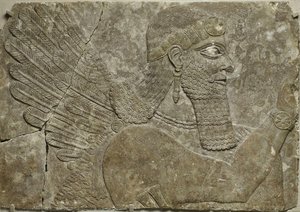
The Northwest Palace of Ashurnasirpal II is arguably the artist’s magnum opus and a cornerstone of Assyrian art history. The palace walls were covered with an astonishing array of relief sculptures, meticulously carved from gypsum and limestone. These weren't merely decorative embellishments; they constituted a comprehensive visual narrative of the king’s life, his military victories, and his connection to the divine realm. Central to these reliefs are depictions of Ashurnasirpal himself—often portrayed in heroic poses, hunting lions, receiving tribute from foreign dignitaries, or presiding over elaborate religious ceremonies. Equally significant are the winged genies ( *shesh*, or “divine beings”) that flank the king, symbolizing his protection and divine authority. These figures, with their human bodies and feathered wings, were a distinctive feature of Neo-Assyrian art, representing powerful supernatural entities who served as guardians of the palace and its ruler. The sheer scale of the relief program—hundreds of panels covering vast areas of wall space—demands a profound understanding of both artistic skill and political messaging.
Technique and Symbolism: Decoding the Royal Narrative
The artistry displayed in the Northwest Palace is characterized by remarkable technical precision, intricate detail, and a sophisticated use of symbolism. The Assyrians developed a unique carving technique, utilizing a “low relief” style—figures are sculpted slightly projecting from the background plane, creating an illusion of depth and volume. This technique allowed for incredibly detailed depictions of clothing, armor, and facial expressions. Furthermore, the reliefs were originally painted in vibrant colors – reds, blues, greens, and yellows – which would have dramatically enhanced their visual impact. The recurring motifs—the king’s hunting scenes, the depiction of divine beings, the standardized inscriptions—were not arbitrary; they served to reinforce his authority, legitimize his rule, and communicate key aspects of Assyrian ideology. The “Standard Inscription,” a lengthy text repeated across numerous panels, meticulously documented Ashurnasirpal's achievements and emphasized his role as a divinely appointed ruler.
Legacy and Historical Significance
Ashurnasirpal II’s artistic patronage profoundly shaped the course of Assyrian art and architecture. The conventions he established—the use of monumental relief sculpture, the depiction of royal power, and the integration of religious symbolism—became hallmarks of Neo-Assyrian palaces for centuries to come. His influence extended beyond his own reign; subsequent kings continued to draw inspiration from his artistic legacy. The Northwest Palace itself remains a remarkable archaeological site, offering invaluable insights into the art, architecture, and culture of ancient Assyria. Ashurnasirpal II’s contributions are not merely those of a skilled ruler but also as a visionary artist who elevated sculpture to an unprecedented level of sophistication and used it to shape the image of his empire for posterity. His work continues to be studied and admired today, serving as a powerful reminder of the enduring legacy of ancient Mesopotamia.