 プレビュー
プレビュー
 プリントを購入
 シェアする
シェアする シェアする
シェアする
 詳細を見る
詳細を見る

 ダウンロード
 似ている作品
 X線調査
X線調査 スライドショー
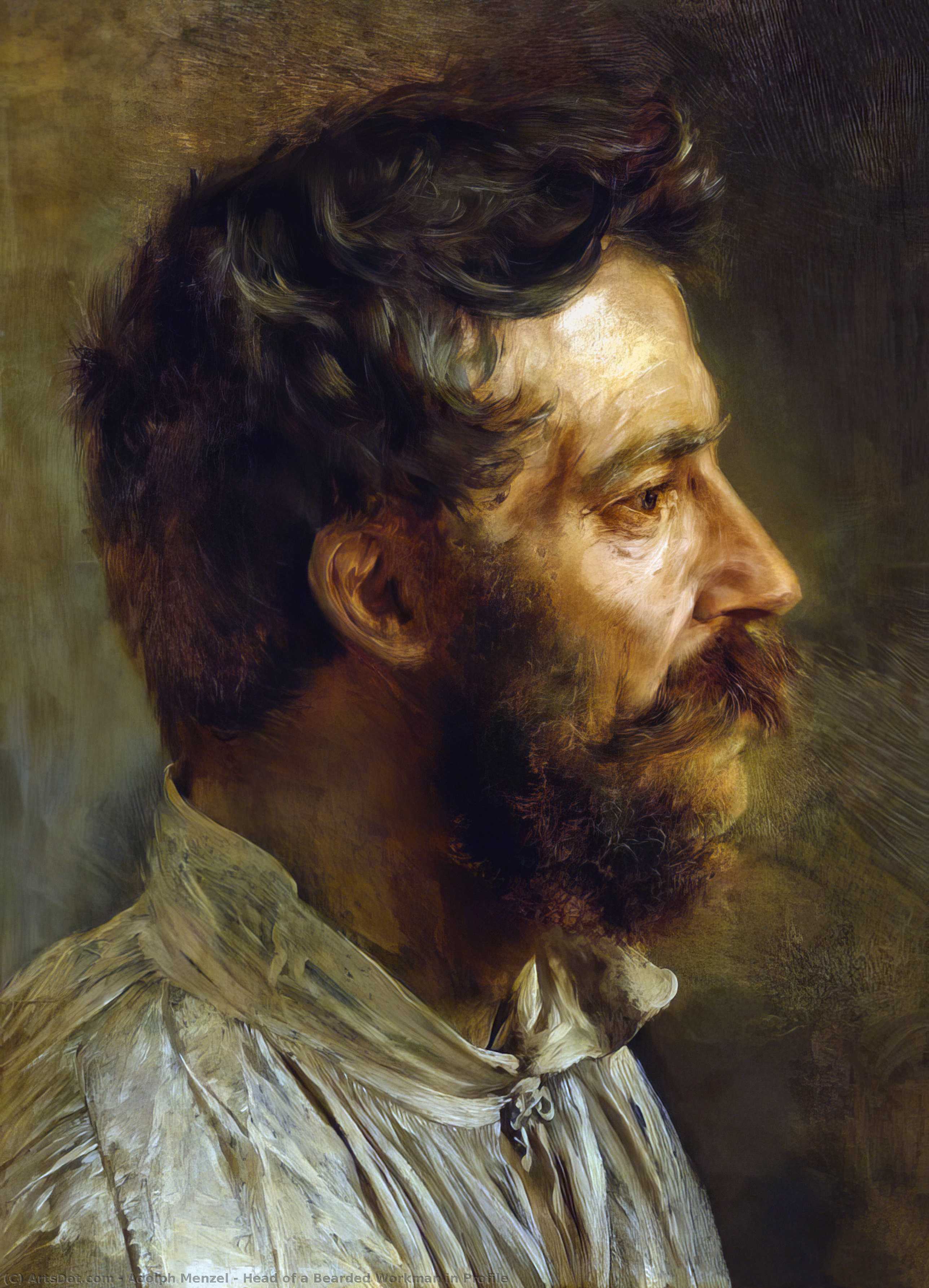
Head of a Bearded Workman in Profile

Adolph Menzel (1815-1905) was a German Realist painter renowned for his detailed depictions of 19th-century life, history, and Prussian society. His iconic works include 'The Flute Concert' and scenes from Frederick the Great’s reign. A master of observation and historical accuracy.
 詳細を見る
詳細を見る




































Standard
custom
CM
INCH
作品のオリジナル比率に合わせた、当店の規定サイズからお選びください。
Loading sizes...

幅
高さ
特定のフレームやスペースに合わせて、ご希望のサイズをご入力いただけます。選択されたサイズが元の画像の比率と異なる場合、アートワークをトリミングするか、手描きで要素を追加して絵画を拡張いたします。デジタルモックアップ を制作し、制作開始前にご確認(承認)をいただきます。
画面上のプレビューは、実際のトリミングや拡張を正確に反映しているものではありません。最終的な構図は、モックアップによってのみ正確にご確認いただけます。
カスタムサイズもご利用いただけますが、元の比率を維持するためには、あらかじめ用意されたリストからサイズを選択することをお勧めいたします。
カスタマイズの例:顔をお客様の写真に置き換える、ペットを追加する(例:猫を犬に変更)、背景に隠れたメッセージを入れる、背景の風景や要素を変更するなど。
ご注文後、ArtsDot.com チームより詳細な指示をお送りするとともに、仕上がりイメージ(モックアップ)をご提供いたします。
ご注文後、ArtsDot.com チームより詳細な指示をお送りするとともに、仕上がりイメージ(モックアップ)をご提供いたします。


 ガラスオプションは、110cm未満のサイズでのみご利用いただけます。

Head of a Bearded Workman in Profile
複製技法
複製画のサイズ
-


合計金額
$ 263
関連作品

アーティストの略歴
A Life Immersed in Prussian Reality: The World of Adolph Menzel
Adolph Menzel, born on December 30, 1815, in Düsseldorf, Germany, was not merely a painter; he was a visual chronicler of his time, an artist whose work became inextricably linked with the spirit – and often, the anxieties – of 19th-century Prussia. His father, Wilhelm Menzel, a renowned calligrapher and art educator, instilled in him a rigorous academic foundation from a young age, but it was the burgeoning industrial landscape and the social currents swirling around Berlin that truly shaped his artistic vision. Unlike many artists who sought escape in idealized landscapes or mythological narratives, Menzel turned his gaze inward, focusing on the everyday lives of ordinary people and the monumental shifts occurring within Prussian society. He died in 1905 in Berlin, leaving behind a legacy as one of Germany’s most important Realist painters.Early Training and the Rise of Historical Realism
Menzel's early artistic development was marked by a meticulous attention to detail, honed through his father’s instruction and further refined during studies with Carl Joseph Begas at the Düsseldorf Academy. However, he quickly grew restless within the confines of academic tradition. A pivotal moment came in 1835 when he traveled to Italy – a customary pilgrimage for aspiring artists – but found himself largely unimpressed by the classical grandeur that captivated his peers. Instead, he was drawn to the raw energy and immediacy of everyday life, sketching scenes of bustling markets, humble workshops, and the working classes. This nascent interest in Realism solidified upon his move to Berlin in 1840, where he became associated with a circle of intellectuals and artists who challenged conventional artistic norms. His early works, such as *The Potato Eaters* (1836) and scenes from Frederick the Great’s court, already demonstrated a remarkable ability to capture both historical accuracy and psychological depth. He wasn't simply recreating events; he was attempting to understand – and portray – the human experience within them.Chronicler of an Era: Menzel’s Major Works
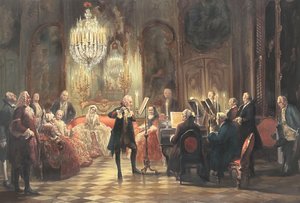
Menzel’s career reached its zenith in the latter half of the 19th century with a series of monumental historical paintings that cemented his reputation as Prussia's foremost artist. *The Flute Concert* (1872), perhaps his most famous work, is a masterpiece of Realist observation, depicting a private musical gathering within a bourgeois home. The painting’s power lies not in grand gestures or dramatic narratives but in the subtle interplay of light and shadow, the nuanced expressions of the figures, and the palpable sense of intimacy. Similarly, *Frederick the Great Playing the Flute in Sanssouci* (1853) eschews romanticized depictions of the Prussian king, presenting him as a contemplative figure immersed in his music. His work on the series *History of German Art*, commissioned by Kaiser Wilhelm I, further showcased his dedication to historical accuracy and meticulous research. Beyond these large-scale canvases, Menzel produced an astonishing volume of drawings, watercolors, and prints – often serving as studies for larger compositions but also standing as compelling works in their own right. These smaller pieces offer a fascinating glimpse into his artistic process and his unwavering commitment to capturing the details of everyday life.Influences and Artistic Development
While Menzel is firmly associated with Realism, his work was not devoid of influence. He admired the Dutch Masters – particularly Rembrandt and Vermeer – for their mastery of light and shadow and their ability to imbue ordinary scenes with psychological depth. The burgeoning field of photography also played a role in shaping his artistic vision, encouraging him to capture fleeting moments with unprecedented accuracy. However, Menzel was not simply imitating these influences; he synthesized them into a uniquely personal style characterized by its meticulous detail, psychological insight, and unwavering commitment to portraying the realities of Prussian society. His work evolved over time, becoming increasingly complex and nuanced as he grappled with the social and political changes unfolding around him. He moved from early Romantic tendencies towards an almost scientific objectivity in his later works, yet always retained a deep empathy for his subjects.Legacy and Historical Significance
Adolph Menzel’s impact on German art is profound. He elevated Realism to new heights, demonstrating its potential to capture not only historical events but also the complexities of human experience. His work served as a powerful commentary on Prussian society – celebrating its achievements while simultaneously acknowledging its inequalities and anxieties. He was appointed professor at the Academy of Arts in Berlin in 1873, though he often clashed with the institution’s conservative norms.- His influence extended beyond painting, inspiring generations of artists to embrace Realism and social commentary.
- Menzel's meticulous documentation of Prussian life provides invaluable insights into the period for historians and art scholars alike.
- He remains a celebrated figure in German cultural history, his works continuing to captivate audiences with their beauty, accuracy, and psychological depth.