

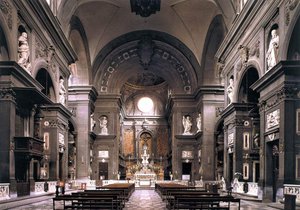
![St. Hedwig Church In Chicago, Inside [polish Parishes And Churches In Chicago] — Adolphus Druiding](/media/artworks/images-full/c0/6c/c06c8fdfde2b0aa970c2cc1e2861fc3e.jpg)
 プリントを購入
 シェアする
シェアする シェアする
シェアする
 詳細を見る
詳細を見る

 ダウンロード
 似ている作品
 スライドショー
St. Hedwig Church in Chicago, inside [Polish parishes and churches in Chicago]
 Black and White Photography
- Photo
 1901
1901- 19th Century
 POLONIKA The National Institute of Polish Cultural Heritage Abroad
 詳細を見る
詳細を見る
オンラインプレビューをはるかに凌ぐ、高解像度で鮮明なデジタル画像をご購入いただけます。
各ファイルは、社内の専門家が高度なツールと熟練した手作業によるレタッチを用いて、細心の注意を払って準備されています。すべての画像において、卓越した鮮明度、正確な色彩再現性、そして繊細なディテールを保証いたします。
最終ファイルは、プロフェッショナルな編集・印刷環境ですぐにご利用いただけるよう最適化された状態で、72時間以内にメールにてお届けいたします。これは、一流のデザインスタジオ、出版社、ギャラリーから信頼されているものと同等の品質です。
デジタル画像のご注文に付随する特典
高品質なデジタル画像配信を、確かな品質で。
ArtsDot.com を選ぶことは、単に画像を手に入れることではありません。それは、プロの手によって精密に仕上げられ、満足保証が付いた高品質なデジタルアートワークを受け取ることを意味します。ご注文いただいた際に自動的に付随する内容は、以下の通りです:

メールですぐにお届け
ご注文から72時間以内に、高解像度のデジタル画像ファイルがメールでお手元に届きます。すぐにそのままご利用いただけます。

AI技術で最適化されたデジタルファイル
お客様の作品は、高度なAIツールと専門家による手作業の編集を組み合わせてプロフェッショナルに最適化されており、細部のディテール、鮮明さ、そして正確な色再現性を最大限に引き出しています。

一生涯無料の再送サービス
ファイルを誤って削除したり、紛失してしまったりしましたか?ご安心ください。いつでも無料で再送いたします。

輸入手数料は一切かかりません
関税や手数料、配送料を気にすることなく、お気に入りのアートワークをすぐにお楽しみいただけます。デジタルダウンロードは常に免税です。

色彩再現の保証
プロ仕様のツールとカラーマネジメント技術を用いることで、デジタル画像が元の色を最大限に忠実に再現することを保証いたします。

60日間満足保証
ご購入いただいたデジタル画像にご満足いただけない場合は、60日以内であれば、修正または100%の返金(理由を問う必要はありません)をさせていただきます。

100% 返金保証
ご満足いただけない場合は、デジタルファイルを受け取ってから60日以内であれば、理由を問わず全額返金いたします。

まとめ買い割引
3枚購入で10%OFF - 5枚購入で15%OFF - 10枚以上購入で20%OFF。クリエイティブなプロジェクト、ギャラリー、エージェンシーに最適です。
関連作品

作家の略歴
Paul Cézanne: The Architect of Modern Vision
Paul Cézanne, a name synonymous with the transition from Impressionism to modern art, remains one of the most profoundly influential figures in the history of painting. Born in Aix-en-Provence in 1839, his life was marked by a quiet dedication to observation and a relentless pursuit of capturing the essence of form and space. He wasn’t a flamboyant revolutionary like some of his contemporaries; rather, Cézanne meticulously dismantled and rebuilt artistic conventions, laying the groundwork for Cubism, Fauvism, and countless subsequent movements. His legacy isn't found in dramatic gestures or bold pronouncements, but in the subtle yet seismic shifts he enacted within the very fabric of painting itself.Early Influences and Artistic Beginnings
Cézanne’s early artistic education was a blend of traditional instruction and independent exploration. He initially studied at the École des Beaux-Arts in Paris, where he received training in academic techniques – drawing, sculpture, and history painting. However, he quickly grew disillusioned with the rigid rules and idealized subjects demanded by the academy. His early works, particularly portraits of his uncle Dominique Aubert, reveal a fascination with costume and theatricality, echoing the influence of Édouard Manet’s Spanish scenes. These pieces demonstrate a darker palette and expressive brushwork, reminiscent of Eugène Delacroix – a key figure in Cézanne's formative years. Crucially, these early studies weren’t simply imitations; they were experiments, testing the boundaries of representation and hinting at the radical changes to come. He was searching for a way to depict reality that went beyond mere visual perception.The Pursuit of Structure: A New Approach to Painting
Cézanne's artistic journey took a decisive turn in the mid-1870s, driven by a desire to understand and represent the underlying structure of objects and landscapes. He began to systematically analyze nature – breaking down forms into their fundamental geometric components: cylinders, spheres, and cones. This analytical approach wasn’t about creating mechanical copies; it was about distilling the essence of an object, its three-dimensional form, and translating that understanding onto a two-dimensional surface. He famously stated, “I would like to make painting art for arts' sake.” He moved away from the fleeting effects of light and color favored by Impressionism, focusing instead on creating paintings that possessed a sense of solidity and permanence. His brushstrokes became deliberate and controlled, building up layers of paint to suggest volume and depth. The *Bathers* series (1874-75) exemplifies this shift – figures emerge from a landscape rendered with an almost architectural precision, suggesting the underlying structure beneath the surface.Key Works and Artistic Developments
Cézanne’s oeuvre is remarkably consistent in its exploration of these principles. His still lifes, particularly those featuring fruit and vases (e.g., *Still Life with Apples and a Pot of Primroses*, circa 1890), are masterpieces of constructive painting. He abandoned traditional chiaroscuro – the dramatic contrasts of light and shadow – in favor of subtle gradations of color, creating an illusion of volume through carefully modulated tones. His landscapes, such as *Mont Sainte-Victoire* (painted repeatedly over several decades), demonstrate his ability to capture not just a visual likeness but also the feeling of place—the solidity of rock, the warmth of sunlight, and the sense of distance. The influence of Japanese prints is evident in his cropped compositions and flattened perspectives, further contributing to his innovative approach. He continued to experiment with perspective, often distorting it to create a more dynamic and engaging composition.Legacy and Historical Significance
Paul Cézanne’s impact on the course of art history is immeasurable. He didn't invent abstraction; rather, he provided a crucial bridge between Impressionism and the radical innovations of the early 20th century. His emphasis on form, structure, and the materiality of paint directly inspired Cubists like Pablo Picasso and Georges Braque, who sought to break down objects into their geometric components – mirroring Cézanne’s own analytical approach. His work also paved the way for Fauves, known for their bold use of color, and influenced countless artists who followed. Cézanne's quiet dedication to his craft, coupled with his profound understanding of visual perception, cemented his place as a pivotal figure in the evolution of modern art—a true architect of our visual world. He demonstrated that painting could be both descriptive and conceptual, offering a new way of seeing and representing reality.
adolphus druiding
1839 - 1900 , Germany
プロフィール概要
- Artistic Movement Or Style: Post-Impressionism
- Artists Or Movements Influenced By This Artist:
- Cubism
- Fauvism
- Artists Who Influenced This Artist:
- Eugène Delacroix
- Édouard Manet
- Date Of Birth: 19 January 1839
- Date Of Death: 22 October 1906
- Full Name: Paul Cézanne
- Nationality: French
- Notable Artworks:
- Bathers at Asnières
- The Basket of Apples
- Mont Sainte-Victoire
- Still Life with Apples and a Pot of Primroses
- Place Of Birth: Aix-en-Provence, France

