

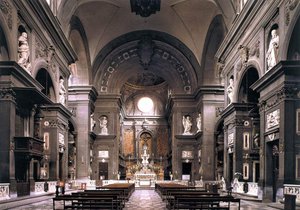
![St. Hedwig Church In Chicago, Inside [polish Parishes And Churches In Chicago] — Adolphus Druiding](/media/artworks/images-full/c0/6c/c06c8fdfde2b0aa970c2cc1e2861fc3e.jpg)
 シェアする
シェアする シェアする
シェアする
 詳細を見る
詳細を見る

 ダウンロード
 似ている作品
 スライドショー
St. Hedwig Church in Chicago, inside [Polish parishes and churches in Chicago]
 Black and White Photography
- Photo
 1901
1901- 19th Century
 POLONIKA The National Institute of Polish Cultural Heritage Abroad
 詳細を見る
詳細を見る
ジークレー/アートプリント
迅速な制作と多彩な仕上げオプションを備えた、ミュージアムクオリティのジークレーまたはキャンバスプリント。 ( 手描きの絵画を購入 画像を購入)




































作品のオリジナル比率に合わせた、当店の規定サイズからお選びください。

特定のフレームやスペースに合わせて、ご自身でサイズを指定することも可能です。選択されたサイズが元の画像の比率と一致しない場合、作品をトリミングするか、鏡面反射または単色での塗りつぶしによって画像を拡張いたします。制作を開始する前に、ご確認用のデジタルモックアップをお送りいたします。
画面上のプレビューには、実際のトリミングや拡張は反映されませんのでご注意ください。最終的な構図を正確に確認できるのは、モックアップのみとなります。
カスタムサイズも承っておりますが、元の比率を維持するためには、あらかじめ用意されたリストからサイズを選択することをお勧めいたします。


 ガラスオプションは、110cm未満のサイズでのみご利用いただけます。

St. Hedwig Church in Chicago, inside [Polish parishes and churches in Chicago]
ジークレー/アートプリント
複製画のサイズ
-


合計金額
$ 62
関連作品

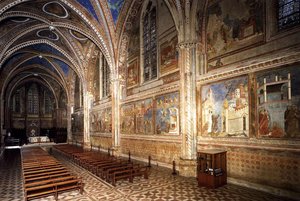
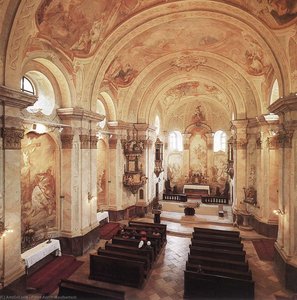
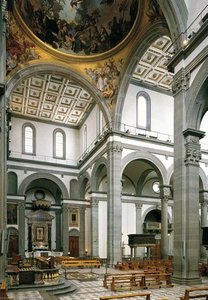
アーティストの略歴
Paul Cézanne: The Architect of Modern Vision
Paul Cézanne, a name synonymous with the transition from Impressionism to modern art, remains one of the most profoundly influential figures in the history of painting. Born in Aix-en-Provence in 1839, his life was marked by a quiet dedication to observation and a relentless pursuit of capturing the essence of form and space. He wasn’t a flamboyant revolutionary like some of his contemporaries; rather, Cézanne meticulously dismantled and rebuilt artistic conventions, laying the groundwork for Cubism, Fauvism, and countless subsequent movements. His legacy isn't found in dramatic gestures or bold pronouncements, but in the subtle yet seismic shifts he enacted within the very fabric of painting itself.Early Influences and Artistic Beginnings
Cézanne’s early artistic education was a blend of traditional instruction and independent exploration. He initially studied at the École des Beaux-Arts in Paris, where he received training in academic techniques – drawing, sculpture, and history painting. However, he quickly grew disillusioned with the rigid rules and idealized subjects demanded by the academy. His early works, particularly portraits of his uncle Dominique Aubert, reveal a fascination with costume and theatricality, echoing the influence of Édouard Manet’s Spanish scenes. These pieces demonstrate a darker palette and expressive brushwork, reminiscent of Eugène Delacroix – a key figure in Cézanne's formative years. Crucially, these early studies weren’t simply imitations; they were experiments, testing the boundaries of representation and hinting at the radical changes to come. He was searching for a way to depict reality that went beyond mere visual perception.The Pursuit of Structure: A New Approach to Painting
Cézanne's artistic journey took a decisive turn in the mid-1870s, driven by a desire to understand and represent the underlying structure of objects and landscapes. He began to systematically analyze nature – breaking down forms into their fundamental geometric components: cylinders, spheres, and cones. This analytical approach wasn’t about creating mechanical copies; it was about distilling the essence of an object, its three-dimensional form, and translating that understanding onto a two-dimensional surface. He famously stated, “I would like to make painting art for arts' sake.” He moved away from the fleeting effects of light and color favored by Impressionism, focusing instead on creating paintings that possessed a sense of solidity and permanence. His brushstrokes became deliberate and controlled, building up layers of paint to suggest volume and depth. The *Bathers* series (1874-75) exemplifies this shift – figures emerge from a landscape rendered with an almost architectural precision, suggesting the underlying structure beneath the surface.Key Works and Artistic Developments
Cézanne’s oeuvre is remarkably consistent in its exploration of these principles. His still lifes, particularly those featuring fruit and vases (e.g., *Still Life with Apples and a Pot of Primroses*, circa 1890), are masterpieces of constructive painting. He abandoned traditional chiaroscuro – the dramatic contrasts of light and shadow – in favor of subtle gradations of color, creating an illusion of volume through carefully modulated tones. His landscapes, such as *Mont Sainte-Victoire* (painted repeatedly over several decades), demonstrate his ability to capture not just a visual likeness but also the feeling of place—the solidity of rock, the warmth of sunlight, and the sense of distance. The influence of Japanese prints is evident in his cropped compositions and flattened perspectives, further contributing to his innovative approach. He continued to experiment with perspective, often distorting it to create a more dynamic and engaging composition.Legacy and Historical Significance
Paul Cézanne’s impact on the course of art history is immeasurable. He didn't invent abstraction; rather, he provided a crucial bridge between Impressionism and the radical innovations of the early 20th century. His emphasis on form, structure, and the materiality of paint directly inspired Cubists like Pablo Picasso and Georges Braque, who sought to break down objects into their geometric components – mirroring Cézanne’s own analytical approach. His work also paved the way for Fauves, known for their bold use of color, and influenced countless artists who followed. Cézanne's quiet dedication to his craft, coupled with his profound understanding of visual perception, cemented his place as a pivotal figure in the evolution of modern art—a true architect of our visual world. He demonstrated that painting could be both descriptive and conceptual, offering a new way of seeing and representing reality.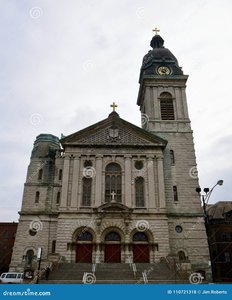
adolphus druiding
1839 - 1900 , Germany
基本情報
- Artistic Movement Or Style: Post-Impressionism
- Artists Or Movements Influenced By This Artist:
- Cubism
- Fauvism
- Artists Who Influenced This Artist:
- Eugène Delacroix
- Édouard Manet
- Date Of Birth: 19 January 1839
- Date Of Death: 22 October 1906
- Full Name: Paul Cézanne
- Nationality: French
- Notable Artworks:
- Bathers at Asnières
- The Basket of Apples
- Mont Sainte-Victoire
- Still Life with Apples and a Pot of Primroses
- Place Of Birth: Aix-en-Provence, France
関連記事

エル・グレコの傑作25選:魂を揺さぶる宗教画と芸術の深淵 | ArtsDot
エル・グレコの傑作25選:魂を揺さぶる宗教画の世界へ。スペイン絵画の巨匠、マニエリスム様式と Toledo の光彩を紐解きます。ArtsDot.com で名画のアートプリントや複製画をお楽しみください。コレクションはこちら →
古典と現代の調和:大胆な抽象芸術がクラシックインテリアに与える影響
抽象表現主義がクラシックインテリアに与える影響を解説。色彩心理学や空間への効果、著名なアーティストの作品を紹介します。ArtsDot.comで理想のアートピースを見つけ、洗練された空間を実現しましょう。
Harmonizing History & Hue: A Guide to Matching Art Styles with Interior Architecture for Balanced Décor
Elevate your interior design with our expert guide to harmonizing art styles & architecture. Discover timeless pieces, color palettes, & custom artwork solutions for balanced, luxury spaces. Expert advice included!
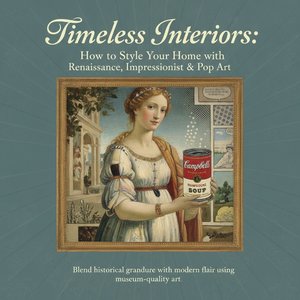
時代を超越するインテリア美学:ルネサンス様式、印象派の光彩、そして現代的空間への調和
ルネサンス様式から印象派、現代アートまで。美術史に基づいたインテリア美学を解説。ArtsDot.comで至高の油絵複製やカスタムアートを手に入れ、あなただけの空間を創造しましょう。無料相談受付中。
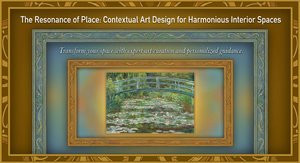
The Resonance of Place: Contextual Art Design for Harmonious Interior Spaces
Discover how expert art curation transforms interiors into harmonious spaces. Elevate your home with personalized selections & the guidance of a dedicated art concierge at ArtsDot.com.

