

 プレビュー
プレビュー
 プリントを購入
 シェアする
シェアする シェアする
シェアする
 詳細を見る
詳細を見る

 ダウンロード
 似ている作品
 X線調査
X線調査 スライドショー
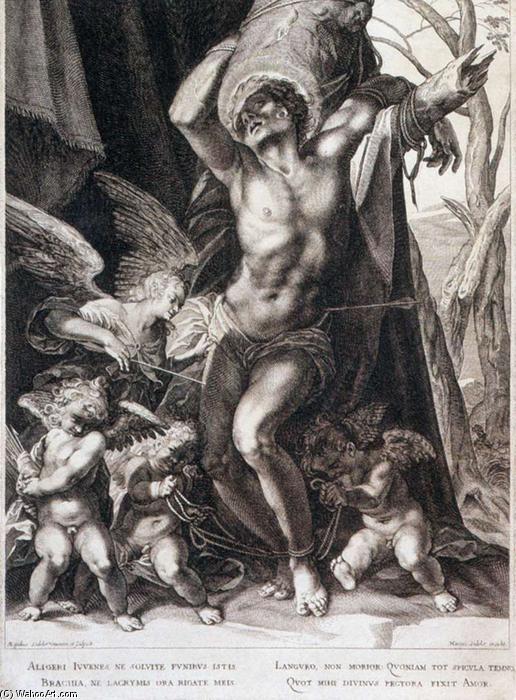
The Martyrdom of St Sebastian


 詳細を見る
詳細を見る




P118B $10

P118H $10

P118W $10

P438Z $10

P508JH $12

P508YH $12

P805H $10

P805Z $10

P919BZ $10

P919G $10

P919XJ $10

P959ZH $10

P968JZ $12

W106C $8

W218G $10

W218JH $8

W218Y $10

W307PJ $10

W316G $10

W316PJ $8

W316Y $10

W398PJ $8

W4111J $10

W500HY $15

W500JH $15

W692G $12

W849H $8

W940BG $15

W953PJ $8




作品のオリジナル比率に合わせた、当店の規定サイズからお選びください。

特定のフレームやスペースに合わせて、ご希望のサイズをご入力いただけます。選択されたサイズが元の画像の比率と異なる場合、アートワークをトリミングするか、手描きで要素を追加して絵画を拡張いたします。デジタルモックアップ を制作し、制作開始前にご確認(承認)をいただきます。
画面上のプレビューは、実際のトリミングや拡張を正確に反映しているものではありません。最終的な構図は、モックアップによってのみ正確にご確認いただけます。
カスタムサイズもご利用いただけますが、元の比率を維持するためには、あらかじめ用意されたリストからサイズを選択することをお勧めいたします。
ご注文後、ArtsDot.com チームより詳細な指示をお送りするとともに、仕上がりイメージ(モックアップ)をご提供いたします。


 ガラスオプションは、110cm未満のサイズでのみご利用いただけます。

The Martyrdom of St Sebastian
複製技法
複製画のサイズ
-


合計金額
$ 363
作品解説
A Study in Suffering and Divine Grace
To gaze upon Aegidius Sadeler II's etching of The Martyrdom of St Sebastian is to enter a realm where profound spiritual narrative meets breathtaking technical mastery. This work does not merely depict an event; it captures the very essence of enduring faith under duress. Saint Sebastian, bound and pierced by arrows, becomes a poignant figure of human vulnerability juxtaposed against the eternal promise of salvation. The composition immediately draws the eye to his suffering form, yet this pain is framed by the gentle, concerned presence of surrounding putti, whose wings seem to whisper secrets of divine intervention. It is a scene steeped in Baroque drama, rendered with an almost unbearable intimacy.
The Artistry of Line: Etching as Narrative
What elevates this piece beyond mere illustration is Sadeler's unparalleled command of the etching medium. The entire emotional weight and visual texture are carried by the meticulous dance of line. Observe how the artist employs hatching—those delicate, parallel scratches—and cross-hatching, where lines intersect to build shadow. These techniques allow him to sculpt light and dark across the monochromatic surface, giving skin a palpable sheen and casting deep, dramatic shadows that enhance the sense of theatrical lighting. The precision required to achieve such tonal variation using only an etching needle speaks volumes about Sadeler’s virtuosity as a master reproducer, channeling the detailed realism characteristic of Northern Renaissance printmaking.
Symbolism Woven into Shadow
The symbolism within this martyrdom is rich and multi-layered. The arrows are not simply weapons; they are potent symbols of sacrifice, purification, and the trials inherent in devotion. Meanwhile, the surrounding cherubs act as celestial witnesses, embodying innocence and divine observation. Sadeler masterfully balances the raw physicality of Sebastian’s suffering—evident in his taut musculature—with the ethereal quality suggested by the drapery and the background landscape. This tension between earthly pain and heavenly grace is the core emotional resonance that has captivated viewers for centuries.
A Touch of Baroque Drama for Your Space
For those seeking to infuse a space with intellectual depth and historical gravitas, this reproduction offers an unparalleled focal point. While its subject matter is deeply religious, its aesthetic qualities—the dramatic chiaroscuro achieved through line work, the classical composition, and the sheer technical brilliance—allow it to transcend purely devotional art. Imagine this etching gracing a library or a formal drawing-room; it speaks of cultivated taste, an appreciation for historical craftsmanship, and a quiet contemplation of enduring human spirit. It is a piece that demands close looking, rewarding the owner with layers of artistic discovery.
関連作品
アーティストの略歴
The Master of the Burin: The Life and Legacy of Aegidius Sadeler II
In the vibrant, swirling currents of the late Renaissance and early Baroque periods, few artists possessed the ability to translate the monumental grandeur of painting into the intimate, precise language of printmaking as masterfully as Aegidius Sadeler II. Born in 1570 within the illustrious artistic dynasty of Antwerp, Sadeler was destined for a life steeped in the fine arts. As a member of the famed Sadeler family of engravers and print dealers, his very lineage was woven into the fabric of European visual culture. His early training under his uncle, Jan I, provided him with a rigorous foundation in the exacting techniques of the Antwerp Guild of St. Luke, instilling in him a discipline that would later allow him to capture the most delicate nuances of light and shadow through the sharp tip of a burin.
The trajectory of Sadeler’s career was as much a journey across Europe as it was an evolution of style. His wanderings took him through the intellectual hubs of Munich, Rome, and Naples, exposing him to the diverse aesthetic currents of the continent. This cosmopolitan upbringing allowed him to absorb the sophisticated elegance of Italian Mannerism and the robust realism of the Northern traditions. By the time he settled in Prague in 1597, he had become a versatile virtuoso, capable of navigating the complex visual vocabulary required by the most demanding patrons of the age.
At the Heart of the Imperial Court
The zenith of Sadeler’s professional life was undoubtedly his appointment as the court engraver to Rudolf II, the Holy Roman Emperor. The court in Prague was a glittering epicenter of Mannerist innovation, a place where art, alchemy, and intellect converged. Within this rarefied atmosphere, Sadeler found his greatest inspiration and his most significant subjects. He did not merely record the images of his era; he acted as a vital conduit for their dissemination. Through his meticulous reproductions, the masterpieces housed in the Emperor's private collections were liberated from the confines of palace walls and shared with the wider European intelligentsia.
His collaboration with the leading lights of the Mannerist movement was profound. Sadeler possessed a rare ability to translate the fluid, often elongated forms of Bartholomeus Spranger and the whimsical, transformative imagery of Giuseppe Arcimboldo into the monochromatic medium of engraving. His work after the sculptures of Giambologna and Adriaen de Vries demonstrated an uncanny ability to render the tactile quality of bronze and marble through nothing more than black ink and white paper. This period of his life was marked by a relentless pursuit of technical perfection, where every line served to heighten the theatricality and emotional depth characteristic of the era.
A Lasting Impression on Art History
The significance of Aegidius Sadeler II extends far beyond the individual prints he produced. He was a pivotal figure in the democratization of high art, playing a crucial role in the creation of a shared European visual language. By reproducing the works of masters like Albrecht Dürer and Raphael, he helped sustain the prestige of these Renaissance icons long after their original eras had passed. His engravings served as both a tribute to the past and a blueprint for the future, influencing generations of artists who looked to his prints for compositional guidance and technical inspiration.
Even today, when we examine his portraits or his dramatic religious scenes, such as his poignant etchings of The Martyrdom of St. Sebastian, we are struck by a sense of profound permanence. His work captures the tension between the physical and the spiritual, the human and the divine, with a clarity that remains undiminished by time. Through his mastery of the engraver's craft, Sadeler ensured that the fleeting brilliance of the Prague court would be etched into the enduring memory of art history.
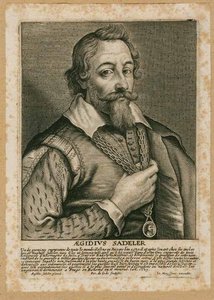
aegidius ii sadeler
1570 - 1629 , Belgium
基本情報
- Artistic Movement Or Style: Mannerism
- Artists Or Movements Influenced By This Artist: ['Rudolf II']
- Artists Who Influenced This Artist: ['Albrecht Dürer']
- Date Of Birth: Antwerp, Belgium (1570)
- Date Of Death: 1629
- Full Name: Aegidius Sadeler II
- Nationality: Flemish
- Notable Artworks:
- The Interior of the Vladislav Hall, Prague
- Venus Receiving Gifts
- Place Of Birth: Antwerp
関連記事
Etching Masters: 10 Legendary Prints That Revolutionized Art | ArtsDot
Journey through 10 legendary etching masterpieces by Rembrandt, Dürer & Goya. Explore the history of printmaking and discover timeless art for your home. Find museum-quality reproductions at ArtsDot.com.
Etching: A Historical Survey of Technique, Aesthetic Qualities & Enduring Artistic Significance
Explore the rich history of etching, from its origins to Rembrandt's masterful innovations. Discover the technique, aesthetic qualities & enduring legacy of this captivating art form. Expert insights for collectors and enthusiasts.
The Intricate World of Etching: A Historical Survey of Technique, Aesthetic Evolution, and Enduring Artistic Impact
Explore the rich history of etching, from its origins to modern practice. Discover techniques, key artists like Rembrandt, and insights for collectors. A comprehensive guide by ArtsDot.

エル・グレコの傑作25選:魂を揺さぶる宗教画と芸術の深淵 | ArtsDot
エル・グレコの傑作25選:魂を揺さぶる宗教画の世界へ。スペイン絵画の巨匠、マニエリスム様式と Toledo の光彩を紐解きます。ArtsDot.com で名画のアートプリントや複製画をお楽しみください。コレクションはこちら →

バロックのドラマ:現代のインテリアに壮麗さと情感を取り込む
バロック様式の歴史、絵画、家具の魅力をご紹介。ArtsDotでは、高品質な油絵複製やカスタムポートレートをご提供し、現代のインテリアに壮麗さと情感を取り入れます。アートコンサルテーションも承ります。

