 プリントを購入
 シェアする
シェアする シェアする
シェアする
 詳細を見る
詳細を見る

 ダウンロード
 似ている作品
 スライドショー
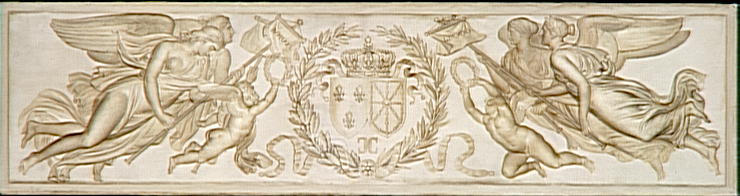
LES ARTS RENDENT HOMMAGE AU SOUVERAIN


 詳細を見る
詳細を見る




































作品のオリジナル比率に合わせた、当店の規定サイズからお選びください。

特定のフレームやスペースに合わせて、ご希望のサイズをご入力いただけます。選択されたサイズが元の画像の比率と異なる場合、アートワークをトリミングするか、手描きで要素を追加して絵画を拡張いたします。デジタルモックアップ を制作し、制作開始前にご確認(承認)をいただきます。
画面上のプレビューは、実際のトリミングや拡張を正確に反映しているものではありません。最終的な構図は、モックアップによってのみ正確にご確認いただけます。
カスタムサイズもご利用いただけますが、元の比率を維持するためには、あらかじめ用意されたリストからサイズを選択することをお勧めいたします。
ご注文後、ArtsDot.com チームより詳細な指示をお送りするとともに、仕上がりイメージ(モックアップ)をご提供いたします。


 ガラスオプションは、110cm未満のサイズでのみご利用いただけます。

LES ARTS RENDENT HOMMAGE AU SOUVERAIN
複製技法
複製画のサイズ
-


合計金額
$ 288
作品解説
Les Arts Rendant Hommage Au Souverain – Alexandre Évariste Fragonard
Alexandre Évariste Fragonard (1780–1850) stands as a pivotal figure bridging the opulent Rococo era and the ascendant Neoclassical movement, cementing his legacy as one of France’s most prolific painters and sculptors. Born into the artistic milieu fostered by Jean-Honoré Fragonard and Marie-Anne Fragonard in Grasse, Alpes-Maritimes, he inherited not merely lineage but a foundational immersion in expressive art—a tradition that profoundly shaped his formative years and instilled within him an instinctive understanding of captivating subject matter and masterful execution. Yet, Fragonard’s artistic journey wouldn't be solely defined by replicating his father’s flamboyant style; rather, it would unfold as a deliberate negotiation between the fading grandeur of Rococo and the burgeoning ideals of Neoclassicism, ultimately forging a distinctive voice within the evolving panorama of 19th-century French art. His output—over 550 paintings alongside drawings and etchings—testifies to an unparalleled dedication to artistic exploration and a remarkable ability to capture fleeting moments of beauty and emotion.- Early Influences & Rococo Flair: Fragonard’s initial training under Chardin instilled in him a disciplined approach, tempered by the exuberant spirit characteristic of Jean-Honoré Fragonard's oeuvre. However, it was Jacques-Louis David who truly ignited his artistic passion, introducing him to the principles of classical composition and elevating his technical skill to new heights. This formative period established a bedrock of stylistic awareness that would permeate his subsequent works—particularly those produced during the reign of Louis XV, where he embraced the Rococo style’s penchant for delicate ornamentation and sensual indulgence.
- The Venetian Connection & Neoclassical Awakening: Fragonard's travels to Venice in 1760 proved transformative, exposing him to the monumental canvases of Giovanni Battista Tiepolo—a revelation that instilled within him a deep admiration for the grandeur and clarity of Venetian painting. Simultaneously, he absorbed the stylistic innovations championed by Rembrandt and Hals, mastering their loose brushstrokes and capturing the immediacy of human emotion with unparalleled sensitivity. This confluence of influences propelled him toward a gradual embrace of Neoclassicism, marked by an emphasis on order, symmetry, and idealized forms—a stylistic shift that reflected the broader cultural currents shaping France at the time.
- Notable Works & Artistic Legacy: Fragonard’s artistic output spanned genres ranging from mythological narratives to portraits of aristocratic figures, demonstrating his versatility as a painter and sculptor. Among his most celebrated achievements are “Francis I Armed as a Knight,” “Francis I Receiving Primaticcio” (a monumental ceiling fresco adorning the Louvre), and “Joan of Arc Climbing to the Stake”—each piece embodying Fragonard’s mastery of technique and conveying profound emotional resonance. His sculptural endeavors included the Old Pediment of the Chambre des Députés and a colossal statue of Pichegru—testaments to his artistic ambition and enduring influence on French sculpture.
- Technique & Artistic Vision: Fragonard's distinctive style was characterized by subtractive sculpting, where material is meticulously removed to reveal the desired form—a technique honed through years of experience and reflecting a profound understanding of sculptural principles. His paintings showcased an astonishing command of color and texture, utilizing pigments with exceptional vibrancy and blending them seamlessly to create luminous surfaces that captured the essence of his subjects.
- Symbolism & Emotional Impact: Fragonard’s artistic vision transcended mere aesthetic beauty; it sought to communicate complex ideas about human experience—particularly themes of love, desire, and heroism. His depictions frequently employed allegorical figures and symbolic imagery—such as laurel wreaths signifying victory and honor—to convey profound emotional depth and intellectual nuance.
関連作品
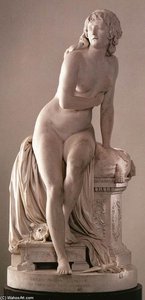
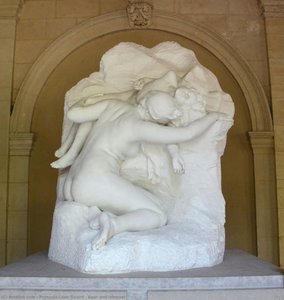
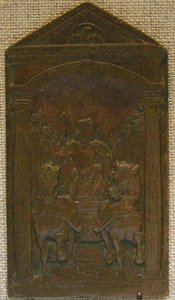
アーティストの略歴
時代を繋ぐ遺産:アレクサンドル=エヴァリスト・フラゴナール
1780年10月26日、フランスのグラスにて、ロココ芸術の輝かしい世界の中にアレクサンドル=エヴァリスト・フラゴナールは生を受けた。彼は、自らの芸術的歩みを推進させると同時に、密かに挑戦を突きつけることとなる偉大な遺産を受け継いだのである。名高いジャン=オノレ・フラゴナールとマリー=アンヌ・フラゴナールの息子として、彼は幼少期から、筆致が光と感情とともに舞うような、創造的な情熱に満ちた空気に浸っていた。この家族の繋がりは、単なる血統の問題ではなかった。それは基礎となる教育であり、技術的な習熟と、情緒豊かな主題を見出す感性が直接的に受け継がれるプロセスであった。しかし、アレクサンドル=エヴァリストは、単に父の様式を模倣することに留まらなかった。彼の旅路は、消えゆくロココの優雅さと、押し寄せる新古典主義の潮流との間での、魅惑的な交渉によって刻まれていくことになる。そして最終的に、進化し続ける19的なフランス芸術の風景の中に、独自の声を確立させたのである。彼は1850年11月10日にパリでこの世を去ったが、政治的激動と美学的理想の変遷に彩られた時代への貴重な洞察を与える作品群を、後世に残した。形成期と芸術教育
アレクサンドル=エヴァリストの初期の芸術訓練は、当然のことながら父の手によって導かれた。ジャン=オノレ・フラゴナールは、彼に描画と絵画技法の極意を叩き込み、形態と表情を捉える天賦の才能を育んだ。この初期の指導が、彼のキャリアを通じて特徴であり続ける、流麗で優美な様式の礎となったのである。しかし、変化しつつあった芸術的風潮を見極め、ジャン=オノレは息子にさらなる視野の拡大を促した。これが、アレクサンドル=エヴァリストが新古典主義の旗手であるジャック=ルイ・ダヴィッドに師事するという、彼の発展における決定的な瞬間へと繋がったのである。ダヴィッドの影響は、フラゴナールの手法に新たな規律と厳格さをもたらした。それは、構造化された構図、精密な素描、そして歴史的正確さへの注力を強調するものだった。この経験は、決してロココを完全に放棄することではなく、むしろその固有の優雅さを、秩序と明晰さを重んじる新古典主義的な要素と融合させる試みであった。その結果、感情的な共鳴と知的な制御が混ざり合った、二つの世界の間で比類なき地位を占める芸術的感性が誕生したのである。トゥルバドゥール様式と主要作品
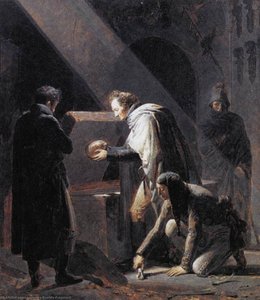
アレクサンドル=エヴァリスト・フラゴナールは、19世紀フランスで流行した、歴史や文学の主題をロマン主義的に描く「トゥルバドゥール(吟遊詩人)様式」の中に自らの居場所を見出した。このジャンルによって、彼はドラマ、感情、そして民族的な熱狂に満ちた物語を探求することが可能となった。彼の絵画は単なる過去の出来事の描写ではない。それらは、特定の情緒を呼び起こし、あるいは特定のメッセージを伝えるために、緻密に構成された情景なのである。例えば、François Ier armé chevalier par Bayard(騎士として武装するフランス国王フランソワ1世とバイアール)は、バイアールによるフランソワ1世への叙勲の瞬間を鮮やかに描き出し、騎士道精神と王権の威厳を見事に捉えている。Vivant Denon Replacing El Cid's Remains in their Tombs(墓にエル・シドの遺骸を安置するドニョン)は、死、悲嘆、そして英雄たちの不朽の遺産というテーマを探求した、とりわけ痛切な作品である。また、Cardinal Mazarin at the Deathbed of Eustache Le Sueur(エタッシュ・ル・スールの死床にいる枢機卿マザラン)は、光と影の見事な使い分けによって、優しくも厳かな情景を描き出し、フランス史への魅力的な眼差しを提示している。絵画のみならず、フラゴナールは彫刻家としても卓越しており、フランス代議院のペディメント(破風)や、ピシェグル将軍の巨大な像を手がけたことは、彼が異なる芸術媒体においても多才な技術を有していたことを証明している。激動の時代を航海する
フラゴナールのキャリアは、フランス革命、ナポレオン時代、そしてその後の復古王政期という、極めて大きな政治的・社会的変革の背景の中で展開された。この激動の文脈は、彼の作品に深い影響を与えた。彼はナポレオン・ボナパルト自身から制作を依頼されており、これは、壮大さと繊細さの両面をもって歴史的物語を捉えることができる芸術家として、彼の名声が高まっていたことの証左である。これらの依頼は単なる芸術へのパトロン行為ではなく、権力と国家のアイデンティティの表明でもあった。当時の主流であった好みは、ドラマチックな物語性と、フランス人の誇りに共鳴するテーマを支持しており、フラゴナールはそれらの要素を巧みに自身の絵画へと取り入れたのである。彼は変化し続ける政治情勢を器用に渡り歩き、自らの芸術的誠実さを保ちながら、異なるパトロンたちの要求に応えるべく様式を適応させていった。歴史的な出来事のスペクタクル(壮観)と、そこに付随する人間的な犠牲の両方を捉える彼の能力は、彼を時代における重要な記録者としての地位に定着させたのである。永続的な印象
アレクサンドル=エヴァリスト・フラゴナールは、父ほどの広範な知名度を享受しているわけではないかもしれないが、19世紀フランス芸術への彼の貢献は否定しようのないものである。彼はロココの遊び心ある優雅さと、新古典主義の形式的な厳格さの間の溝を埋めることに成功し、当時の観衆に響き、今日においても見る者を魅了し続ける独自の様式を創り上げた。彼の絵画と彫刻は、激動と革新の両面によって特徴づけられる、彼の時代の芸術的嗜好と歴史意識に対する極めて貴重な洞察を与えてくれる。彼は単なる過去の様式の模倣者ではなかった。彼は伝統と現代性を融合させ、視覚的に美しく、かつ知的な刺激に満ちた作品を生み出した統合者であった。フラゴナールの遺産は、芸術を通じて説得力のある物語を語り、深い変革の渦中にあった国家のドラマ、感情、そして複雑さを捉えきったその力の中に存在しているのである。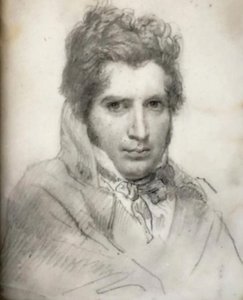
アレクサンドル=エヴァリスト・フラゴナール
1780 - 1850 , フランス
基本情報
- Artistic Movement Or Style: トゥルバドゥール様式
- Artists Who Influenced This Artist:
- ジャン=オノレ・フラゴナール
- ジャック=ルイ・ダヴィッド
- Date Of Birth: 1780年10月26日
- Date Of Death: 1850年11月10日
- Full Name: アレクサンドル=エヴァリスト・フラゴナール
- Nationality: フランス
- Notable Artworks:
- 騎士となったフランス1世
- エル・シドの遺骸を安置し直すヴィヴァン・ドノン
- 死の床にある枢機卿マザラン
- Place Of Birth: フランス、グラース
関連記事

Bronze Sculptures That Defined Art History | ArtsDot
Journey through art history with our Top 10 bronze sculptures! Explore masterpieces by Rodin, Michelangelo & more. Discover stories behind iconic statues and find museum-quality reproductions for your home decor at ArtsDot.com.

Bronze Age to Modern Masters: 10 Sculptures That Redefined Art | ArtsDot
Journey through art history with 10 legendary bronze sculptures – from Michelangelo's David to Rodin’s Thinker. Explore the stories, techniques & timeless beauty of these masterpieces. Find museum-quality reproductions & elevate your home decor on ArtsDot.com.

The Enduring Form: Exploring Themes & Techniques in Sculpture Across Historical Periods
Explore the rich history of sculpture from ancient masterpieces to contemporary innovations. Discover key techniques, influential artists & investment potential for discerning art collectors.
The Enduring Form: Sculpture Across History, Technique & Emotional Resonance
Explore the rich history of sculpture with ArtsDot. Discover key techniques, influential artists & investment potential for discerning collectors. Expert insights into valuing and collecting timeless masterpieces.
Antonio Canova: Neoclassical Sculpture & the Pursuit of Emotional Perfection
Explore the life & art of Antonio Canova, the greatest Neoclassical sculptor. Discover his masterpieces, innovative techniques, and lasting influence on fine art collecting. Expert insights for discerning investors.