

 プレビュー
プレビュー
 プリントを購入
 シェアする
シェアする シェアする
シェアする
 詳細を見る
詳細を見る

 ダウンロード
 似ている作品
 X線調査
X線調査 スライドショー
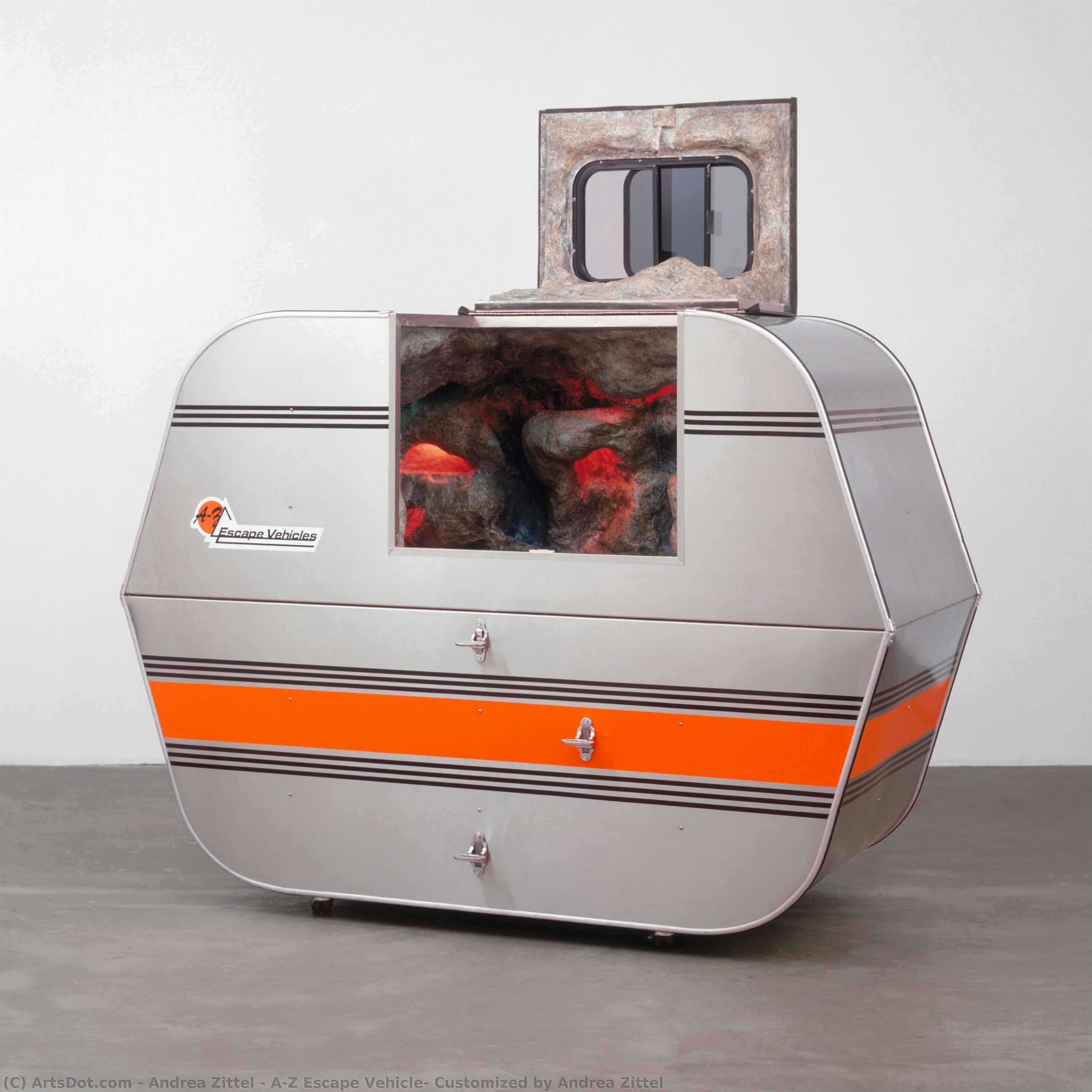
A-Z Escape Vehicle: Customized by Andrea Zittel
 Acrylic On Canvas
- WallArt
- Minimalist Sculpture
 1996
1996 213.0 x 157.0 cm
 MoMA(ニューヨーク近代美術館)
 詳細を見る
詳細を見る
オンラインプレビューをはるかに凌ぐ、高解像度で鮮明なデジタル画像をご購入いただけます。
各ファイルは、社内の専門家が高度なツールと熟練した手作業によるレタッチを用いて、細心の注意を払って準備されています。すべての画像において、卓越した鮮明度、正確な色彩再現性、そして繊細なディテールを保証いたします。
最終ファイルは、プロフェッショナルな編集・印刷環境ですぐにご利用いただけるよう最適化された状態で、72時間以内にメールにてお届けいたします。これは、一流のデザインスタジオ、出版社、ギャラリーから信頼されているものと同等の品質です。
デジタル画像のご注文に付随する特典
高品質なデジタル画像配信を、確かな品質で。
ArtsDot.com を選ぶことは、単に画像を手に入れることではありません。それは、プロの手によって精密に仕上げられ、満足保証が付いた高品質なデジタルアートワークを受け取ることを意味します。ご注文いただいた際に自動的に付随する内容は、以下の通りです:

メールですぐにお届け
ご注文から72時間以内に、高解像度のデジタル画像ファイルがメールでお手元に届きます。すぐにそのままご利用いただけます。

AI技術で最適化されたデジタルファイル
お客様の作品は、高度なAIツールと専門家による手作業の編集を組み合わせてプロフェッショナルに最適化されており、細部のディテール、鮮明さ、そして正確な色再現性を最大限に引き出しています。

一生涯無料の再送サービス
ファイルを誤って削除したり、紛失してしまったりしましたか?ご安心ください。いつでも無料で再送いたします。

輸入手数料は一切かかりません
関税や手数料、配送料を気にすることなく、お気に入りのアートワークをすぐにお楽しみいただけます。デジタルダウンロードは常に免税です。

色彩再現の保証
プロ仕様のツールとカラーマネジメント技術を用いることで、デジタル画像が元の色を最大限に忠実に再現することを保証いたします。

60日間満足保証
ご購入いただいたデジタル画像にご満足いただけない場合は、60日以内であれば、修正または100%の返金(理由を問う必要はありません)をさせていただきます。

100% 返金保証
ご満足いただけない場合は、デジタルファイルを受け取ってから60日以内であれば、理由を問わず全額返金いたします。

まとめ買い割引
3枚購入で10%OFF - 5枚購入で15%OFF - 10枚以上購入で20%OFF。クリエイティブなプロジェクト、ギャラリー、エージェンシーに最適です。
作品の詳細
A Deep Dive Into Andrea Zittel’s “A-Z Escape Vehicle”
Andrea Zittel's "A-Z Escape Vehicle," created in 1996, isn’t merely a sculpture; it’s an embodiment of minimalist philosophy and a profound meditation on the human condition. Constructed from steel, insulation, wood, and glass—a deceptively simple combination—the vehicle transcends its material form to become a powerful statement about inhabiting space and redefining notions of domesticity. Zittel herself meticulously crafted this piece, reflecting her core belief that art should actively reshape our daily experiences, pushing us beyond conventional perceptions of comfort and functionality.The Genesis of Minimalism
Zittel’s artistic trajectory began with an unwavering fascination for the intersection between art and everyday life—a deliberate rejection of gallery conventions in favor of transforming utilitarian objects into immersive artworks. This ethos is powerfully exemplified by “wagon station,” a mobile living unit designed to challenge established architectural paradigms. Like many of Zittel's projects, "A-Z Escape Vehicle" operates on the principle that true liberation resides not in boundless freedom but rather in accepting limitations—a carefully curated environment where every element contributes to a heightened awareness of presence and intention. The artist’s manifesto encapsulates this perspective: “What makes us feel liberated is not total freedom, but rather living in a set of limitations that we have created and prescribed for ourselves.”Form Meets Function: A Sculptural Exploration
The vehicle's exterior shell—a robust steel frame insulated with wood—provides structural integrity while simultaneously hinting at the protective qualities of shelter. Inside, Zittel incorporated colored lights, water, fiberglass, wood, papier-mâché, pebbles and paint – elements that deliberately disrupt traditional aesthetic expectations. These materials aren’t simply decorative; they serve as conduits for sensory experience, inviting contemplation on how we perceive our surroundings and how these perceptions shape our inner lives. The deliberate inclusion of a chair—positioned centrally within the space—further underscores Zittel's exploration of domestic rituals and the significance of creating intentional environments.Symbolism Within Simplicity
Beyond its practical dimensions, “A-Z Escape Vehicle” carries symbolic weight. The vehicle’s name itself – "A–Z" – is a playful juxtaposition of inclusivity and initials—a nod to Zittel's belief that art can foster connection and expand our understanding of selfhood. Furthermore, the artwork speaks to broader themes of social responsibility and reimagining established roles within society. As Zittel herself noted, “What I’m interested in…is that each person examines his own goals, talents and options, and then based on these begins to invent new models or roles to fulfill his needs.” The vehicle's stark materiality—the cold steel juxtaposed against the warmth of wood—represents a conscious confrontation with the rigidity of architectural norms.A Legacy of Thoughtful Design
“A-Z Escape Vehicle” stands as a testament to Zittel’s pioneering approach to art and design—a fusion of minimalist aesthetics, sustainable practices, and social engagement. Published in 2019 by MoMA Highlights: 375 Works from The Museum of Modern Art, New York, the piece exemplifies Zittel's commitment to transforming everyday objects into vehicles for intellectual exploration. Its enduring appeal lies not only in its visual elegance but also in its invitation to reconsider fundamental questions about how we inhabit space and what imbues life with meaning—a legacy that continues to inspire artists and designers alike.関連作品
作家の略歴
The Architecture of Existence: The Visionary World of Andrea Zittel
Andrea Zittel, born in Escondido, United States of America, in 1965, stands as a singular figure in contemporary art, recognized for her distinctive approach to artistic practice—a fusion of spatial exploration, sculptural experimentation, and a profound contemplation on the essence of existence. Her work delves into questions surrounding how we inhabit space and what imbues life with meaning, reflecting a core belief that art can fundamentally reshape our daily experiences. Rather than confining her creative output to the traditional confines of a canvas or a pedestal, Zittel has spent her career blurring the boundaries between fine art, functional design, and lived reality.
Zittel’s artistic journey began with an unwavering fascination for the intersection between art and everyday living. Reject and conventional notions of artistic creation, she prioritizes transforming utilitarian objects and environments into immersive artworks—a deliberate departure from traditional gallery settings. This ethos is powerfully embodied in her celebrated project “wagon station,” a mobile living unit meticulously designed to redefine the boundaries between architecture, design, and personal habitation. More than just a dwelling, it serves as a sculptural statement that interrogates our relationship with place and challenges us to reconsider conventional notions of comfort and convenience. Through works like the A-Z Escape Vehicle, she investigates how we inhabit space and imbues life with meaning, rejecting mass production in favor of experimental designs that challenge assumptions about individuality.
Minimalism, Materiality, and the Search for Meaning
Her artistic style is characterized by an uncompromising commitment to minimalism—a deliberate stripping away of extraneous elements to reveal the core materiality and form of her creations. This aesthetic aligns seamlessly with Zittel's exploration of sustainability and self-sufficiency, mirroring a broader cultural preoccupation with reconnecting with nature amidst urbanization. Her work often utilizes texture and form to evoke quiet contemplation; for instance, in pieces such as Lavender Corduroy Personal Panel, she presents minimalist fabric sculptures that reflect on the nuances of daily life and the human experience through a captivating study of tactile surfaces.
The influence of conceptual masters like Sol LeWitt and Agnes Martin is palpable in her work, particularly in her use of geometric abstraction to champion intellectual rigor and visual simplicity. Zittel’s ability to manipulate spatial perception is perhaps most striking in works such as Point of Interest—An A-Z Land Brand. In this gouache piece, the arrangement of large rocks against a bold red backdrop creates an illusion of floating, demonstrating her mastery over the psychological impact of composition and color. Her practice is not merely about looking at art, but about living within it, creating a dialogue between the viewer and the structural elements of their own environment.
Legacy and the Social Sculpture
Throughout her development, Zittel has expanded her reach through collaborations and large-scale installations that function as social sculptures. By engaging with themes of branding, land use, and personal autonomy, she creates a unique ecosystem where art becomes a tool for navigating the complexities of modern life. Her work continues to resonate within the contemporary landscape because it addresses the fundamental tension between our desire for stability and our need for mobility.
The historical significance of Andrea Zittel lies in her ability to transform the concept of the "art object" into an "artistic way of life." Her contributions can be summarized through several key pillars of her practice:
- Spatial Redefinition: The creation of mobile and modular living units that challenge traditional architectural norms.
- Conceptual Minimalism: A focus on the essential forms and materials that define our physical reality.
- Sustainable Living: An exploration of self-sufficiency and the reduction of unnecessary consumption through thoughtful design.
- Social Engagement: The use of art to interrogate social structures, mass production, and the way individuals claim their own space in the world.
As she continues to evolve her practice, Zittel remains a vital voice in the movement toward an integrated existence, where the distinction between the creator, the creation, and the inhabitant is beautifully and permanently dissolved.

andrea zittel
1965 -

