

 プリントを購入
 シェアする
シェアする シェアする
シェアする
 詳細を見る
詳細を見る

 ダウンロード
 似ている作品
 スライドショー
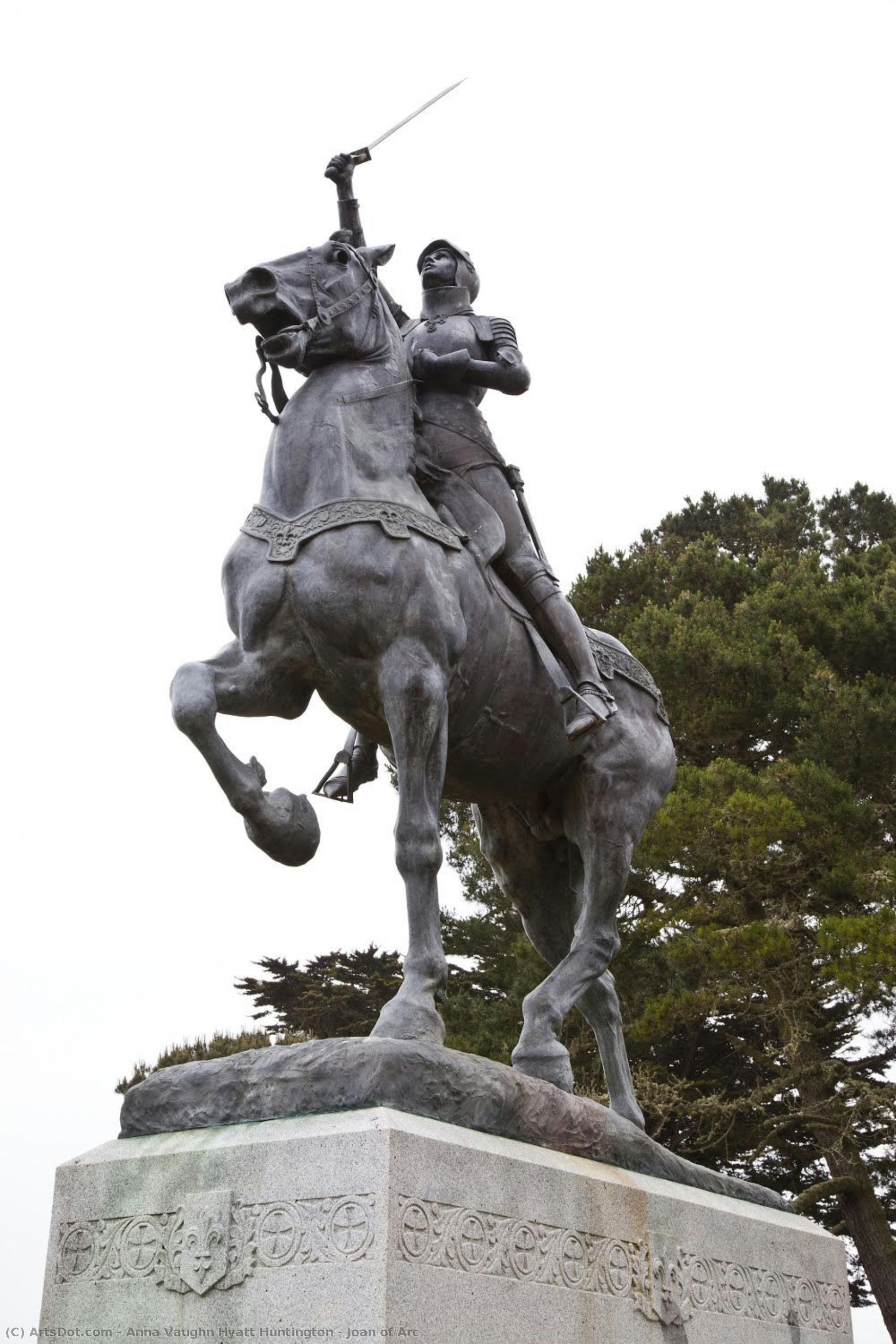
Joan of Arc
 Bronze
- Sculpture
- Realism
 1915
1915 366.0 x 115.0 cm
 レギオン・オブ・オナー美術館
 詳細を見る
詳細を見る
オンラインプレビューをはるかに凌ぐ、高解像度で鮮明なデジタル画像をご購入いただけます。
各ファイルは、社内の専門家が高度なツールと熟練した手作業によるレタッチを用いて、細心の注意を払って準備されています。すべての画像において、卓越した鮮明度、正確な色彩再現性、そして繊細なディテールを保証いたします。
最終ファイルは、プロフェッショナルな編集・印刷環境ですぐにご利用いただけるよう最適化された状態で、72時間以内にメールにてお届けいたします。これは、一流のデザインスタジオ、出版社、ギャラリーから信頼されているものと同等の品質です。
デジタル画像のご注文に付随する特典
高品質なデジタル画像配信を、確かな品質で。
ArtsDot.com を選ぶことは、単に画像を手に入れることではありません。それは、プロの手によって精密に仕上げられ、満足保証が付いた高品質なデジタルアートワークを受け取ることを意味します。ご注文いただいた際に自動的に付随する内容は、以下の通りです:

メールですぐにお届け
ご注文から72時間以内に、高解像度のデジタル画像ファイルがメールでお手元に届きます。すぐにそのままご利用いただけます。

AI技術で最適化されたデジタルファイル
お客様の作品は、高度なAIツールと専門家による手作業の編集を組み合わせてプロフェッショナルに最適化されており、細部のディテール、鮮明さ、そして正確な色再現性を最大限に引き出しています。

一生涯無料の再送サービス
ファイルを誤って削除したり、紛失してしまったりしましたか?ご安心ください。いつでも無料で再送いたします。

輸入手数料は一切かかりません
関税や手数料、配送料を気にすることなく、お気に入りのアートワークをすぐにお楽しみいただけます。デジタルダウンロードは常に免税です。

色彩再現の保証
プロ仕様のツールとカラーマネジメント技術を用いることで、デジタル画像が元の色を最大限に忠実に再現することを保証いたします。

60日間満足保証
ご購入いただいたデジタル画像にご満足いただけない場合は、60日以内であれば、修正または100%の返金(理由を問う必要はありません)をさせていただきます。

100% 返金保証
ご満足いただけない場合は、デジタルファイルを受け取ってから60日以内であれば、理由を問わず全額返金いたします。

まとめ買い割引
3枚購入で10%OFF - 5枚購入で15%OFF - 10枚以上購入で20%OFF。クリエイティブなプロジェクト、ギャラリー、エージェンシーに最適です。
A Vision of Courage: Anna Hyatt Huntington’s Equestrian Joan of Arc
The bronze figure of Joan of Arc, sculpted by Anna Vaughn Hyatt Huntington in 1915 and currently residing in Riverside Park, New York City, is more than just a statue; it's a potent embodiment of French national identity, unwavering faith, and the spirit of defiance. Huntington’s masterful rendering captures not merely the likeness of a historical figure but also the very essence of her legend – a young woman who, against overwhelming odds, rallied a nation to victory. The sculpture stands as a testament to both the artist's technical skill and her profound understanding of the symbolic power inherent in equestrian portraiture.
Huntington’s approach was deeply rooted in her background as a paleontologist’s daughter; she possessed an unparalleled ability to dissect and reconstruct animal anatomy, translating this knowledge into remarkably lifelike representations. This meticulous attention to detail is immediately apparent in the rearing horse – its musculature rendered with astonishing precision, conveying both power and a palpable sense of urgency. The horse itself isn't simply a mount but a dynamic partner in Joan’s narrative, mirroring her own courageous spirit and unwavering determination.
The Sculptor’s Process: Lost-Wax Casting and the Pursuit of Realism
The creation of this monumental bronze sculpture involved a complex and demanding process. Huntington employed the traditional technique of lost-wax casting, a method that has been utilized for centuries to produce intricate and durable works of art. Initially, she created a full-scale plaster model, painstakingly studying historical accounts and artistic representations of Joan of Arc. This detailed study informed every aspect of her design, from the folds of the fabric draped across Joan’s body to the subtle expression on her face.
Once the plaster model was complete, it was used to create a wax mold. Molten bronze was then poured into this mold, filling the intricate details of the original sculpture. After cooling and solidifying, the wax was removed, leaving behind a hollow bronze casting. This process, while demanding, allowed Huntington to achieve an unparalleled level of detail and texture in her work. The surface of the bronze exhibits a rich, tactile quality – a testament to the artist’s skill and the inherent beauty of the material itself. The subtle variations in tone, achieved through careful manipulation of the casting process, add depth and dimension to the sculpture, bringing it vividly to life.
Symbolism and Narrative: A Portrait of Faith and Resistance
Beyond its technical brilliance, the sculpture is laden with symbolism. Joan’s raised sword represents her unwavering commitment to her cause – a declaration of defiance against oppression and a symbol of French sovereignty. Her upward gaze, directed towards the heavens, speaks to her deep faith and belief in divine guidance. The rearing horse, as mentioned earlier, embodies power, freedom, and the spirit of rebellion. Together, these elements coalesce into a powerful narrative of courage, conviction, and ultimately, triumph.
The choice of an equestrian pose is particularly significant. Historically, depictions of rulers on horseback have long symbolized authority, strength, and leadership. By placing Joan on horseback, Huntington elevates her to the status of a national hero – a figure worthy of emulation and inspiration. The sculpture’s placement in Riverside Park, a popular urban oasis, further reinforces this symbolic connection, positioning Joan as a guardian spirit for the city and its inhabitants.
A Legacy of Strength: Joan of Arc in the 20th Century
Completed just six years after the end of World War I, Huntington’s sculpture resonated deeply with a nation grappling with the trauma of conflict. Joan of Arc's story – a young woman who rose to lead her country against seemingly insurmountable odds – offered a powerful message of hope and resilience in an era defined by loss and uncertainty. The statue quickly became a beloved landmark in New York City, embodying the values of courage, faith, and national pride.
Today, Huntington’s equestrian Joan of Arc remains a poignant reminder of France's rich history and its enduring spirit. It is a work that continues to inspire awe and admiration, inviting viewers to contemplate the complexities of leadership, faith, and the timeless struggle for freedom. Reproductions of this iconic sculpture offer a beautiful way to bring this powerful image into any home or office, serving as a constant source of inspiration and reflection.
関連作品
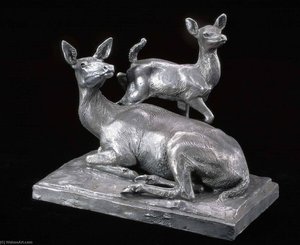
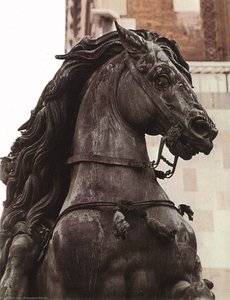
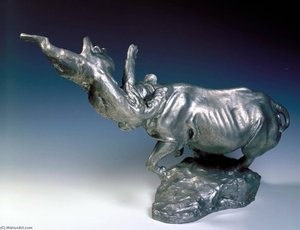
作家の略歴
A Life Sculpted in Passion: The Story of Anna Vaughn Hyatt Huntington
Anna Vaughn Hyatt Huntington, a name synonymous with pioneering spirit and artistic grace, emerged as a formidable force in the early 20th-century American art scene. Born in Cambridge, Massachusetts, on March 10, 1876, her life was an extraordinary blend of scientific curiosity inherited from her father, Alpheus Hyatt – a renowned paleontologist and zoologist – and artistic sensibility nurtured by her mother, Audella Beebe Hyatt, a talented watercolorist. This unique upbringing instilled in young Anna a profound appreciation for the natural world, particularly animal anatomy, which would become a defining characteristic of her sculptural work. From an early age, she demonstrated a keen eye for detail and an unwavering commitment to realism, even daring to critique the anatomical inaccuracies in the work of established artists like Henry Hudson Kitson, leading to a bold departure from his studio – a testament to her independent spirit and artistic integrity. Her formal education continued at the Art Students League of New York, where she studied under Hermon Atkins MacNeil and Gutzon Borglum, further honing her skills while immersing herself in the vibrant artistic community of the city. Crucially, Hyatt dedicated countless hours observing animals firsthand – at zoos like the Bronx Zoo and within the dynamic atmosphere of circuses – meticulously studying their forms and movements to capture their essence with unparalleled accuracy and expressiveness.Breaking Barriers and Defining a Style
Hyatt Huntington’s ascent in the art world was remarkable, particularly for a woman during an era when the field was overwhelmingly dominated by men. She quickly gained recognition for her animal sculptures, imbued with emotional depth and breathtaking realism. These were not merely representations of creatures; they were explorations of character, power, and grace. Her breakthrough came in 1915 with the creation of Joan of Arc, a monumental sculpture erected on Riverside Drive in New York City. This wasn’t just an artistic triumph; it was a historical one – the first public monument created by a woman in the city, and the first dedicated to a historical female figure. The work established her reputation as a sculptor of significant stature and paved the way for future commissions. Beyond individual animal studies, Hyatt Huntington became celebrated for her equestrian sculptures, masterpieces like El Cid in Seville, Spain, and General Israel Putnam in Redding, Connecticut. These works showcased not only her mastery of equine anatomy but also her ability to capture the spirit and character of both horse and rider, creating dynamic compositions that resonated with power and narrative. A pivotal moment arrived in 1930 when she and her husband, Archer Milton Huntington, founded Brookgreen Gardens near Myrtle Beach, South Carolina. This sprawling outdoor sculpture garden became a living testament to their shared passion for art and nature, featuring over 300 sculptures – many of them Hyatt Huntington’s own creations – harmoniously integrated into the landscape. Her experimentation with aluminum during the 1930s further demonstrated her innovative spirit, allowing for lighter, more dynamic forms that pushed the boundaries of sculptural possibilities.Influences and Artistic Foundations
The foundations of Anna Vaughn Hyatt Huntington's artistic vision were deeply rooted in both scientific observation and classical tradition. Her father’s expertise in paleontology and zoology provided an unparalleled understanding of animal anatomy, which she meticulously incorporated into her sculptures, ensuring anatomical accuracy and lifelike quality. This scientific rigor was beautifully balanced by a profound appreciation for classical sculpture, particularly in the depiction of human figures and their interaction with animals. While firmly grounded in realism, Hyatt Huntington’s later work began to incorporate elements of early Modernism, evident in stylized forms and dynamic compositions – especially those crafted from aluminum. She wasn't afraid to experiment, to push boundaries, and to explore new ways of expressing her artistic vision. The influence of these diverse sources coalesced into a unique style that was both technically masterful and emotionally resonant.A Lasting Legacy: Beyond the Sculptures
Anna Vaughn Hyatt Huntington’s impact extends far beyond her remarkable sculptures. She was a true pioneer for women artists, breaking down barriers and achieving success in a field historically closed to them. Her creation of Joan of Arc served as an inspiration to generations of female artists, demonstrating that their voices could be heard and their contributions valued. The founding of Brookgreen Gardens not only provided a stunning showcase for her work but also established a unique outdoor sculpture museum that continues to inspire and educate visitors today. Her election to the American Academy of Arts and Letters was a testament to her artistic merit and recognition by her peers. Furthermore, she and Archer Milton Huntington were dedicated philanthropists who generously supported numerous cultural institutions, leaving an indelible mark on the arts and sciences. Anna Vaughn Hyatt Huntington passed away on October 4, 1973, in Redding Ridge, Connecticut, but her legacy continues to thrive through her sculptures, Brookgreen Gardens, and the enduring inspiration she provides to artists and art lovers alike. Her life stands as a powerful example of dedication, innovation, and the transformative power of artistic expression.- Born: March 10, 1876, Cambridge, Massachusetts
- Died: October 4, 1973, Redding Ridge, Connecticut
- Nationality: American
- Known For: Sculpture, particularly animal and equestrian figures
- Movement: Realism, early Modernism
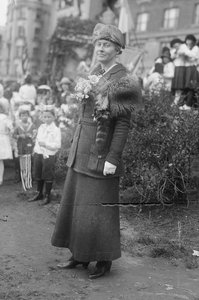
Anna Vaughn Hyatt Huntington
1876 - 1973

