

 プレビュー
プレビュー
 プリントを購入
 シェアする
シェアする シェアする
シェアする
 詳細を見る
詳細を見る

 ダウンロード
 似ている作品
 X線調査
X線調査 スライドショー
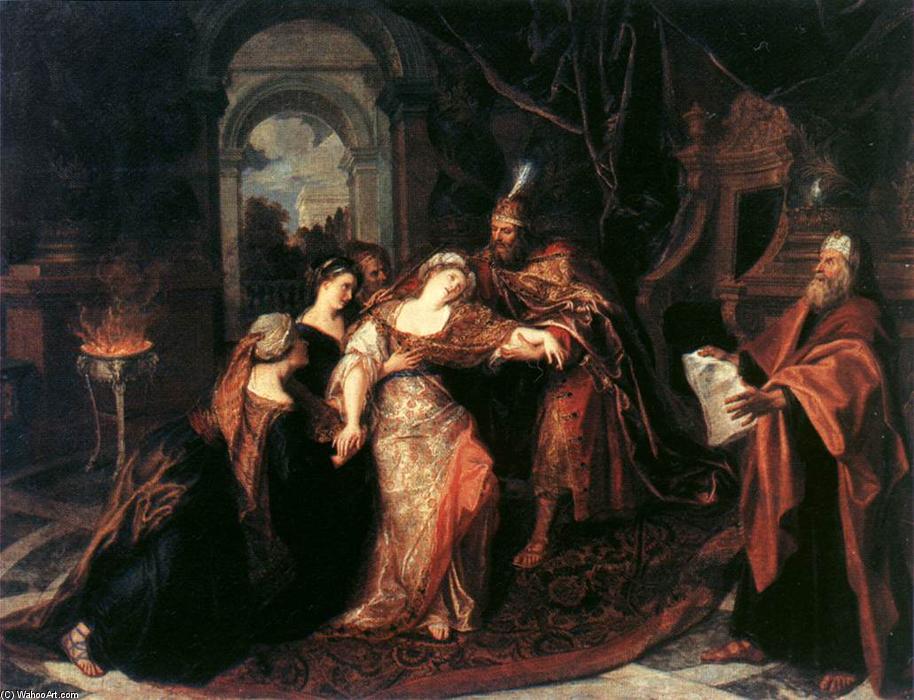
The Swooning of Esther


 詳細を見る
詳細を見る




































作品のオリジナル比率に合わせた、当店の規定サイズからお選びください。

特定のフレームやスペースに合わせて、ご希望のサイズをご入力いただけます。選択されたサイズが元の画像の比率と異なる場合、アートワークをトリミングするか、手描きで要素を追加して絵画を拡張いたします。デジタルモックアップ を制作し、制作開始前にご確認(承認)をいただきます。
画面上のプレビューは、実際のトリミングや拡張を正確に反映しているものではありません。最終的な構図は、モックアップによってのみ正確にご確認いただけます。
カスタムサイズもご利用いただけますが、元の比率を維持するためには、あらかじめ用意されたリストからサイズを選択することをお勧めいたします。
ご注文後、ArtsDot.com チームより詳細な指示をお送りするとともに、仕上がりイメージ(モックアップ)をご提供いたします。


 ガラスオプションは、110cm未満のサイズでのみご利用いただけます。

The Swooning of Esther
複製技法
複製画のサイズ
-


合計金額
$ 313
関連作品
アーティストの略歴
The Legacy of Antoine Coypel II: A Bridge Between Eras
In the grand tapestry of French art history, few figures embody the delicate transition from the structured majesty of the Baroque to the playful elegance of the Rococo as gracefully as Antoine Coypel II. Born in Paris in 1661 into a lineage of profound artistic prestige, his very existence was intertwined with the pulse of the French Royal Academy. As the son of the celebrated painter Noël Coypel, Antoine did not merely inherit a name; he inherited a visual language of meticulous observation and masterful draughtsmanship. His early life was marked by an immersion in the highest circles of Parisian culture, a period that would lay the foundation for a career defined by both classical restraint and an emerging, spirited dynamism.
The formative years of Coypel II were characterized by a rigorous education that spanned the most significant artistic hubs of Europe. At the age of eleven, he accompanied his father to Italy, a journey that proved transformative. In Rome, the young artist found himself breathing the same air as the remnants of the High Renaissance and the burgeoning Roman Baroque. By studying the works of masters such as Carlo Maratta and witnessing the sculptural genius of Gian Lorenzo Bernini, Coypel developed a profound respect for anatomical precision and classical proportion. This Italian sojourn allowed him to master the art of copying the Antique, an essential practice that instilled in him a lifelong reverence for idealized beauty and balanced composition.
Mastery of Form and the Royal Commission
Upon his return to Paris in 1676, Coypel II completed his training at the Académie Royale, quickly ascending through the ranks of the artistic elite. His talent was such that he achieved official recognition with remarkable speed, earning the title of académicien at a young age. This period of his life saw him navigating the complex waters of royal patronage, securing prestigious commissions that would decorate the most significant architectural wonders of France. From the altarpieces of Notre-Dame in Paris to the grand decorative schemes for the Palais Royal, his brushwork became a tool for storytelling on a monumental scale.
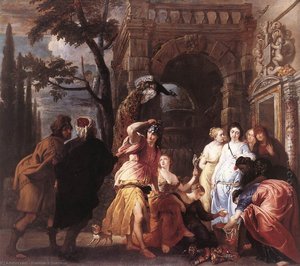
His technical prowess was particularly evident in his ability to blend the heavy, dramatic chiaroscuro of Rubens and Rembrandt with a uniquely French clarity. While he possessed the skill to execute the grand, sweeping gestures required for history paintings, he often favored a certain restrained elegance. This stylistic choice allowed him to capture profound psychological depth within his subjects. In works such as "The Swooning of Esther," commissioned by Louis XIV for the Fontainebleau Palace, one can observe his mastery over luminous palettes and the intricate rendering of drapery, all serving to heighten the emotional intensity of the biblical narrative.
A Pivotal Figure in French Art History
As his career progressed, Coypel II reached the zenith of professional achievement. His appointment as premier peintre du roi (First Painter to the King) and his role as the keeper of the royal collection of drawings solidified his status as a pillar of the French art establishment. He was not merely a painter of scenes but a custodian of the aesthetic values of the age. Even as the artistic climate began to shift toward the more whimsical and lighthearted Rococo style, Coypel II remained a stabilizing force, ensuring that the principles of classical structure were not lost in the pursuit of ornamentation.
The historical significance of Antoine Coypel II lies in his role as a stylistic conduit. His oeuvre serves as a visual record of an era in flux, capturing the moment when the austere grandeur of the 17th century began to soften into the decorative exuberance of the 18th. Though he lived in the shadow of more famous contemporaries and family members, his contribution to the evolution of French painting is undeniable. Through his portraits, mythological scenes, and historical canvases, he left behind a legacy of grace, drama, and an enduring commitment to the beauty of the human form.
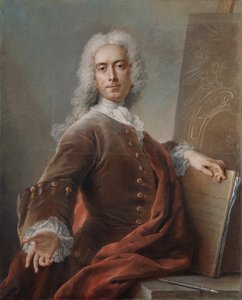
antoine coypel ii
1661 - 1722
基本情報
- Artistic Movement Or Style: Baroque
- Artists Who Influenced This Artist:
- Nicolas Frémiet
- Charles Le Brun
- Date Of Birth: 1661
- Date Of Death: 1722
- Full Name: Antoine Coypel II
- Nationality: French
- Notable Artworks:
- The Swooning of Esther
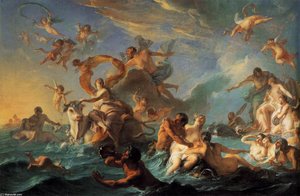
- Europa
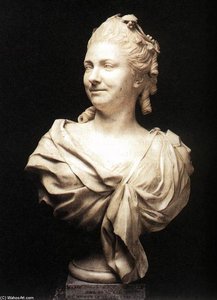
- Head of a Woman
- Place Of Birth: Paris, France
関連記事
Simon Vouet: A Baroque Master's Journey from Italian Influence to French Classicism
Explore the life & art of Simon Vouet, a pivotal French Baroque painter who introduced Italian styles to France. Discover his masterpieces and lasting influence on 17th-century art.

バロックのドラマ:現代のインテリアに壮麗さと情感を取り込む
バロック様式の歴史、絵画、家具の魅力をご紹介。ArtsDotでは、高品質な油絵複製やカスタムポートレートをご提供し、現代のインテリアに壮麗さと情感を取り入れます。アートコンサルテーションも承ります。
Charles Le Brun: Master of French Baroque Classicism & His Enduring Legacy
Explore the life & art of Charles Le Brun, master of French Baroque Classicism. Discover his royal commissions, influence on Versailles, and enduring legacy through detailed analysis & stunning artworks.

The Dramatic Flourish: Exploring the Baroque Movement's Enduring Legacy in Art History
Explore the dramatic world of Baroque art! Discover iconic artists like Caravaggio & Rubens, defining techniques, and its lasting impact on art history. Expert insights for collectors & enthusiasts at ArtsDot.

バロック美術を極めた至宝:時代を彩る10大名作の世界
バロック美術の華!カラヴァッジョ、ベルニーニら巨匠が創り上げた10大名作を徹底解剖。ドラマチックな色彩と豪華絢爛の世界観に触れ、至宝のアートプリントで空間を彩ろう。ArtsDot.comで美術館品質の複製と洗練されたインテリアを見つけましょう!

