 プレビュー
プレビュー
 プリントを購入
 シェアする
シェアする シェアする
シェアする
 詳細を見る
詳細を見る

 ダウンロード
 似ている作品
 X線調査
X線調査 スライドショー
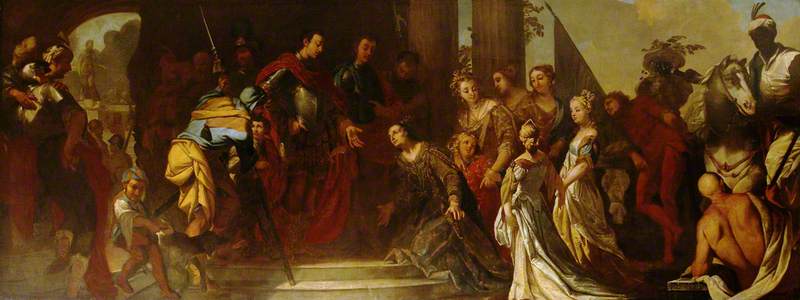
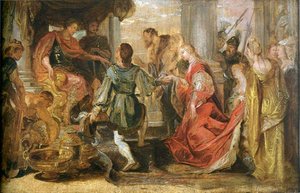
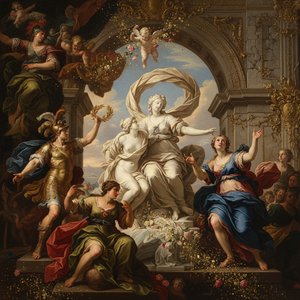
The Family of Darius before Alexander the Great
 Oil On Canvas
- WallArt
- Baroque
 213.0 x 564.0 cm
 アシュモリアン美術館
 詳細を見る
詳細を見る




P118B $10

P118H $10

P118W $10

P438Z $10

P508JH $12

P508YH $12

P805H $10

P805Z $10

P919BZ $10

P919G $10

P919XJ $10

P959ZH $10

P968JZ $12

W106C $8

W218G $10

W218JH $8

W218Y $10

W307PJ $10

W316G $10

W316PJ $8

W316Y $10

W398PJ $8

W4111J $10

W500HY $15

W500JH $15

W692G $12

W849H $8

W940BG $15

W953PJ $8




作品のオリジナル比率に合わせた、当店の規定サイズからお選びください。

特定のフレームやスペースに合わせて、ご希望のサイズをご入力いただけます。選択されたサイズが元の画像の比率と異なる場合、アートワークをトリミングするか、手描きで要素を追加して絵画を拡張いたします。デジタルモックアップ を制作し、制作開始前にご確認(承認)をいただきます。
画面上のプレビューは、実際のトリミングや拡張を正確に反映しているものではありません。最終的な構図は、モックアップによってのみ正確にご確認いただけます。
カスタムサイズもご利用いただけますが、元の比率を維持するためには、あらかじめ用意されたリストからサイズを選択することをお勧めいたします。
ご注文後、ArtsDot.com チームより詳細な指示をお送りするとともに、仕上がりイメージ(モックアップ)をご提供いたします。


 ガラスオプションは、110cm未満のサイズでのみご利用いただけます。

The Family of Darius before Alexander the Great
複製技法
複製画のサイズ
-


合計金額
$ 263
作品解説
The Family of Darius Before Alexander the Great: A Baroque Triumph of Narrative and Symbol
Paolo Veronese’s “The Family of Darius Before Alexander,” housed in the Ashmolean Museum, Oxford, stands as a monumental achievement of Venetian Baroque painting—a visual drama steeped in classical allusion and imbued with profound psychological insight. Completed around 1565-1570 for Francesco Pisani’s palazzo in Venice, this colossal canvas transcends mere depiction; it aspires to convey an epic tale of diplomacy, humiliation, and ultimately, magnanimity.
- Subject Matter: The painting portrays Alexander the Great confronting Darius III, the last king of Persia, following their decisive victory at Issus. It’s not simply a historical record but a carefully crafted narrative exploring themes of power, vulnerability, and reconciliation—a cornerstone of Veronese's artistic vision.
- Style: Veronese embodies the Venetian Grand Manner style, prioritizing theatrical grandeur and meticulous detail over purely decorative considerations. The composition is deliberately complex, employing a stage-like arrangement to heighten dramatic impact and immersing viewers in an opulent setting reminiscent of ancient Greece.
- Technique: Executed with oil on canvas, Veronese’s masterful brushwork demonstrates unparalleled control over texture and color. Layers upon layers of pigment create a luminous surface that captures the brilliance of gold leaf—a hallmark of Venetian aristocratic patronage—and imbues the figures with palpable warmth and vitality.
- Historical Context: The painting reflects the intellectual fervor of its time, fueled by humanist scholarship and revived interest in classical antiquity. Veronese skillfully integrates references to Greek mythology and iconography, subtly reinforcing the narrative’s moral dimension.
- Symbolism: Beyond its historical accuracy, “The Family of Darius Before Alexander” is laden with symbolic significance. The kneeling Sisygambis—Darius's mother—represents humility and supplication before divine judgment, while Alexander’s gesture embodies regal composure and forgiveness—a deliberate contrast to the perceived barbarity of Persian rule.
The painting’s visual impact is undeniable. Veronese’s masterful use of perspective creates a shallow depth of field that draws attention to the central group of figures, emphasizing their expressions and gestures. Dramatic lighting casts highlights on key characters—particularly Alexander—enhancing their prominence and conveying an aura of authority. The vibrant color palette—dominated by golds and ochres—contrasts sharply with darker hues, amplifying the theatrical atmosphere.
More than just a beautiful image, “The Family of Darius Before Alexander” is a testament to Veronese’s artistic genius—a captivating portrayal of human psychology interwoven with historical grandeur. Its enduring appeal lies in its ability to inspire contemplation on themes of leadership, compassion, and the complexities of intercultural relations.
関連作品





アーティストの略歴
The Grandeur of the Venetian Spirit
Antonio Bellucci stands as a luminous figure within the Venetian artistic tradition, a master whose brush captured the transition from the dramatic intensity of the Baroque to the airy elegance of the Rococo. Born in 1654 in Pieve di Soligo, Italy, Bellucci’s early training under Domenico Difnico in Sebénico provided him with a rigorous foundation in classical principles. However, it was his arrival in Venice that truly ignited his creative spirit. By 1675, he was already making significant contributions to the city's sacred spaces, most notably through his monumental frescoes for San Pietro di Castello. In these works, depicting Saint Lorenzo Giustiniani’s fervent prayers during the plague of 1447, Bellucci demonstrated an extraordinary ability to weave together religious devotion and human emotion, creating a sense of divine drama that resonated deeply with the Venetian public.
His talent was not confined to the spiritual realm; Bellucci possessed a versatile mastery over various genres, from the intimate tenderness of nativity scenes for the church of Ascension to the sweeping narratives of classical mythology. A defining characteristic of his development was his collaborative spirit. He worked in close harmony with the landscape painter Antonio Tempesta, where Bellucci’s skill in rendering human figures breathed life and narrative complexity into Tempesta's expansive vistas. This synergy between figure and landscape became a hallmark of his maturing style, blending movement and grace with structural depth.
A Courtly Ascent and European Legacy
As his reputation grew, Bellucci’s ambitions carried him far beyond the borders of the Venetian Republic, leading him to the heart of European power. His periods in Vienna during the late seventeenth and early eighteenth centuries marked a pinnacle in his career, as he secured the prestigious patronage of the Habsburg court. Under the gaze of Emperor Charles VI, Bellucci undertook monumental projects that showcased his technical prowess on an imperial scale. The four altarpieces he created for Klosterneuburg serve as enduring testaments to his ability to command large-scale religious compositions with both majesty and clarity.
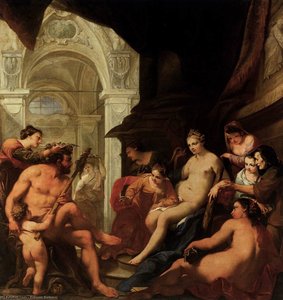
The zenith of his architectural painting is perhaps best exemplified by the breathtaking ceiling frescoes at Palais Liechtenstein. In depicting the Triumph of Hercules, Bellucci utilized the grand manner to create an immersive experience, where mythological heroism meets the sophisticated aesthetics of the burgeoning Rococo era. This ability to synthesize classical grandeur with a lighter, more decorative touch allowed him to navigate the changing tastes of the European aristocracy with ease.
Beyond his individual achievements, Bellucci’s historical significance is cemented by his role as a mentor and an influential force in the lineage of Italian art. Through his instruction of talented students such as Antonio Balestra and potentially Jacopo Amigoni, he ensured that the sophisticated techniques of the Venetian school would endure and evolve. His legacy remains etched in the ceilings of palaces and the altars of cathedrals, representing a period of unparalleled artistic splendor where light, movement, and myth converged to celebrate the human and the divine.
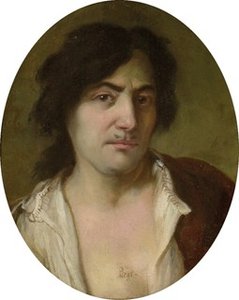
Antonio Bellucci
1654 - 1726 , Italy
基本情報
- Artistic Movement Or Style: Rococo
- Artists Or Movements Influenced By This Artist: ['Venetian Art']
- Artists Who Influenced This Artist: ['Domenico Difnico']
- Date Of Birth: 1654
- Date Of Death: 1726
- Full Name: Antonio Bellucci
- Nationality: Italian
- Notable Artworks:
- St Lorenzo Giustiniani Praying
- Nativity
- Hercules Triumph
- Place Of Birth: Pieve di Soligo, Italy
関連記事

バロックのドラマ:現代のインテリアに壮麗さと情感を取り込む
バロック様式の歴史、絵画、家具の魅力をご紹介。ArtsDotでは、高品質な油絵複製やカスタムポートレートをご提供し、現代のインテリアに壮麗さと情感を取り入れます。アートコンサルテーションも承ります。

The Dramatic Flourish: Exploring the Baroque Movement's Enduring Legacy in Art History
Explore the dramatic world of Baroque art! Discover iconic artists like Caravaggio & Rubens, defining techniques, and its lasting impact on art history. Expert insights for collectors & enthusiasts at ArtsDot.

バロック美術を極めた至宝:時代を彩る10大名作の世界
バロック美術の華!カラヴァッジョ、ベルニーニら巨匠が創り上げた10大名作を徹底解剖。ドラマチックな色彩と豪華絢爛の世界観に触れ、至宝のアートプリントで空間を彩ろう。ArtsDot.comで美術館品質の複製と洗練されたインテリアを見つけましょう!

The Visceral Stage: Exploring Dramatic Narratives & Emotional Intensity in Baroque Art
Explore the dramatic world of Baroque art! Discover iconic masters like Caravaggio & Rembrandt, their techniques, and the movement's lasting impact. Expert insights for collectors & enthusiasts at ArtsDot.
Theatricality & Triumph: Baroque Drama in Painting & Sculpture
Explore the dramatic world of Baroque art! Discover its history, defining characteristics, & lasting influence on painting & sculpture. Expert insights into Caravaggio, Zurbarán, and Bernini – plus high-quality reproductions at ArtsDot.