

 プレビュー
プレビュー
 プリントを購入
 シェアする
シェアする シェアする
シェアする
 詳細を見る
詳細を見る

 ダウンロード
 似ている作品
 X線調査
X線調査 スライドショー
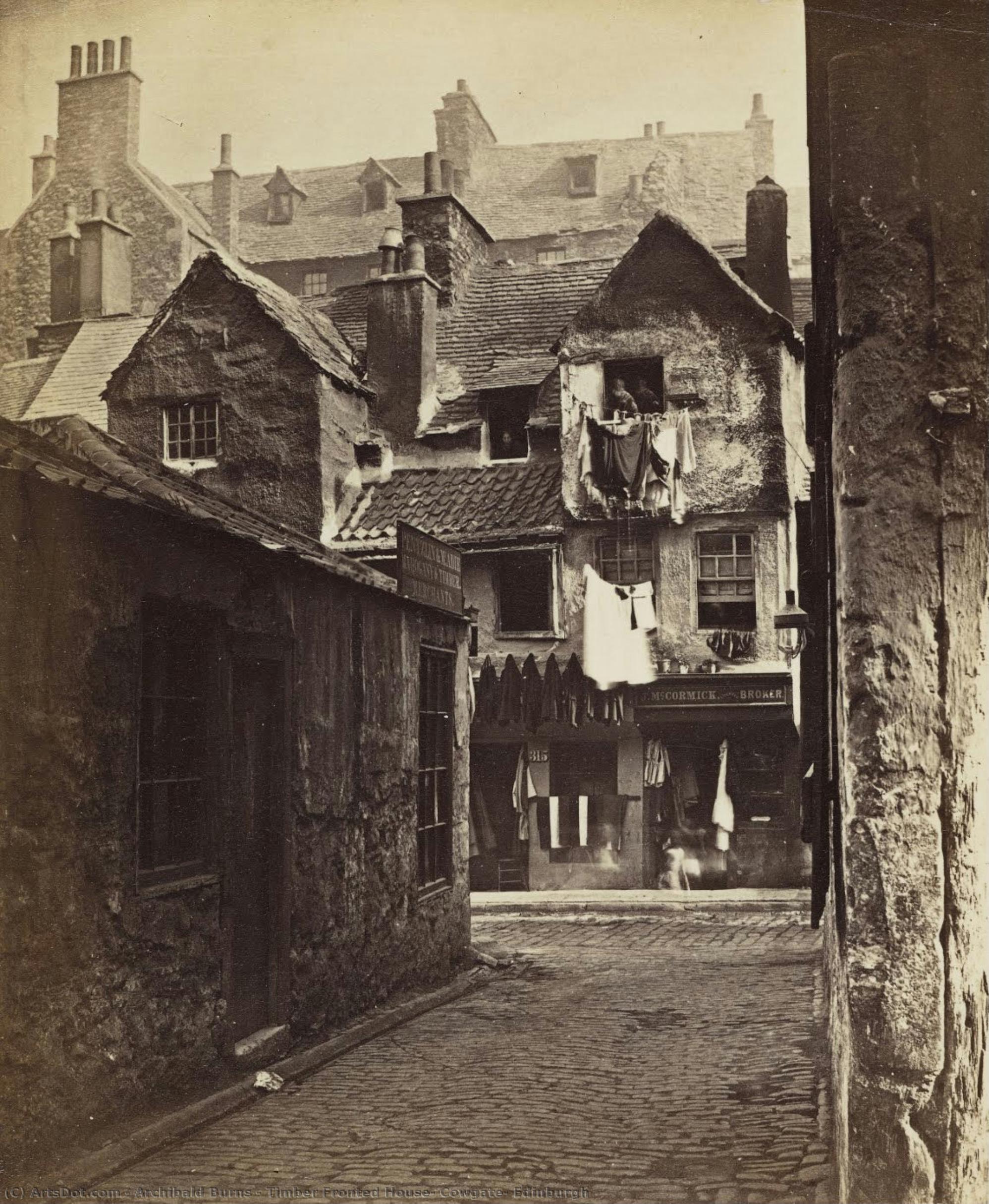
Timber Fronted House, Cowgate, Edinburgh


 詳細を見る
詳細を見る




































作品のオリジナル比率に合わせた、当店の規定サイズからお選びください。

特定のフレームやスペースに合わせて、ご希望のサイズをご入力いただけます。選択されたサイズが元の画像の比率と異なる場合、アートワークをトリミングするか、手描きで要素を追加して絵画を拡張いたします。デジタルモックアップ を制作し、制作開始前にご確認(承認)をいただきます。
画面上のプレビューは、実際のトリミングや拡張を正確に反映しているものではありません。最終的な構図は、モックアップによってのみ正確にご確認いただけます。
カスタムサイズもご利用いただけますが、元の比率を維持するためには、あらかじめ用意されたリストからサイズを選択することをお勧めいたします。
ご注文後、ArtsDot.com チームより詳細な指示をお送りするとともに、仕上がりイメージ(モックアップ)をご提供いたします。


 ガラスオプションは、110cm未満のサイズでのみご利用いただけます。

Timber Fronted House, Cowgate, Edinburgh
複製技法
複製画のサイズ
-


合計金額
$ 263
関連作品








アーティストの略歴
Archibald Burns: Preserving Edinburgh’s Soul Through Light and Shadow
Archibald Burns, a name perhaps less familiar than some of his contemporaries, stands as a quietly significant figure in the history of Scottish photography. Born in Edinburgh in 1831, he wasn't a flamboyant innovator or a revolutionary stylist; instead, he possessed a meticulous eye and an unwavering dedication to documenting the evolving cityscape of his beloved city. His work, primarily focused on architectural details and landscapes, offers a remarkably intimate glimpse into Victorian Edinburgh – a time of rapid transformation, shadowed by the demolition of historic buildings for the sake of progress.
Burns’ early life reveals a man deeply rooted in the artistic traditions of Scotland. He joined the Photographic Society of Scotland in 1858 and later became one of the founding members of the Edinburgh Photographic Society in 1861, signaling his commitment to this nascent art form. Initially, he pursued landscape photography, capturing the rolling hills and dramatic skies surrounding Edinburgh. However, it was his fascination with the city itself that truly defined his career. He established his first studio at 22 Calton Stairs in 1861, a location that would become synonymous with his work for nearly a decade before he moved to Rock House in 1871.
Burns’ photographic practice coincided with a period of intense urban development in Edinburgh. The city was undergoing significant changes – the demolition of historic closes (narrow alleyways) and wynds (street passages) to make way for wider streets and grander buildings. This destruction, while intended to modernize the city, threatened to erase its unique character. Recognizing this impending loss, Burns dedicated himself to meticulously recording these vanishing spaces before they disappeared forever. His most celebrated work from this period is undoubtedly his series of photographs documenting the Cowgate area – a collection that now resides within the Scottish National Portrait Gallery and serves as a poignant reminder of what was lost.
A Master of Salted Paper: Technique and Style
Burns’ photographic style wasn't characterized by dramatic effects or elaborate compositions. Instead, he favored a restrained, almost documentary approach. He primarily utilized the salted paper process, a technique that produced images with a subtle tonal range and a characteristic slightly muted quality. This method, popular at the time, emphasized detail and texture, allowing the inherent character of the buildings and landscapes to shine through. His compositions were often carefully framed, focusing on architectural details – ornate doorways, weathered stonework, and intricate window frames – revealing the beauty in the commonplace.
Crucially, Burns’ work wasn't simply a record of physical structures; it was an attempt to capture the *spirit* of Edinburgh. His photographs convey a sense of melancholy and nostalgia, reflecting the awareness that these historic spaces were being sacrificed for progress. The shadows cast by the buildings, the textures of the stone, and the subtle variations in light all contribute to this evocative atmosphere.
Publications and Legacy: Documenting a City’s Transformation
Beyond his individual prints, Burns played a vital role in documenting Edinburgh through published works. In 1868, he collaborated with Thomas Henderson on “Picturesque Bits from Old Edinburgh,” a book that showcased a selection of his photographs alongside descriptive text. This publication helped to raise awareness about the city’s architectural heritage and cemented Burns' reputation as a skilled documentarian.
Following his death in 1880, his studio contents were sold at auction – a testament to the breadth of his collection and the value he placed on his photographic equipment. The sale offered a fascinating glimpse into the tools of his trade: cameras, lenses, chemicals, and countless prints. His work has since been exhibited widely, including a notable showcase at the Inverness Museum and Art Gallery, further solidifying his place in Scottish art history.
Beyond the Image: A Window into Victorian Edinburgh
Archibald Burns’ legacy extends far beyond the individual photographs he produced. He served as a crucial visual witness to a pivotal moment in Edinburgh's history – a period of rapid transformation that irrevocably altered the city’s landscape. His meticulous documentation provides invaluable insights into the architectural and social fabric of Victorian Scotland, offering a poignant reminder of what was lost and a powerful testament to the importance of preserving our cultural heritage. His photographs are not merely images; they are windows into a bygone era, inviting us to contemplate the relationship between progress and preservation.
Further Resources

Archibald Burns
1831 - 1880 , United Kingdom
基本情報
- Artistic Movement Or Style: Landscape/Architectural
- Artists Or Movements Influenced By This Artist: ['Victorian Photography']
- Artists Who Influenced This Artist: ['Hill & Adamson']
- Date Of Birth: 1831 Edinburgh UK
- Date Of Death: 1880
- Full Name: Archibald Burns
- Nationality: Scottish
- Notable Artworks:
- Timber Fronted House, Cowgate
- Princes St Edinburgh
- Place Of Birth: Edinburgh UK