

 プレビュー
プレビュー
 プリントを購入
 シェアする
シェアする シェアする
シェアする
 詳細を見る
詳細を見る

 ダウンロード
 似ている作品
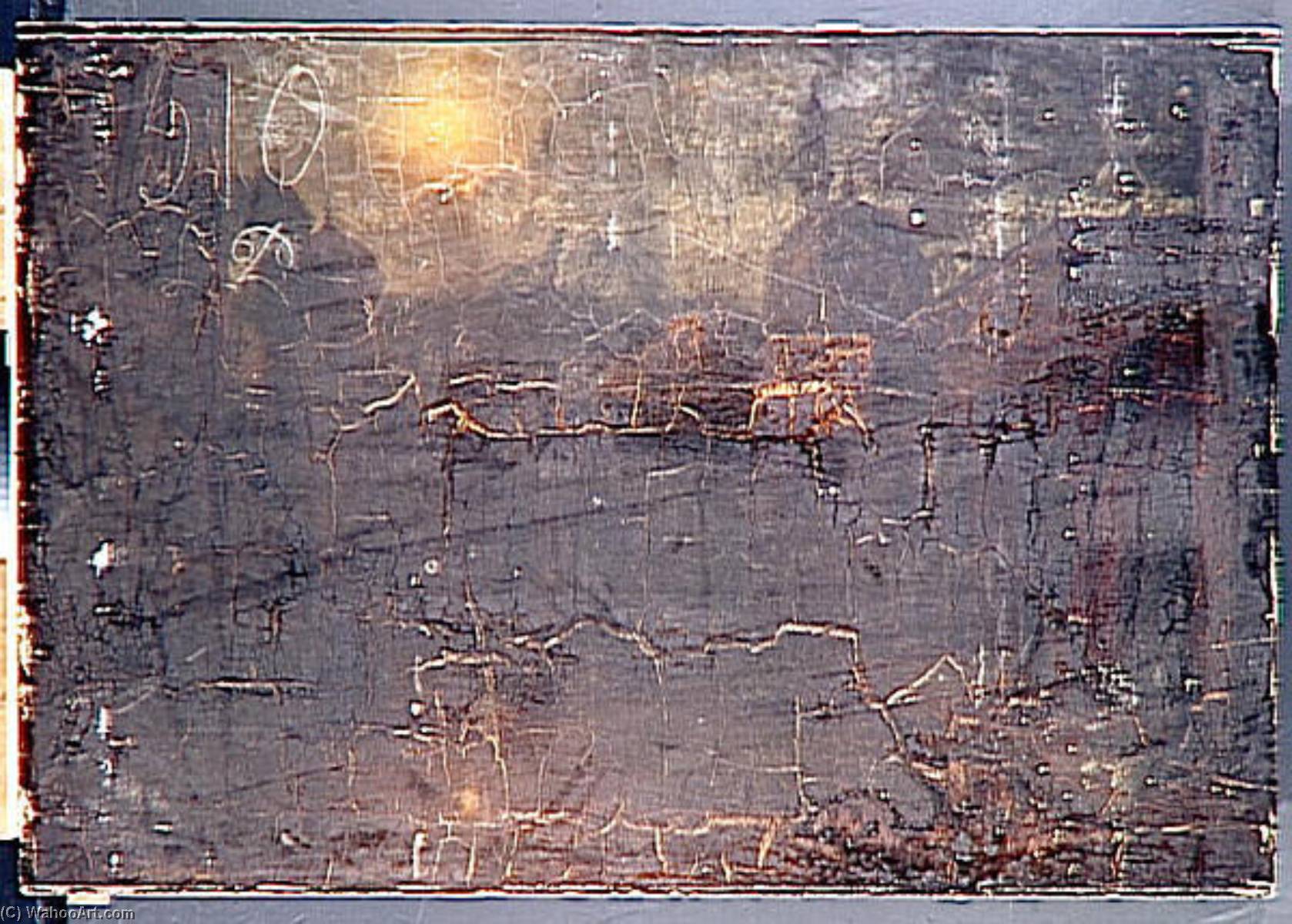
 X線調査
X線調査 スライドショー
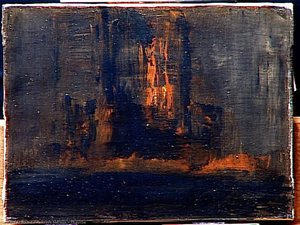
VUE DE CAZZAFANI, DANS L'ILE DE CHYPRE


 詳細を見る
詳細を見る




P118B $10

P118H $10

P118W $10

P438Z $10

P508JH $12

P508YH $12

P805H $10

P805Z $10

P919BZ $10

P919G $10

P919XJ $10

P959ZH $10

P968JZ $12

W106C $8

W218G $10

W218JH $8

W218Y $10

W307PJ $10

W316G $10

W316PJ $8

W316Y $10

W398PJ $8

W4111J $10

W500HY $15

W500JH $15

W692G $12

W849H $8

W940BG $15

W953PJ $8




作品のオリジナル比率に合わせた、当店の規定サイズからお選びください。

特定のフレームやスペースに合わせて、ご希望のサイズをご入力いただけます。選択されたサイズが元の画像の比率と異なる場合、アートワークをトリミングするか、手描きで要素を追加して絵画を拡張いたします。デジタルモックアップ を制作し、制作開始前にご確認(承認)をいただきます。
画面上のプレビューは、実際のトリミングや拡張を正確に反映しているものではありません。最終的な構図は、モックアップによってのみ正確にご確認いただけます。
カスタムサイズもご利用いただけますが、元の比率を維持するためには、あらかじめ用意されたリストからサイズを選択することをお勧めいたします。
ご注文後、ArtsDot.com チームより詳細な指示をお送りするとともに、仕上がりイメージ(モックアップ)をご提供いたします。


 ガラスオプションは、110cm未満のサイズでのみご利用いただけます。

VUE DE CAZZAFANI, DANS L'ILE DE CHYPRE
複製技法
複製画のサイズ
-


合計金額
$ 263
作品解説
A Haunting Echo: Auguste de Forbin’s ‘Vue de Cazzafani’
Auguste de Forbin’s “Vue de Cazzafani, dans l'île de Chypre” isn’t merely a depiction of a landscape; it’s an experience. A visceral encounter with the relentless passage of time, rendered in a masterful blend of realism and evocative abstraction. The painting, a fragmented testament to a bygone era, immediately draws the viewer into its melancholic embrace – a ghostly reminder of beauty lost and the enduring power of decay. It's a work that whispers stories of conflict, artistic ambition, and the inevitable erosion of all things.
The Artist and His Time: Forbin’s Complex Legacy
Auguste de Forbin (1777 – 1841) was a figure caught between the idealism of the Romantic era and the pragmatic realities of Napoleonic France. Born into a noble family in Provence, his early life was shaped by both artistic training and personal tragedy—the assassination of his father during the tumultuous events of the French Revolution profoundly impacted him. His career as a painter and antiquarian intertwined with military service, diplomatic missions, and ultimately, a deep engagement with the art world of Paris. Forbin’s journey reflects the broader shifts occurring in European society – a transition from revolutionary fervor to the restoration of the monarchy, marked by both artistic innovation and political instability.
His association with Princess Pauline Borghese, a passionate affair that spanned several years, further cemented his place within the circles of power and influence. This connection not only shaped his personal life but also informed his artistic sensibilities, imbuing his work with a sense of both grandeur and vulnerability. The painting’s subject matter – a ruined landscape – can be interpreted as a reflection of this complex interplay between personal experience and historical context.
Deconstructing Decay: Technique and Symbolism
“Vue de Cazzafani” is executed in oil on canvas, utilizing a layered technique that emphasizes the texture of decay. The surface is a chaotic tapestry of cracks, fissures, and discoloration—a deliberate representation of time’s relentless assault. The artist doesn't shy away from revealing the underpainting; instead, he embraces it as an integral part of the narrative. Hints of figures – perhaps a ship or a crumbling fortress – emerge from the damage, suggesting memories struggling to surface amidst the ruins. The muted palette—dominated by dark browns, grays, and subtle hints of yellow and orange—contributes to the painting’s somber mood.
The choice of subject matter itself is laden with symbolism. A ruined landscape speaks to loss, impermanence, and the futility of human ambition. It's a meditation on the cyclical nature of history – destruction followed by potential rebirth—a theme particularly resonant in the context of 19th-century Europe grappling with the aftermath of revolution and war.
A Fragment of Remembrance: The Painting Today
“Vue de Cazzafani, dans l'île de Chypre” is more than just a historical artifact; it’s a powerful emotional experience. Its damaged state invites contemplation on the fragility of beauty and the enduring power of memory. The painting’s evocative quality makes it particularly compelling for interior designers seeking to create spaces that evoke a sense of history, mystery, and quiet reflection. Reproductions offer an accessible way to bring this haunting masterpiece into your home, allowing you to experience its melancholic beauty firsthand.
関連作品
アーティストの略歴
A Life Forged in the Crucible of Revolution
The life of Auguste de Forbin (1777–1841) was a dramatic tapestry woven from the threads of nobility, tragedy, and profound political transformation. Born into the aristocratic splendor of Château La Roque-d’Anthéron in Provence, Forbin’s early years were marked by an extraordinary precocity; it is said he possessed the ability to draw before he had even mastered the art of writing. This innate talent was nurtured through a lifelong bond with his contemporary, François Marius Granet, a friendship that would serve as a cornerstone for their shared artistic evolution. However, the tranquility of his noble upbringing was shattered by the violent tremors of the French Revolution. During the Lyon insurrection of 1793, Forbin suffered the devastating loss of both his father, the Marquis de Pont-à-Mousson, and his uncle. This early encounter with mortality and political upheaval left an indelible mark on his psyche, instilling a sensitivity to the ephemeral nature of power and the inevitable decay of even the most grand structures.
Despite the shadows cast by personal loss, Forbin’s ascent within the Parisian art world was nothing short of meteoric. The Directory provided him with the ultimate gateway to prestige: entry into the legendary studio of Jacques-Louis David. Within this neoclassical sanctuary, Forbin absorbed the rigorous discipline and formal precision that defined the era's dominant aesthetic. Collaborating closely with Granet, he refined a technique that balanced the structured ideals of Neoclassicism with an emerging, soulful Romanticism. His journey was not merely one of academic study but a physical pilgrimage through the heart of classical civilization, most notably during his transformative travels to Rome in 1804. In the vibrant, intellectual atmosphere of Roman society, Forbin immersed himself in the grandeur of antiquity, a period that would forever inform the spiritual and historical weight of his later compositions.
The Romantic Vision: Landscapes of Memory and Decay
As his style matured, Forbin’s work began to transcend mere topographical representation, moving toward a deeply emotive exploration of the sublime. His canvases became windows into a world where history and nature converged in moments of poignant melancholy. In masterpieces such as “Vue de Cazzafani, dans l'île de Chypre,” Forbin utilized a masterful blend of realism and evocative abstraction to capture the relentless passage of time. These landscapes were rarely just scenery; they were visceral encounters with the ghosts of bygone eras, where crumbling ruins served as metaphors for the fragility of human ambition. His ability to render the texture of decay—the way light falls upon weathered stone or how shadows cling to ancient walls—allowed him to communicate a sense of loss that resonated deeply with the Romantic movement's fascination with the ephemeral.
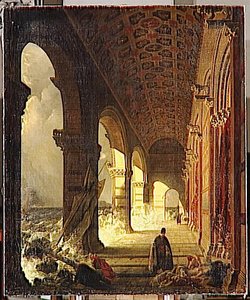
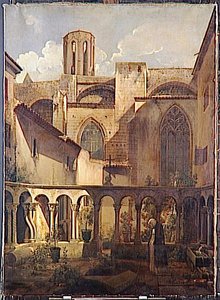
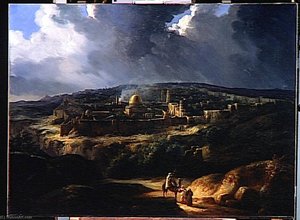
This preoccupation with historical narrative and spiritual grandeur is perhaps most evident in his depictions of the Levant and the Holy Land. In works like “Vue de Jérusalem, prise de la vallée de Josaphat,” painted in 1825, Forbin constructed meticulously crafted tableaus that sought to capture the sacred weight of the ancient city. Through a sophisticated use of light and composition, he invited viewers to contemplate the intersection of the divine and the earthly. Whether painting the sun-drenched ruins of Ascalon or the quiet cloisters of Aix-en-Provence, Forbin’s brushwork remained deeply informed by his early training under David, yet it was infused with a new, restless energy that sought to find beauty in the wreckage of history.
Legacy of a Curator and Antiquary
Beyond the canvas, Auguste de Forbin occupied a position of immense cultural significance within the French state. His expertise as an antiquary and his profound understanding of classical aesthetics led him to succeed the great Vivant Denon as the curator of the Musée du Louvre and other vital French museums. In this capacity, he was not merely a keeper of objects but a guardian of national heritage, navigating the complex responsibilities of managing one of the world's most significant collections during a period of intense political transition. His career, which intertwined military service, diplomatic missions, and museum administration, reflects the multifaceted nature of an intellectual caught between the pragmatic demands of the Napoleonic era and the idealistic pursuits of the Romantic age.
The historical significance of Forbin lies in his ability to bridge disparate worlds:
- Stylistic Synthesis: He successfully merged the disciplined, linear precision of Davidian Neoclassicism with the emotive, atmospheric depth of Romanticism.
- Cultural Stewardship: As a curator, he played a pivotal role in shaping the public's engagement with classical and historical art within the Louvre.
- Thematic Depth: His oeuvre remains a profound meditation on the themes of memory, the passage of time, and the enduring power of ruins.
Auguste de Forbin
1777 - 1841
基本情報
- Artistic Movement Or Style: Romanticism
- Artists Or Movements Influenced By This Artist: ['Neoclassicism']
- Artists Who Influenced This Artist: ['François Marius Granet']
- Date Of Birth: 1777
- Date Of Death: 1841
- Full Name: Auguste de Forbin
- Nationality: French
- Notable Artworks:
- Vue de Jérusalem, prise de la vallée de Josaphat
- Vue de Cazzafani, dans l’île de Chypre
- Vue d’un cloître sur les bords de la Méditerranée, près de Carrère
- Place Of Birth: Laroched'antheron, France
関連記事
ルノワール傑作25選:光と色彩が織りなす印象派の華麗なる世界 | ArtsDot
ルノワールの傑作25選🎨 印象派の光と色彩が輝く世界へ。絵画の背景、技法、そして時代を超えて愛される理由を紐解きます。ArtsDotで高品質な複製画やインテリアアートを見つけ、お部屋に芸術的な彩りを✨ Explore the full collection online!

ゴヤ傑作25選:スペインの魂を揺さぶる、深遠な芸術の世界 | ArtsDot
ゴヤ傑作25選:ロマン主義を代表するスペインの巨匠、フランシスコ・デ・ゴヤの世界へ。黒衣の女からマハまで、魂を揺さぶる絵画の物語と技法を紐解きます。ArtsDotで高品質なアートレプリカを見つけ、インテリアに深みと風格を。今すぐコレクションをご覧ください。
抽象表現主義を定義する十大傑作:芸術と装飾の深遠な旅
抽象表現主義を定義する10の傑作。ポロック、ロスコら巨匠たちの情熱と色彩の世界へ。各作品に込められた物語と技法を紐解き、至高のアート体験を。ArtsDot.comで、ミュージアムクオリティの複製画や洗練されたインテリアアイデアを発見してください。
Kandinsky's Masterpieces: 25 Paintings That Define Abstract Art | ArtsDot
Journey through Wassily Kandinsky's 25 most iconic abstract paintings. Explore his revolutionary use of color, form & spiritual expressionism. Find museum-quality Kandinsky reproductions and elevate your home decor with ArtsDot.com. Discover all masterpieces on ArtsDot.com!

幾何学的抽象絵画を定義した傑作10選|アート、アーティスト、インテリア装飾
モンドリアン、マレーヴィチ…幾何学的抽象絵画を代表する傑作10選。各作品の背景や色彩構成、アーティストの情熱に迫ります。美術館品質の複製画はArtsDot.comで。オンラインでアートコレクションをご覧ください。

