

 プレビュー
プレビュー
 シェアする
シェアする シェアする
シェアする
 詳細を見る
詳細を見る

 ダウンロード
 似ている作品
 X線調査
X線調査 スライドショー
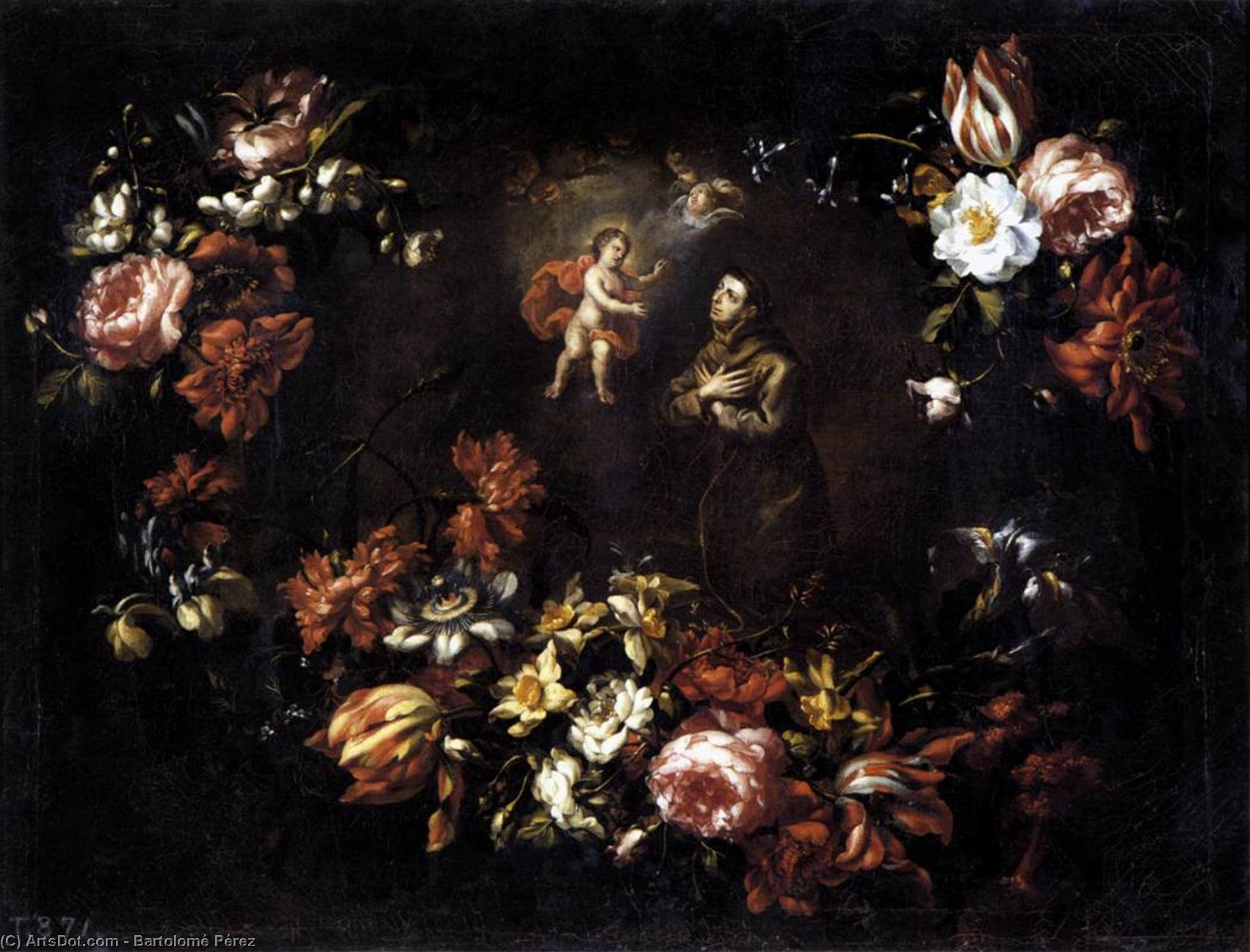
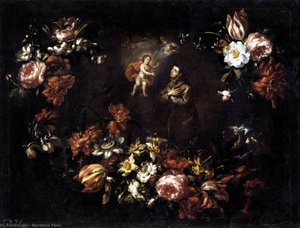
Garland of Flowers with St Anthony of Padua


 詳細を見る
詳細を見る
ジークレー/アートプリント
迅速な制作と多彩な仕上げオプションを備えた、ミュージアムクオリティのジークレーまたはキャンバスプリント。 ( 手描きの絵画を購入 画像を購入)




































作品のオリジナル比率に合わせた、当店の規定サイズからお選びください。

特定のフレームやスペースに合わせて、ご自身でサイズを指定することも可能です。選択されたサイズが元の画像の比率と一致しない場合、作品をトリミングするか、鏡面反射または単色での塗りつぶしによって画像を拡張いたします。制作を開始する前に、ご確認用のデジタルモックアップをお送りいたします。
画面上のプレビューには、実際のトリミングや拡張は反映されませんのでご注意ください。最終的な構図を正確に確認できるのは、モックアップのみとなります。
カスタムサイズも承っておりますが、元の比率を維持するためには、あらかじめ用意されたリストからサイズを選択することをお勧めいたします。


 ガラスオプションは、110cm未満のサイズでのみご利用いただけます。

Garland of Flowers with St Anthony of Padua
ジークレー/アートプリント
複製画のサイズ
-


合計金額
$ 62
関連作品







アーティストの略歴
The Luminous Legacy of Bartolomé Pérez de la Dehesa
In the golden twilight of the Spanish Baroque, few artists captured the ephemeral beauty of the natural world with as much grace and precision as Bartolomé Pérez de la Dehesa. Born in Madrid around 1634, Pérez emerged from a lineage of visual storytellers, the son of a painter who provided his earliest lessons in the language of light and shadow. However, it was his profound connection to the master Juan de Arellano that would truly define his destiny. Not only did Pérez become Arellano’s pupil, but he also entered the master's family as his son-in-law, inheriting a sophisticated aesthetic centered on the delicate textures of flora and the quiet drama of the bodegón.
His training within the vibrant intellectual atmosphere of Madrid during the reign of Philip IV allowed him to refine a technique that was both scientifically observant and deeply poetic. Pérez possessed an uncanny ability to manipulate chiaroscuro, using the dramatic interplay of light and darkness to breathe life into inanimate objects. Under his brush, a simple petal or a drop of dew became a subject of intense meditation. His work moved beyond mere decoration; it was an exploration of the tactile reality of the world, where the soft velvet of a rose petal contrasted against the cold, hard surface of a sculpted vase, all illuminated by the flickering, intimate glow of candlelight.
Mastery of the Bodegón and Royal Recognition
The heart of Pérez’s oeuvre lies in his mastery of the bodegón, a uniquely Spanish genre that finds profound meaning in the commonplace. While other artists of his era sought glory in grand historical or religious narratives, Pérez found transcendence in the arrangement of fruit, vegetables, and blossoms. His compositions often functioned as subtle memento mori, reminding the viewer of the fleeting nature of life through the depiction of wilting blooms and ripe, heavy fruits. This delicate balance between beauty and decay gave his work a soulful, humanist depth that resonated with the sensibilities of the 17th century.
His technical prowess eventually earned him prestigious recognition within the Spanish court. In January 1689, he was named a painter to the King, a title held without salary but one that signaled his immense standing in the artistic hierarchy. Beyond his celebrated still lifes, Pérez also contributed to the theatrical splendor of the era, designing scenography for performances at the Teatro del Buen Retiro. This versatility—moving from the intimate scale of a flower garland to the expansive stage of royal spectacle—demonstrates an artist capable of commanding both the microscopic detail of nature and the macroscopic grandeur of courtly life.
A Tragic End and Lasting Significance
The life of Bartolomé Pérez de la Dehesa came to a sudden and poignant conclusion, mirroring the very fragility he so often painted. He died in 1693 following a tragic fall from a scaffold while working on the ceiling of the palace of Monteleon. This accidental death, occurring amidst the pursuit of monumental art, serves as a haunting coda to a career dedicated to capturing the transient. He was laid to rest in the church of San Ildefonso, leaving behind a legacy etched in oil and light.
Today, the significance of Pérez’s work remains undiminished. His ability to elevate the humble subject matter of the bodegón into high art continues to inspire awe. His contributions can be seen through several key artistic pillars:
- Technical Innovation: The perfection of light-driven textures and the use of chiaroscuro to create three-dimensional realism in floral arrangements.
- Genre Development: The elevation of Spanish still life from simple domestic observation to a sophisticated medium for philosophical reflection.
- Cultural Impact: His role in defining the aesthetic of the Madrid Baroque, bridging the gap between private devotion and royal spectacle.
Through masterpieces such as Vase of Flowers and his intricate garlands, Pérez de la Dehesa remains a cornerstone of Spanish art history, reminding us that there is an infinite universe of beauty to be found in the smallest, most quiet corners of our existence.
bartolomé pérez
1618 - 1682 , Spain
基本情報
- Artistic Movement Or Style: Baroque
- Artists Or Movements Influenced By This Artist: ['Murillo']
- Artists Who Influenced This Artist: ['Juan de Arellano']
- Date Of Birth: Madrid, Spain (1634)
- Date Of Death: Madrid, Spain (1693)
- Full Name: Bartolomé Esteban Pérez de la Dehesa
- Nationality: Spanish
- Notable Artworks:
- Garland of Flowers with St Anthony of Padua
- Basket of Flowers
- Vase of Flowers
- Place Of Birth: Madrid

