

 プレビュー
プレビュー
 プリントを購入
 シェアする
シェアする シェアする
シェアする
 詳細を見る
詳細を見る

 ダウンロード
 似ている作品
 X線調査
X線調査 スライドショー
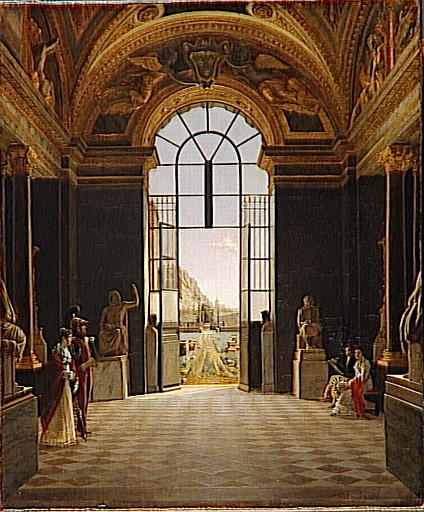
VUE DE LA SALLE DE LA PAIX, AU LOUVRE


 詳細を見る
詳細を見る




































作品のオリジナル比率に合わせた、当店の規定サイズからお選びください。

特定のフレームやスペースに合わせて、ご希望のサイズをご入力いただけます。選択されたサイズが元の画像の比率と異なる場合、アートワークをトリミングするか、手描きで要素を追加して絵画を拡張いたします。デジタルモックアップ を制作し、制作開始前にご確認(承認)をいただきます。
画面上のプレビューは、実際のトリミングや拡張を正確に反映しているものではありません。最終的な構図は、モックアップによってのみ正確にご確認いただけます。
カスタムサイズもご利用いただけますが、元の比率を維持するためには、あらかじめ用意されたリストからサイズを選択することをお勧めいたします。
ご注文後、ArtsDot.com チームより詳細な指示をお送りするとともに、仕上がりイメージ(モックアップ)をご提供いたします。


 ガラスオプションは、110cm未満のサイズでのみご利用いただけます。

VUE DE LA SALLE DE LA PAIX, AU LOUVRE
複製技法
複製画のサイズ
-


合計金額
$ 288
関連作品
アーティストの略歴
Étienne Bouhot: A Parisian Observer
Étienne Bouhot (1780-1862) was a French Romantic painter whose meticulous depictions of 19th-century Paris offer a remarkably intimate glimpse into the city’s evolving architecture and daily life. Born in Bard-lès-Époisses, he initially pursued a career as an art teacher before establishing himself as a respected artist known for his detailed urban landscapes and captivating scenes of Parisian courtyards and iconic landmarks. Bouhot's work stands apart not merely for its technical skill but also for the subtle sense of observation and quiet dignity it conveys – a reflection of the changing social fabric of a rapidly modernizing capital.Early Life and Artistic Training
Information about Bouhot’s early life is somewhat sparse, though he was born into a family with artistic connections. He received his initial training in perspective painting, a skill honed during his time as a student at the École de Dessin in Semur-en-Auxois. This foundational expertise proved crucial to his later success, allowing him to render buildings and spaces with an astonishing degree of accuracy and illusionistic depth. The influence of the theatre, where perspective was paramount for creating convincing stage sets, is clearly evident in Bouhot’s approach to urban composition – a deliberate framing of familiar Parisian vistas as if viewed through a theatrical proscenium.The Rise of a Parisian Observer
Bouhot's career truly took off during the Salon period, beginning around 1808. He quickly gained recognition for his series of paintings depicting various districts of Paris – from the grand boulevards and opulent squares to the quieter, more intimate alleyways and courtyards. Unlike many of his contemporaries who focused on heroic historical scenes or idealized landscapes, Bouhot chose to capture the reality of Parisian life as it unfolded. His subjects weren’t necessarily dramatic; instead, he meticulously documented the everyday – a street vendor's stall, a group of children playing in a fountain, the weathered facades of historic buildings. This focus on the ordinary, rendered with such precision and attention to detail, is what distinguishes Bouhot’s work and contributes to its enduring appeal.Key Works and Artistic Style
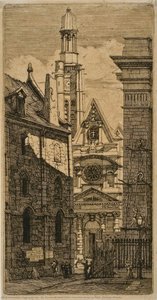
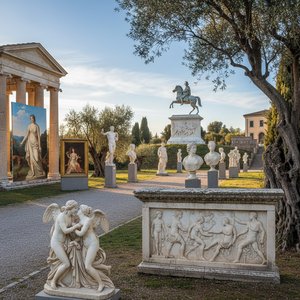
Several of Bouhot's paintings stand out as particularly noteworthy examples of his skill and vision. “Vue de la Salle de la Paix” at the Louvre, for instance, showcases his mastery of Neoclassical composition and light, capturing the grandeur and serenity of a Parisian museum hall with remarkable clarity. Similarly, his depiction of "L’église St Etienne du Mont à Paris" reveals an acute eye for architectural detail and a subtle understanding of how light interacts with surfaces. His “Le Jardin et le palais des Tuileries, vus du quai d'Orsay” offers a beautiful panorama of the Louvre and Tuileries gardens, demonstrating his ability to create atmospheric realism while maintaining a sense of classical elegance. Bouhot’s style is characterized by meticulous detail, a keen awareness of perspective, and an understated sensitivity to light and shadow. He often employed staffage figures – small, carefully placed human subjects – to add scale and context to his scenes, creating a sense of presence and inviting the viewer into the depicted world.Legacy and Historical Significance
Étienne Bouhot’s work offers a valuable window into 19th-century Paris—a city undergoing rapid transformation during a period of immense social and political change. His paintings document not just the physical appearance of the city but also its evolving character, reflecting the rise of industrialization, urbanization, and the growing importance of public spaces. His work has been recognized for its contribution to French genre painting, particularly in its focus on urban landscapes and its skillful use of perspective. As noted in a Nationalmuseum article, Bouhot’s technique recalls the almost porcelain-like surfaces of the Leiden fijnschilder tradition, highlighting his dedication to achieving an incredibly realistic and detailed representation of the world around him. His paintings are now housed in collections such as the Musée Carnavalet in Paris, ensuring that his unique perspective on Parisian life continues to be appreciated by generations to come.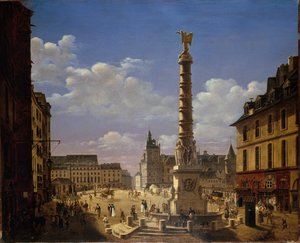
bouhot etienne
1780 - 1862
基本情報
- Artistic Movement Or Style: Romanticism, Neoclassicism
- Artists Who Influenced This Artist: ['None],\n "Artists or movements influenced by this artist": [None']
- Date Of Birth: 1780
- Date Of Death: 1862
- Full Name: Étienne Bouhot
- Nationality: French
- Notable Artworks:
- Vue de la Salle de la Paix
- L'église St Etienne du Mont
- Le Jardin des Tuileries
- Place Of Birth: Bard-lès-Époisses, France
関連記事
古典と現代の調和:大胆な抽象芸術がクラシックインテリアに与える影響
抽象表現主義がクラシックインテリアに与える影響を解説。色彩心理学や空間への効果、著名なアーティストの作品を紹介します。ArtsDot.comで理想のアートピースを見つけ、洗練された空間を実現しましょう。
18th Century Masters: 10 Artworks That Define an Era | ArtsDot
Journey through 18th century art! Explore 10 iconic paintings – from Rococo elegance to Neoclassical grandeur. Discover Fragonard, David & more. Find museum-quality reproductions and elevate your home decor on ArtsDot.com.
Intimate Interiors: Domestic Life & Artistic Representation from Renaissance to Impressionism
Explore the evolution of domestic life in Western art from the Renaissance to Impressionism. Discover symbolism, realism & artistic techniques shaping intimate interior scenes. Learn more with ArtsDot.
Harmonizing History & Hue: A Guide to Matching Art Styles with Interior Architecture for Balanced Décor
Elevate your interior design with our expert guide to harmonizing art styles & architecture. Discover timeless pieces, color palettes, & custom artwork solutions for balanced, luxury spaces. Expert advice included!
至高の芸術:新古典主義を象徴する10選 – 華麗なる巨匠と時代を彩る傑作の世界
新古典主義を代表する10選!ダビッド、アンジェリカーら巨匠の傑作を紐解き、時代を超えた美と知性を探求。油絵、版画など高精細なアートプリントで、お部屋を華やかに彩りませんか?ArtsDot.comで至高の芸術を体験してください。

