

 プレビュー
プレビュー
 プリントを購入
 シェアする
シェアする シェアする
シェアする
 詳細を見る
詳細を見る

 ダウンロード
 似ている作品
 X線調査
X線調査 スライドショー
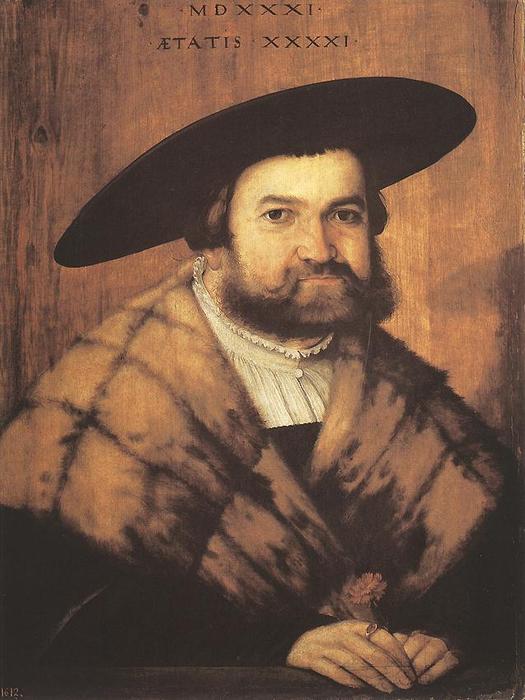
Goldsmith Jörg Zürer of Augsburg
 Oil On Panel
- Northern Renaissance
 1531
1531- Renaissance
 78.0 x 51.0 cm
 プラド美術館
 詳細を見る
詳細を見る




P118B $10

P118H $10

P118W $10

P438Z $10

P508JH $12

P508YH $12

P805H $10

P805Z $10

P919BZ $10

P919G $10

P919XJ $10

P959ZH $10

P968JZ $12

W106C $8

W218G $10

W218JH $8

W218Y $10

W307PJ $10

W316G $10

W316PJ $8

W316Y $10

W398PJ $8

W4111J $10

W500HY $15

W500JH $15

W692G $12

W849H $8

W940BG $15

W953PJ $8




作品のオリジナル比率に合わせた、当店の規定サイズからお選びください。

特定のフレームやスペースに合わせて、ご希望のサイズをご入力いただけます。選択されたサイズが元の画像の比率と異なる場合、アートワークをトリミングするか、手描きで要素を追加して絵画を拡張いたします。デジタルモックアップ を制作し、制作開始前にご確認(承認)をいただきます。
画面上のプレビューは、実際のトリミングや拡張を正確に反映しているものではありません。最終的な構図は、モックアップによってのみ正確にご確認いただけます。
カスタムサイズもご利用いただけますが、元の比率を維持するためには、あらかじめ用意されたリストからサイズを選択することをお勧めいたします。
ご注文後、ArtsDot.com チームより詳細な指示をお送りするとともに、仕上がりイメージ(モックアップ)をご提供いたします。


 ガラスオプションは、110cm未満のサイズでのみご利用いただけます。

Goldsmith Jörg Zürer of Augsburg
複製技法
複製画のサイズ
-


合計金額
$ 263
A Glimpse into Renaissance Grandeur: The Portrait of Jörg Zürer
To stand before The Goldsmith Jörg Zürer of Augsburg is to step directly across the threshold of the early sixteenth century. This magnificent oil on panel, executed by Christoph Amberger in 1531, transcends mere portraiture; it is a meticulously preserved window into the material culture, social aspirations, and quiet dignity of an artisan from Renaissance Augsburg. The subject himself, Jörg Zürer, was not merely wealthy—as suggested by his opulent fur-lined coat and wide-brimmed hat—but he represents the rising class of skilled craftsmen whose patronage fueled the artistic brilliance of the era. Amberger captured more than just a likeness; he immortalized a moment of established status.
Mastery in Technique: The Art of Light and Shadow
What immediately captivates the viewer is the sheer technical virtuosity on display. Amberger’s handling of paint is nothing short of breathtaking. Observe the fine brushwork used to render the texture of Zürer's garments; one can almost feel the nap of the fur or the weight of the heavy fabric. This attention to tactile detail, characteristic of Northern Renaissance masters, elevates the portrait from a flat depiction to a dimensional reality. Furthermore, Amberger employs light and shadow with an almost scientific precision. The subtle gradations of tone sculpt Zürer’s features, lending his contemplative expression a profound sense of depth and psychological weight. It is this masterful interplay between illumination and obscurity that gives the piece its enduring lifelike quality.
Symbolism and Social Standing in Renaissance Dress
Every element within the composition speaks volumes about Jörg Zürer’s place in society. The richness of his attire serves as a visual testament to his success as a goldsmith—a trade requiring both immense skill and considerable capital. These garments are not simply clothing; they are markers of achievement, communicating status to all who beheld them. Coupled with the inscription visible at the top, which references dates and ages, the painting functions almost as a commemorative document, solidifying Zürer’s identity and success for posterity. The background's relative minimalism ensures that all focus remains squarely on the man, his bearing, and the narrative woven into his presentation.
Bringing History Home: Owning a Piece of Art History
For the discerning collector or designer seeking to infuse a space with authentic historical gravitas, reproductions of this work offer an unparalleled opportunity. While the original resides in the esteemed halls of the Museo del Prado, owning a high-quality hand-painted reproduction allows one to integrate the sophisticated narrative and exquisite detail of Amberger’s genius into a modern setting. It is more than decoration; it is an heirloom piece that invites conversation, sparking dialogues about craftsmanship, history, and the enduring human spirit captured by the brush.
関連作品

アーティストの略歴
The Silent Witness of Augsburg’s Renaissance
In the vibrant, bustling heart of 16th-century Augsburg, a city that pulsed with the economic energy of European trade, there lived an artist whose brush captured the very soul of the High Renaissance. Christoph Amberger (c. 1505 – 1562) was not merely a painter of figures, but a meticulous chronicler of human dignity and divine narrative. Born into a lineage of craftsmen—the son of a stonemason and grandson of a woodcarver—Amberger inherited a profound respect for the tactile precision of art. This foundational upbringing in the traditions of German craftsmanship provided the bedrock upon which he would build a career defined by clarity, realism, and an unwavering attention to detail.
The trajectory of Amberger’s talent was irrevocably altered through his apprenticeship under the legendary Hans Holbein the Younger. From Holbein, Amberger inherited more than just technical skill; he absorbed a specific psychological language, a way of rendering the human countenance that allowed a sitter to breathe through the oil and pigment. This mentorship instilled in him a mastery of crisp realism, enabling him to navigate the delicate balance between capturing physical likeness and conveying the inner character of his subjects. His work became a bridge between the Northern European tradition of meticulous detail and the burgeoning humanist ideals sweeping across the continent.
A Journey Through Faith and Humanism
Amberger’s artistic evolution was significantly enriched by his travels, most notably his sojourn through Northern Italy between 1525 and 1527. Immersing himself in the artistic atmosphere of Venice and Florence, he stood in the shadow of giants like Leonardo da Vinci and Michelangelo. This exposure to the Italian Renaissance breathed a new dimension into his work, infusing his German roots with a sophisticated understanding of composition and the monumental grace of the South. Upon his return to Augsburg, this synthesis of styles allowed him to engage with the city's most powerful patrons, including the legendary merchant Jakob Fugger and the statesman Konrad Peutinger.
Perhaps his most enduring contribution to the art historical canon is his profound engagement with biblical storytelling. His celebrated series, The History of Joseph, stands as a testament to his ability to transform scripture into visual dialogue. Through twelve magnificent canvases, Amberger meticulously recounts the life of Joseph, utilizing symbolic resonance to explore themes of virtue, providence, and faith. These are not merely illustrations of text; they are carefully constructed worlds where every fold of fabric and every shadow serves to deepen the theological narrative, making the ancient stories feel immediate and profoundly human.
Legacy of a Master Portraitist
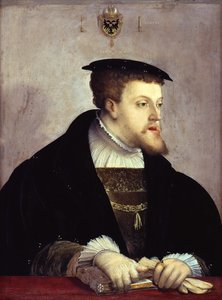
Beyond his religious narratives, Amberger’s legacy is etched into the faces of the era's most influential figures. His portraiture served as a vital historical record of the political and economic titans of his time. By capturing the likenesses of individuals such as Emperor Charles V and the prominent members of the Fugger dynasty, he provided a window into the power structures of the 16th century. His portraits are characterized by:
- Psychological Depth: A profound ability to capture the gravity and intellect of his subjects.
- Material Precision: An exquisite rendering of textures, from heavy velvets to the cold sheen of armor.
- Humanist Spirit: A focus on the individual as a central figure of importance within the cosmic and social order.
Though he may not have sought the flamboyant fame of some of his contemporaries, Christoph Amberger remains an indispensable figure of the German Renaissance. His life’s work represents a harmonious intersection of Northern precision and Italian grace, leaving behind a body of work that continues to resonate with the quiet strength of a master who saw the divine in the details of the human experience.
Christoph Amberger
1505 - 1562 , Germany
基本情報
- Artistic Movement Or Style: Renaissance
- Artists Or Movements Influenced By This Artist: Italian Renaissance
- Artists Who Influenced This Artist: Hans Holbein
- Date Of Birth: c. 1505
- Date Of Death: 1562
- Full Name: Christoph Amberger
- Nationality: German
- Notable Artworks: ['History of Joseph']
- Place Of Birth: Berlin, Germany
関連記事
Oil on Panel Masters: 10 Paintings That Revolutionized Art |
Journey through 10 legendary 'Oil on Panel' masterpieces by Van Eyck, Bosch & Bruegel. Explore the stories behind these iconic Renaissance & Baroque paintings and find museum-quality art reproductions to elevate your home decor. Discover all masterpieces on !
Oil on Panel: A Historical Survey of Technique, Support & Aesthetic Evolution
Explore the rich history of oil on panel painting! Discover Renaissance techniques, support structures & aesthetic evolution. Expert insights for art collectors and enthusiasts.
Oil on Panel: A Historical Survey of Technique, Support, and Aesthetic Impact
Explore the rich history of oil on panel painting! Discover Renaissance techniques, support construction, & the enduring legacy of this masterful art form. Expert insights for collectors and enthusiasts.
The Northern Awakening: Artistic Innovation & Cultural Transformation in the German Renaissance
Explore the artistic innovation of the German Renaissance! Discover Dürer, the Danube School & Reformation art. Learn about techniques, materials & lasting influence. Find museum-quality reproductions at ArtsDot.

The Enduring Legacy of Oil on Canvas: Technique, History & Aesthetic Impact
Explore the rich history & techniques of oil painting – from Renaissance masters to Impressionism. Discover pigments, layering methods, and why this timeless medium endures. Expert insights for artists & art enthusiasts.

