

 プレビュー
プレビュー
 プリントを購入
 シェアする
シェアする シェアする
シェアする
 詳細を見る
詳細を見る

 ダウンロード
 似ている作品
 X線調査
X線調査 スライドショー
Holy Family on the Steps


 詳細を見る
詳細を見る




P118B $10

P118H $10

P118W $10

P438Z $10

P508JH $12

P508YH $12

P805H $10

P805Z $10

P919BZ $10

P919G $10

P919XJ $10

P959ZH $10

P968JZ $12

W106C $8

W218G $10

W218JH $8

W218Y $10

W307PJ $10

W316G $10

W316PJ $8

W316Y $10

W398PJ $8

W4111J $10

W500HY $15

W500JH $15

W692G $12

W849H $8

W940BG $15

W953PJ $8




作品のオリジナル比率に合わせた、当店の規定サイズからお選びください。

特定のフレームやスペースに合わせて、ご希望のサイズをご入力いただけます。選択されたサイズが元の画像の比率と異なる場合、アートワークをトリミングするか、手描きで要素を追加して絵画を拡張いたします。デジタルモックアップ を制作し、制作開始前にご確認(承認)をいただきます。
画面上のプレビューは、実際のトリミングや拡張を正確に反映しているものではありません。最終的な構図は、モックアップによってのみ正確にご確認いただけます。
カスタムサイズもご利用いただけますが、元の比率を維持するためには、あらかじめ用意されたリストからサイズを選択することをお勧めいたします。
ご注文後、ArtsDot.com チームより詳細な指示をお送りするとともに、仕上がりイメージ(モックアップ)をご提供いたします。


 ガラスオプションは、110cm未満のサイズでのみご利用いただけます。

Holy Family on the Steps
複製技法
複製画のサイズ
-


合計金額
$ 338
A Moment of Grace: Exploring Claudine Bouzonnet Stella’s “Holy Family on the Steps”
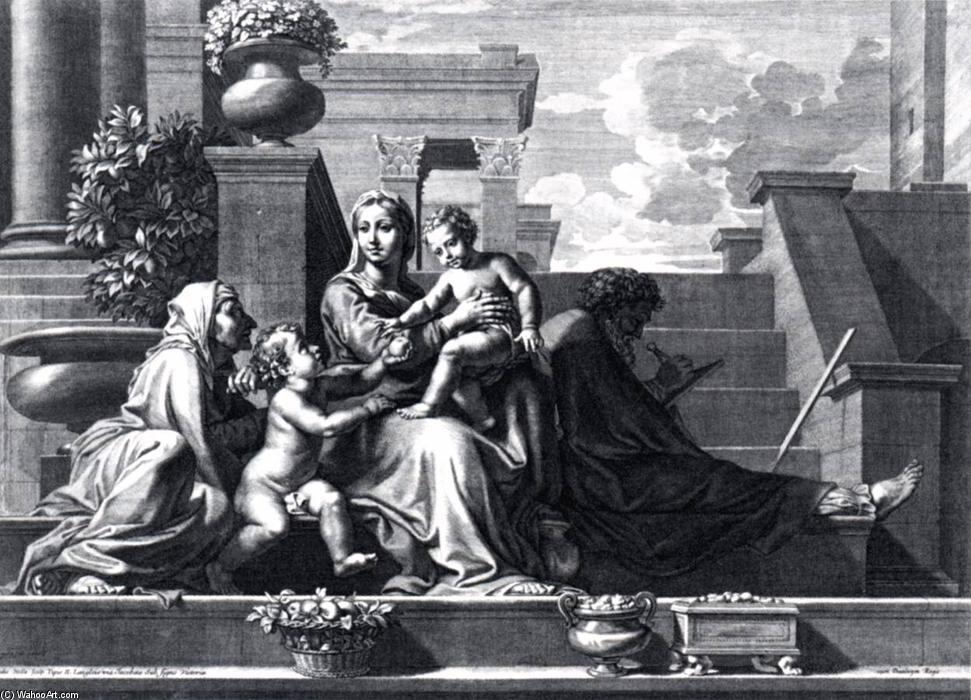
Claudine Bouzonnet-Stella's 1668 engraving, "Holy Family on the Steps," is more than just a depiction of a biblical scene; it’s a carefully constructed meditation on faith, family, and the divine. Born into an artistic lineage steeped in Lyon’s goldsmithing tradition – her uncle Jacques Stella was a renowned printmaker – Claudine inherited not only technical skill but also a deep appreciation for classical composition and religious iconography. This work, deeply influenced by Nicolas Poussin's earlier explorations of the Holy Family theme, showcases Bouzonnet-Stella’s mastery of engraving techniques and her ability to imbue a seemingly straightforward subject with profound emotional resonance.
The scene unfolds within a meticulously rendered architectural setting: a grand staircase leading towards a distant, ethereal light. At its center stands the Virgin Mary, seated regally on the steps, cradling the Christ Child in a gesture of tender protection. To her right, Joseph, depicted with dignified gravitas, observes the tableau with quiet devotion. A young boy, kneeling before Mary, embodies youthful reverence and an earnest desire to connect with the sacred. The pyramidal composition, a hallmark of Baroque art, draws the eye upwards towards the divine, reinforcing the importance of this familial unit within the broader context of Christian belief.
The Language of Line: Technique and Craftsmanship
Bouzonnet-Stella’s skill as an engraver is immediately apparent in the intricate detail of the engraving. She employed a masterful use of hatching, cross-hatching, and fine lines to create a remarkable illusion of texture and volume. The drapery of the figures flows with graceful fluidity, while the folds of Joseph's cloak are rendered with subtle gradations of tone. Notice particularly how she captures the smoothness of skin, the sheen of fabric, and the rough texture of the stone steps – all achieved through painstaking manipulation of the burin.
- Burin Technique: The artist utilized a sharp burin to precisely cut lines into a metal plate.
- Hatching & Cross-Hatching: These techniques created shading and depth, mimicking the effects of light and shadow.
- Linear Perspective: The receding steps establish a clear sense of spatial depth, drawing the viewer’s eye towards the vanishing point.
A Baroque Vision: Symbolism and Context
“Holy Family on the Steps” is firmly rooted in the artistic conventions of the 17th century – specifically, the Baroque period. The dramatic lighting, the dynamic composition, and the emphasis on emotional intensity are all characteristic features of this style. The staircase itself serves as a potent symbol: it represents the journey from earthly existence to divine grace, a pathway towards salvation. The figures’ postures and expressions convey a sense of serenity, contemplation, and profound connection – a testament to the enduring power of family bonds within a spiritual framework.
Furthermore, the work echoes Poussin's earlier depictions of the Holy Family, demonstrating Bouzonnet-Stella’s deep respect for her predecessor while also establishing her own distinct artistic voice. The inclusion of elements like the young boy and the architectural setting subtly allude to themes of innocence, hope, and the promise of a future filled with divine blessings.
A Timeless Masterpiece: Beyond Reproduction
Claudine Bouzonnet-Stella’s “Holy Family on the Steps” transcends its historical context, offering viewers a timeless meditation on faith, family, and the human condition. A faithful reproduction captures not only the visual details of this remarkable engraving but also the emotional depth and artistic brilliance that define it. Whether adorning a grand salon or a more intimate space, this image invites contemplation and serves as a poignant reminder of the enduring power of art to inspire and uplift.
関連作品
アーティストの略歴
Rembrandt: The Master of Light and Shadow
Rembrandt Harmenszoon van Rijn, born in Leiden in 1606, stands as one of the most revered figures in Western art history – a titan of painting whose profound understanding of light, emotion, and human psychology continues to captivate audiences centuries after his death. Initially destined for a life of mercantile trade through his father’s profession, Rembrandt’s innate artistic talent led him towards the world of painting, a path he pursued with relentless dedication and an unwavering commitment to capturing the essence of his subjects. His journey began in Leiden, where he received a basic education before venturing into the bustling art scene of Amsterdam around 1631, a city that would become both his home and the crucible for his artistic evolution. Rembrandt’s early career was marked by a struggle for recognition amidst the competitive landscape of Dutch painting. He initially focused on historical scenes and portraits, diligently honing his skills under various masters before establishing himself as an independent artist. However, it was in the 1640s that Rembrandt truly began to forge his distinctive style – one characterized by dramatic contrasts of light and shadow (chiaroscuro), a profound exploration of human emotion, and a remarkable ability to convey psychological depth within his compositions. This period witnessed the emergence of some of his most iconic works, including “The Night Watch” (1642) and “The Anatomy Lesson of Dr. Nicolaes Tulp” (1632), both testaments to his innovative approach and masterful technique. A pivotal influence on Rembrandt’s artistic development was Marcus Gheeraerts the Younger, a Flemish artist who had settled in England and become a favored portraitist for the Tudor court. Rembrandt spent several formative years working under Gheeraerts, absorbing not only technical skills but also a refined aesthetic sensibility that emphasized elegance and detail – a stark contrast to the more raw and expressive style he would later develop. Gheeraerts’s work provided a foundation in formal composition and portraiture, while Rembrandt ultimately transcended these conventions to forge his own unique vision. The impact of Gheeraerts is particularly evident in early portraits like the “Ditchley” portrait of Elizabeth I (c. 1592), which showcases a meticulous attention to detail and a sense of regal dignity – though it’s clear that Rembrandt would soon move beyond such purely decorative representations. Rembrandt's artistic journey was deeply intertwined with the tumultuous political and religious climate of his time. The Dutch Republic, recently liberated from Spanish rule, faced ongoing challenges and social unrest. The rise of Calvinism, with its emphasis on simplicity and piety, created a challenging environment for artists who favored elaborate ornamentation and dramatic displays. Despite these pressures, Rembrandt continued to produce groundbreaking work, often exploring themes of faith, morality, and the human condition. His later works, particularly those produced in his studio after he lost his sight, are characterized by an intensely personal and introspective quality – a reflection of his own struggles with loss, aging, and mortality. The influence of Italian Renaissance masters, especially Caravaggio, played a significant role in shaping Rembrandt’s artistic style. Caravaggio's masterful use of chiaroscuro—the dramatic contrast between light and dark—inspired Rembrandt to employ similar techniques to heighten the emotional impact of his paintings. Rembrandt didn’t simply mimic Caravaggio; he adapted these principles to suit his own expressive vision, creating a uniquely powerful and evocative effect. He also studied the works of Titian and Veronese, absorbing their mastery of color and composition. Throughout his career, Rembrandt was a prolific painter, printmaker, and draughtsman. His artistic output spanned a wide range of subjects, including portraits, self-portraits (a particularly revealing series documenting his aging process), biblical scenes, mythological narratives, and genre paintings depicting everyday life. His ability to capture the nuances of human emotion—joy, sorrow, contemplation, and despair—is unparalleled in Western art. Rembrandt’s legacy extends far beyond his individual works; he fundamentally altered the course of painting by demonstrating the expressive potential of light and shadow and by prioritizing psychological realism over mere representation. He died in Amsterdam in 1669, leaving behind a vast and enduring body of work that continues to inspire artists and captivate viewers around the world.The Colourist Controversy
Rembrandt’s innovative approach to painting, particularly his bold use of color and light, sparked considerable debate during his lifetime. He was part of a movement known as the “colourists,” who challenged the established artistic conventions of the time, which prioritized drawing and linear precision. The "Quarrel of the Colourists" erupted in the early 1670s within the Royal Academy of Painting and Sculpture, pitting the proponents of drawing (led by figures like Philippe de Champaigne and Charles Le Brun) against those who championed color—represented by artists such as Gabriel Blanchard and Roger de Piles. The debate centered on the relative importance of line and colour in art appreciation; the “drawers” argued that a clear outline was essential for conveying meaning, while the “colourists,” including Rembrandt, believed that colour held greater expressive power. The Royal Academy’s decision to recognize Rembrandt as a member of the academy further fueled this controversy, highlighting his departure from traditional artistic norms. His work, characterized by its vibrant colors, loose brushstrokes, and emotional intensity, represented a radical shift away from the more restrained style favored by the established academic tradition. The debate ultimately served to highlight the evolving nature of artistic taste and the ongoing tension between innovation and convention in the art world.
claudine bouzonnet stella
1636 - 1697 , France
基本情報
- Artistic Movement Or Style: Tudor portraiture
- Artists Or Movements Influenced By This Artist:
- Anthony van Dyck
- Charles de La Fosse
- Artists Who Influenced This Artist:
- Marcus Gheeraerts the Elder
- Poussin
- Titian
- Date Of Birth: 1561/1562
- Date Of Death: 1635/1636
- Full Name: Marcus Gheeraerts the Younger
- Nationality: Flemish
- Notable Artworks:
- Ditchley Portrait
- Elizabeth I
- Place Of Birth: Bruges, Belgium
関連記事

Engraving's Golden Age: 10 Masterpieces That Redefined Art | ArtsDot
Journey through art history with our Top 10 Legendary Engravings! Explore masterpieces by Dürer, Rembrandt & Goya. Discover the stories behind these iconic prints and find museum-quality reproductions for your home at ArtsDot.com.

The Dramatic Flourish: Exploring the Baroque Movement's Enduring Legacy in Art History
Explore the dramatic world of Baroque art! Discover iconic artists like Caravaggio & Rubens, defining techniques, and its lasting impact on art history. Expert insights for collectors & enthusiasts at ArtsDot.
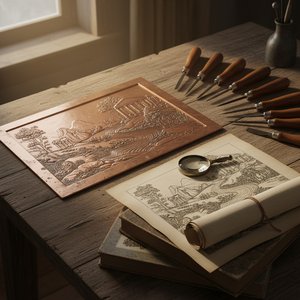
Engraving: A Historical Survey of Technique, Artistic Expression & Enduring Legacy
Explore the rich history of engraving with ArtsDot. Discover techniques, iconic artists like Dürer & Callot, collecting tips, and expert guidance for preserving your art investment. Learn about intaglio printing & more!

バロック美術を極めた至宝:時代を彩る10大名作の世界
バロック美術の華!カラヴァッジョ、ベルニーニら巨匠が創り上げた10大名作を徹底解剖。ドラマチックな色彩と豪華絢爛の世界観に触れ、至宝のアートプリントで空間を彩ろう。ArtsDot.comで美術館品質の複製と洗練されたインテリアを見つけましょう!

Theatricality & Triumph: Baroque Drama in Painting & Sculpture
Explore the dramatic world of Baroque art! Discover its history, defining characteristics, & lasting influence on painting & sculpture. Expert insights into Caravaggio, Zurbarán, and Bernini – plus high-quality reproductions at ArtsDot.

