

 プレビュー
プレビュー
 プリントを購入
 シェアする
シェアする シェアする
シェアする
 詳細を見る
詳細を見る

 ダウンロード
 似ている作品
 X線調査
X線調査 スライドショー
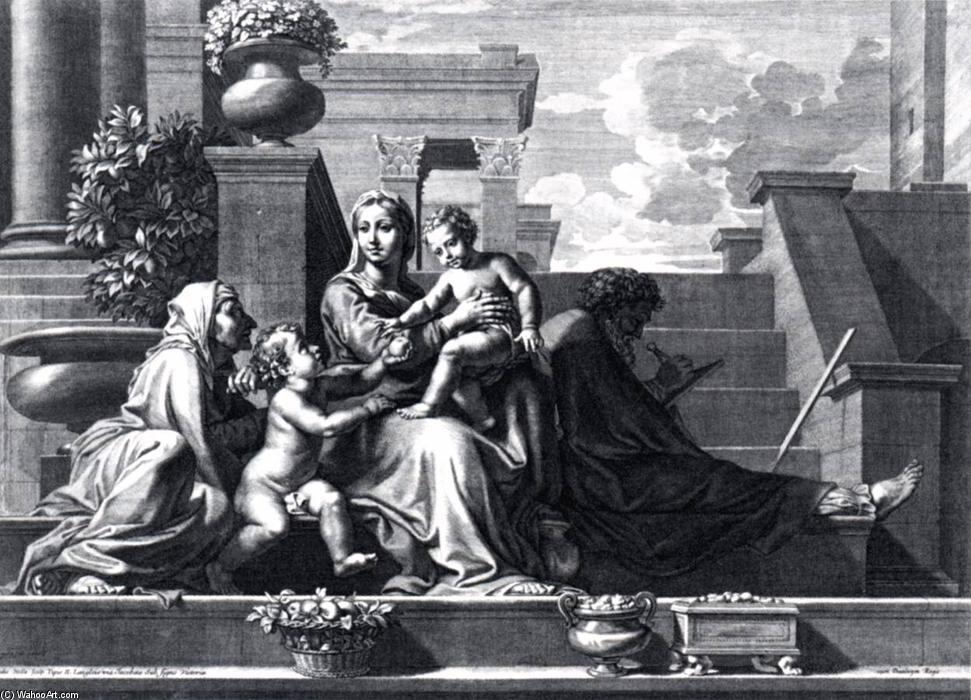
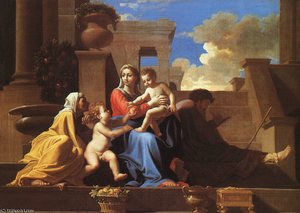
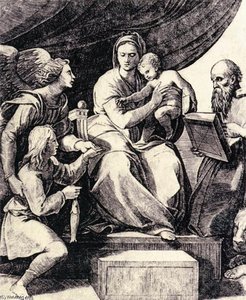
Holy Family on the Steps


 詳細を見る
詳細を見る
オンラインプレビューをはるかに凌ぐ、高解像度で鮮明なデジタル画像をご購入いただけます。
各ファイルは、社内の専門家が高度なツールと熟練した手作業によるレタッチを用いて、細心の注意を払って準備されています。すべての画像において、卓越した鮮明度、正確な色彩再現性、そして繊細なディテールを保証いたします。
最終ファイルは、プロフェッショナルな編集・印刷環境ですぐにご利用いただけるよう最適化された状態で、72時間以内にメールにてお届けいたします。これは、一流のデザインスタジオ、出版社、ギャラリーから信頼されているものと同等の品質です。
デジタル画像のご注文に付随する特典
高品質なデジタル画像配信を、確かな品質で。
ArtsDot.com を選ぶことは、単に画像を手に入れることではありません。それは、プロの手によって精密に仕上げられ、満足保証が付いた高品質なデジタルアートワークを受け取ることを意味します。ご注文いただいた際に自動的に付随する内容は、以下の通りです:

メールですぐにお届け
ご注文から72時間以内に、高解像度のデジタル画像ファイルがメールでお手元に届きます。すぐにそのままご利用いただけます。

AI技術で最適化されたデジタルファイル
お客様の作品は、高度なAIツールと専門家による手作業の編集を組み合わせてプロフェッショナルに最適化されており、細部のディテール、鮮明さ、そして正確な色再現性を最大限に引き出しています。

一生涯無料の再送サービス
ファイルを誤って削除したり、紛失してしまったりしましたか?ご安心ください。いつでも無料で再送いたします。

輸入手数料は一切かかりません
関税や手数料、配送料を気にすることなく、お気に入りのアートワークをすぐにお楽しみいただけます。デジタルダウンロードは常に免税です。

色彩再現の保証
プロ仕様のツールとカラーマネジメント技術を用いることで、デジタル画像が元の色を最大限に忠実に再現することを保証いたします。

60日間満足保証
ご購入いただいたデジタル画像にご満足いただけない場合は、60日以内であれば、修正または100%の返金(理由を問う必要はありません)をさせていただきます。

100% 返金保証
ご満足いただけない場合は、デジタルファイルを受け取ってから60日以内であれば、理由を問わず全額返金いたします。

まとめ買い割引
3枚購入で10%OFF - 5枚購入で15%OFF - 10枚以上購入で20%OFF。クリエイティブなプロジェクト、ギャラリー、エージェンシーに最適です。
A Moment of Grace: Exploring Claudine Bouzonnet Stella’s “Holy Family on the Steps”
Claudine Bouzonnet-Stella's 1668 engraving, "Holy Family on the Steps," is more than just a depiction of a biblical scene; it’s a carefully constructed meditation on faith, family, and the divine. Born into an artistic lineage steeped in Lyon’s goldsmithing tradition – her uncle Jacques Stella was a renowned printmaker – Claudine inherited not only technical skill but also a deep appreciation for classical composition and religious iconography. This work, deeply influenced by Nicolas Poussin's earlier explorations of the Holy Family theme, showcases Bouzonnet-Stella’s mastery of engraving techniques and her ability to imbue a seemingly straightforward subject with profound emotional resonance.
The scene unfolds within a meticulously rendered architectural setting: a grand staircase leading towards a distant, ethereal light. At its center stands the Virgin Mary, seated regally on the steps, cradling the Christ Child in a gesture of tender protection. To her right, Joseph, depicted with dignified gravitas, observes the tableau with quiet devotion. A young boy, kneeling before Mary, embodies youthful reverence and an earnest desire to connect with the sacred. The pyramidal composition, a hallmark of Baroque art, draws the eye upwards towards the divine, reinforcing the importance of this familial unit within the broader context of Christian belief.
The Language of Line: Technique and Craftsmanship
Bouzonnet-Stella’s skill as an engraver is immediately apparent in the intricate detail of the engraving. She employed a masterful use of hatching, cross-hatching, and fine lines to create a remarkable illusion of texture and volume. The drapery of the figures flows with graceful fluidity, while the folds of Joseph's cloak are rendered with subtle gradations of tone. Notice particularly how she captures the smoothness of skin, the sheen of fabric, and the rough texture of the stone steps – all achieved through painstaking manipulation of the burin.
- Burin Technique: The artist utilized a sharp burin to precisely cut lines into a metal plate.
- Hatching & Cross-Hatching: These techniques created shading and depth, mimicking the effects of light and shadow.
- Linear Perspective: The receding steps establish a clear sense of spatial depth, drawing the viewer’s eye towards the vanishing point.
A Baroque Vision: Symbolism and Context
“Holy Family on the Steps” is firmly rooted in the artistic conventions of the 17th century – specifically, the Baroque period. The dramatic lighting, the dynamic composition, and the emphasis on emotional intensity are all characteristic features of this style. The staircase itself serves as a potent symbol: it represents the journey from earthly existence to divine grace, a pathway towards salvation. The figures’ postures and expressions convey a sense of serenity, contemplation, and profound connection – a testament to the enduring power of family bonds within a spiritual framework.
Furthermore, the work echoes Poussin's earlier depictions of the Holy Family, demonstrating Bouzonnet-Stella’s deep respect for her predecessor while also establishing her own distinct artistic voice. The inclusion of elements like the young boy and the architectural setting subtly allude to themes of innocence, hope, and the promise of a future filled with divine blessings.
A Timeless Masterpiece: Beyond Reproduction
Claudine Bouzonnet-Stella’s “Holy Family on the Steps” transcends its historical context, offering viewers a timeless meditation on faith, family, and the human condition. A faithful reproduction captures not only the visual details of this remarkable engraving but also the emotional depth and artistic brilliance that define it. Whether adorning a grand salon or a more intimate space, this image invites contemplation and serves as a poignant reminder of the enduring power of art to inspire and uplift.
関連作品


作家の略歴
Rembrandt: The Master of Light and Shadow
Rembrandt Harmenszoon van Rijn, born in Leiden in 1606, stands as one of the most revered figures in Western art history – a titan of painting whose profound understanding of light, emotion, and human psychology continues to captivate audiences centuries after his death. Initially destined for a life of mercantile trade through his father’s profession, Rembrandt’s innate artistic talent led him towards the world of painting, a path he pursued with relentless dedication and an unwavering commitment to capturing the essence of his subjects. His journey began in Leiden, where he received a basic education before venturing into the bustling art scene of Amsterdam around 1631, a city that would become both his home and the crucible for his artistic evolution. Rembrandt’s early career was marked by a struggle for recognition amidst the competitive landscape of Dutch painting. He initially focused on historical scenes and portraits, diligently honing his skills under various masters before establishing himself as an independent artist. However, it was in the 1640s that Rembrandt truly began to forge his distinctive style – one characterized by dramatic contrasts of light and shadow (chiaroscuro), a profound exploration of human emotion, and a remarkable ability to convey psychological depth within his compositions. This period witnessed the emergence of some of his most iconic works, including “The Night Watch” (1642) and “The Anatomy Lesson of Dr. Nicolaes Tulp” (1632), both testaments to his innovative approach and masterful technique. A pivotal influence on Rembrandt’s artistic development was Marcus Gheeraerts the Younger, a Flemish artist who had settled in England and become a favored portraitist for the Tudor court. Rembrandt spent several formative years working under Gheeraerts, absorbing not only technical skills but also a refined aesthetic sensibility that emphasized elegance and detail – a stark contrast to the more raw and expressive style he would later develop. Gheeraerts’s work provided a foundation in formal composition and portraiture, while Rembrandt ultimately transcended these conventions to forge his own unique vision. The impact of Gheeraerts is particularly evident in early portraits like the “Ditchley” portrait of Elizabeth I (c. 1592), which showcases a meticulous attention to detail and a sense of regal dignity – though it’s clear that Rembrandt would soon move beyond such purely decorative representations. Rembrandt's artistic journey was deeply intertwined with the tumultuous political and religious climate of his time. The Dutch Republic, recently liberated from Spanish rule, faced ongoing challenges and social unrest. The rise of Calvinism, with its emphasis on simplicity and piety, created a challenging environment for artists who favored elaborate ornamentation and dramatic displays. Despite these pressures, Rembrandt continued to produce groundbreaking work, often exploring themes of faith, morality, and the human condition. His later works, particularly those produced in his studio after he lost his sight, are characterized by an intensely personal and introspective quality – a reflection of his own struggles with loss, aging, and mortality. The influence of Italian Renaissance masters, especially Caravaggio, played a significant role in shaping Rembrandt’s artistic style. Caravaggio's masterful use of chiaroscuro—the dramatic contrast between light and dark—inspired Rembrandt to employ similar techniques to heighten the emotional impact of his paintings. Rembrandt didn’t simply mimic Caravaggio; he adapted these principles to suit his own expressive vision, creating a uniquely powerful and evocative effect. He also studied the works of Titian and Veronese, absorbing their mastery of color and composition. Throughout his career, Rembrandt was a prolific painter, printmaker, and draughtsman. His artistic output spanned a wide range of subjects, including portraits, self-portraits (a particularly revealing series documenting his aging process), biblical scenes, mythological narratives, and genre paintings depicting everyday life. His ability to capture the nuances of human emotion—joy, sorrow, contemplation, and despair—is unparalleled in Western art. Rembrandt’s legacy extends far beyond his individual works; he fundamentally altered the course of painting by demonstrating the expressive potential of light and shadow and by prioritizing psychological realism over mere representation. He died in Amsterdam in 1669, leaving behind a vast and enduring body of work that continues to inspire artists and captivate viewers around the world.The Colourist Controversy
Rembrandt’s innovative approach to painting, particularly his bold use of color and light, sparked considerable debate during his lifetime. He was part of a movement known as the “colourists,” who challenged the established artistic conventions of the time, which prioritized drawing and linear precision. The "Quarrel of the Colourists" erupted in the early 1670s within the Royal Academy of Painting and Sculpture, pitting the proponents of drawing (led by figures like Philippe de Champaigne and Charles Le Brun) against those who championed color—represented by artists such as Gabriel Blanchard and Roger de Piles. The debate centered on the relative importance of line and colour in art appreciation; the “drawers” argued that a clear outline was essential for conveying meaning, while the “colourists,” including Rembrandt, believed that colour held greater expressive power. The Royal Academy’s decision to recognize Rembrandt as a member of the academy further fueled this controversy, highlighting his departure from traditional artistic norms. His work, characterized by its vibrant colors, loose brushstrokes, and emotional intensity, represented a radical shift away from the more restrained style favored by the established academic tradition. The debate ultimately served to highlight the evolving nature of artistic taste and the ongoing tension between innovation and convention in the art world.
claudine bouzonnet stella
1636 - 1697 , France
プロフィール概要
- Artistic Movement Or Style: Tudor portraiture
- Artists Or Movements Influenced By This Artist:
- Anthony van Dyck
- Charles de La Fosse
- Artists Who Influenced This Artist:
- Marcus Gheeraerts the Elder
- Poussin
- Titian
- Date Of Birth: 1561/1562
- Date Of Death: 1635/1636
- Full Name: Marcus Gheeraerts the Younger
- Nationality: Flemish
- Notable Artworks:
- Ditchley Portrait
- Elizabeth I
- Place Of Birth: Bruges, Belgium

