

 プレビュー
プレビュー
 シェアする
シェアする シェアする
シェアする
 詳細を見る
詳細を見る

 ダウンロード
 似ている作品
 X線調査
X線調査 スライドショー
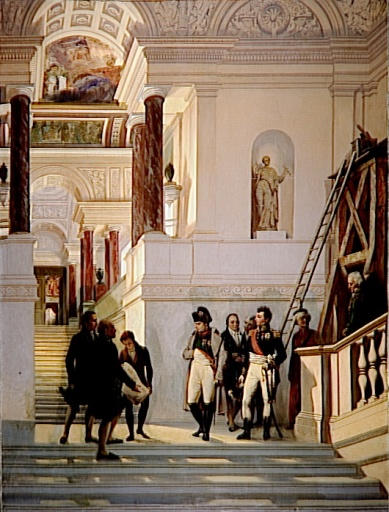
NAPOLEON IER VISITANT L'ESCALIER DU MUSEE DU LOUVRE SOUS LA CONDUITE DES ARCHITECTES PERCIER ET FONTAINE


 詳細を見る
詳細を見る
ジークレー/アートプリント
迅速な制作と多彩な仕上げオプションを備えた、ミュージアムクオリティのジークレーまたはキャンバスプリント。 ( 手描きの絵画を購入 画像を購入)




P118B $10

P118H $10

P118W $10

P438Z $10

P508JH $12

P508YH $12

P805H $10

P805Z $10

P919BZ $10

P919G $10

P919XJ $10

P959ZH $10

P968JZ $12

W106C $8

W218G $10

W218JH $8

W218Y $10

W307PJ $10

W316G $10

W316PJ $8

W316Y $10

W398PJ $8

W4111J $10

W500HY $15

W500JH $15

W692G $12

W849H $8

W940BG $15

W953PJ $8




作品のオリジナル比率に合わせた、当店の規定サイズからお選びください。

特定のフレームやスペースに合わせて、ご自身でサイズを指定することも可能です。選択されたサイズが元の画像の比率と一致しない場合、作品をトリミングするか、鏡面反射または単色での塗りつぶしによって画像を拡張いたします。制作を開始する前に、ご確認用のデジタルモックアップをお送りいたします。
画面上のプレビューには、実際のトリミングや拡張は反映されませんのでご注意ください。最終的な構図を正確に確認できるのは、モックアップのみとなります。
カスタムサイズも承っておりますが、元の比率を維持するためには、あらかじめ用意されたリストからサイズを選択することをお勧めいたします。


 ガラスオプションは、110cm未満のサイズでのみご利用いただけます。

NAPOLEON IER VISITANT L'ESCALIER DU MUSEE DU LOUVRE SOUS LA CONDUITE DES ARCHITECTES PERCIER ET FONTAINE
ジークレー/アートプリント
複製画のサイズ
-


合計金額
$ 62
A Monumental Portrait of Power: Couder’s Vision of Napoleon at the Louvre
Auguste Couder's “Napoleon Ier Visitant L’Escalier Du Musée Du Louvre Sous La Conduite Des Architectes Percier Et Fontaine,” painted in 1833, stands as a testament to the enduring fascination with Napoleonic grandeur and the meticulous craftsmanship of French Romanticism. Commissioned by Louis-Philippe, Duc d'Orléans, this monumental canvas isn’t merely a depiction of an event; it’s a carefully constructed narrative designed to solidify the Bourbon monarchy’s legitimacy amidst the turbulent aftermath of revolution.
- Subject Matter: The painting captures Napoleon Bonaparte’s visit to the Louvre Museum under the guidance of architects Jean Nicolas Pierre Percier and Claude Michel François Fontaine. This scene commemorates the reopening of the museum after its closure during the Napoleonic Wars, symbolizing France's triumphant return to cultural prestige.
- Style & Technique: Couder adheres rigorously to the academic tradition championed by David, employing a balanced composition and precise draughtsmanship characteristic of the École de peinture française. The artist skillfully utilizes oil paint on canvas—a technique favored for its luminosity and ability to convey texture—to achieve remarkable realism in portraying the figures and architectural details.
- Historical Context: Painted during Louis-Philippe’s reign, “Napoleon” serves as a deliberate propaganda piece. Percier and Fontaine's involvement underscores the royal patronage of art and reinforces the image of France as a beacon of civilization and artistic excellence. The painting reflects the broader Romantic preoccupation with heroic narratives and idealized representations of historical figures.
Symbolism: Hierarchy and Restoration
Beyond its factual representation, Couder’s artwork is laden with symbolic significance. Napoleon dominates the composition, positioned prominently at the top right corner, embodying imperial authority and ambition. The surrounding figures—military officers and dignitaries—represent the elite circles supporting Louis-Philippe's rule. Notably, the inclusion of horses symbolizes power and majesty, mirroring Napoleonic conquests.
- Architectural Detail: Percier and Fontaine’s architectural prowess is meticulously rendered, emphasizing the Louvre’s grandeur as a symbol of artistic heritage and royal patronage. The clock hanging on the wall serves as a subtle reminder of time passing—a commentary on Napoleon's reign and France's journey toward stability.
- Color Palette: Couder employs a muted palette dominated by browns, ochres, and reds—colors associated with seriousness and dignity—creating an atmosphere of solemn contemplation. The artist’s careful attention to tonal gradations enhances the painting’s visual impact and contributes to its overall sense of grandeur.
Emotional Impact: Reverence for Glory
"Napoleon Ier Visitant L'Escalier Du Louvre Sous La Conduite Des Architectes Percier Et Fontaine" evokes a profound feeling of reverence for Napoleonic glory and the restoration of French cultural identity. Couder’s masterful execution captures not only the visual splendor of the scene but also its emotional resonance—a celebration of artistic achievement and royal legitimacy. It remains an enduring emblem of France's triumphant return to prominence after years of upheaval.
- Provenance: The painting originated in a series commissioned by Louis-Philippe for the Galerie d’Apollon at the Louvre, showcasing the Duc’s commitment to elevating French art and culture. Its subsequent acquisition by Emmanuel Bréon and its donation to the Musée National des Beaux Arts de Malmaison underscore its significance as a cornerstone of French artistic heritage.
- References: Further exploration can be found in Thierry Sarmant's “Napoléon et Paris,” published by Paris Musées (2015), and Isabelle Leroy-Jay Lemaistre’s “Napoléon et le Louvre dans les collections des musées français” (2017).
関連作品
関連記事
ルノワール傑作25選:光と色彩が織りなす印象派の華麗なる世界 | ArtsDot
ルノワールの傑作25選🎨 印象派の光と色彩が輝く世界へ。絵画の背景、技法、そして時代を超えて愛される理由を紐解きます。ArtsDotで高品質な複製画やインテリアアートを見つけ、お部屋に芸術的な彩りを✨ Explore the full collection online!
ルーブル美術館の至宝25選:名画と芸術史を巡る旅 | ArtsDot
ルーブル美術館の至宝25選。レオナルド・ダ・ヴィンチ、ミロのヴィーナス…名画の歴史と感動を紐解きます。複製画やインテリアアートも豊富に。ArtsDotで、あなただけの芸術空間を。
Neo-Classicism's Greatest Hits: 10 Masterpieces for Your Home |
Journey through Neo-Classicism's finest! Explore 10 iconic masterpieces by David, Ingres & Canova. Discover art history, techniques & timeless beauty – perfect for inspiring your home decor. Find museum-quality reproductions at
Charles Le Brun: Master of French Baroque Classicism & His Enduring Legacy
Explore the life & art of Charles Le Brun, master of French Baroque Classicism. Discover his royal commissions, influence on Versailles, and enduring legacy through detailed analysis & stunning artworks.
The Enduring Legacy of Classicism: Principles, Evolution & Influence in Western Art
Explore the enduring legacy of Classicism in Western art! Discover its historical context, key principles, iconic masterpieces & lasting influence. Learn about Renaissance and Neoclassical movements with ArtsDot.

